
Case Study: How One Shopify Store Reduced Delivery Time to 7 Days
Case Study: How One Shopify Store Reduced Delivery Time to 7 Days
Struggling with long delivery times?
Seeing customers ask, “Where is my order?”
Worried that slow shipping is killing repeat sales?
I’ve seen this problem more times than I can count.
And yes—7-day delivery from China is realistic.
This case study breaks down exactly how one Shopify store did it.
No hype.
Just clear steps and real decisions.

The Background: A Store With Growing Pain
This Shopify store sold lifestyle accessories.
Mid-ticket items.
Strong demand from the US and EU.
Traffic wasn’t the problem.
Conversions weren’t either.
The issue?
-
12–18 day delivery times
-
Rising refund requests
-
Declining repeat customers
Customers liked the product.
They hated the wait.
The Original Fulfillment Setup (What Wasn’t Working)
Before the change, fulfillment looked like this:
-
Products sourced per order
-
No local inventory in China
-
Mixed shipping lines chosen by price
-
No order cutoff discipline
On paper, it was “cheap.”
In reality, it was expensive.
Hidden costs included:
-
Refunds
-
Chargebacks
-
Support workload
-
Lost LTV (lifetime value)
Speed was unpredictable.
Trust was slipping.
The Goal: Consistent 7-Day Delivery
The owner didn’t want miracles.
They wanted consistency.
The target:
-
7 days average delivery to the US
-
Predictable tracking
-
Fewer “where is my order” tickets
We focused on process, not hacks.

Step 1: Move to China-Based Inventory
The biggest shift was inventory placement.
Instead of sourcing per order:
-
Stock was pre-positioned in China
-
Best-selling SKUs only
-
Conservative quantities
This alone removed:
-
Supplier lead time
-
Daily sourcing delays
Orders could be packed the same day.
Step 2: SKU-Level Demand Forecasting
Not every product deserves inventory.
We reviewed:
-
60-day sales history
-
SKU velocity
-
Regional demand
Only top performers were stocked.
Benefits:
-
Lower inventory risk
-
Faster picking
-
Cleaner warehouse workflow
Speed comes from focus.
Step 3: Lock One Primary Shipping Line
Before, shipping lines changed daily.
That killed predictability.
We switched to:
-
One primary express line
-
One backup line only
Key improvements:
-
Stable transit times
-
Clear cutoff schedules
-
Consistent tracking behavior
Cheap shipping varies.
Reliable shipping repeats.
Step 4: Set Clear Order Cutoff Times
This step is often ignored.
We set:
-
Daily cutoff at 4 PM China time
-
Orders after cutoff ship next business day
Why this mattered:
-
Warehouse planning improved
-
Fewer rushed packing errors
-
Same-day dispatch became real
Promises must match operations.
Step 5: Standardize Packing & Handover
Packing was simplified.
Changes included:
-
One box size per SKU
-
Pre-approved packing materials
-
Fixed handover window to carrier
No improvising.
No guessing.
Consistency reduced:
-
Packing delays
-
Missed pickups
-
Damage-related reships
Step 6: Align Customer Messaging
Shipping speed isn’t just logistics.
It’s communication.
We updated:
-
Product page delivery estimates
-
Checkout shipping language
-
Order confirmation emails
Instead of:
“10–20 business days”
We used:
“Delivered in about 7 days after dispatch”
Accuracy builds trust faster than optimism.
The Result: From 14 Days to 7 Days
After 30 days, results were clear.
Delivery Performance
-
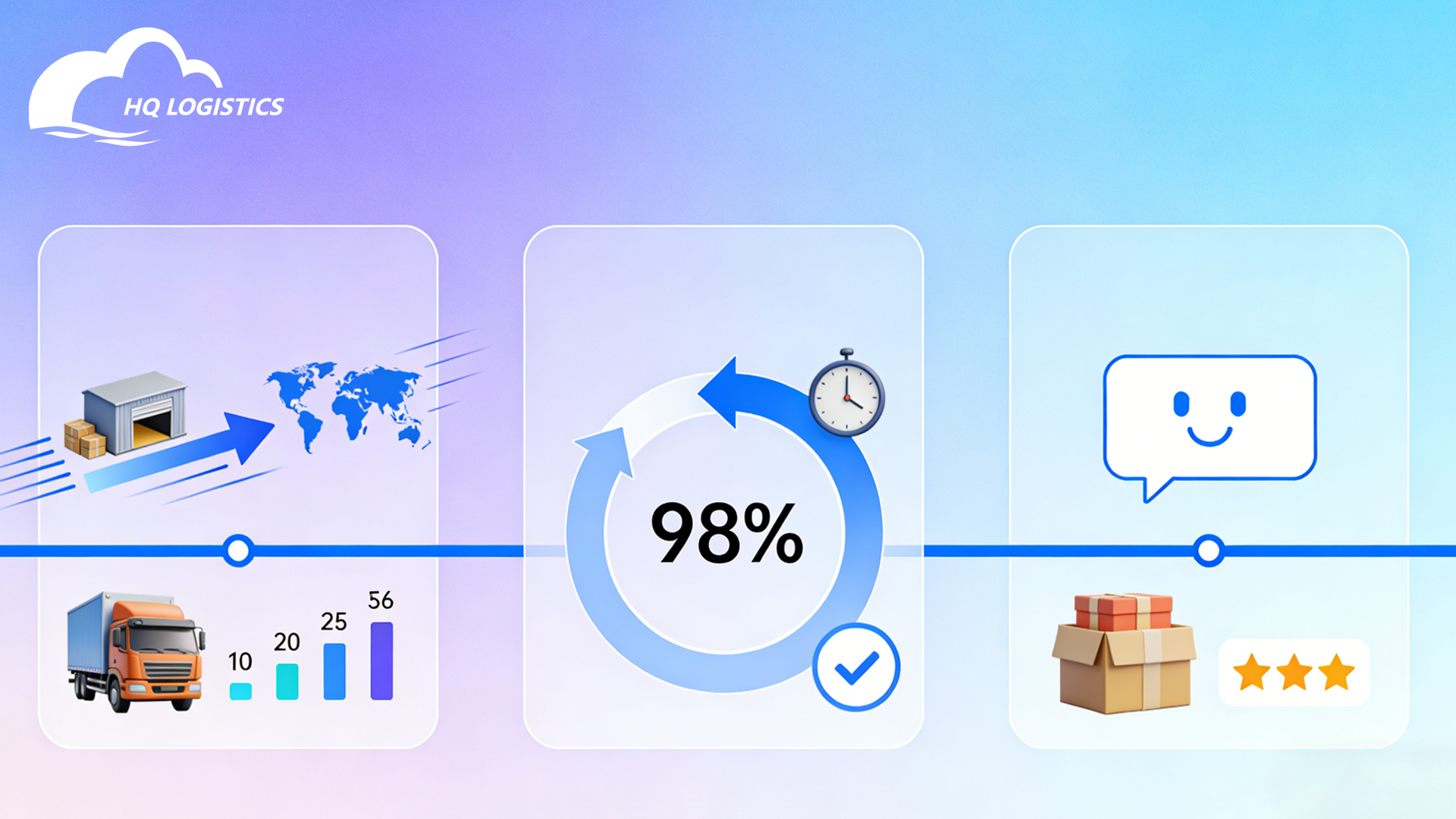
Average delivery: 7.2 days
-
On-time rate: 94%
Customer Metrics
-
Fewer WISMO tickets (“Where is my order”)
-
Higher review scores mentioning shipping
-
Repeat purchase rate increased
Operational Impact
-
Support workload dropped
-
Refund requests declined
-
Cash flow stabilized
Speed fixed more than shipping.
A Short Real Moment From the Owner
The store owner told me:
“I thought faster shipping meant higher costs.
What I didn’t expect was how much money slow shipping was already costing me.”
That mindset shift matters.
What Actually Made the Difference
It wasn’t one trick.
It was:
-
Inventory discipline
-
Shipping line consistency
-
Clear cutoffs
-
Honest customer communication
Fast delivery is a system.
Not a setting.
Common Mistakes Sellers Still Make
Even after seeing results, many sellers hesitate.
Big mistakes include:
-
Overstocking slow SKUs
-
Switching shipping lines too often
-
Promising faster delivery than operations can handle
Speed without control breaks brands.
FAQs: 7-Day Delivery From China
1. Is 7-day delivery from China realistic for Shopify stores?
Yes.
With inventory in China and the right shipping line, it’s very achievable.
2. Does faster delivery always cost more?
Not always.
It often reduces refunds, support costs, and lost customers.
3. Do I need huge inventory to do this?
No.
Start with top SKUs only and scale gradually.
4. What countries work best for 7-day delivery?
The US, UK, and major EU markets are the most reliable.
5. How long does setup usually take?
Most stores can transition within 2–4 weeks
if products and data are ready.
Final Takeaway
This Shopify store didn’t reinvent fulfillment.
They removed chaos.
By controlling inventory, shipping, and expectations,
they turned delivery speed into a competitive advantage.
If customers trust your delivery,
they trust your brand.
And that’s how one Shopify store reduced delivery time to 7 days—
without burning cash or losing control.