Beyond 3PL: Why Shopify Brands Are Turning to 4PL for End-to-End Supply Chain Management
Beyond 3PL: Why Shopify Brands Are Turning to 4PL for End-to-End Supply Chain Management
For many Shopify brands, working with a 3PL is the first step toward scaling fulfillment.
A 3PL can store inventory, pick and pack orders, manage shipping, and help brands avoid the cost of running their own warehouse.
But as a Shopify business grows, a new problem often appears.
Fulfillment is no longer the only challenge.
Inventory may be spread across multiple warehouses. Suppliers may be in different countries. Shipping carriers may offer different rates and delivery times. Returns need to be processed. Purchase orders need to be coordinated. Sales forecasts need to match inventory planning. And someone still has to make sure all of these moving parts work together.
This is where 4PL logistics comes in.
Instead of simply fulfilling orders, a 4PL can act as a strategic supply chain partner—coordinating sourcing, inventory, fulfillment, shipping, technology, and logistics partners through one integrated system.
For growing Shopify brands, that difference can be significant.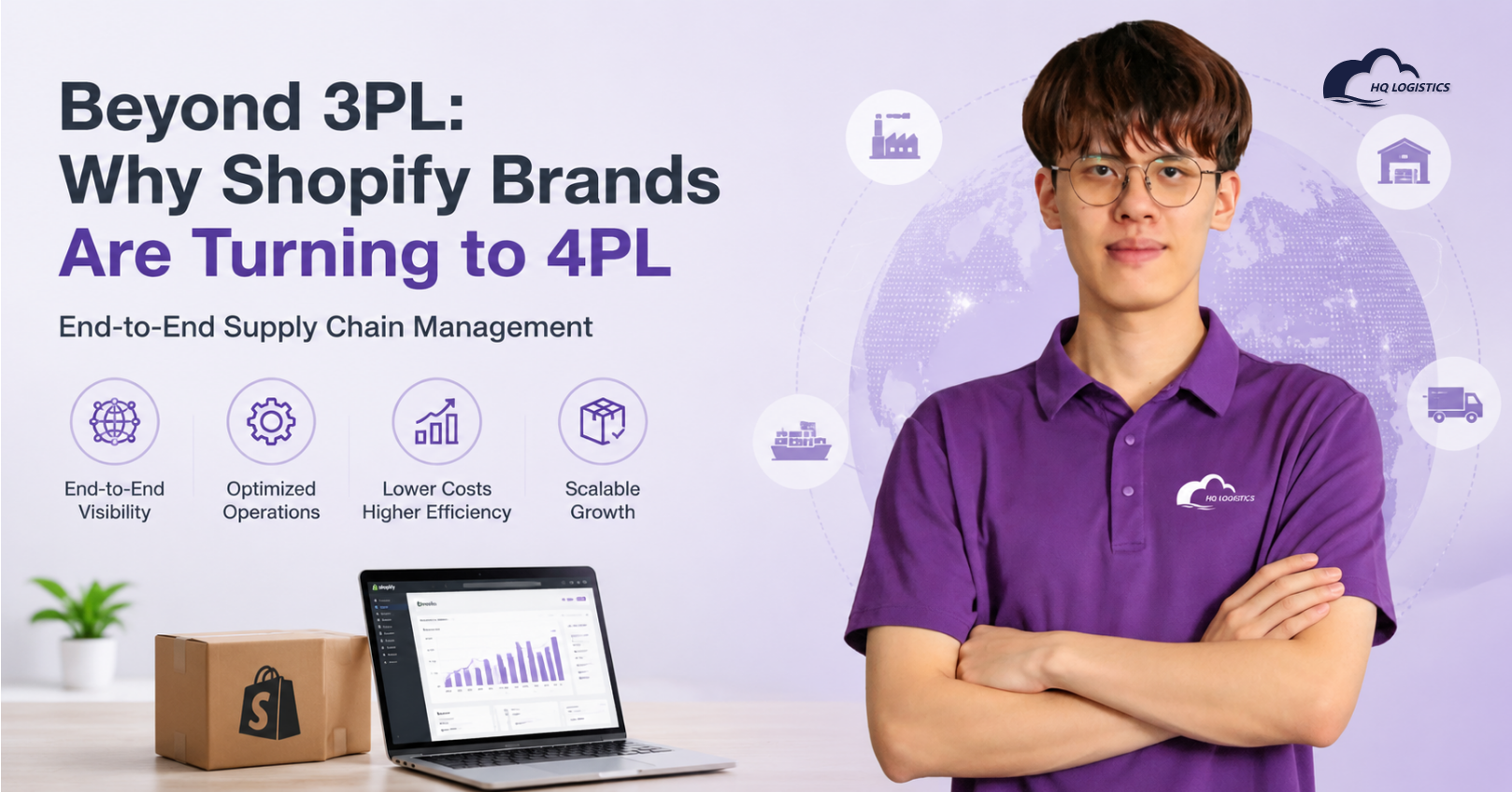
What Is 4PL Logistics?
Before understanding why brands are moving beyond 3PL, it helps to understand the difference.
A 3PL (Third-Party Logistics) provider typically handles operational logistics such as:
Inventory storage | Picking and packing | Order fulfillment | Shipping | Returns | Warehouse operations
Shopify describes third-party fulfillment in a similar way: a 3PL stores inventory and fulfills orders on behalf of the merchant, while Shopify provides tools to monitor inventory and fulfillment workflows.
A 4PL (Fourth-Party Logistics) provider goes one step further.
Instead of focusing primarily on one fulfillment operation, a 4PL coordinates multiple parts of the supply chain.
That can include:
Product sourcing | Supplier coordination | Inventory planning | Warehouse allocation | 3PL management | Shipping strategy | Carrier selection | Returns management | Technology integration | Supply chain optimization
The simplest way to think about it is:
3PL = Execute the logistics.
4PL = Manage the logistics ecosystem.
Shopify Enterprise similarly describes 4PL as a model where the provider manages and coordinates the merchant's logistics partners rather than simply performing fulfillment itself.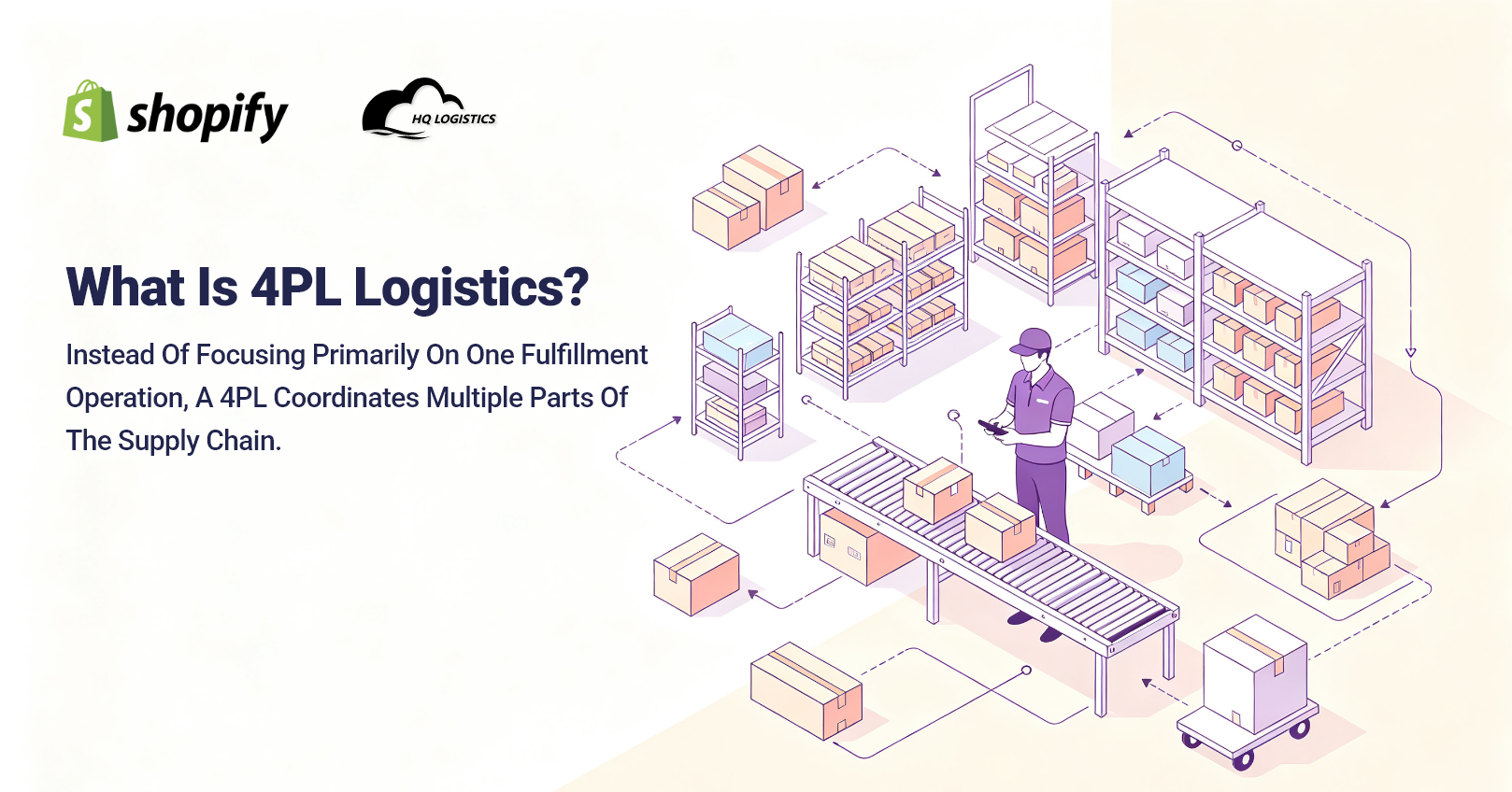
3PL vs. 4PL: What's the Real Difference?
The difference is not simply the number "3" versus "4."
It is about responsibility and visibility.
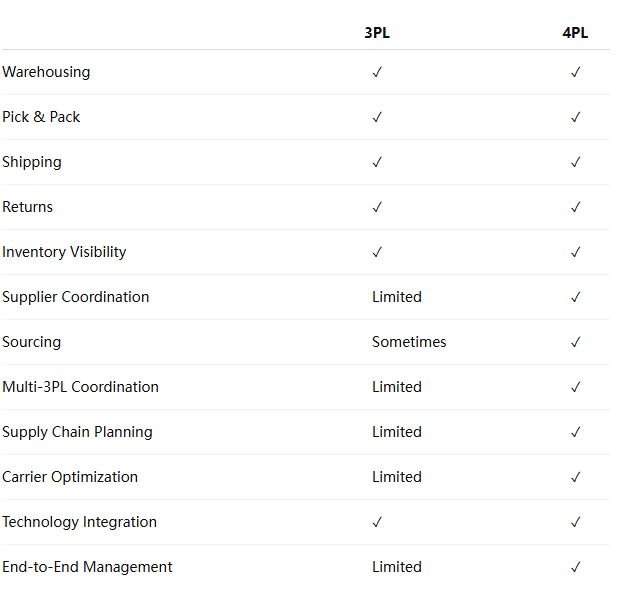
"How do we get this order shipped?"
A 4PL asks:
"What is the best way to move, store, source, and fulfill this product across the entire supply chain?"
That is a much broader question.
Why Shopify Brands Eventually Outgrow Traditional 3PL Services
A Shopify store can start relatively simply.
One store. A few winning products. One supplier. One warehouse. One shipping method. One fulfillment partner.
At this stage, a 3PL can be exactly what the business needs.
But growth changes the equation.
A brand may eventually have:
100+ SKUs | Multiple suppliers | Multiple sales channels | International customers | Multiple fulfillment locations | Seasonal demand spikes | Different shipping requirements | Custom packaging | Returns in different markets
Suddenly, fulfillment is only one part of the problem.
The bigger challenge becomes coordination.
Shopify itself now supports inventory across multiple locations, fulfillment apps, warehouses, and other fulfillment services, making inventory allocation and routing increasingly important as businesses scale.
This is where the 4PL model becomes more valuable.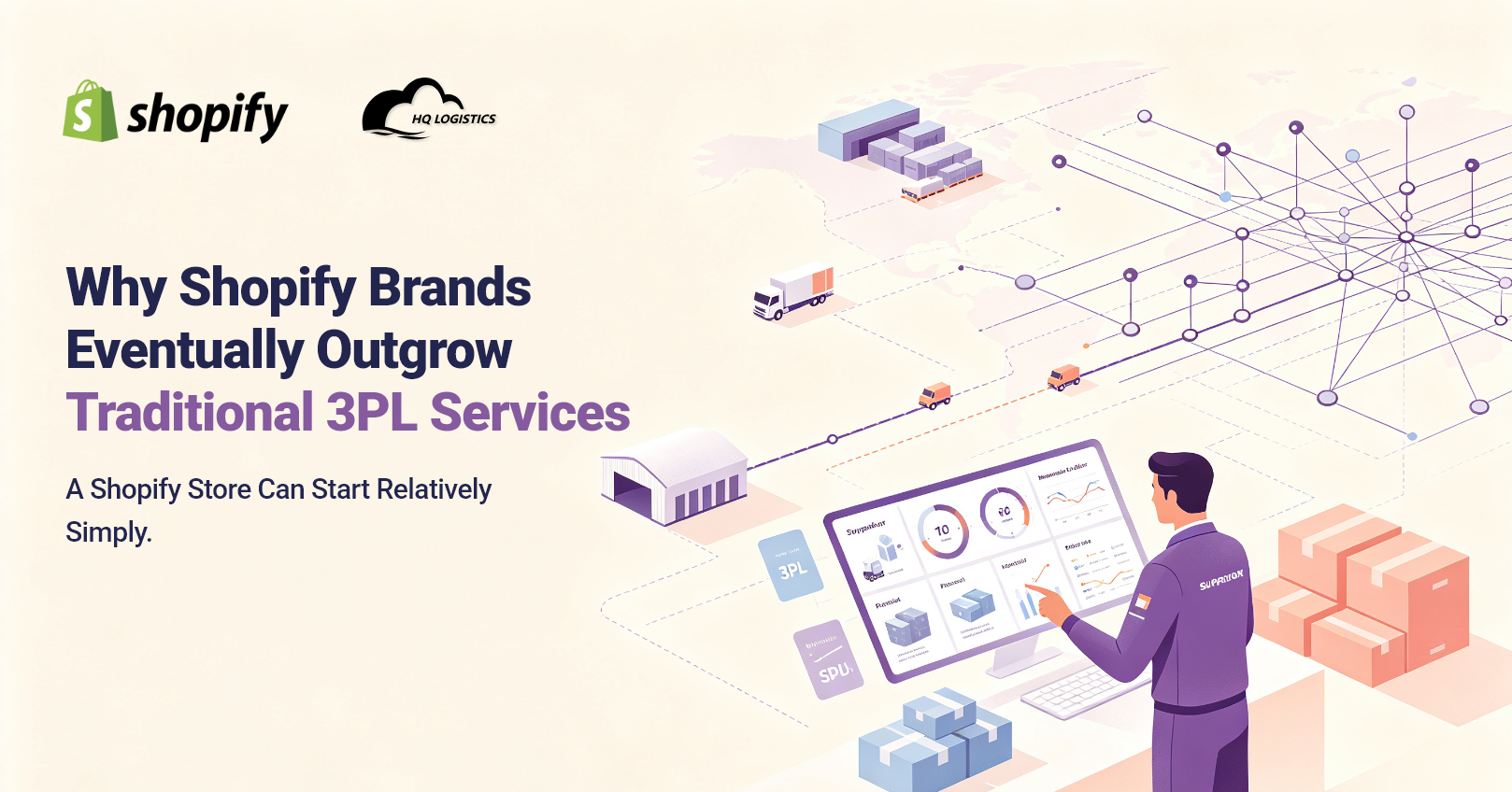
1. A 4PL Connects the Entire Supply Chain
One of the biggest problems for growing ecommerce brands is fragmentation.
A typical setup might look like this:
Supplier → Freight Forwarder → Warehouse → 3PL → Carrier → Customer
And the Shopify brand sits in the middle trying to coordinate everyone.
If something goes wrong, the brand has to figure out:
Who caused the delay? | Where is the inventory? | Which warehouse should fulfill the order? | Which carrier should be used? | When should the next purchase order be placed? | How much stock should be sent to each market?
A 4PL model changes the structure.
Instead of managing every partner separately:
Shopify Brand → 4PL Supply Chain Partner → Suppliers + Warehouses + Carriers + 3PLs + Technology
The 4PL becomes the central coordination layer.
That means the brand has fewer operational relationships to manage while gaining greater visibility across the supply chain.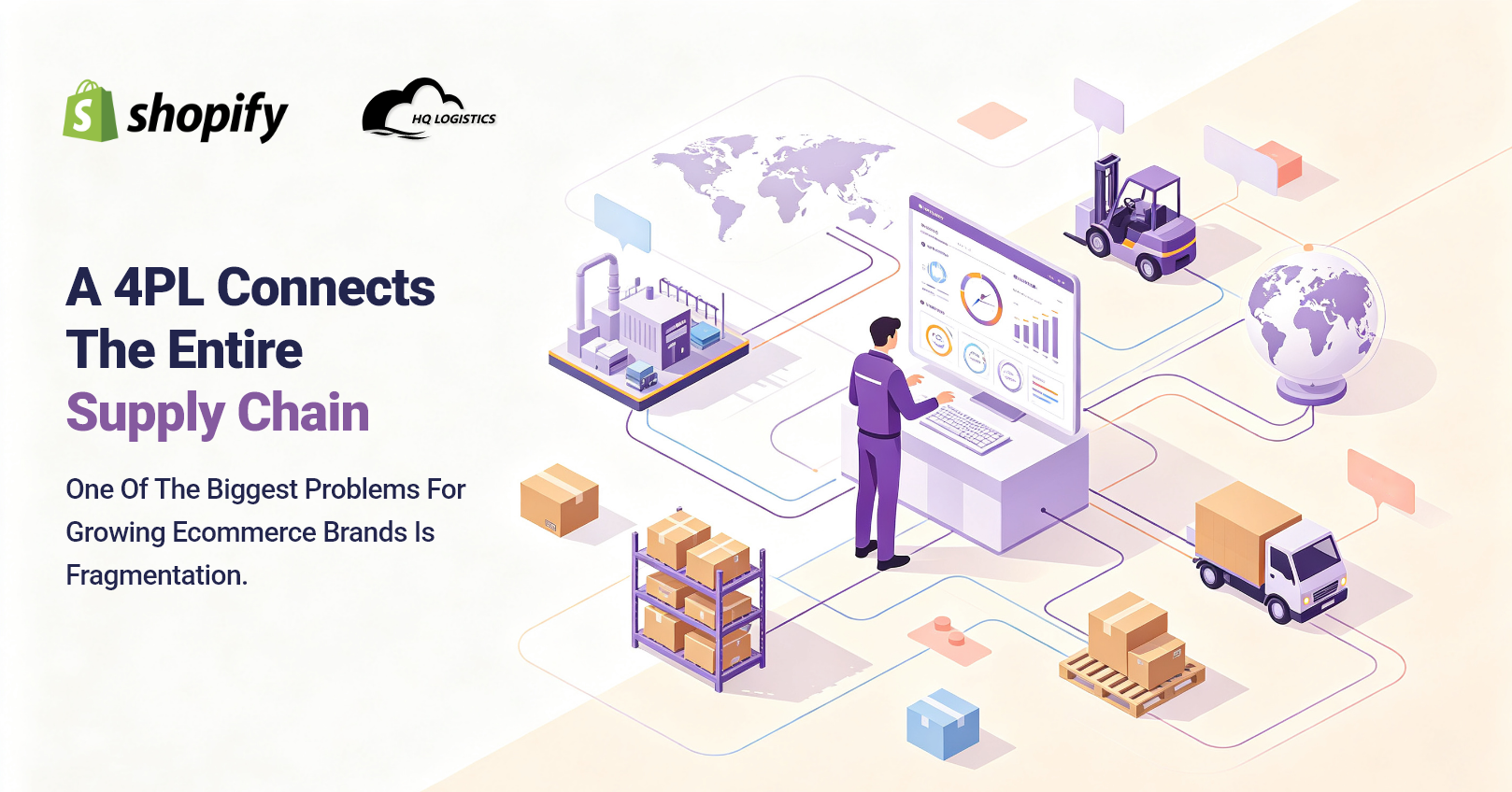
2. Inventory Management Becomes More Strategic
Inventory is one of the biggest challenges for growing Shopify brands.
Too much inventory means:
Cash tied up | Storage costs | Slow-moving stock
Too little inventory means:
Stockouts | Lost sales | Delayed fulfillment
The goal is not simply to have more inventory.
The goal is to have the right inventory in the right place at the right time.
Shopify's current inventory guidance emphasizes the importance of real-time visibility across locations, purchase orders, transfers, and fulfillment methods.
A 4PL can take this one step further by connecting inventory decisions with the broader supply chain.
For example:
If European sales are growing faster than expected, the solution may not simply be:
"Order more products."
Instead, the supply chain team might evaluate:
Current inventory | Supplier lead time | Ocean vs. air freight | European warehouse capacity | Current shipping costs | Expected demand | Safety stock | Upcoming promotions
The result is a more coordinated inventory strategy.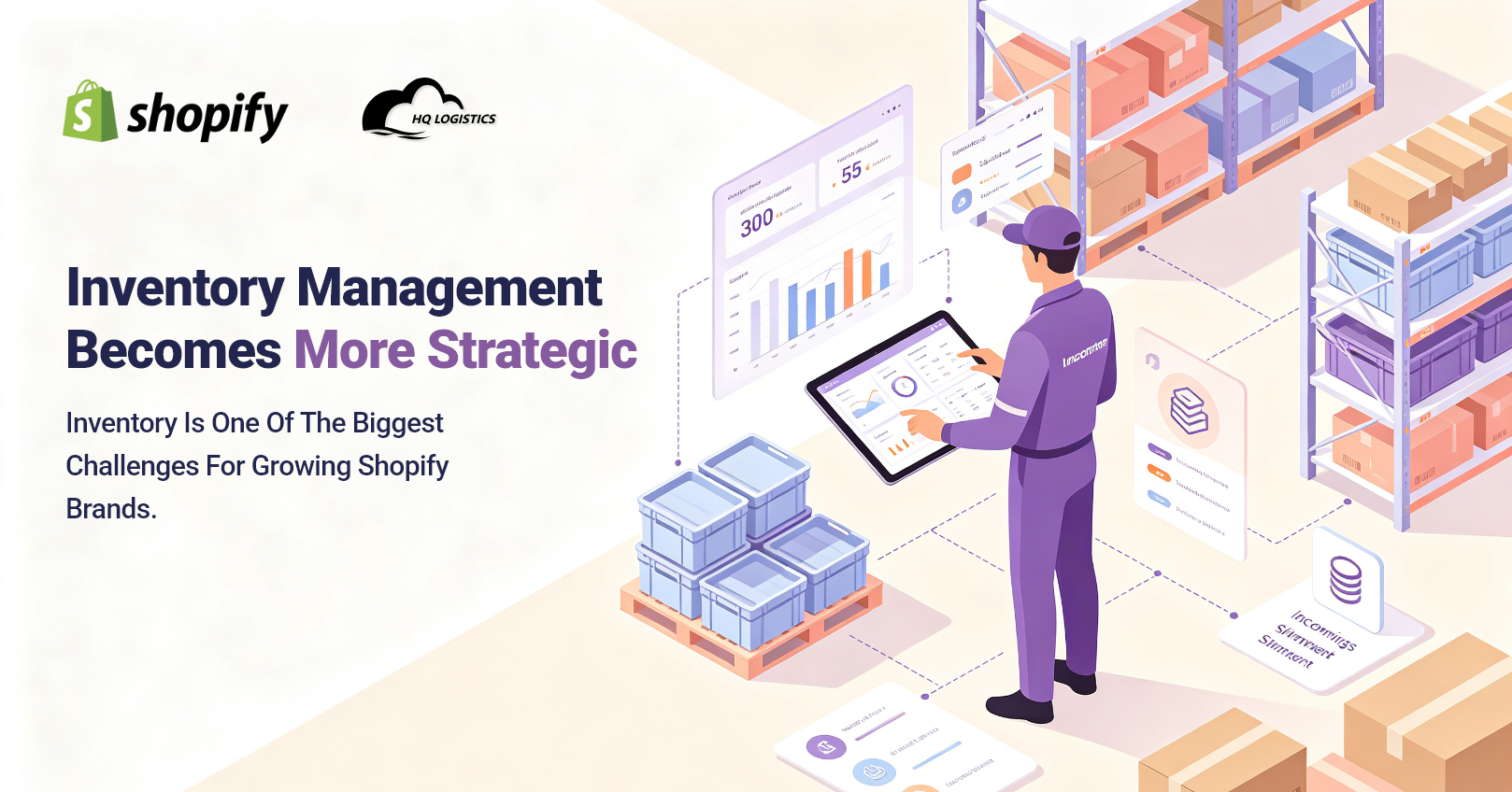
3. Sourcing and Fulfillment Can Work Together
This is particularly important for Shopify brands using China-based sourcing.
Traditional sourcing often looks like:
Find Product → Negotiate Price → Place Order → Ship to Warehouse
But the cheapest product price does not necessarily mean the lowest total cost.
Consider two products.
Product A
Product cost: $4 | Packaging: $1 | Shipping: $7
Total logistics cost: $12
Product B
Product cost: $5 | Packaging: $0.30 | Shipping: $4.50
Total logistics cost: $9.80
Product B costs more at the factory.
But it may be the better business decision.
This is why supply chain optimization should look beyond product cost.
A 4PL approach considers:
Product Cost + Packaging + Warehousing + Transportation + Fulfillment + Returns
This is closer to the real cost of getting a product into a customer's hands.
4. Multi-Warehouse Fulfillment Requires Better Coordination
As Shopify brands expand internationally, one warehouse may no longer be enough.
A brand could have:
China → sourcing and production
Europe → regional inventory
United States → US fulfillment
UK → local inventory
The challenge becomes deciding:
Where should each SKU be stored?
And:
Which warehouse should fulfill each order?
Shopify supports inventory across multiple locations and can use order-routing configurations to determine which location fulfills an order.
But the technology alone does not solve every supply chain decision.
Brands still need a strategy for:
Inventory allocation | Replenishment | Shipping costs | Delivery speed | Warehouse capacity | Regional demand
A 4PL can connect these decisions instead of treating each warehouse as a separate operation.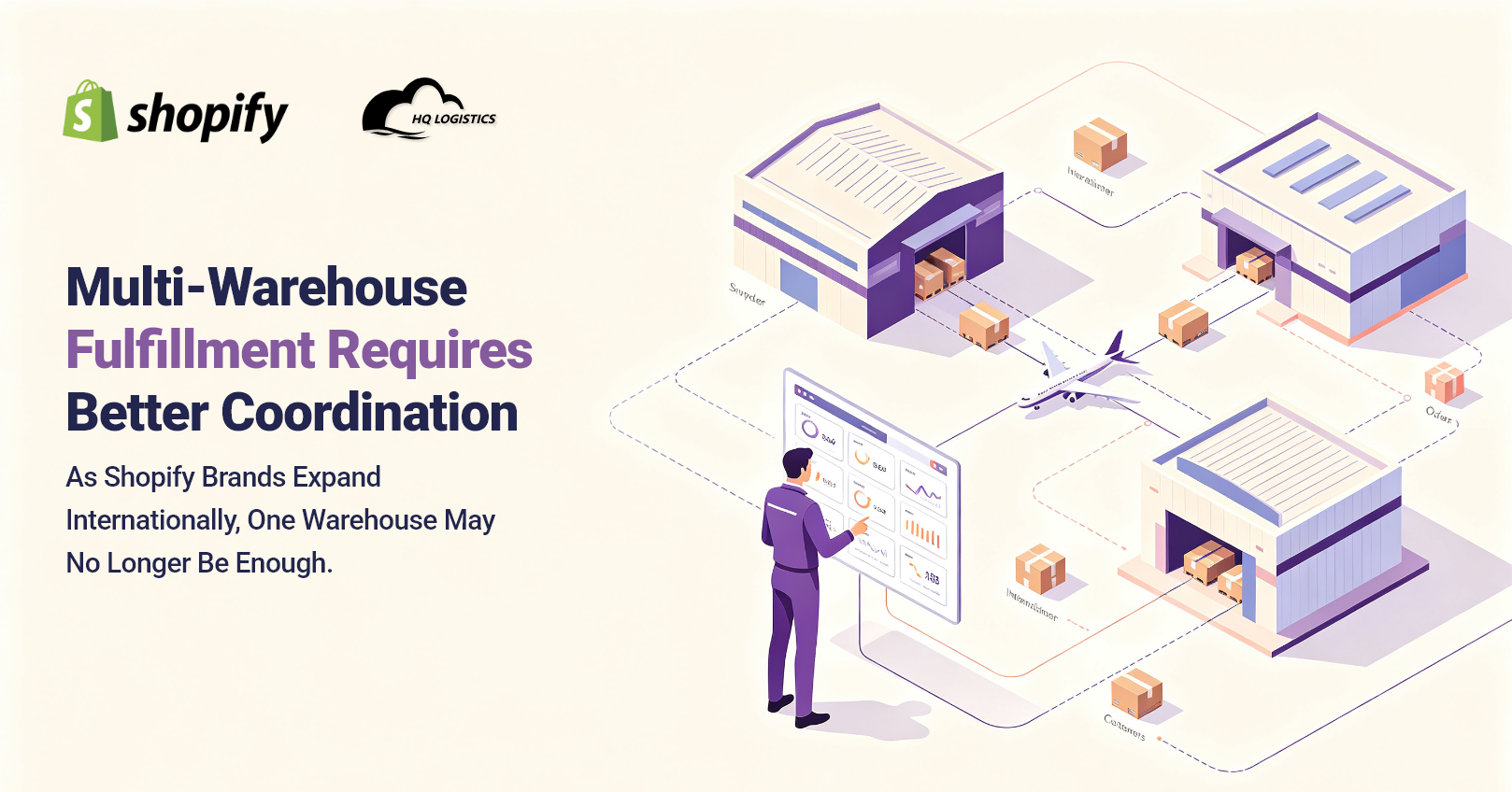
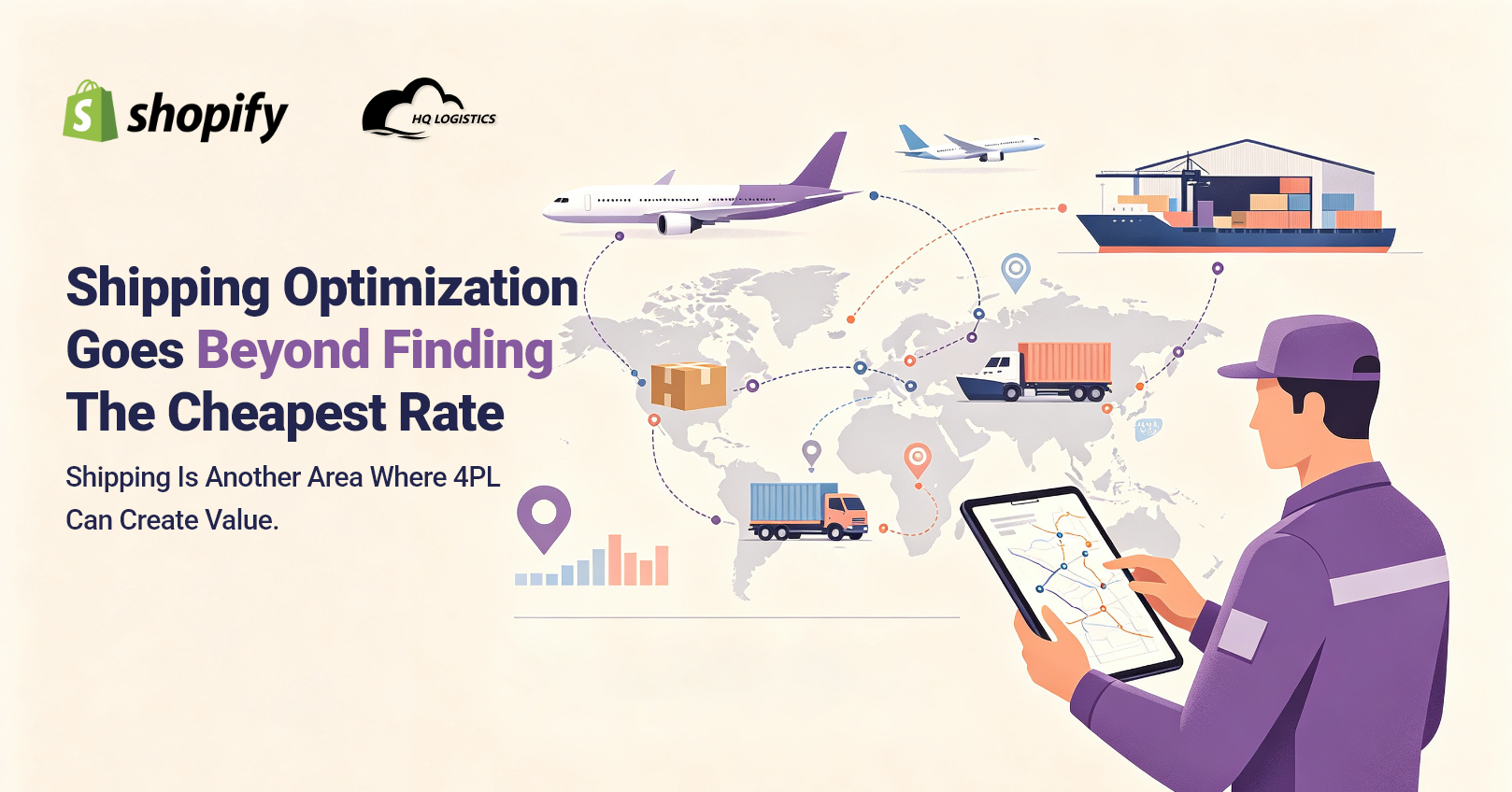
5. Shipping Optimization Goes Beyond Finding the Cheapest Rate
Shipping is another area where 4PL can create value.
A growing brand may use several shipping methods:
Express | Air freight | Sea freight | DDP | Local delivery | Postal services | Regional carriers
The cheapest shipping option is not always the best option.
For a high-value product, speed may matter more.
For a low-margin product, cost may be the priority.
For a European order, customs and duties may influence the best route.
For a seasonal product, delivery reliability may matter more than saving a small amount per shipment.
A 4PL looks at these variables together.
The objective is not:
Find the cheapest shipping method.
It is:
Find the most efficient logistics strategy for the product, market, and customer expectation.
6. Technology Becomes the Supply Chain's Single Source of Truth
As a business grows, data fragmentation becomes another major problem.
Orders are in Shopify. Inventory may be in a WMS. Supplier information may be in spreadsheets. Shipping data may be in carrier systems. Purchase orders may be handled separately. Returns may use another platform.
This creates information gaps.
A modern 4PL model should connect these systems so that information flows between them.
Shopify → Order Data → ERP / OMS → Inventory Allocation → WMS → Picking & Packing → Carrier Network → Tracking → Customer
Shopify already provides tools for inventory, order management, fulfillment, routing, and integrations with external fulfillment services.
The opportunity for a 4PL is to connect those operational systems into a broader supply chain workflow.
7. Returns Should Be Part of the Supply Chain
Many brands think about logistics as:
Supplier → Customer
But the real supply chain is:
Supplier → Warehouse → Customer → Return → Inspection → Restock / Replacement / Disposal
Returns can create hidden costs.
A returned product may:
Sit in a warehouse | Require inspection | Need repackaging | Become unsellable | Need to be returned to a supplier | Be restocked in another market
Without a coordinated reverse-logistics process, inventory can exist physically but remain unavailable for sale.
Shopify's inventory guidance also highlights returns as a factor that can create gaps between physical stock and sellable inventory.
A 4PL approach treats reverse logistics as part of the overall supply chain—not an afterthought.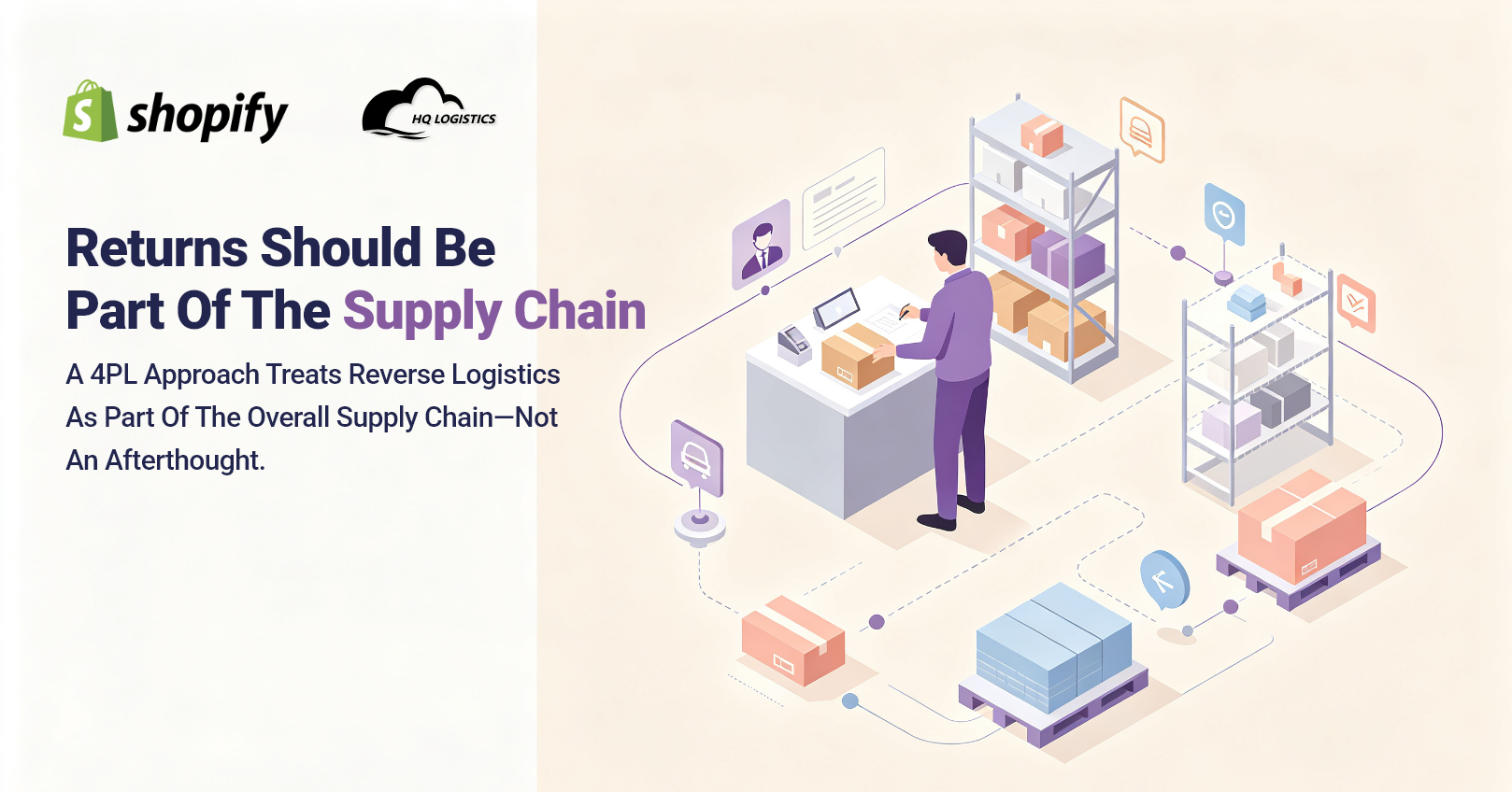
When Should a Shopify Brand Consider Moving From 3PL to 4PL?
Not every business needs a 4PL.
If you are:
Selling a small number of SKUs | Using one warehouse | Working with one supplier | Shipping primarily to one market | Managing a relatively simple operation
A 3PL may be enough.
But a 4PL becomes more attractive when complexity starts increasing.
Consider 4PL if you have:
Multiple Suppliers
You are working with several factories and need someone to coordinate sourcing, production, quality control, and replenishment.
Multiple Warehouses
Your inventory is distributed across different countries or regions.
Multiple Sales Channels
You sell through Shopify, Amazon, TikTok Shop, marketplaces, wholesale, or retail.
Rapid SKU Growth
Your catalog is becoming too complex to manage manually.
International Expansion
You need different shipping routes, customs solutions, and fulfillment strategies for different markets.
Rising Logistics Costs
You know your logistics costs are increasing but cannot clearly identify where the money is going.
Too Many Logistics Partners
Your team spends too much time communicating with warehouses, carriers, sourcing agents, and freight providers.
That is often the point where a 4PL model starts making sense.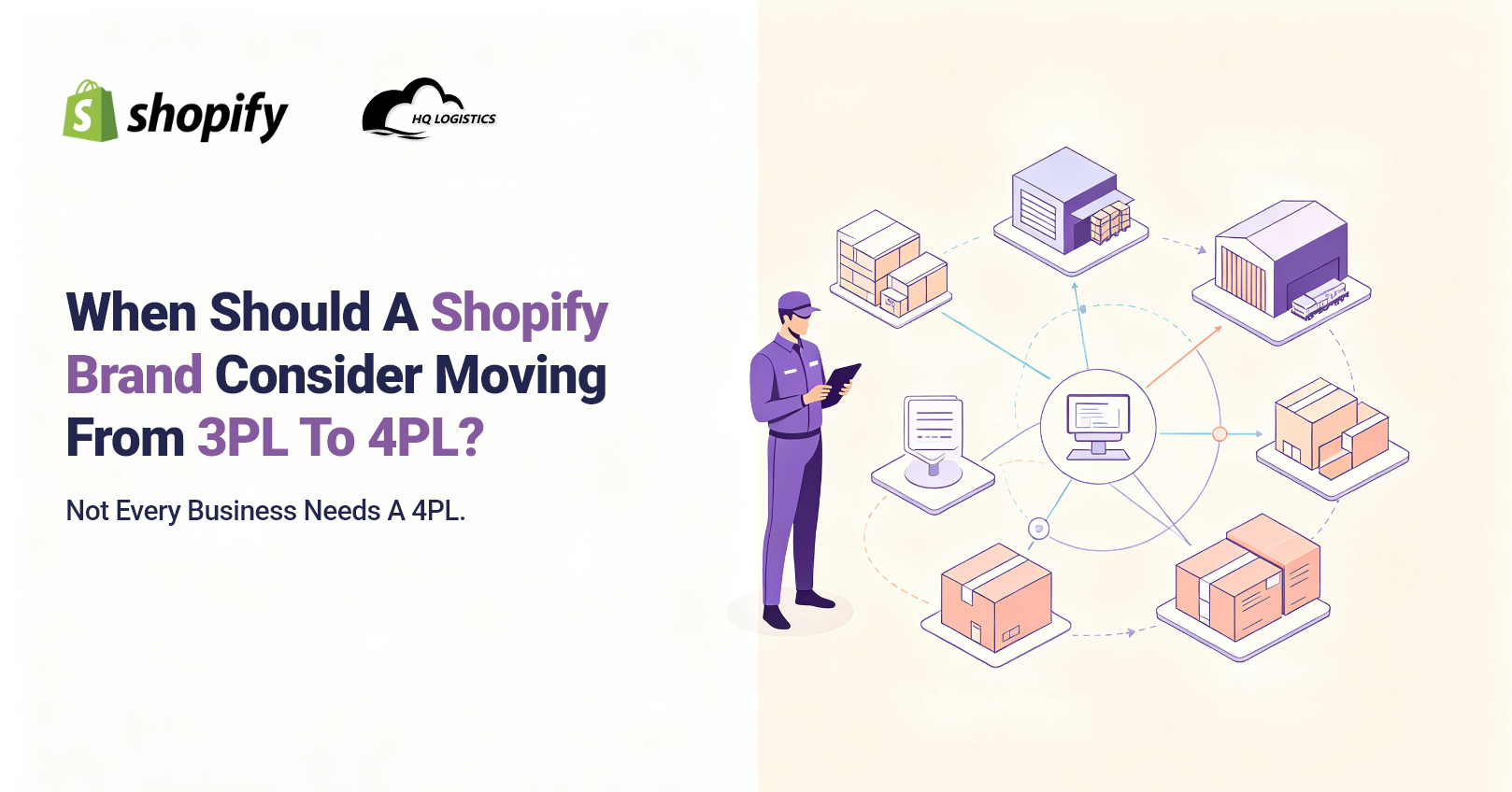
What Does a 4PL Supply Chain Look Like?
A well-designed 4PL ecosystem can look like this:
Shopify Store | Order & Inventory Data | 4PL Supply Chain Management | Sourcing | Quality Control | Inventory Planning | Warehousing | Fulfillment | International Shipping | Customs | Returns | Customer
Instead of asking the brand owner to manage each piece independently, the 4PL coordinates the system as a whole.
The brand can then focus more of its time on:
Product | Marketing | Customer Experience | Growth
3PL vs. 4PL: Which One Is Right for Your Shopify Brand?
The answer depends on your stage.
Choose 3PL if:
You mainly need someone to:
Store inventory | Pick orders | Pack products | Ship packages | Process returns
Consider 4PL if:
You need someone to:
Coordinate multiple suppliers | Manage multiple logistics partners | Optimize inventory | Plan warehouse allocation | Optimize shipping routes | Connect technology systems | Manage sourcing and fulfillment together | Build an end-to-end supply chain strategy
In simple terms:
3PL helps you outsource logistics.
4PL helps you outsource supply chain complexity.
Why the 4PL Model Matters for Growing Shopify Brands
The biggest advantage of 4PL is not simply having more services.
It is having one strategic layer connecting those services.
A Shopify brand may already have:
A warehouse | A sourcing agent | A freight forwarder | A shipping company | A WMS | An ERP | A returns provider
The problem is that having more providers does not automatically create a better supply chain.
Someone needs to coordinate them.
That is the role of a 4PL.
As Shopify brands expand into more markets, add more products, and distribute inventory across more locations, the supply chain becomes increasingly interconnected. Shopify itself has expanded its tools around multi-location inventory, smart order routing, fulfillment integrations, and inventory automation to support this growing complexity.
The next stage is not simply more logistics providers.
It is better coordination between them.
From Fulfillment Provider to Supply Chain Partner
The future of ecommerce logistics is moving beyond “we store and ship your products.”
The more valuable question is: how can we make your entire supply chain more efficient?
Source → Produce → Inspect → Store → Allocate → Fulfill → Ship → Deliver → Return → Replenish
When all of these stages are connected, brands can reduce unnecessary inventory, improve shipping efficiency, react faster to demand changes, simplify international expansion, and create a more consistent customer experience.
That is the real value of moving beyond 3PL.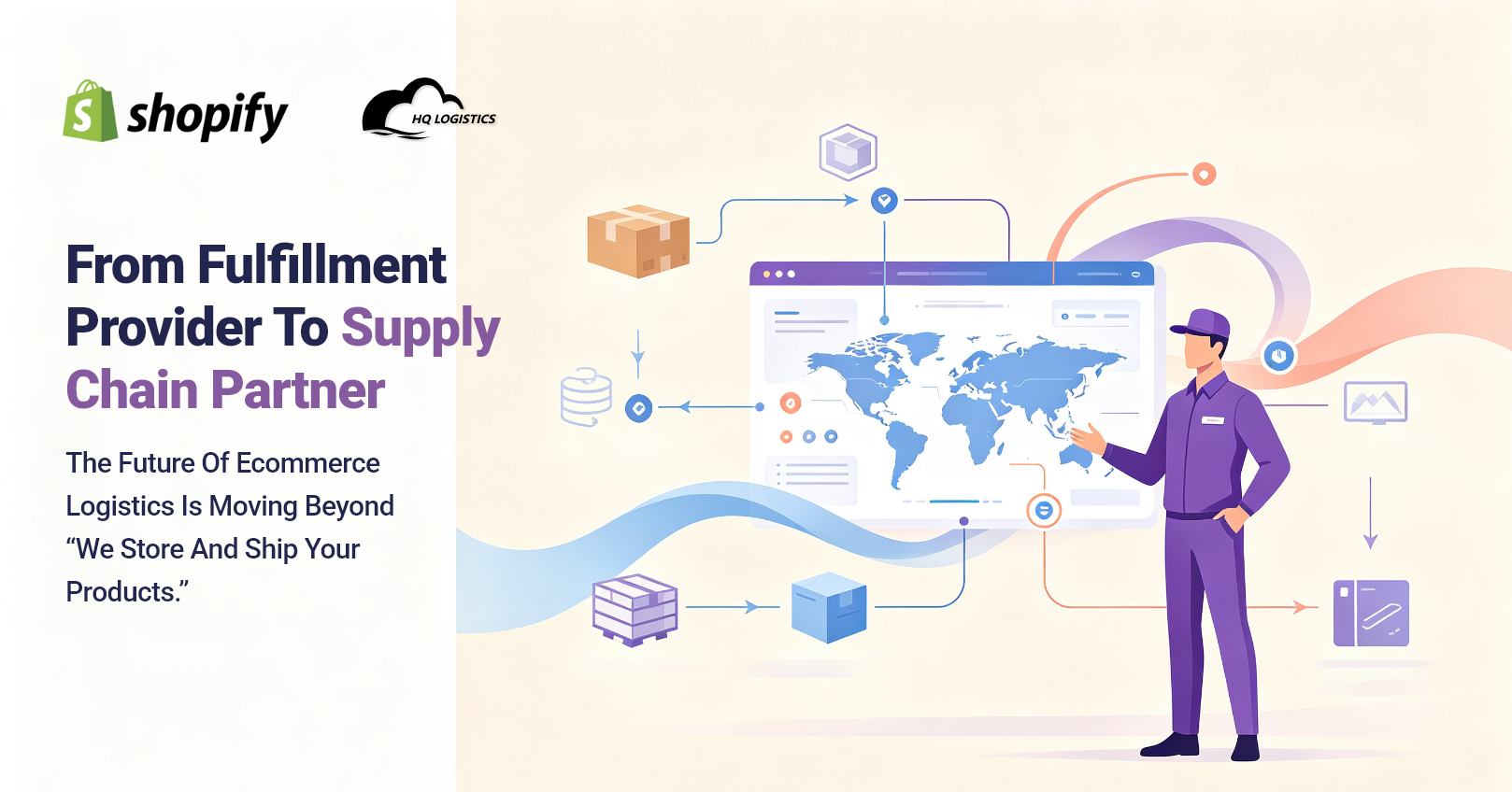
How HQ LOGISTICS Supports the 4PL Model
At HQ LOGISTICS, we believe fulfillment should be more than simply picking, packing, and shipping orders.
For growing ecommerce and Shopify brands, we connect key parts of the supply chain through one operational partner.
Our approach can include:
Product Sourcing
Find and coordinate suitable suppliers based on product requirements, cost, quality, and scalability.
Quality Control
Inspect products before they enter the fulfillment process and provide real product photos when required.
Warehousing
Store inventory and organize products for efficient fulfillment.
Order Fulfillment
Automatically obtain and process Shopify orders through integrated systems.
Custom Packaging
Support branded packaging, inserts, labels, and other customized fulfillment requirements.
Global Shipping
Connect products with international shipping solutions based on destination, cost, and delivery requirements.
Real-Time Tracking
Sync tracking information back to ecommerce systems so brands and customers can follow shipments.
Supply Chain Coordination
Bring sourcing, inventory, fulfillment, and shipping into one connected workflow.
The goal is simple:
One partner. One supply chain. Less operational complexity.
Final Thoughts: The Next Step Beyond 3PL
3PL remains an important part of ecommerce logistics.
For many Shopify brands, it is the right place to start.
But growth creates complexity.
More SKUs. More suppliers. More warehouses. More markets. More shipping options. More technology. More logistics partners.
At that point, the biggest challenge is no longer fulfillment.
It is coordination.
That is why more growing brands are looking beyond traditional 3PL models and considering 4PL for end-to-end supply chain management.
The future is not about adding more logistics providers.
It is about making the entire supply chain work as one system.
Beyond 3PL, the goal is not just better fulfillment. It is a smarter, more connected supply chain.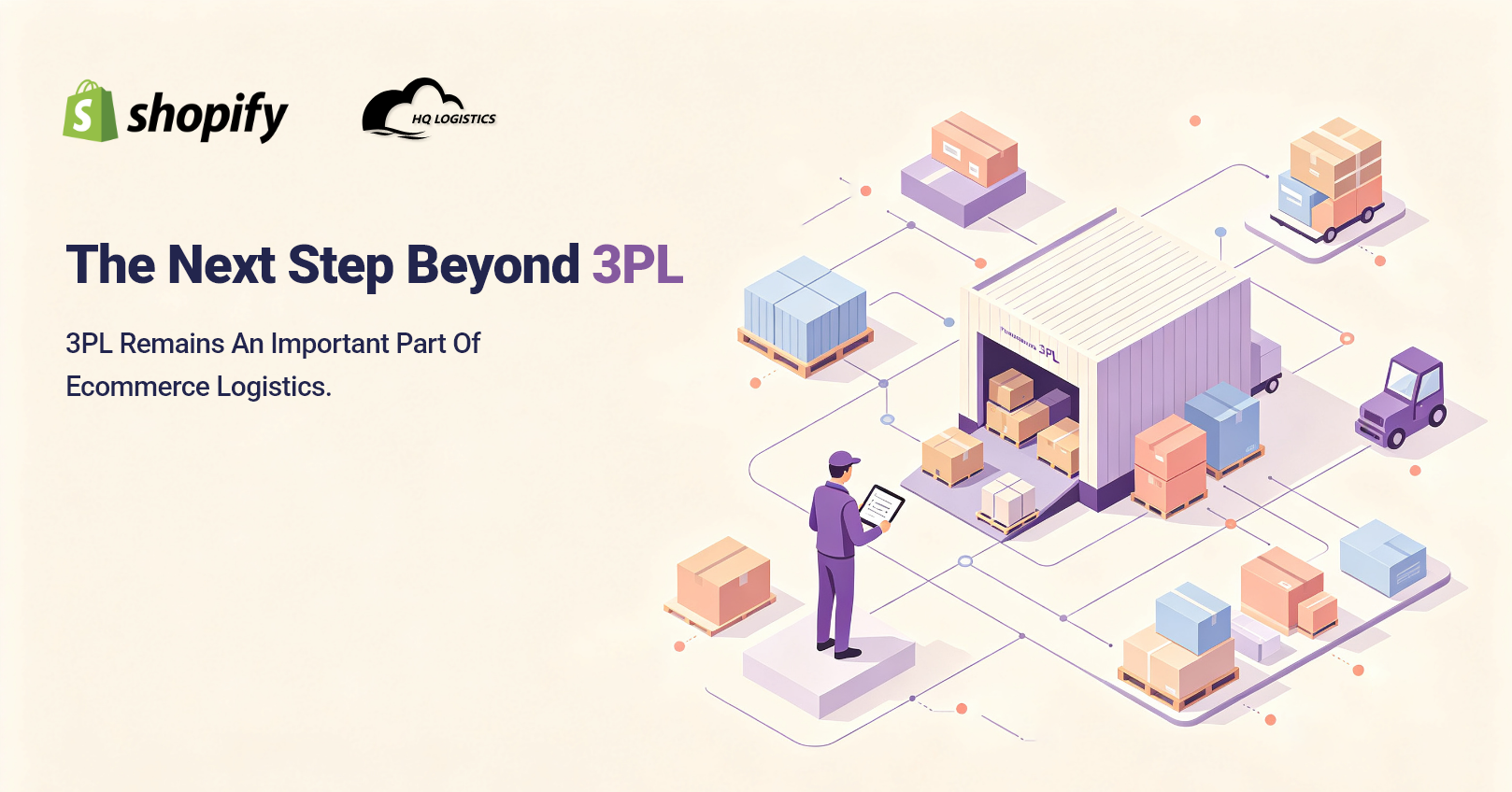
FAQ
What is the difference between 3PL and 4PL?
A 3PL primarily executes logistics operations such as warehousing, picking, packing, and shipping. A 4PL coordinates multiple logistics providers and supply chain functions, including sourcing, inventory planning, transportation, fulfillment, and technology.
Is 4PL better than 3PL?
Not necessarily. A 3PL may be the better choice for a simple operation. 4PL becomes more valuable when a brand has multiple suppliers, warehouses, markets, carriers, or complex logistics workflows.
When should a Shopify brand consider 4PL?
When logistics becomes difficult to manage internally. Multiple warehouses, international expansion, growing SKU counts, multiple suppliers, and rising logistics costs are common signals that a 4PL model may be useful.
Can a 4PL manage multiple 3PL providers?
Yes. One of the key roles of a 4PL is coordinating different logistics partners and creating a unified supply chain strategy.
Does 4PL include fulfillment?
It can. Fulfillment is one component of a broader 4PL supply chain model. The key difference is that 4PL looks beyond fulfillment and coordinates the processes surrounding it.