From 3PL to 4PL: 7 Ways Growing Ecommerce Brands Can Scale Smarter
From 3PL to 4PL: 7 Ways Growing Ecommerce Brands Can Scale Smarter
For a growing ecommerce brand, logistics often starts simple.
Products are sourced from suppliers, sent to a warehouse, picked and packed, and delivered to customers.
At this stage, a traditional 3PL (Third-Party Logistics) partner can be enough.
But growth changes the equation.
More orders mean more inventory. More markets mean more warehouses. More suppliers mean more coordination. And customers increasingly expect faster, more reliable delivery.
At some point, the challenge is no longer just fulfillment.
It becomes supply chain management.
That is where the transition from 3PL to 4PL can help ecommerce brands build a more scalable operation.
Here are 7 ways 4PL can help growing ecommerce brands scale smarter.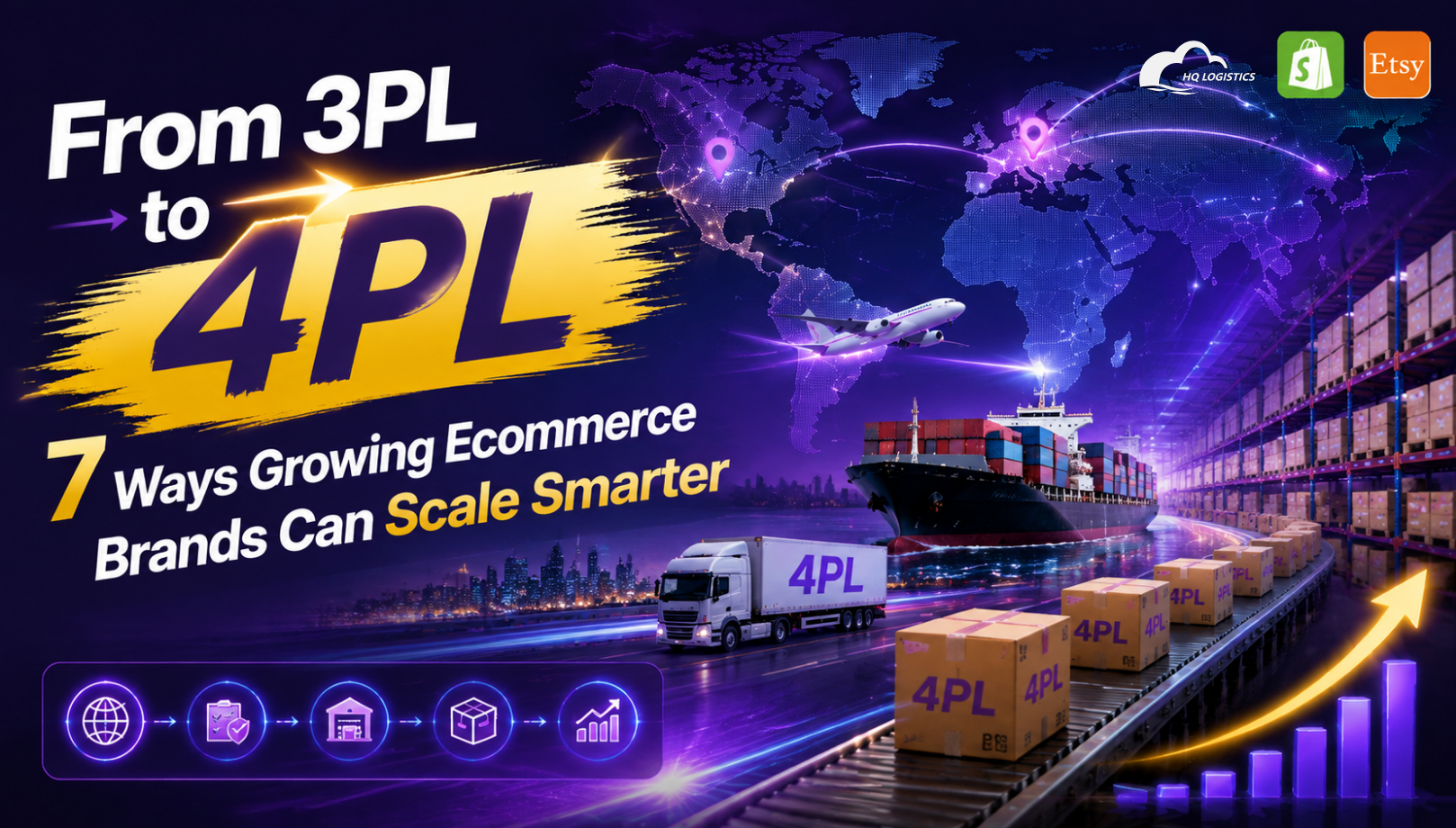
What Is the Difference Between 3PL and 4PL?
Before looking at the benefits, it is important to understand the difference.
A traditional 3PL generally focuses on logistics operations such as:
Warehousing | Picking | Packing | Shipping | Returns
A 4PL takes a broader approach.
Instead of managing only warehouse operations, a 4PL can coordinate:
Sourcing → Inventory Planning → Transportation → Warehousing → Fulfillment → Last-Mile Delivery
In simple terms:
3PL = Execute Logistics
4PL = Coordinate the Supply Chain
This doesn't mean 3PL is outdated.
For many brands, 3PL remains an effective solution for straightforward warehousing and fulfillment.
But when a brand has multiple suppliers, markets, warehouses, and logistics channels, a 4PL model can provide a more connected approach.
1. Connect Sourcing With Fulfillment
One of the biggest advantages of a 4PL approach is connecting upstream and downstream operations.
A traditional fulfillment setup may start when inventory arrives at the warehouse.
But ecommerce supply chain problems often start much earlier.
For example:
Supplier Delays → Late Inventory → Warehouse Stockout → Order Delays → Customer Complaints
A 4PL approach looks at the entire chain.
The process can become:
Sourcing → Supplier Coordination → Production → Quality Control → Inventory Planning → Fulfillment
This allows brands to consider fulfillment requirements when making sourcing and inventory decisions.
The goal is not simply to find a supplier.
It is to build a supply chain that can reliably support customer demand.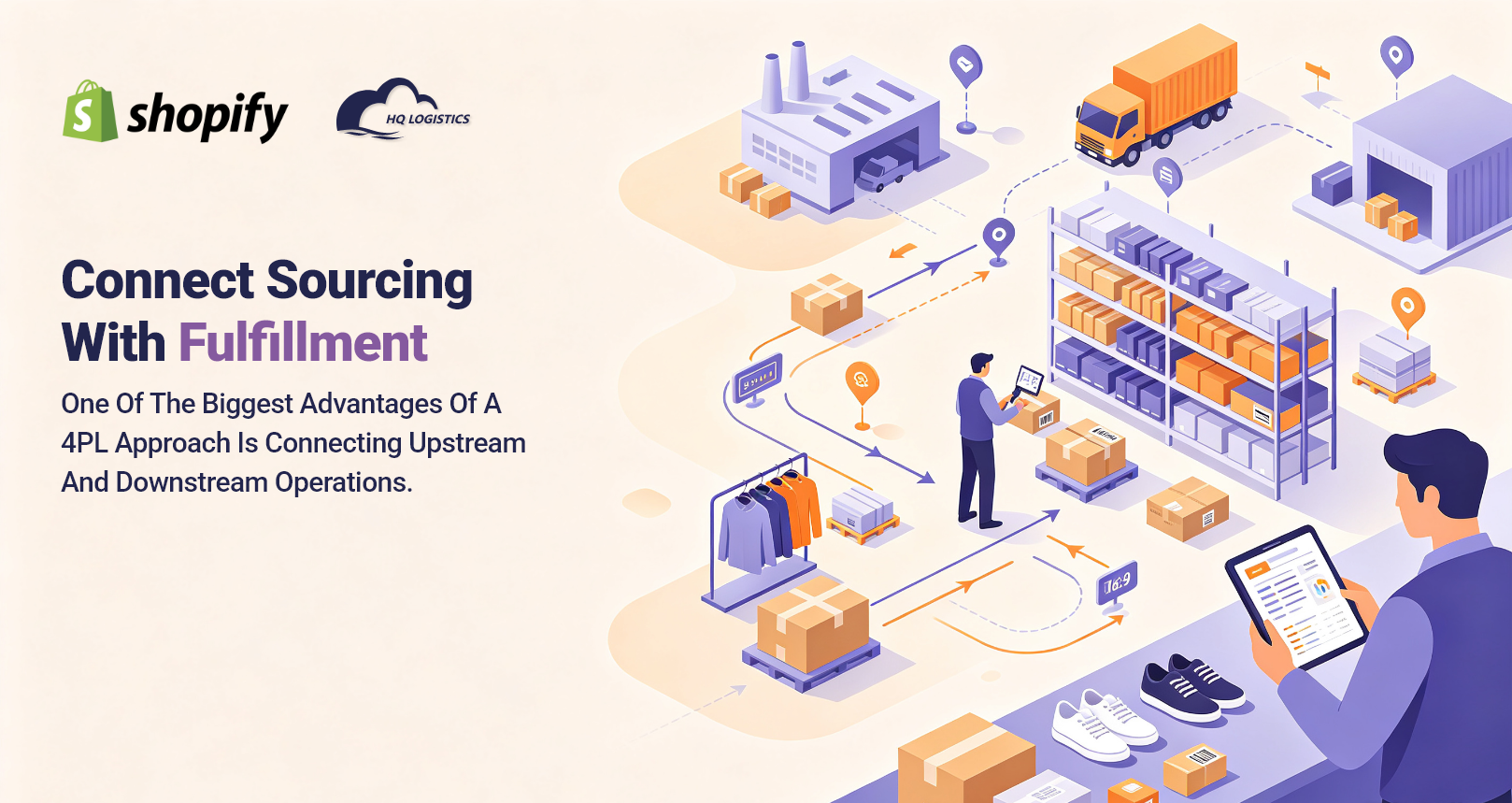
2. Optimize Inventory Across Multiple Locations
As ecommerce brands expand internationally, one warehouse may no longer be enough.
A growing brand may eventually need:
China Warehouse | US Warehouse | EU Warehouse | UK Warehouse
But simply adding warehouses does not automatically improve the supply chain.
The real question is:
How much inventory should be stored in each location?
A 4PL approach can help brands allocate inventory based on:
Customer Demand | Sales History | SKU Performance | Shipping Time | Replenishment Lead Time
For example:
US Demand → US Warehouse
European Demand → EU Warehouse
Product Testing → China Warehouse / Direct Shipping
This creates a more flexible inventory network.
3. Move From Reactive to Proactive Inventory Planning
A common ecommerce problem is reacting to stockouts.
When inventory reaches zero, the brand places another order.
But by then, it may already be too late.
A smarter approach is:
Sales Data → Demand Forecast → Inventory Plan → Replenishment → Warehouse Allocation
For example, if a product consistently sells 1,000 units per month and the replenishment cycle takes six weeks, the brand needs to consider future demand—not just today's inventory.
This becomes even more important during:
Black Friday | Cyber Monday | Christmas | Seasonal Campaigns | Product Launches
4PL supply chain management helps brands think ahead instead of constantly reacting to inventory problems.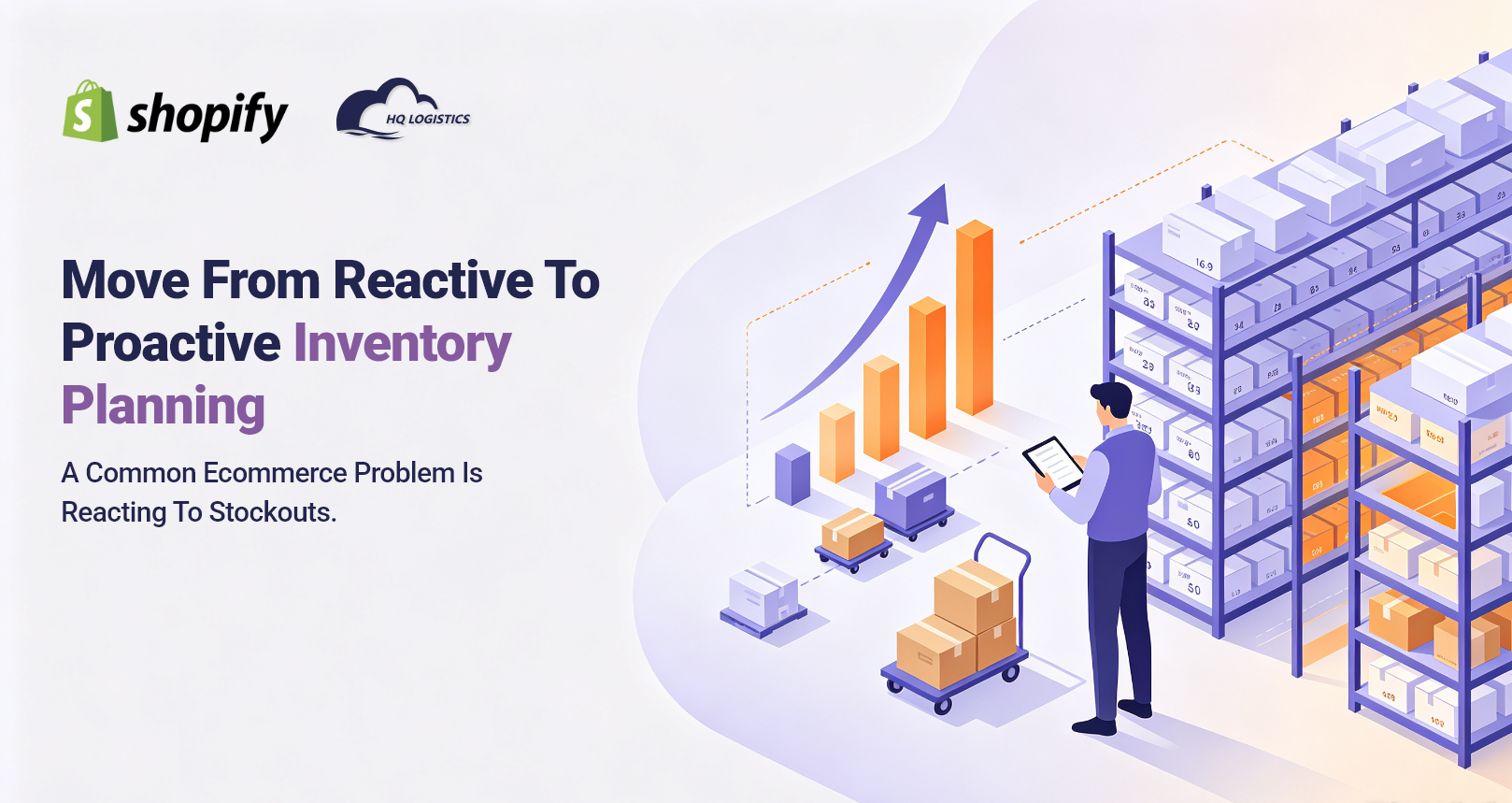
4. Improve International Shipping and Logistics
Shipping from China to global customers involves multiple decisions.
Brands need to consider:
Shipping Route | Transportation Mode | Cost | Transit Time | Customs | Destination | Order Volume
For low-volume orders, direct international shipping may be appropriate.
For proven best sellers, bulk transportation to an overseas warehouse may be more efficient.
For example:
China Sourcing → Bulk Transportation → US Warehouse → Domestic Fulfillment
or:
China Sourcing → Bulk Transportation → EU Warehouse → European Fulfillment
A 4PL partner can help coordinate these different logistics options instead of treating every order as an independent shipment.
5. Use Overseas Warehousing to Improve Delivery
Fast delivery is becoming increasingly important for ecommerce brands.
Customers may be willing to wait longer when purchasing from a new store, but established brands often need to provide a more predictable delivery experience.
This is where overseas warehousing becomes valuable.
Instead of:
China → Customer
brands can use:
China → US/EU Warehouse → Customer
Once inventory is positioned closer to customers, local fulfillment can help improve:
Delivery Speed | Tracking Experience | Order Processing | Customer Satisfaction
For growing brands, the key is not to move everything overseas.
Start with:
Best Sellers | High-Demand Products | Stable SKUs
Then expand based on actual sales performance.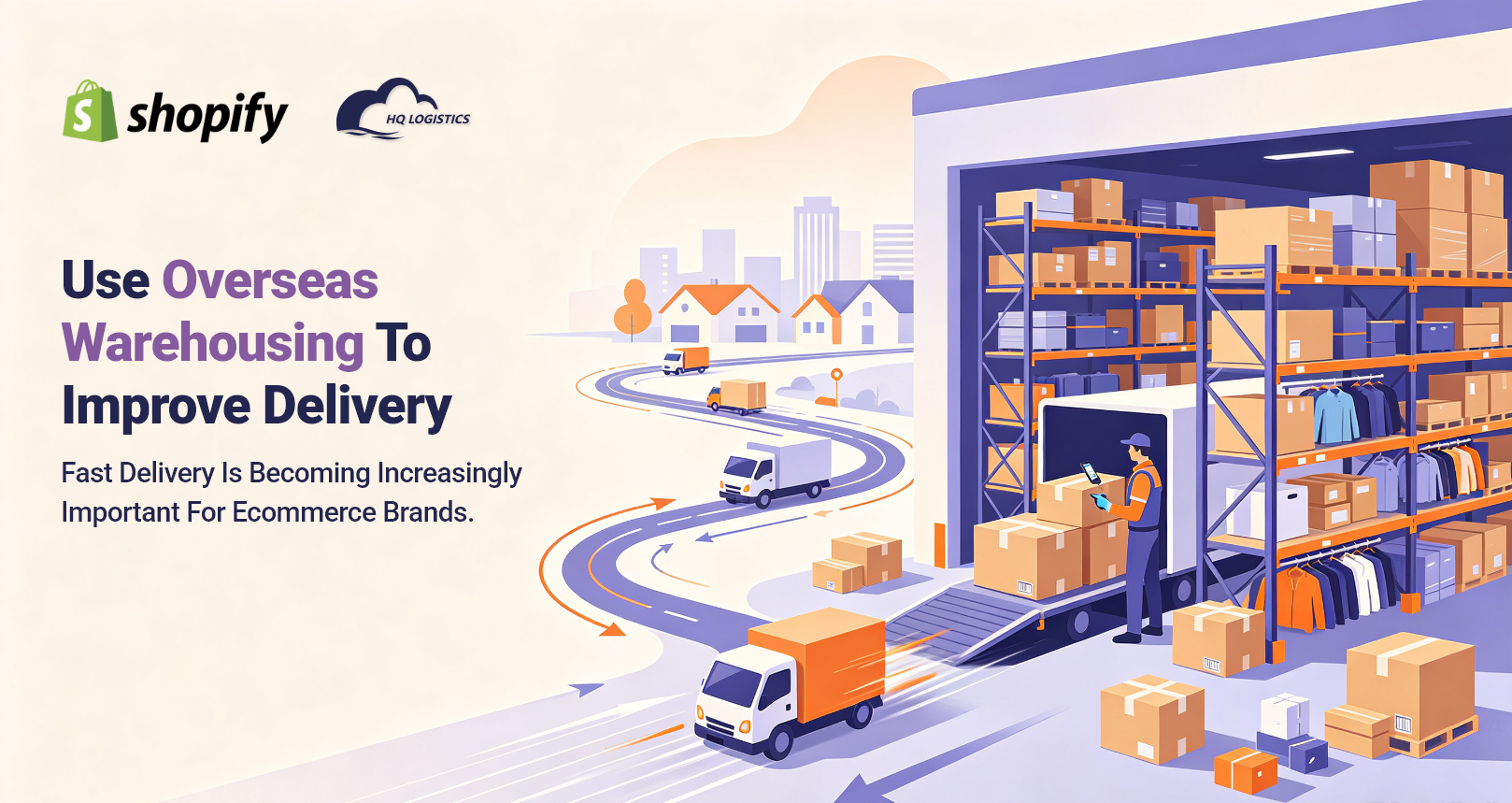
6. Reduce the Complexity of Managing Multiple Partners
As a brand grows, it may work with:
Multiple Suppliers
Shipping Providers
Warehouses
Customs Brokers
Fulfillment Centers
Technology Platforms
Managing all of these independently can create communication gaps.
For example:
Supplier says inventory shipped.
Freight provider says shipment is delayed.
Warehouse has not received the goods.
Customer orders the product.
Inventory system still shows stock available.
A 4PL model can provide a central layer of coordination between different supply chain partners.
Instead of the brand managing every logistics relationship separately, the 4PL partner helps connect the different parts.
This can reduce operational complexity as the business grows.
7. Turn Logistics Into a Growth Strategy
The biggest difference between 3PL and 4PL is the mindset.
A 3PL primarily helps answer:
“How do we fulfill this order?”
A 4PL asks:
“How should the entire supply chain be designed to support growth?”
That includes questions such as:
Where should products be sourced?
Which suppliers should be prioritized?
How much inventory should be ordered?
Which products should go to overseas warehouses?
Which market should receive inventory first?
Which shipping route should be used?
When should inventory be replenished?
These decisions directly affect:
Cost | Delivery Speed | Inventory Turnover | Customer Experience | Scalability
That is why 4PL can become more valuable as the ecommerce business becomes more complex.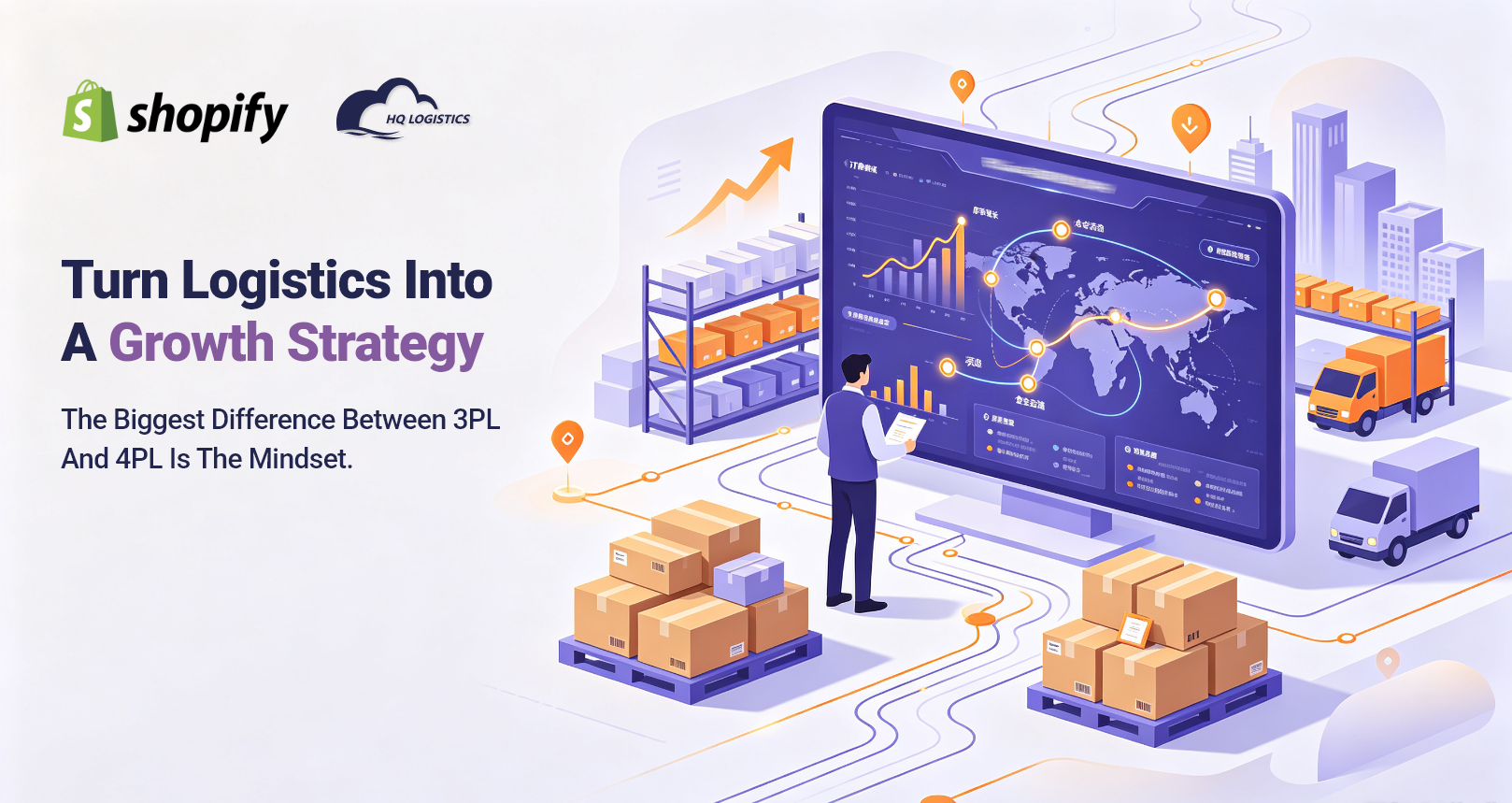
When Should an Ecommerce Brand Move From 3PL to 4PL?
Not every brand needs 4PL from day one.
A traditional 3PL may be perfectly suitable when you have:
Limited SKUs | One Main Market | One Warehouse | Simple Fulfillment Requirements
But a 4PL model becomes more attractive when you have:
Multiple Suppliers
Multiple Markets
Multiple Warehouses
Growing Order Volume
Complex Inventory
International Shipping
Frequent Stockouts
Peak-Season Demand
Increasing Logistics Costs
If your team is spending more time coordinating logistics than growing the business, it may be time to consider a broader supply chain management model.
3PL vs. 4PL: What's the Difference?
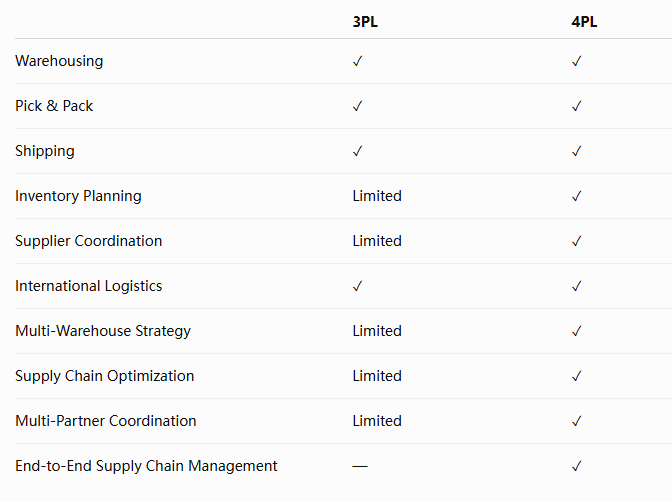
The key difference is scope.
A 3PL operates part of the logistics process.
A 4PL helps coordinate the broader supply chain.
How HQ 4PL Helps Ecommerce Brands Scale
HQ 4PL is designed to connect the different stages of an ecommerce supply chain.
The workflow can include:
China Sourcing
↓
Supplier Coordination
↓
Quality Control
↓
Inventory Planning
↓
China Warehousing
↓
International Transportation
↓
US / EU Overseas Warehousing
↓
Shopify Order Integration
↓
Local Fulfillment
↓
Last-Mile Delivery
This gives brands a centralized approach to managing their supply chain.
Instead of treating sourcing, warehousing, and shipping as separate services, HQ can help connect them into one operational strategy.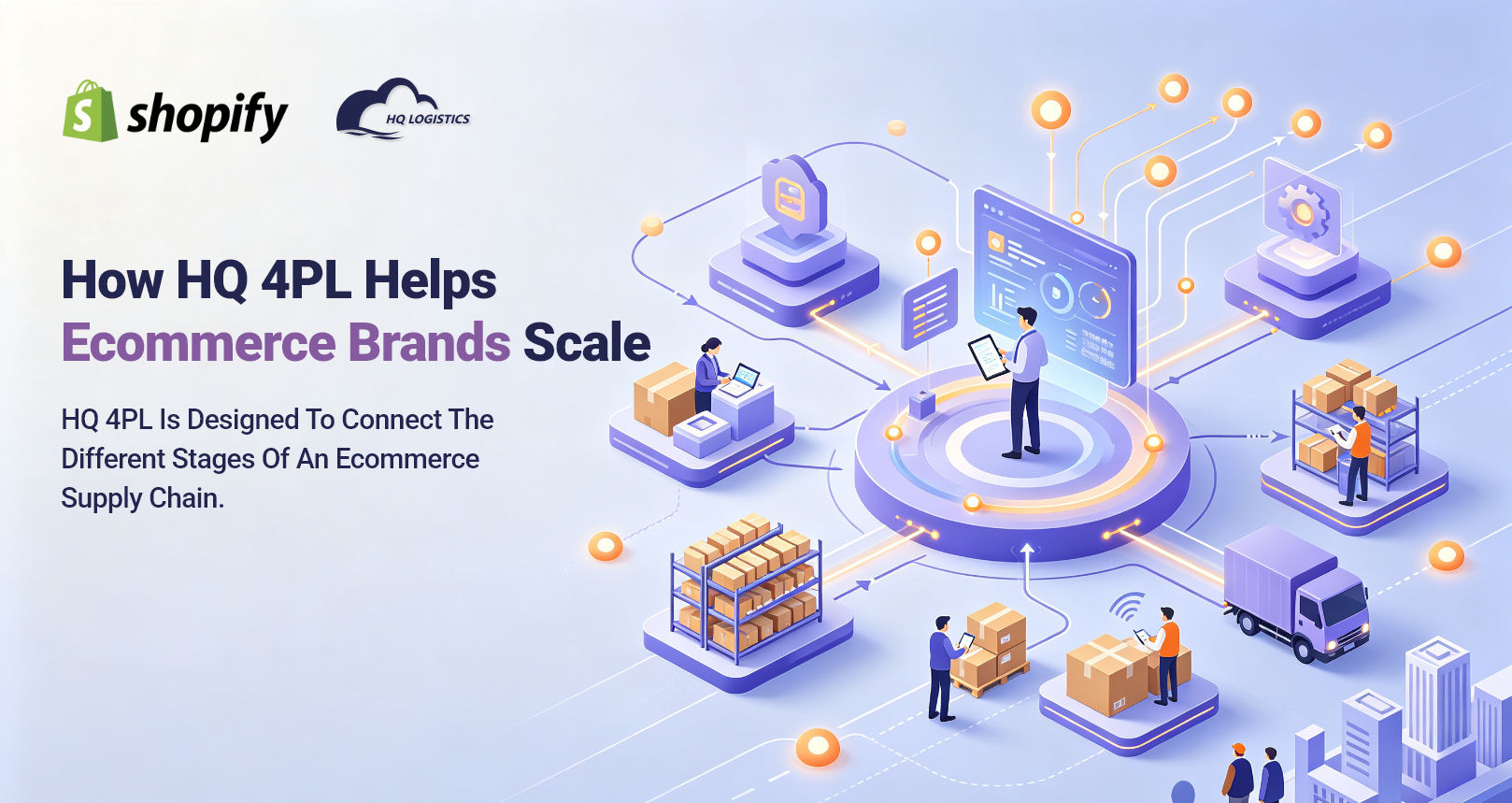
A Practical 3PL-to-4PL Upgrade Path
Brands don't necessarily need to make the transition overnight.
A gradual approach can work better.
Stage 1: Test Products
Dropshipping / Direct Shipping
Use small quantities to validate demand.
Stage 2: Identify Winners
Sales Data → Product Analysis
Identify products with consistent demand.
Stage 3: Bulk Source
Winning Products → Larger Inventory
Improve sourcing and purchasing efficiency.
Stage 4: Move Inventory Overseas
China → US/EU Warehouse
Position proven products closer to customers.
Stage 5: Optimize
Inventory Planning → Multi-Warehouse Allocation → Replenishment
Use data to improve inventory positioning.
Stage 6: Scale
4PL Supply Chain Management
Coordinate sourcing, logistics, warehousing, fulfillment, and replenishment as one system.
This allows the supply chain to evolve at the same pace as the brand.
Final Thoughts
The move from 3PL to 4PL is not simply about changing logistics providers.
It is about changing how the supply chain is managed.
As ecommerce brands grow, they need to coordinate more:
Products | Suppliers | Inventory | Warehouses | Shipping Routes | Markets | Orders
A traditional 3PL can handle fulfillment effectively.
But when complexity increases, a 4PL approach can help connect the bigger picture.
The result is a supply chain designed around:
Lower Complexity | Smarter Inventory | Better Delivery | Greater Flexibility | Sustainable Growth
For growing ecommerce brands, the next step beyond fulfillment may be end-to-end supply chain management.
Don't just move more orders. Build a supply chain that can scale with your brand.
FAQs
1. What is the main difference between 3PL and 4PL?
A 3PL primarily handles logistics operations such as warehousing, picking, packing, and shipping. A 4PL takes a broader role in coordinating sourcing, inventory, transportation, warehousing, fulfillment, and other supply chain partners.
2. When should an ecommerce brand consider 4PL?
Brands should consider 4PL when their supply chain becomes more complex due to multiple suppliers, international markets, overseas warehouses, growing order volumes, or inventory challenges.
3. Can a 4PL partner manage overseas warehouses?
Yes. A 4PL model can coordinate inventory allocation and fulfillment across different warehouse locations, including US and EU overseas warehouses.
4. Is 4PL more expensive than 3PL?
The cost depends on the scope of services. A 4PL may involve additional management services, but the goal is to optimize the total supply chain cost, not simply minimize individual warehouse or shipping fees.
5. Can small ecommerce brands use 4PL?
Yes, but it may not be necessary for every early-stage brand. Businesses with simple operations may start with traditional fulfillment and transition to 4PL as their products, markets, and logistics requirements become more complex.
6. Can 4PL work with Shopify?
Yes. A 4PL setup can integrate with ecommerce platforms and fulfillment systems to connect orders, inventory, warehouses, fulfillment, and tracking.