Don’t Let Shipping Slow Down Back-to-School Sales: The Case for U.S. Warehousing
Don’t Let Shipping Slow Down Back-to-School Sales: The Case for U.S. Warehousing
Back-to-school season is one of the most important sales periods of the year for ecommerce brands.
But it is also a season where delivery speed matters more than ever.
Parents need school supplies before the first day. Students need backpacks, electronics, clothing, and accessories on a specific timeline. When customers place an order, they don't want to wait weeks for products to arrive.
For Shopify sellers, this creates a simple challenge:
How do you keep inventory available and get orders to U.S. customers fast enough without driving up fulfillment costs?
One solution is U.S. overseas warehousing.
By positioning selected inventory closer to your customers, you can shorten the distance between your products and the final delivery destination, improve fulfillment flexibility, and prepare your store for seasonal demand.
In this guide, we'll explain why U.S. warehousing can be a powerful strategy for back-to-school sales and how Shopify brands can use it to build a faster, more flexible fulfillment system.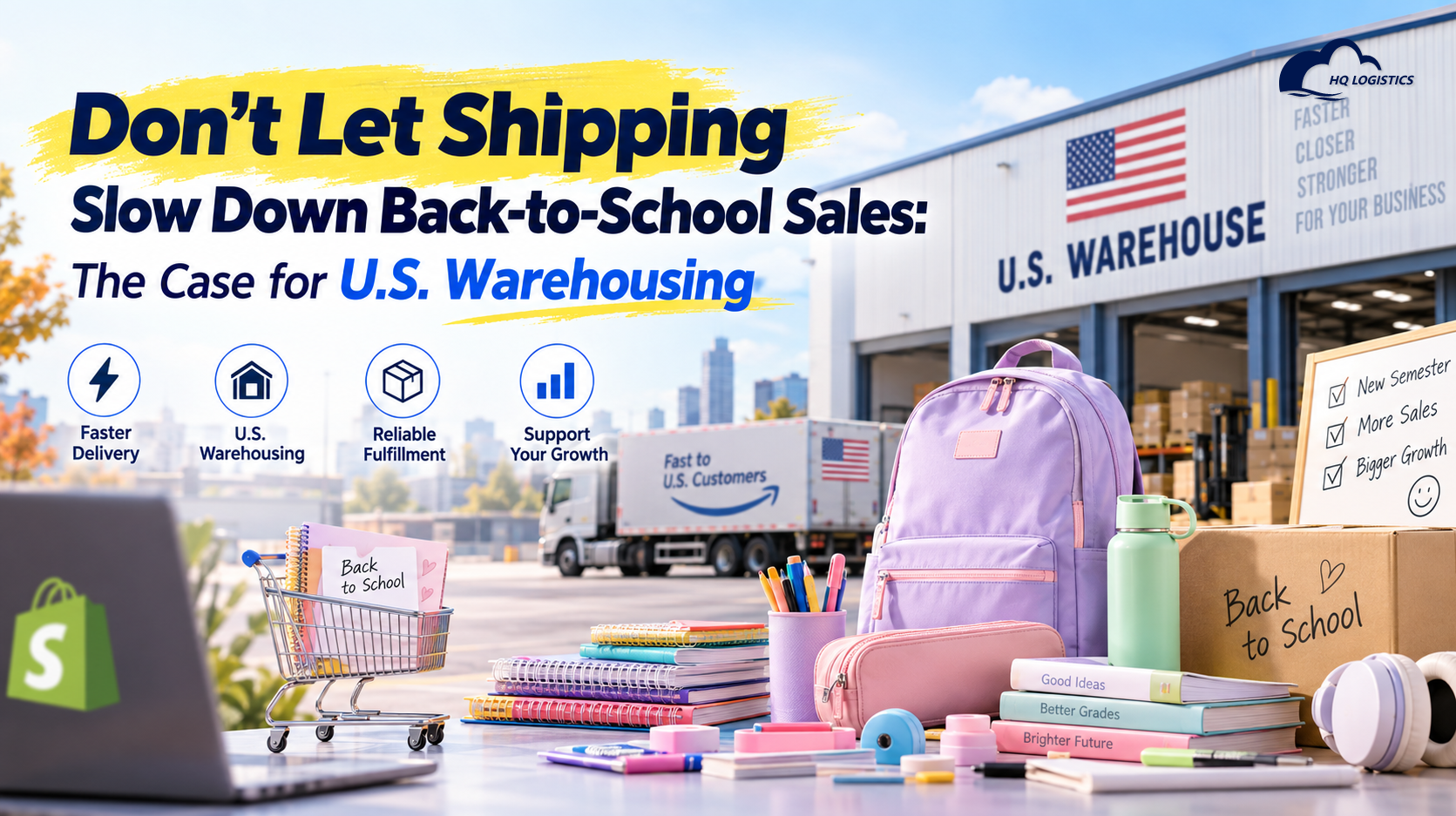
Why Back-to-School Shipping Speed Matters
Back-to-school shopping is increasingly starting earlier and spreading across multiple weeks rather than happening only in August.
Shopify's 2026 back-to-school research highlights earlier shopping behavior and emphasizes that concentrated seasonal demand makes reliable fulfillment especially important. Students and families often need products by specific dates, so delivery reliability can directly affect the customer experience.
This makes fulfillment part of your sales strategy—not just an operational task.
Imagine two Shopify stores selling similar backpacks.
Store A:
Order → China warehouse → International shipping → Customer
Store B:
Order → U.S. warehouse → Local fulfillment → Customer
Even if Store A offers a competitive product and price, Store B may have an advantage when customers care about delivery speed and predictable arrival dates.
During a seasonal campaign, that difference can influence:
Purchase decisions | Conversion rates | Customer satisfaction | Reviews | Repeat purchases | Customer service workload
The product gets the customer to click. Fulfillment helps determine whether they buy again.
1. Move Your Bestsellers Closer to U.S. Customers
The biggest advantage of U.S. warehousing is simple:
Your inventory is already in the market where your customers are.
Instead of shipping every order internationally after the customer places an order, you can pre-position selected products in a U.S. warehouse.
A typical workflow becomes:
China Sourcing → Bulk Shipment → U.S. Warehouse → Local Fulfillment → Customer
This can significantly simplify the final fulfillment process.
Shopify also highlights that fulfillment centers positioned closer to customers can help merchants improve delivery speed, while distributed inventory can support more flexible fulfillment strategies.
Which products should you move first?
You don't necessarily need to send your entire catalog to the U.S.
Start with products that have:
High sales volume | Predictable demand | Strong Q4 potential | Compact shipping dimensions | Stable product quality | Healthy profit margins | Consistent U.S. demand
For example:
Backpacks → School Supplies → Laptop Accessories → Water Bottles → Sports Accessories → Clothing → Dorm Essentials
The goal is to place the right inventory in the right location, not simply to move more inventory.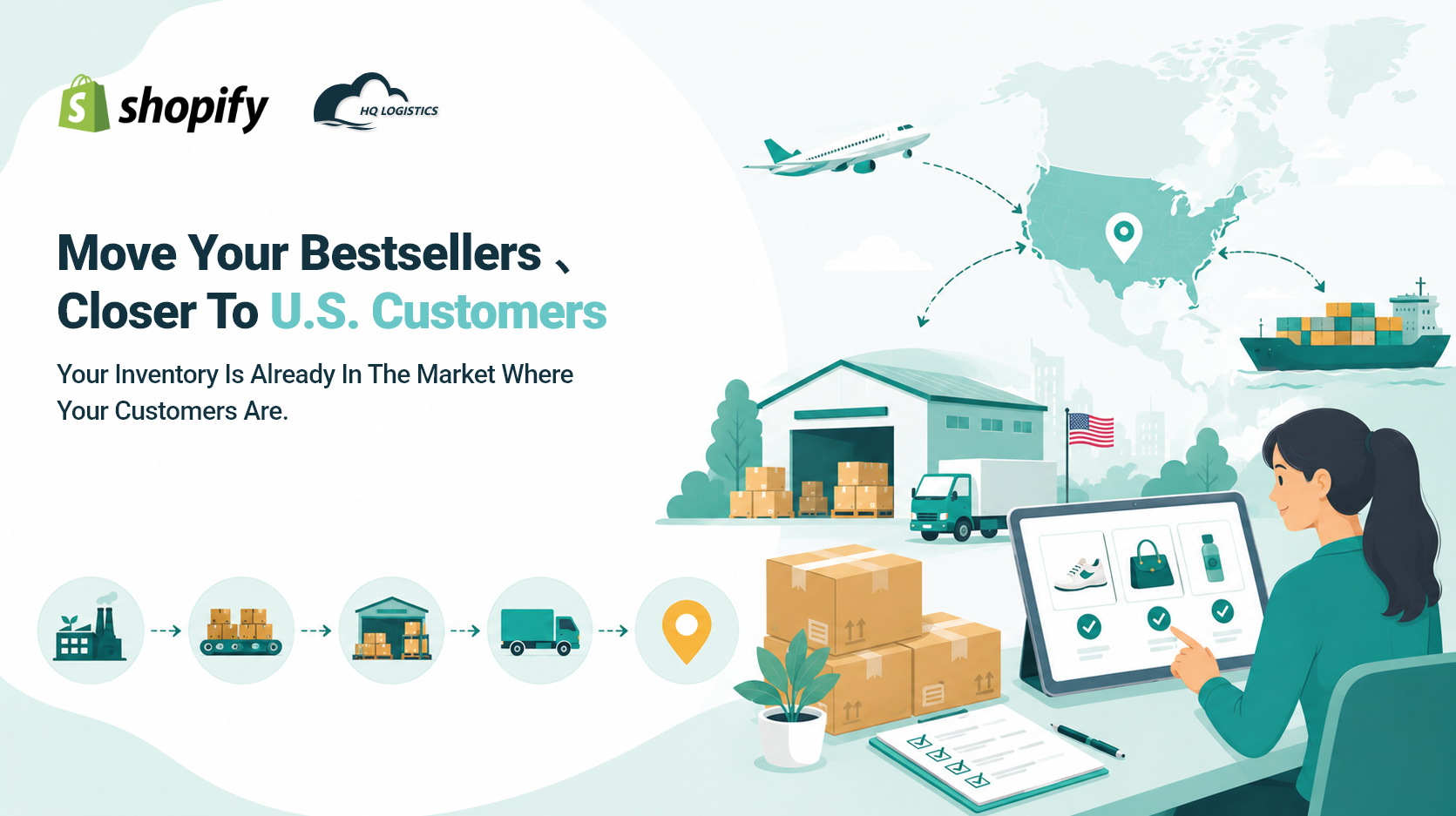
2. Reduce the Distance Between Inventory and Customers
International fulfillment can involve several stages:
Supplier → Export → International Transportation → Customs → Local Carrier → Customer
Every additional stage creates another opportunity for delay.
With U.S. warehousing, part of that process happens before the customer places an order.
Your inventory has already completed the international journey.
The customer order can then follow a simpler path:
Order → U.S. Warehouse → Pick & Pack → Local Carrier → Customer
This is particularly valuable during back-to-school season, when customers often have a specific deadline.
Shopify's current fulfillment guidance similarly emphasizes using inventory locations and routing strategies to reduce delivery distance and get products to customers faster.
3. Prepare Inventory Before the Back-to-School Rush
One of the biggest fulfillment mistakes is waiting for orders before moving inventory.
By the time your sales start accelerating, it may be too late to replenish popular products internationally.
A better strategy is:
Step 1: Identify your potential bestsellers
Review:
Previous seasonal sales | Current product trends | Search demand | Advertising performance | Product margins | Customer locations
Step 2: Forecast demand
Estimate expected sales for:
July | August | September | Early Q4
Don't only look at last year's numbers.
Shopify recommends combining historical data with current market signals because seasonal shopping patterns can change from year to year.
Step 3: Allocate inventory
Move a calculated quantity of your best-performing products to the U.S.
Step 4: Keep replenishment inventory in China
Don't put everything overseas.
A hybrid inventory strategy can give you more flexibility:
U.S. Warehouse:
Fast-moving bestsellers and high-priority SKUs.
China Warehouse:
Long-tail products, new products, and backup inventory.
This reduces the risk of both stockouts and excessive overseas inventory.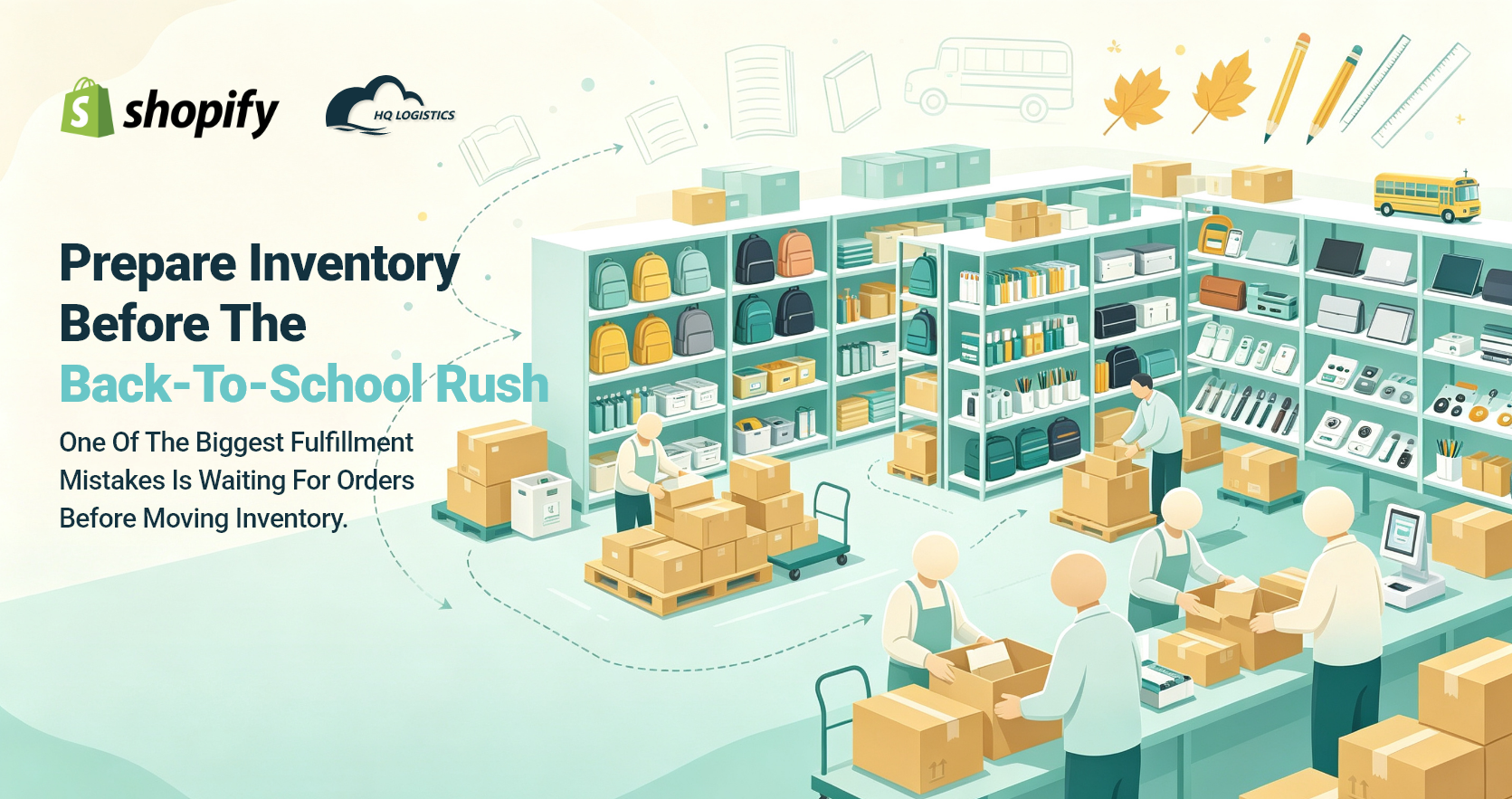
4. Use U.S. Warehousing to Support Faster Local Fulfillment
A U.S. warehouse isn't only about storage.
The real value comes from what happens after an order is placed.
A professional fulfillment process can include:
Order Sync → Inventory Allocation → Picking → Quality Check → Packing → Shipping → Tracking Sync
With inventory already in the U.S., your fulfillment team can process orders locally instead of starting an international shipping process for every customer.
This can make your operation more responsive when order volume suddenly increases.
Shopify describes modern warehouse fulfillment as a combination of inventory management, order processing, picking, packing, shipping, and technology-enabled coordination—not simply storing products on shelves.
5. Improve Inventory Visibility Across Locations
Moving inventory to the U.S. creates another challenge:
How do you know what inventory you actually have?
If your Shopify store, China warehouse, U.S. warehouse, and fulfillment system all have different inventory numbers, overselling and stockouts become much more likely.
That's why inventory visibility matters.
A connected system should help you monitor:
China inventory | U.S. inventory | Available inventory | Reserved inventory | Inbound inventory | Sales velocity | Replenishment needs | Order status
Shopify's 2026 inventory guidance emphasizes the importance of accurate inventory data across locations, while virtual warehousing systems can provide a centralized view of stock across multiple warehouses.
One inventory view, multiple fulfillment locations
For example:
SKU A
China Stock: 2,000
U.S. Stock: 800
In Transit: 500
When U.S. inventory starts falling, your team can prepare replenishment before the product reaches zero.
That is much better than discovering a stockout after customers have already placed orders.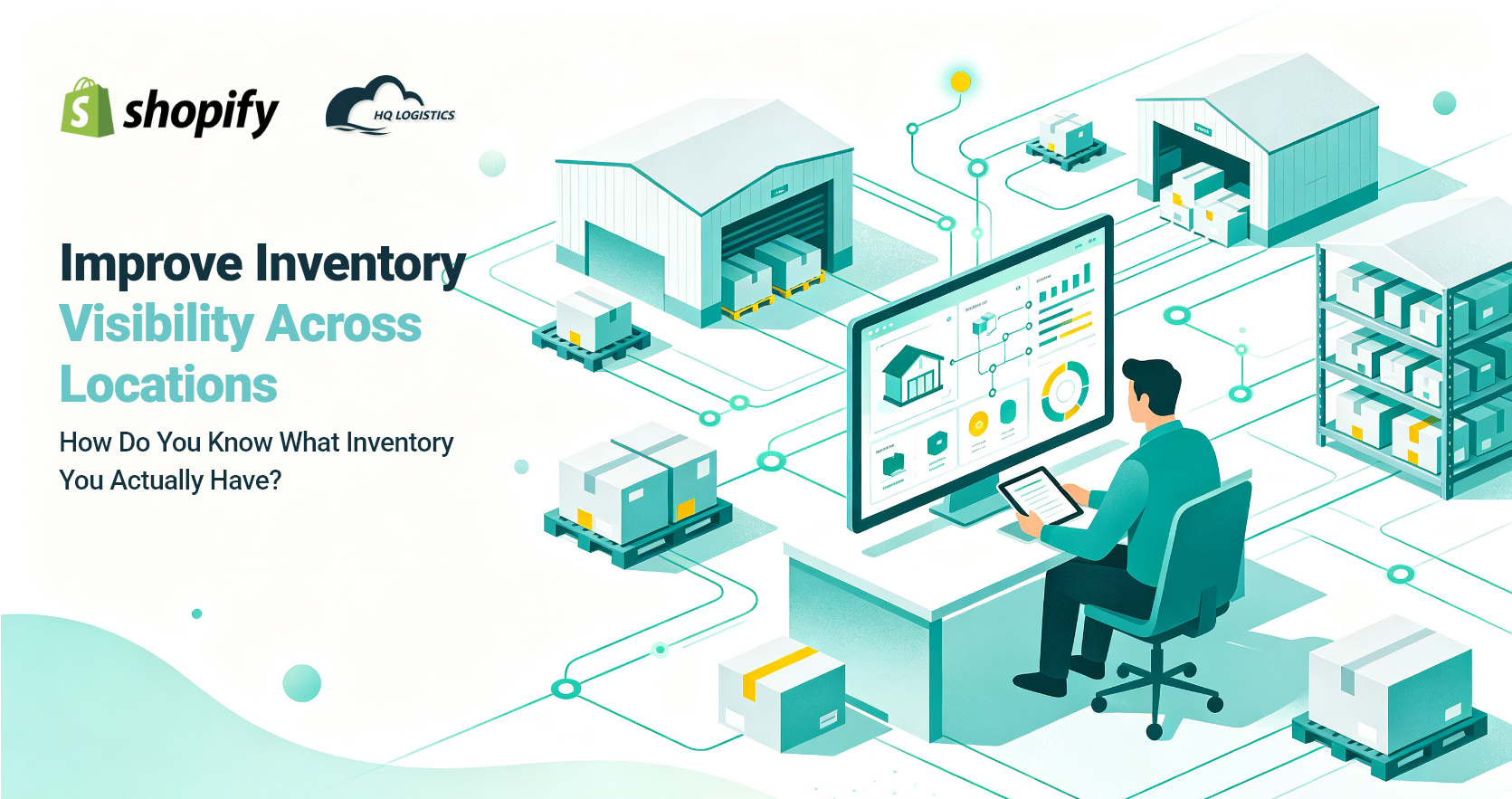
6. Avoid Back-to-School Stockouts
Back-to-school demand can be highly concentrated.
A product that sells slowly in June may suddenly become a bestseller in August.
This creates a dangerous situation:
Marketing increases demand → Orders increase → Inventory drops → Stockout → Lost sales
U.S. warehousing can help, but only if inventory planning happens early enough.
For your most important SKUs, consider maintaining safety stock.
For example:
Expected demand + Safety stock + Replenishment buffer = Q3 inventory target
The exact amount depends on your sales history, lead times, margins, and risk tolerance.
Don't simply ask:
“How much inventory do I need?”
Ask:
“How much inventory do I need in the U.S. to keep selling while my next shipment is on the way?”
That is a much more useful question.
7. Reduce Fulfillment Pressure During Peak Season
Back-to-school season often overlaps with the beginning of the Q4 preparation cycle.
That means sellers may soon face:
Higher order volume | New product launches | Fall product demand | Halloween preparation | Black Friday inventory planning | Christmas inventory planning
If your entire fulfillment process depends on international shipping after every order, operational pressure can quickly increase.
U.S. warehousing gives you another option:
Pre-position inventory → Fulfill locally → Replenish strategically
This allows your team to separate international transportation from final-mile fulfillment.
Instead of asking international shipping to solve every order individually, you move inventory in bulk and use local fulfillment for individual customer orders.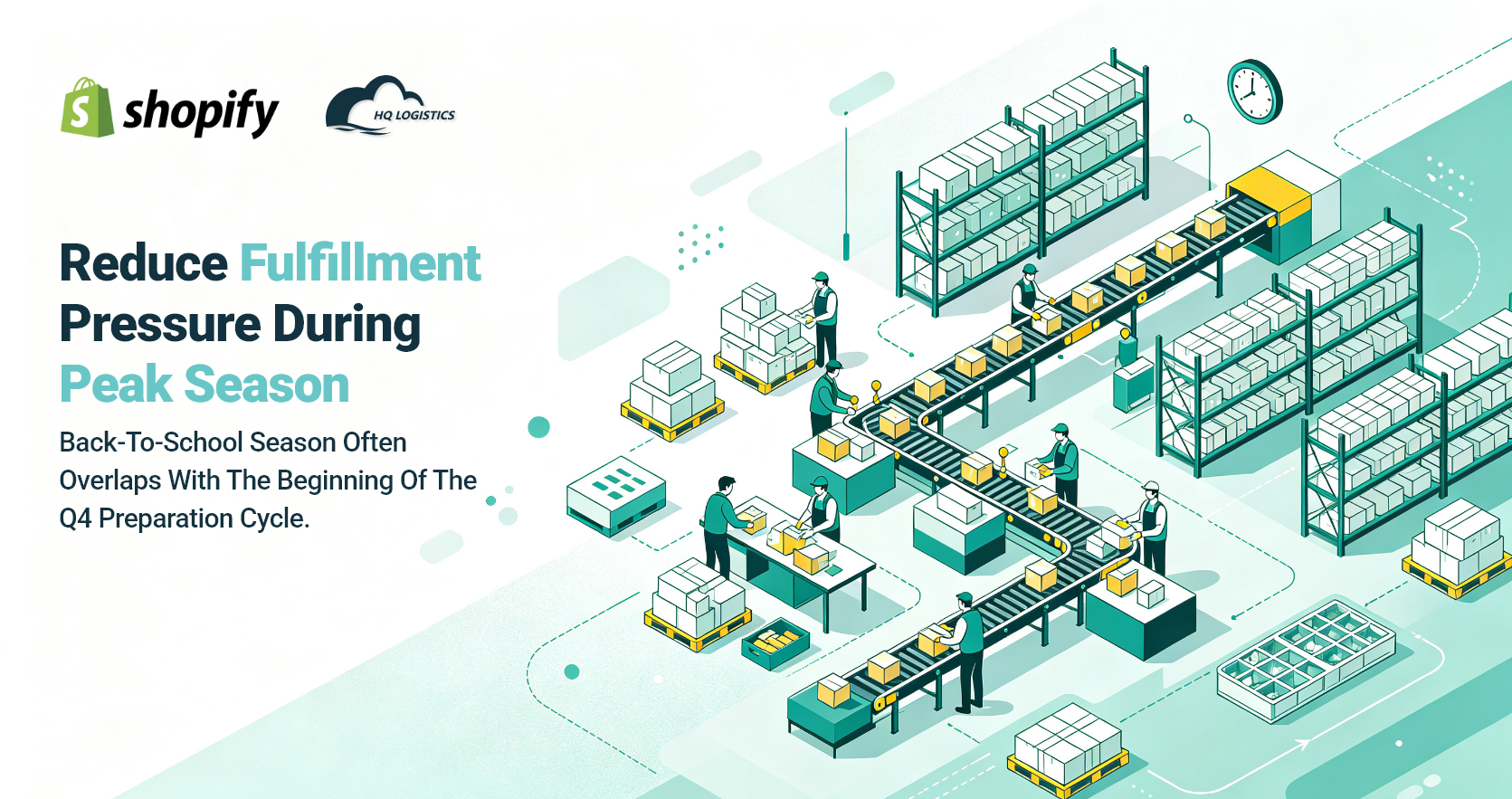
8. U.S. Warehousing Can Support More Than One Sales Channel
A major advantage of a U.S. warehouse is flexibility.
Your inventory doesn't have to support only one Shopify store.
Depending on your setup, the same inventory pool can potentially support multiple channels, such as:
Shopify | Amazon | Etsy | WooCommerce | Other ecommerce channels
The key is centralized inventory visibility and clear order allocation.
Shopify's current inventory management guidance emphasizes the value of unified inventory data as merchants sell across multiple channels and locations.
This can help brands avoid maintaining completely separate inventory pools for every channel.
9. Don't Forget Returns
Back-to-school products can also generate returns.
Customers may:
Order the wrong size | Change their mind | Buy duplicate supplies | Receive a product that doesn't match expectations | Return items after the school season begins
International returns can be expensive and complicated.
A U.S. fulfillment setup can provide a more convenient location for handling eligible returns, inspection, restocking, or other reverse-logistics processes.
This matters because inventory sitting in a return queue isn't really available inventory.
A well-designed fulfillment system should connect:
Delivery → Return → Inspection → Restock → Resale
Instead of treating returns as a separate problem, treat them as another part of inventory management.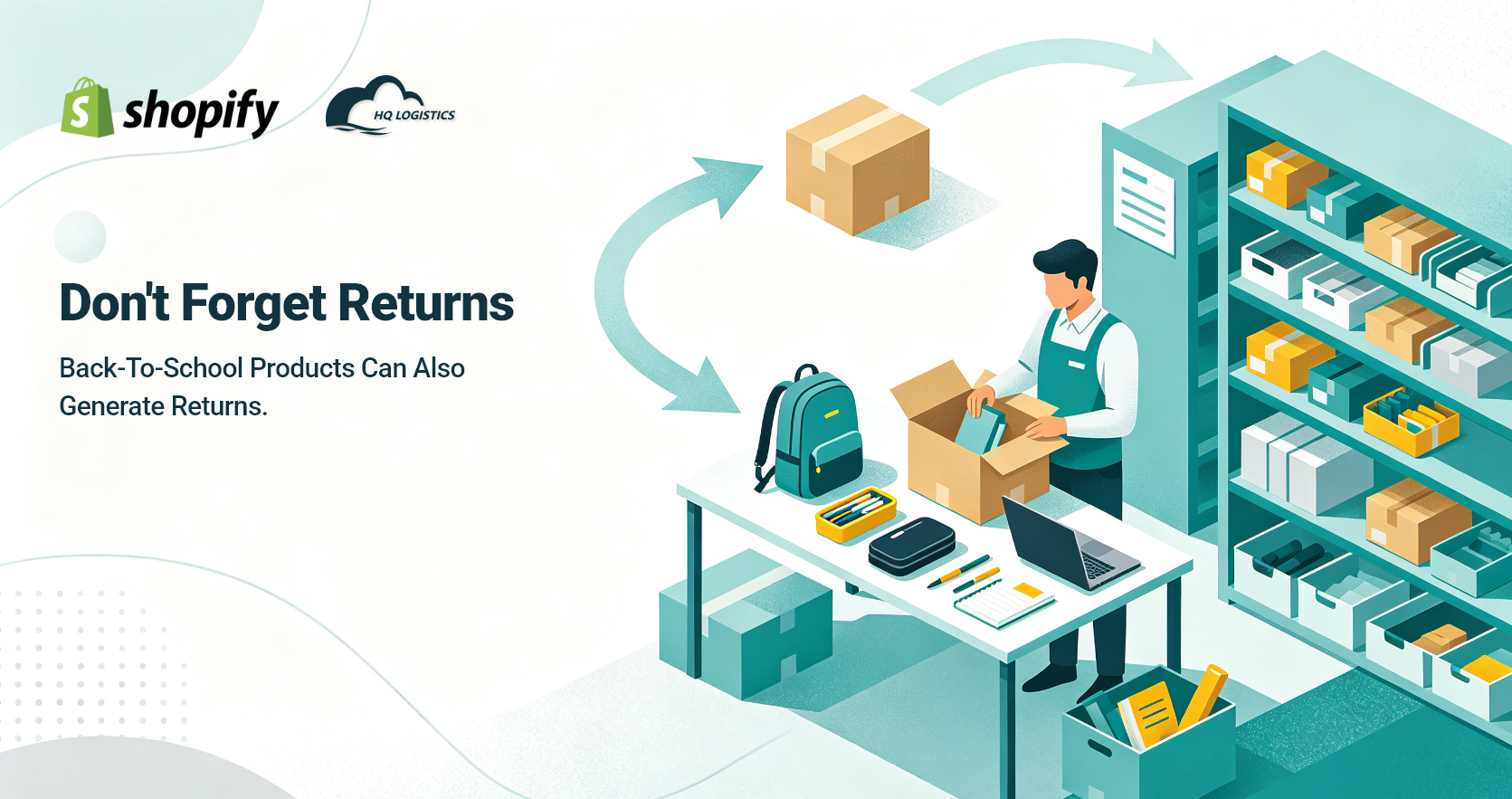
10. Combine U.S. Warehousing With a 4PL Supply Chain Strategy
U.S. warehousing solves an important part of fulfillment.
But warehousing alone doesn't solve every supply chain problem.
You still need to answer:
Where should I source the product?
Which supplier can handle the volume?
How much should I order?
Which products should go to the U.S.?
When should I replenish?
Which shipping route should I use?
How should I manage inventory across locations?
This is where a 4PL approach can provide more value than a traditional warehouse-only model.
Traditional 3PL
Store → Pick → Pack → Ship
4PL Supply Chain
Source → Compare Suppliers → QC → Consolidate → Forecast → Allocate Inventory → Warehouse → Fulfill → Ship → Optimize
Instead of treating the U.S. warehouse as an isolated storage location, a 4PL partner can connect it with your upstream sourcing and logistics operations.
The result is a more complete supply chain:
China Sourcing → Quality Control → China Warehouse → International Shipping → U.S. Warehouse → Local Fulfillment → Customer
That's especially useful for Shopify brands that are moving from simple dropshipping toward a more scalable inventory model.
When Should Shopify Sellers Consider U.S. Warehousing?
U.S. warehousing may be worth considering if:
You have consistent U.S. sales
If a large percentage of your orders already come from the U.S., local inventory can make sense.
Your products are proven
Moving inventory overseas is easier to justify when you already know which SKUs sell.
Delivery speed affects conversion
If customers frequently compare delivery times, faster fulfillment can become a competitive advantage.
You are preparing for seasonal demand
Back-to-school, Halloween, Black Friday, and Christmas can all create concentrated demand.
International shipping is becoming expensive
Bulk inventory movement plus local fulfillment may provide a more efficient structure for certain products.
Your order volume is growing
As order volume increases, a more structured fulfillment network can reduce operational complexity.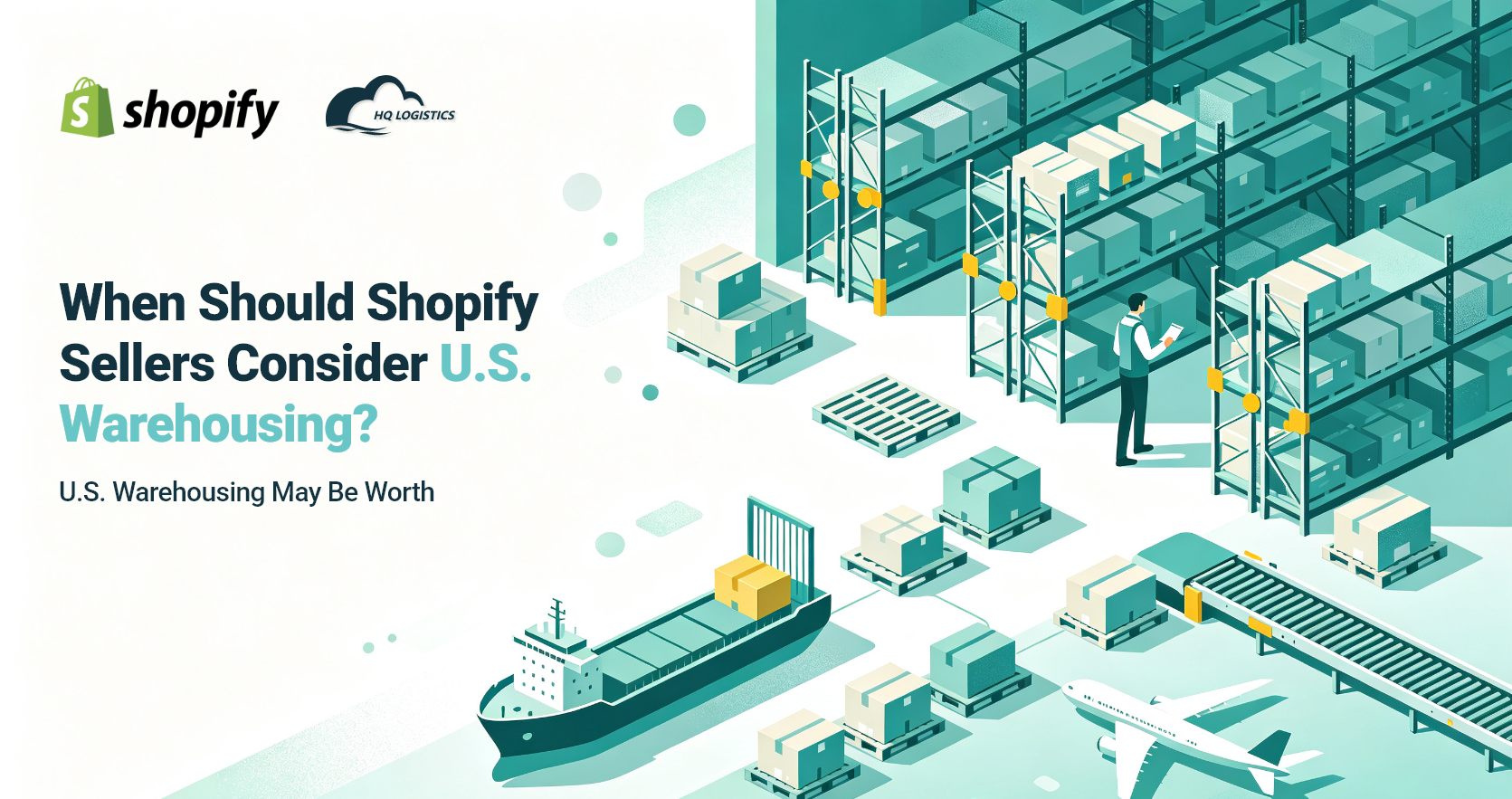
U.S. Warehousing vs. Direct Shipping From China
| Factor | Direct Shipping From China | U.S. Warehousing |
|---|---|---|
| Inventory location | China | United States |
| Final-mile fulfillment | International | Local |
| Delivery speed | Depends on international route | Generally faster locally |
| Best for | New / long-tail products | Proven bestsellers |
| Inventory investment | Lower upfront overseas stock | Higher upfront inventory commitment |
| Replenishment | International | Local + planned inbound |
| Seasonal demand | More difficult to react to | Better for pre-positioned stock |
| Returns | More complex internationally | Easier to manage locally |
| Scalability | Suitable for testing | Better for established volume |
The right answer isn't always choosing one model.
For many Shopify brands, the better strategy is hybrid fulfillment.
A Smart Back-to-School Inventory Strategy
Instead of moving your entire catalog to the U.S., build a tiered strategy.
Tier 1: Top Sellers
Move your strongest SKUs to the U.S.
Prioritize availability and fast fulfillment.
Tier 2: Seasonal Products
Estimate demand carefully and send a controlled quantity.
Monitor sales and replenish when necessary.
Tier 3: New Products
Keep initial inventory smaller.
Test demand before committing significant inventory to overseas storage.
Tier 4: Long-Tail Products
Keep these products in China and ship internationally when orders come in.
This approach can help balance:
Speed + Cost + Inventory Risk + Customer Experience
How HQ Helps Shopify Brands Prepare With U.S. Warehousing
For Shopify sellers preparing for back-to-school and Q4, U.S. warehousing should be part of a larger supply chain strategy—not simply a place to store boxes.
HQ can help coordinate the process from sourcing to U.S. fulfillment, including:
Product sourcing | Supplier comparison | Quality inspection | Product photography | Inventory consolidation | China warehousing | U.S. overseas warehousing | Inventory allocation | Custom packaging | Shopify order integration | Automated fulfillment | Real-time tracking synchronization | U.S. local fulfillment | Global shipping solutions | Returns support
For eligible products, HQ also offers two months of free U.S. overseas warehouse storage, subject to applicable product and service requirements.
The goal is to help sellers position inventory before demand arrives and keep the fulfillment process moving once orders start increasing.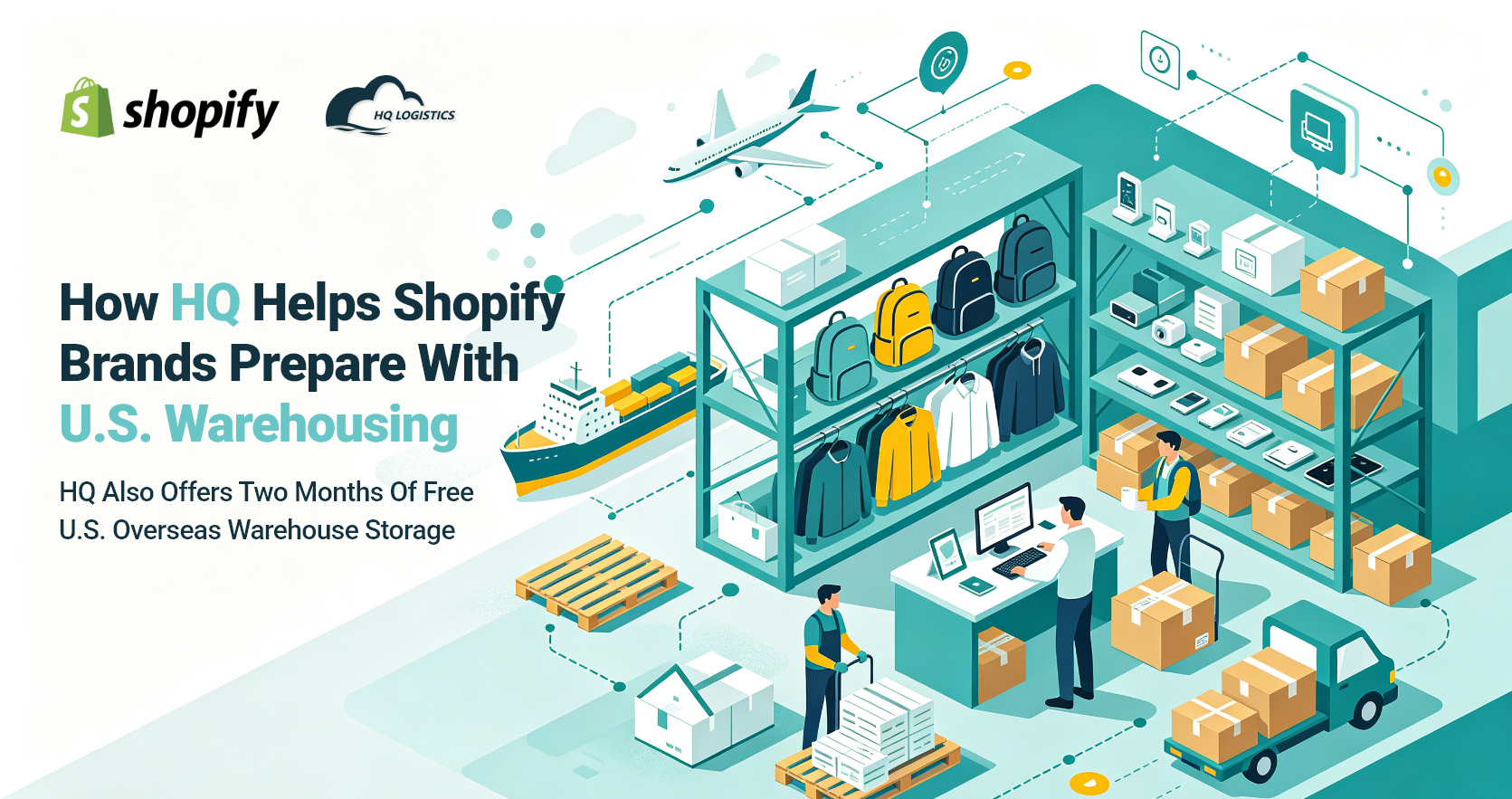
Back-to-School U.S. Warehousing Checklist
Before moving inventory to a U.S. warehouse, ask:
Product
Which products are proven bestsellers? | Which products have the highest U.S. demand? | Which SKUs are most suitable for seasonal sales?
Inventory
How much inventory should be positioned in the U.S.? | How much safety stock do I need? | When should I replenish? | How much inventory should remain in China?
Fulfillment
Can my warehouse handle peak order volume? | Are Shopify orders automatically synchronized? | Is inventory updated in real time? | Can custom packaging be supported?
Shipping
What are my U.S. shipping options? | Which products should use local fulfillment? | Do I have backup shipping routes for replenishment?
Returns
Where will U.S. returns be received? | Can returned products be inspected? | Can sellable products be restocked quickly?
Supply Chain
Can sourcing, warehousing, fulfillment, and shipping be coordinated together? | Do I have visibility across China and U.S. inventory? | Can I scale the system when Q4 begins?
If the answer to several of these questions is “no,” your fulfillment network may need an upgrade before the next sales peak.
Final Thoughts
Back-to-school shoppers aren't just buying products.
They're buying products for a deadline.
That makes fulfillment speed and delivery reliability especially important.
For Shopify brands with strong U.S. demand, U.S. overseas warehousing can turn fulfillment from a potential bottleneck into a competitive advantage.
Instead of:
Customer Order → International Shipping → Long Wait
you can build a more responsive model:
Source → Stock in the U.S. → Fulfill Locally → Deliver Faster
And when U.S. warehousing is connected with sourcing, inventory planning, quality control, fulfillment, and global logistics, it becomes more than a warehouse.
It becomes part of a scalable 4PL supply chain strategy.
Stock closer. Fulfill faster. Keep customers coming back.
Don't let shipping slow down your back-to-school sales.
FAQs
1. What is U.S. overseas warehousing?
U.S. overseas warehousing means storing products in a warehouse located in the United States before customers place their orders. When an order comes in, it can be fulfilled locally instead of being shipped internationally from China.
2. Should every Shopify seller use a U.S. warehouse?
Not necessarily. U.S. warehousing is generally more suitable for brands with consistent U.S. demand, proven products, seasonal sales, or growing order volume. New products and long-tail SKUs may still be better suited to China-based fulfillment.
3. How much inventory should I send to a U.S. warehouse?
Start with your historical U.S. sales, expected seasonal growth, supplier lead time, shipping lead time, and desired safety stock. Focus first on proven bestsellers rather than moving your entire catalog.
4. Can U.S. warehousing help with Q4 preparation?
Yes. Back-to-school demand often provides an opportunity to identify products that may also perform well during the upcoming Q4 season. Pre-positioning proven products in the U.S. can help sellers prepare for Halloween, Black Friday, Cyber Monday, and Christmas demand.
5. What is the difference between U.S. warehousing and 4PL?
U.S. warehousing is a physical fulfillment resource. A 4PL approach connects warehousing with upstream and downstream supply chain activities such as sourcing, supplier management, inventory planning, quality control, fulfillment, and logistics.