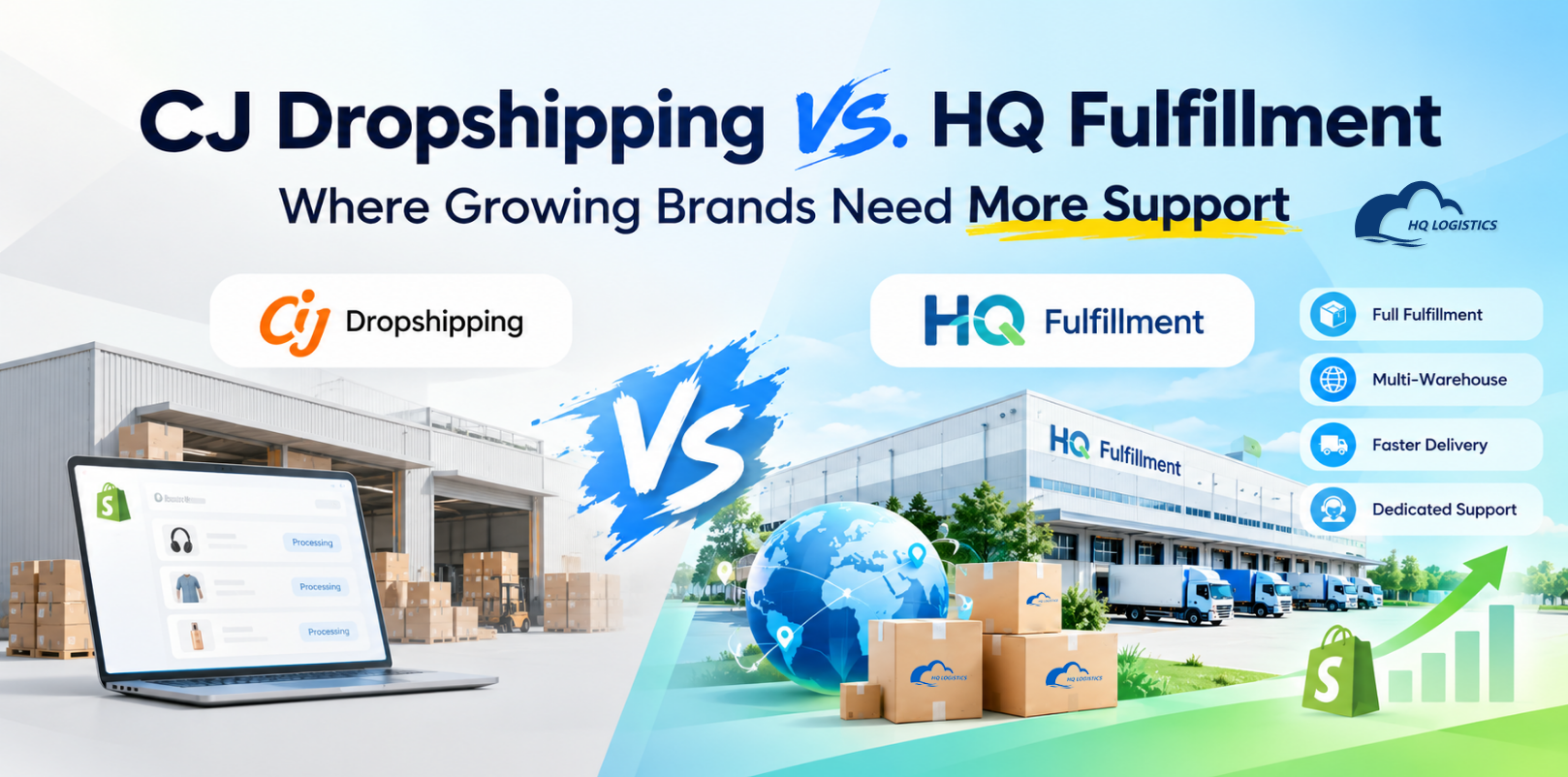
CJ Dropshipping vs. HQ Fulfillment: Where Growing Brands Need More Support
CJ Dropshipping vs. HQ Fulfillment: Where Growing Brands Need More Support
Starting a Shopify store is relatively easy.
Scaling one is a different story.
When you're testing products, running small ad campaigns, and processing a limited number of orders, a standard dropshipping platform may provide everything you need.
You can source products, connect your store, automate orders, and ship directly to customers.
But as your brand grows, your supply chain becomes more complicated.
You may need:
Better product sourcing | Multiple suppliers | Stronger quality control | Custom packaging | More shipping options | Overseas warehousing | Faster fulfillment | Better inventory planning | Peak-season support
That's when the question changes from:
"Which dropshipping platform is easier to use?"
to:
"Which fulfillment partner can support the next stage of my brand?"
Both CJ Dropshipping and HQ Fulfillment provide sourcing, fulfillment, warehousing, and shipping services. CJ offers Shopify integration, automated order fulfillment, sourcing requests, global warehouses, custom packaging, and logistics solutions.
HQ also combines sourcing, warehousing, quality inspection, custom branding, fulfillment, and global shipping, with a focus on growing and higher-volume ecommerce brands.
So the real comparison isn't simply CJ vs. HQ.
It's about where your brand is today—and how much supply chain support you'll need tomorrow.
CJ Dropshipping vs. HQ Fulfillment at a Glance
| Area | CJ Dropshipping | HQ Fulfillment |
|---|---|---|
| Product Sourcing | ✓ | ✓ |
| Shopify Integration | ✓ | ✓ |
| Automated Order Sync | ✓ | ✓ |
| Warehousing | ✓ | ✓ |
| Global Shipping | ✓ | ✓ |
| Custom Packaging | ✓ | ✓ |
| Quality Control | ✓ | ✓ |
| Multiple Suppliers | Supplier network | Multiple supplier support |
| Multiple Shipping Channels | ✓ | ✓ |
| U.S. Fulfillment | ✓ | ✓ |
| EU Fulfillment | ✓ | ✓ |
| China Fulfillment | ✓ | ✓ |
| Brand Customization | ✓ | ✓ |
| Supply Chain Strategy | More platform-driven | More flexible, brand-focused |
| Best Fit | Product testing & dropshipping | Growing brands & customized fulfillment |
The differences become more important when order volume, product complexity, and brand requirements increase.
1. Product Testing vs. Long-Term Brand Building
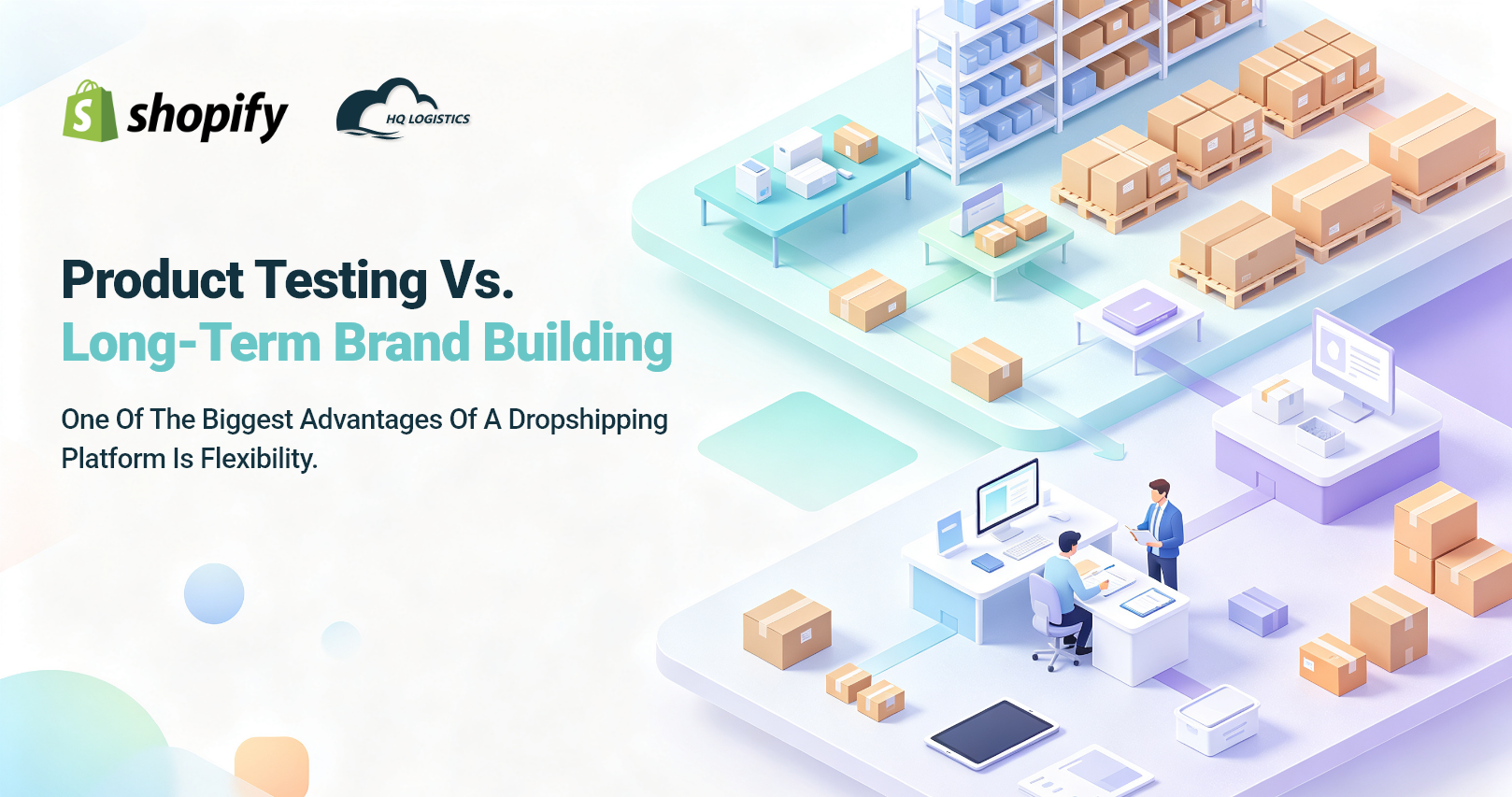
One of the biggest advantages of a dropshipping platform is flexibility.
You can test products without buying large quantities of inventory.
CJ supports product sourcing, store integration, automated fulfillment, inventory synchronization, and global warehouse options, making it practical for sellers who want to test products and automate basic operations.
For a new store, that's extremely useful.
You can follow a relatively simple process:
Find Product → List Product → Run Ads → Receive Order → Fulfill → Ship
But growing brands eventually need more than product testing.
The process becomes:
Source → Compare Suppliers → QC → Customize → Forecast Inventory → Store → Fulfill → Ship → Scale
That's where a more customized fulfillment relationship can become important.
HQ positions its service around connecting sourcing, warehousing, shipping, quality inspection, customization, and fulfillment rather than treating fulfillment as only the final shipping step.
The difference is subtle but important.
Dropshipping helps you sell products.
A stronger supply chain helps you build a brand around those products.
2. One Supplier vs. Multiple Supplier Options
When your store is small, relying on one product source may not create many problems.
But imagine your bestseller suddenly starts generating 300, 500, or 1,000 orders per day.
Now supplier capacity becomes critical.
What happens if:
Production slows down? | The product goes out of stock? | Quality becomes inconsistent? | The supplier raises prices? | Your demand suddenly doubles? | Your main supplier cannot meet Q4 demand?
A growing brand needs options.
Instead of:
Your Brand → One Supplier
a more flexible supply chain can look like:
Your Brand → Supplier A + Supplier B + Supplier C
This doesn't mean you need to personally manage three factories.
A fulfillment partner can help coordinate sourcing and identify alternative supplier options.
HQ's approach is designed to support this type of flexible sourcing and fulfillment structure, particularly for brands that need more than basic product sourcing.
For fast-growing brands, supplier flexibility can become a competitive advantage.
3. Product Price Isn't the Same as Product Quality
A lower product price can look attractive when you're calculating margins.
But product cost is only one part of the equation.
Consider the real cost of a quality problem:
Defective Product → Customer Complaint → Refund → Reshipment → Support Cost → Negative Review
If the same problem affects hundreds of orders, the financial impact can be much larger than the original product-cost difference.
Both CJ and HQ provide quality-control services as part of their fulfillment offerings. CJ states that products can be inspected before storage and before dispatch, while HQ highlights quality inspection as part of its integrated fulfillment service.
For growing brands, however, QC should become part of a broader process:
Supplier Selection → Sample Check → Production → QC → Warehouse → Fulfillment
The goal isn't simply to catch defective products.
It's to reduce the chance of quality problems becoming customer problems.
4. Custom Packaging Becomes More Important as Your Brand Grows
When you're testing products, generic packaging may be completely acceptable.
Once you're building a recognizable brand, it can become a limitation.
Your customer doesn't only experience the product.
They experience:
Packaging + Product + Unboxing + Brand Messaging
Both CJ and HQ offer custom packaging and branding options.
But growing brands often need packaging to become part of the overall supply chain.
For example:
Product Sourcing → Quality Inspection → Custom Packaging → Warehouse Storage → Order Fulfillment → Customer Delivery
This is especially relevant for:
Baby Products | Pet Products | Beauty Products | Lifestyle Products | Small Electronics | Supplements
For suitable products sold in Europe, brands may also want to consider eco-friendly packaging as part of their brand strategy.
Packaging shouldn't be something you think about only after the product has already been purchased.
It should be planned alongside sourcing and fulfillment.
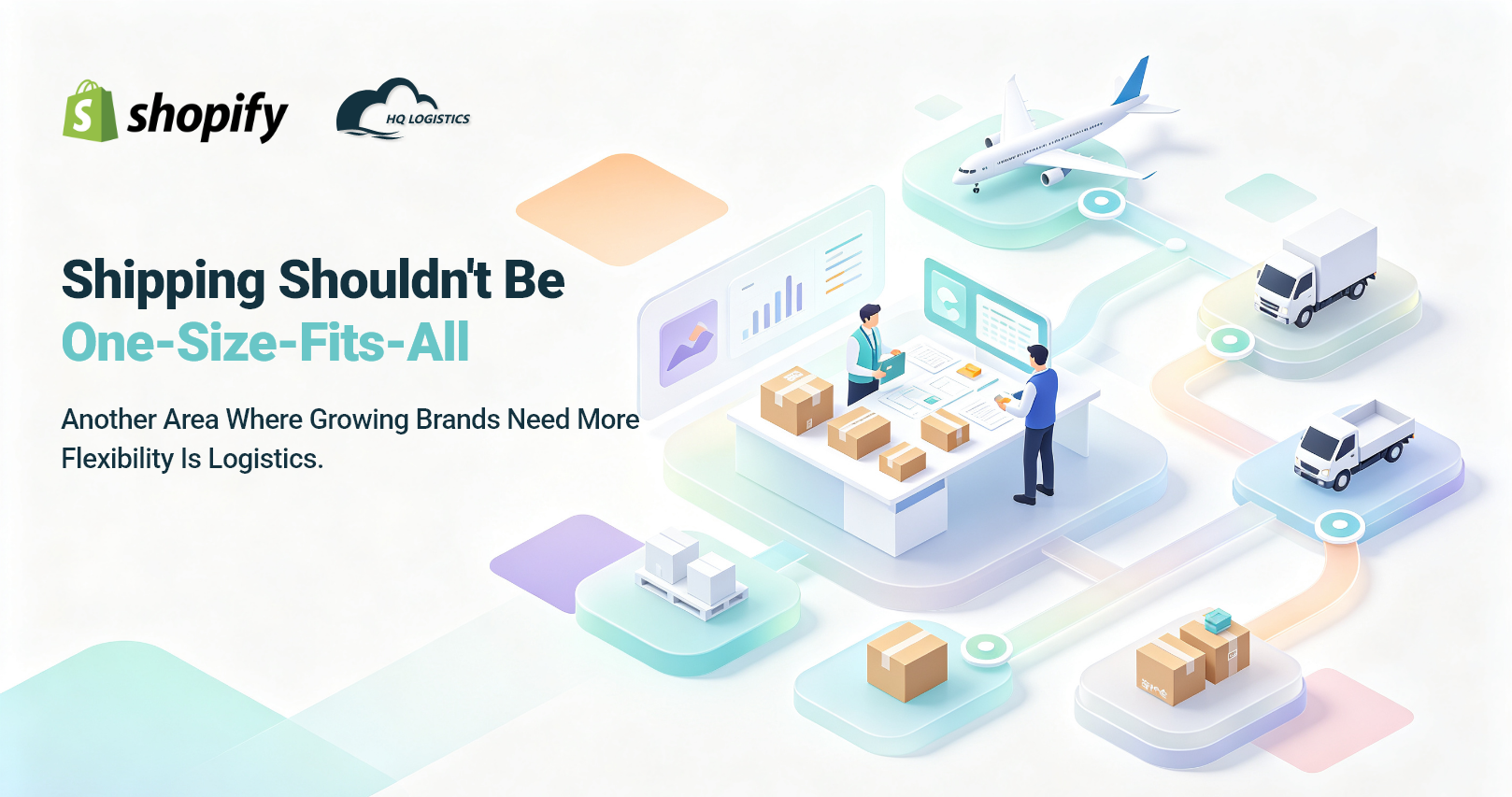
5. Shipping Shouldn't Be One-Size-Fits-All
Another area where growing brands need more flexibility is logistics.
The best shipping method can depend on:
Destination | Product Weight | Product Dimensions | Product Category | Delivery Requirements | Shipping Cost | Customs Requirements | Battery or Special Transportation Requirements
CJ offers multiple shipping options and global warehouse fulfillment, including China, U.S., and EU warehouse options.
HQ also provides multiple logistics routes and shipping solutions based on product and destination requirements.
For a growing brand, the important question isn't:
"Which shipping method is cheapest?"
It's:
"Which shipping method gives me the right balance of cost, speed, reliability, and product suitability?"
For example:
New Product
China Fulfillment → International Shipping
Proven U.S. Bestseller
China → U.S. Warehouse → U.S. Customer
Proven European Bestseller
China → EU Warehouse → Multiple EU Markets
Small Electronics
Product Requirements → Suitable Shipping Channel
Having multiple logistics options gives brands more room to adapt.
6. China Fulfillment vs. Overseas Warehousing
Not every product needs to be stored overseas.
In fact, moving everything overseas too early can create unnecessary inventory risk.
A better strategy can be:
Keep in China
New Products | Low-Volume Products | Experimental SKUs | Long-Tail Products
Store Overseas
Bestsellers | Stable SKUs | High-Volume Products | Predictable Demand
This creates a hybrid model:
China for Flexibility + Overseas Warehousing for Scale
For U.S. sellers, proven products can be pre-stocked in a U.S. warehouse and fulfilled domestically.
For European brands, an EU warehouse can help serve multiple European markets from centralized inventory.
This type of inventory strategy becomes increasingly useful as order volume grows.
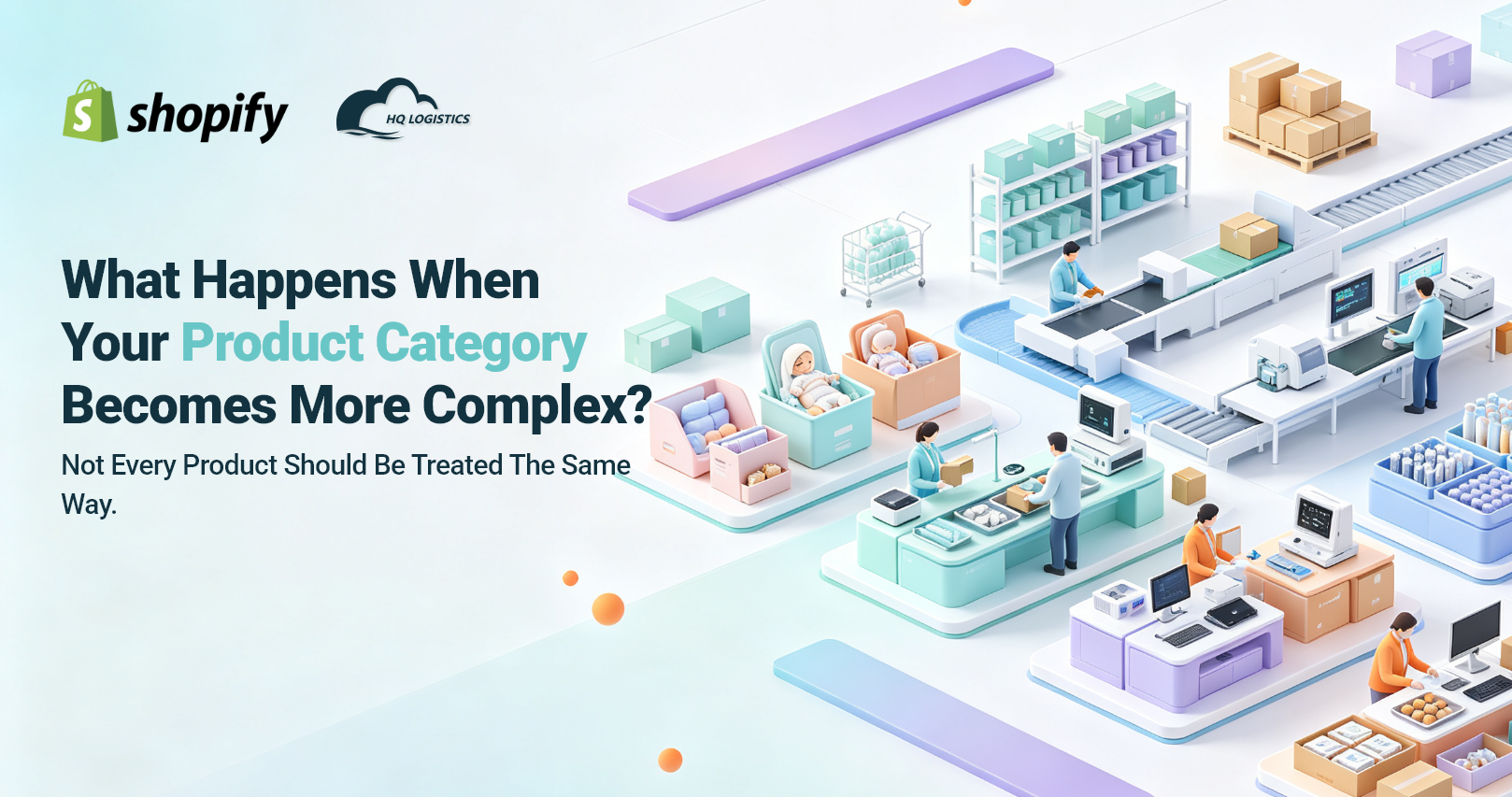
7. What Happens When Your Product Category Becomes More Complex?
Not every product should be treated the same way.
Consider three examples.
Baby Products
Brands may need to pay closer attention to:
Materials | Product consistency | Construction | Packaging | Quality inspection | Product information
Pet Products
Important considerations can include:
Durability | Materials | Dimensions | Functionality | Packaging
Small Electronics
The supply chain may need additional attention around:
Components | Functionality | Battery information | Packaging | Product specifications | Shipping requirements
A general dropshipping workflow may work well for simple product testing.
But as your category becomes more specialized, you may need a fulfillment partner that can build a more tailored process around your products.
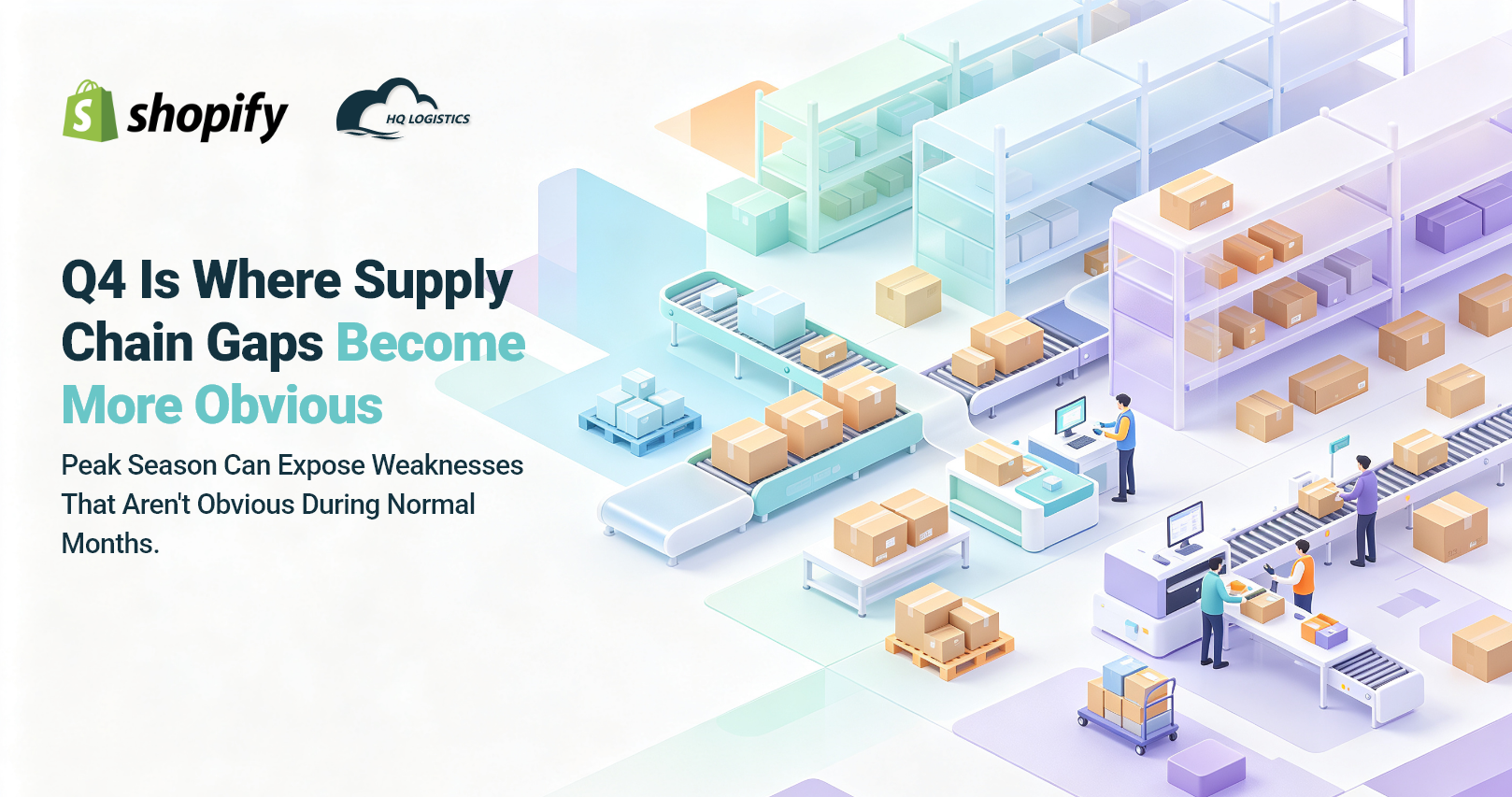
8. Q4 Is Where Supply Chain Gaps Become More Obvious
Peak season can expose weaknesses that aren't obvious during normal months.
During Q4, your store may experience:
2× Orders | 3× Orders | 5× Orders
Your supplier and fulfillment partner need to be ready for the increase.
Ask:
Can production keep up?
Is inventory sufficient?
Can QC handle increased volume?
Can packaging be prepared in advance?
Can the warehouse process orders quickly enough?
Are shipping channels ready for peak volume?
Do you have backup suppliers?
This is where a growing brand may start to outgrow a simple dropshipping model.
The issue isn't necessarily that the platform is "bad."
The issue is that your business has become more complex.
9. When Should You Consider Moving Beyond a Basic Dropshipping Model?
Here are seven signs.
1. Your Order Volume Is Increasing
You need more reliable inventory and fulfillment capacity.
2. You Have Proven Bestsellers
You can start considering overseas inventory.
3. You Need Custom Packaging
Generic packaging no longer fits your brand strategy.
4. You Need Better Quality Control
Product consistency has become a major priority.
5. You Depend Too Much on One Supplier
You want alternative sourcing options.
6. Your Shipping Costs Are Rising
You need to compare multiple routes and fulfillment locations.
7. You're Preparing for Q4
You need a supply chain that can handle higher demand.
If several of these apply to your store, it may be time to review your fulfillment strategy.
10. CJ vs. HQ: Which One Is Right for Your Brand?
The answer depends on your business stage.
CJ Dropshipping May Be a Good Fit If:
You are:
Testing products | Starting a new store | Looking for a broad product catalog | Wanting automated Shopify fulfillment | Running a low-inventory dropshipping model | Looking for an integrated dropshipping platform
CJ provides product sourcing, Shopify integration, automated order fulfillment, global warehousing, custom packaging, and logistics services.
For many new sellers, that can provide a convenient way to get started.
HQ Fulfillment May Be a Better Fit If:
You are:
Scaling an existing brand | Increasing daily order volume | Looking for multiple supplier options | Building a branded product line | Need stronger QC support | Need custom packaging | Considering U.S. or EU warehousing | Want multiple shipping channels | Need a more customized fulfillment strategy
HQ combines sourcing, quality inspection, warehousing, customization, fulfillment, and global shipping, with services designed around growing ecommerce brands.
The key difference is not simply the number of features.
It's the level of supply chain flexibility your brand needs.
CJ Dropshipping vs. HQ Fulfillment: A Practical Comparison
| What You Need | CJ Dropshipping | HQ Fulfillment |
|---|---|---|
| Start Dropshipping | Strong fit | Strong fit |
| Test New Products | Strong fit | Strong fit |
| Shopify Automation | ✓ | ✓ |
| Product Sourcing | ✓ | ✓ |
| Quality Inspection | ✓ | ✓ |
| Custom Packaging | ✓ | ✓ |
| Multiple Suppliers | Supplier network | ✓ |
| China Fulfillment | ✓ | ✓ |
| U.S. Warehouse | ✓ | ✓ |
| EU Warehouse | ✓ | ✓ |
| Multiple Shipping Routes | ✓ | ✓ |
| Brand Customization | ✓ | ✓ |
| Customized Supply Chain | More platform-oriented | Strong focus |
| Scaling Existing Brands | ✓ | Strong focus |
| End-to-End Supply Chain | ✓ | Strong focus |
The comparison isn't about finding a universal winner.
It's about finding the right operational model for your brand.
Why Growing Brands May Need More Than a Dropshipping Platform
At the beginning, simplicity is valuable.
You want:
Find Product → Sell → Fulfill
As your business grows, your priorities change.
You start thinking about:
Supplier Reliability | Quality Control | Inventory Planning | Brand Experience | Shipping Costs | Delivery Speed | Warehouse Locations | Q4 Capacity | Supply Chain Risk
The backend becomes just as important as your storefront.
That's why growing brands often need to move from:
Product Supplier
to:
Supply Chain Partner
How HQ Supports Growing Ecommerce Brands
HQ is designed to connect the different stages of your supply chain.
1. Sourcing
Find products and supplier options based on your requirements.
2. Multiple Suppliers
Build more flexible sourcing options instead of relying entirely on one supplier.
3. Quality Inspection
Check products before fulfillment to reduce quality-related customer problems.
4. Custom Packaging
Develop branded packaging, labels, inserts, and other customization.
5. China Fulfillment
Keep new and lower-volume products flexible in China.
6. U.S. Overseas Warehouse
Pre-stock proven U.S. products for domestic fulfillment.
7. EU Fulfillment
Use EU inventory to support multiple European markets.
8. Multiple Shipping Channels
Choose logistics solutions based on product, destination, cost, and delivery requirements.
9. Order Automation
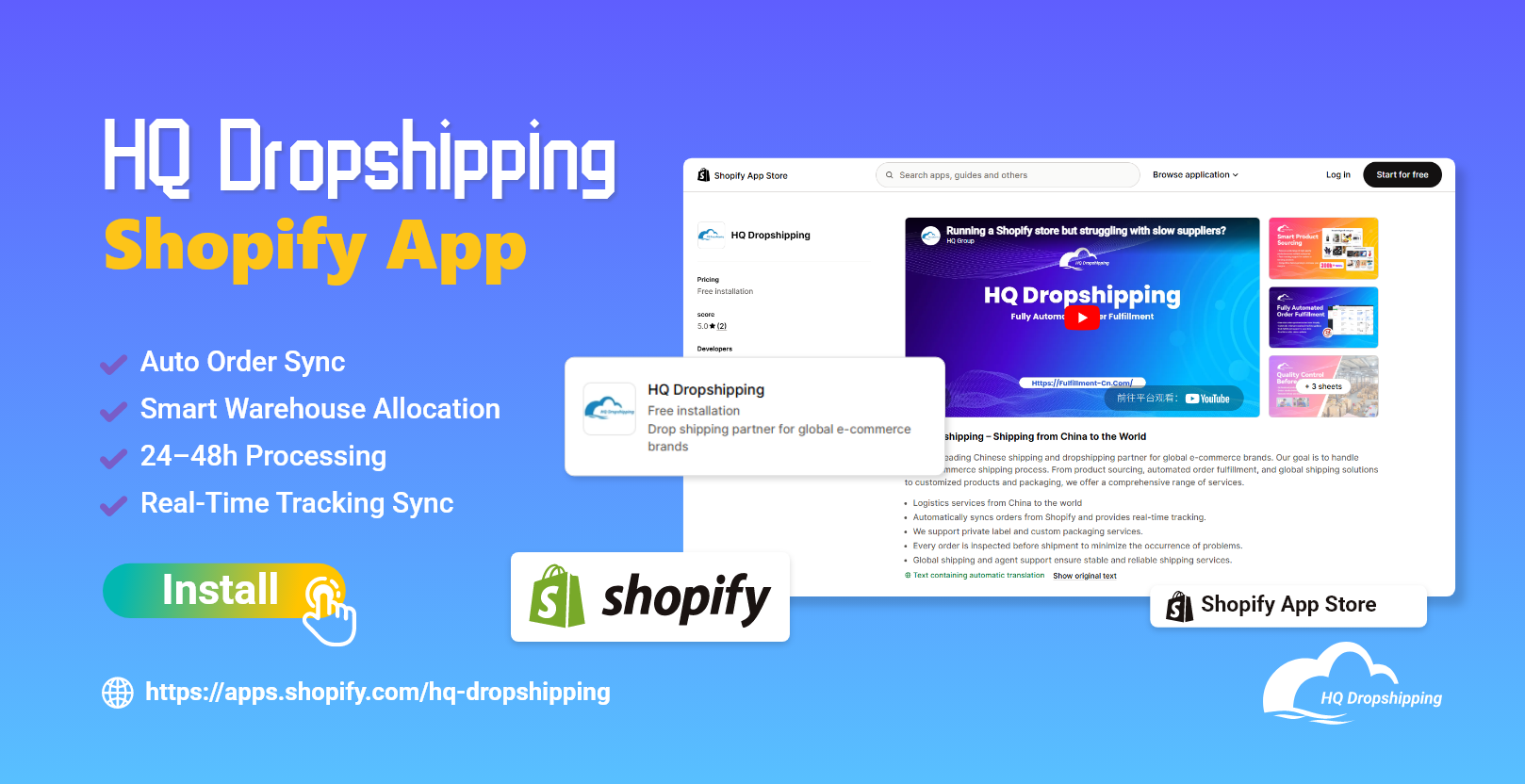
Connect your ecommerce store and synchronize orders and tracking.
10. Scalable Fulfillment
Build a fulfillment process that can evolve as your order volume increases.
The goal is simple:
Don't force your brand into one fulfillment model.
Build a supply chain around your products, your markets, and your growth stage.
Final Thoughts
CJ Dropshipping and HQ Fulfillment both provide tools and services that can help ecommerce sellers source products and fulfill orders.
The more important question is what happens after your store starts growing.
When you're testing products, a streamlined dropshipping platform can be extremely useful.
But when you have:
Higher order volume | Proven bestsellers | Custom packaging | Multiple products | International customers | More complex shipping requirements | Q4 demand | Growing brand expectations
you may need more than automated dropshipping.
You may need a supply chain partner that can support:
Sourcing → Multiple Suppliers → QC → Packaging → Warehousing → Fulfillment → Shipping
That's where HQ focuses its value.
Start simple. Scale strategically. Build a supply chain that grows with your brand.
FAQs
Is CJ Dropshipping better than HQ Fulfillment?
Is HQ Fulfillment a CJ Dropshipping alternative?
Does HQ Fulfillment support Shopify?
Yes. HQ supports Shopify integration and automated order and tracking synchronization.
Can HQ provide custom packaging?
Yes. HQ offers custom branding and packaging support for ecommerce brands.