CJ Dropshipping vs. HQ: When Should Growing Shopify Brands Upgrade Their Fulfillment?
CJ Dropshipping vs. HQ: When Should Growing Shopify Brands Upgrade Their Fulfillment?
CJ Dropshipping vs. HQ Fulfillment is not simply a question of which platform is better.
Both can help ecommerce sellers source products and fulfill orders.
But as your store grows, your needs can change.
When you're testing products, you may mainly care about:
Product Price → Sourcing → Order Fulfillment → Shipping
But when your store reaches consistent daily orders, you may need much more:
Multiple Suppliers → Quality Control → Custom Packaging → Inventory Planning → Warehousing → Multiple Shipping Channels → Brand Support
That's where the difference becomes more important.
CJ Dropshipping can be useful for product testing and traditional dropshipping. HQ Fulfillment is built around a broader supply chain approach for growing brands.
So the real question isn't:
“Which platform is better?”
It's:
“Which fulfillment model fits my brand's next stage?”
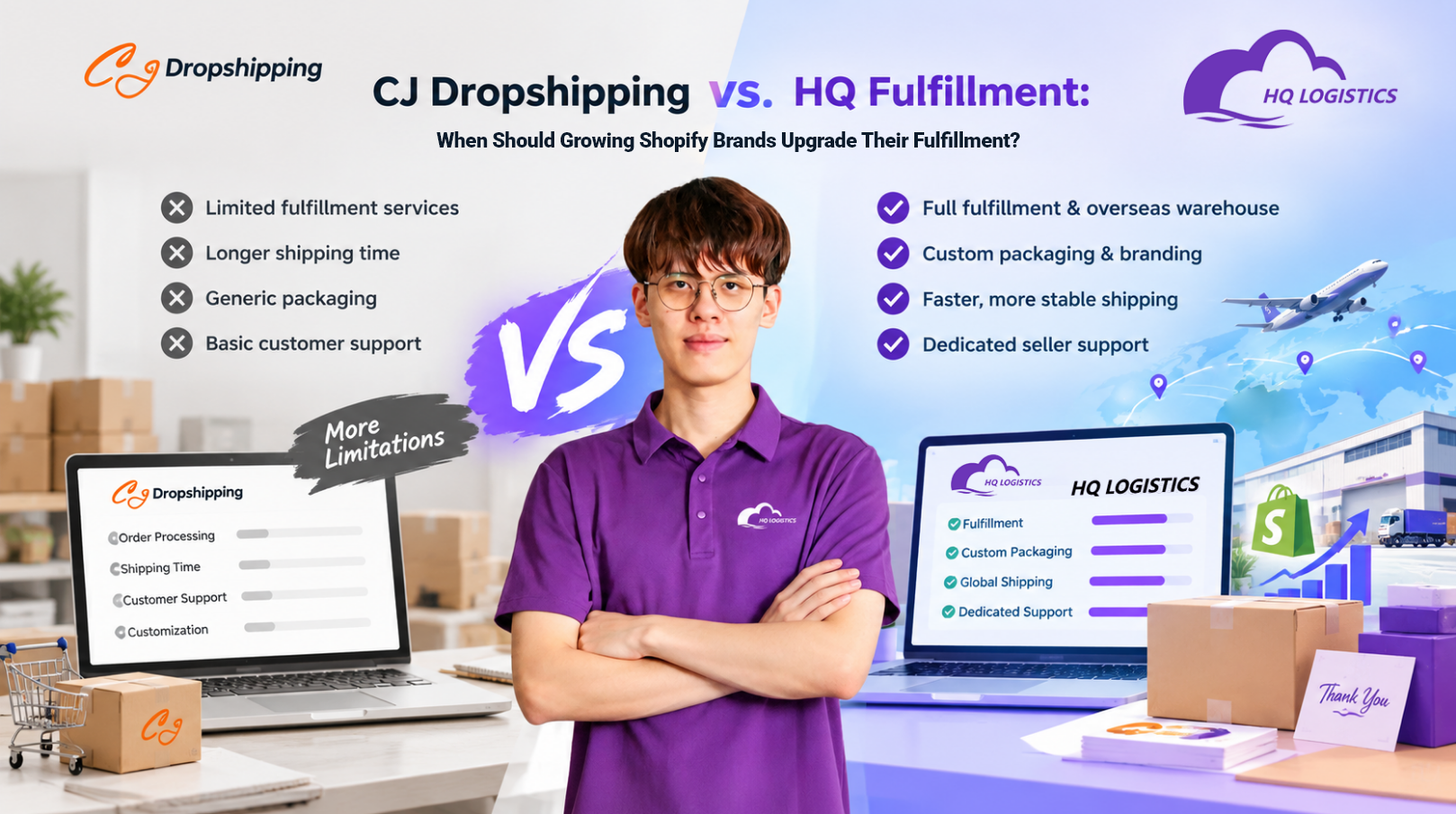
CJ Dropshipping vs. HQ Fulfillment: The Key Difference
At a basic level, both services can support product sourcing and ecommerce fulfillment.
The difference becomes clearer when you look at how a growing brand manages its entire supply chain.
Traditional Dropshipping Model
Find Product → Place Order → Supplier Fulfills → Ship to Customer
This model can work well when you're testing products or operating at relatively low volume.
Growing Brand Fulfillment Model
Source → Manage Suppliers → QC → Customize → Plan Inventory → Warehouse → Fulfill → Ship
The second model involves more coordination.
But that's often what growing brands need.
Your business doesn't stop becoming a dropshipping business because you have more orders.
Your supply chain simply becomes more complicated.
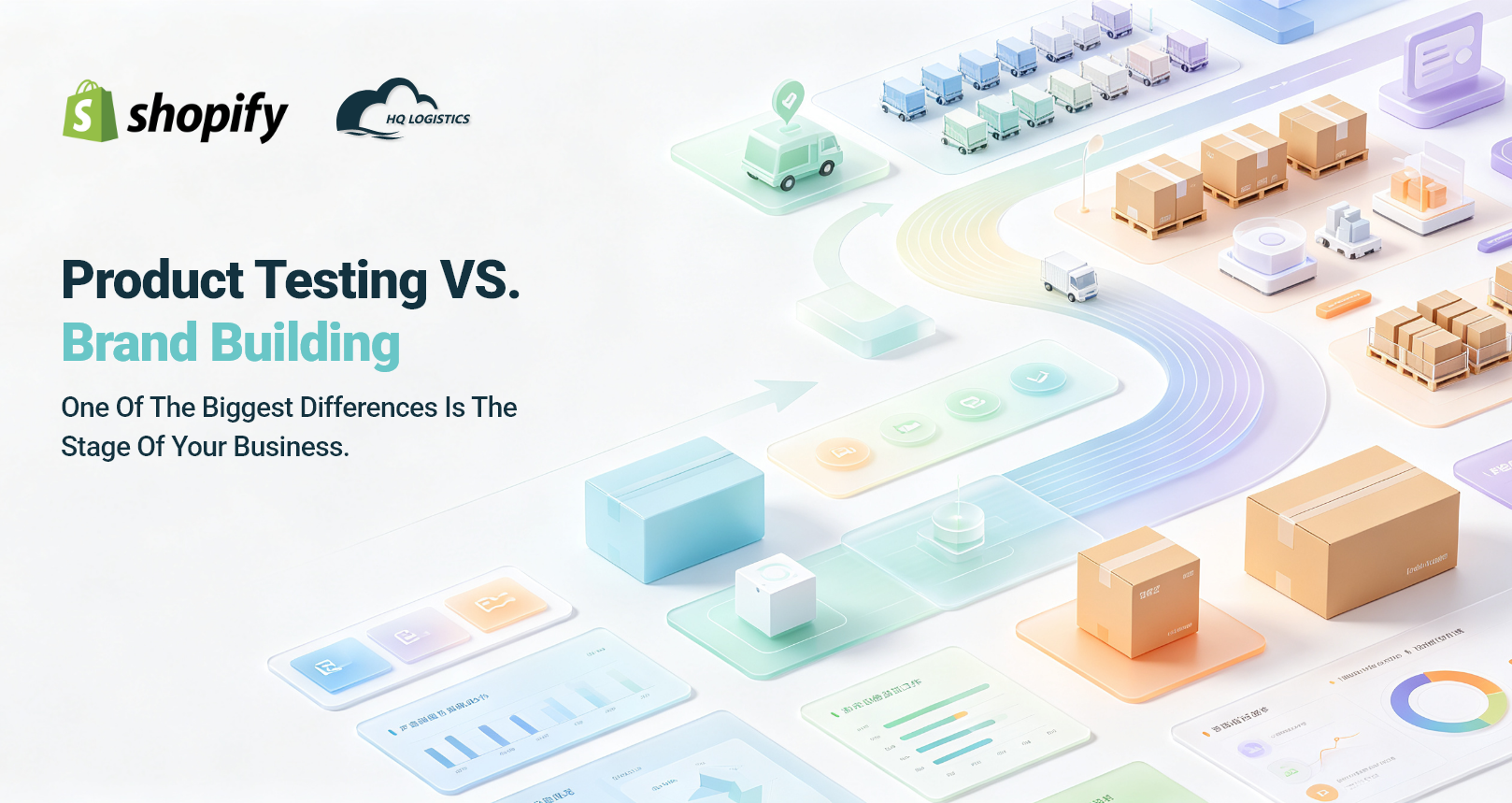
1. Product Testing vs. Brand Building
One of the biggest differences is the stage of your business.
If you're testing new products, speed and flexibility are extremely important.
You want to:
Find Product → Test Demand → Measure Orders → Keep Winners → Drop Losers
A dropshipping platform can be useful for this stage.
But once you identify winning products, your priorities often change.
You may want:
Better Product Quality | Stable Supply | Custom Packaging | Consistent Product Specifications | Better Inventory Planning | Faster Fulfillment | More Competitive Shipping
At this point, you're no longer simply testing products.
You're building a brand.
And brand building requires more control over the supply chain.
2. One Supplier vs. Multiple Supplier Options
Supplier dependency can become a bigger problem as order volume increases.
Imagine you have a bestseller doing:
10 Orders/Day → 30 Orders/Day → 100 Orders/Day
What happens if your supplier suddenly:
Runs Out of Stock?
Raises Prices?
Slows Production?
Changes Product Quality?
Can't Handle Peak Demand?
At low volume, you may simply wait.
At high volume, every delay can directly affect revenue and customer satisfaction.
A stronger supply chain can use:
Supplier A → Main Source
Supplier B → Alternative Source
Supplier C → Backup Capacity
You don't necessarily need to divide every order between suppliers.
The goal is to have reliable sourcing alternatives for important products
.This is particularly valuable when a product suddenly becomes a bestseller.
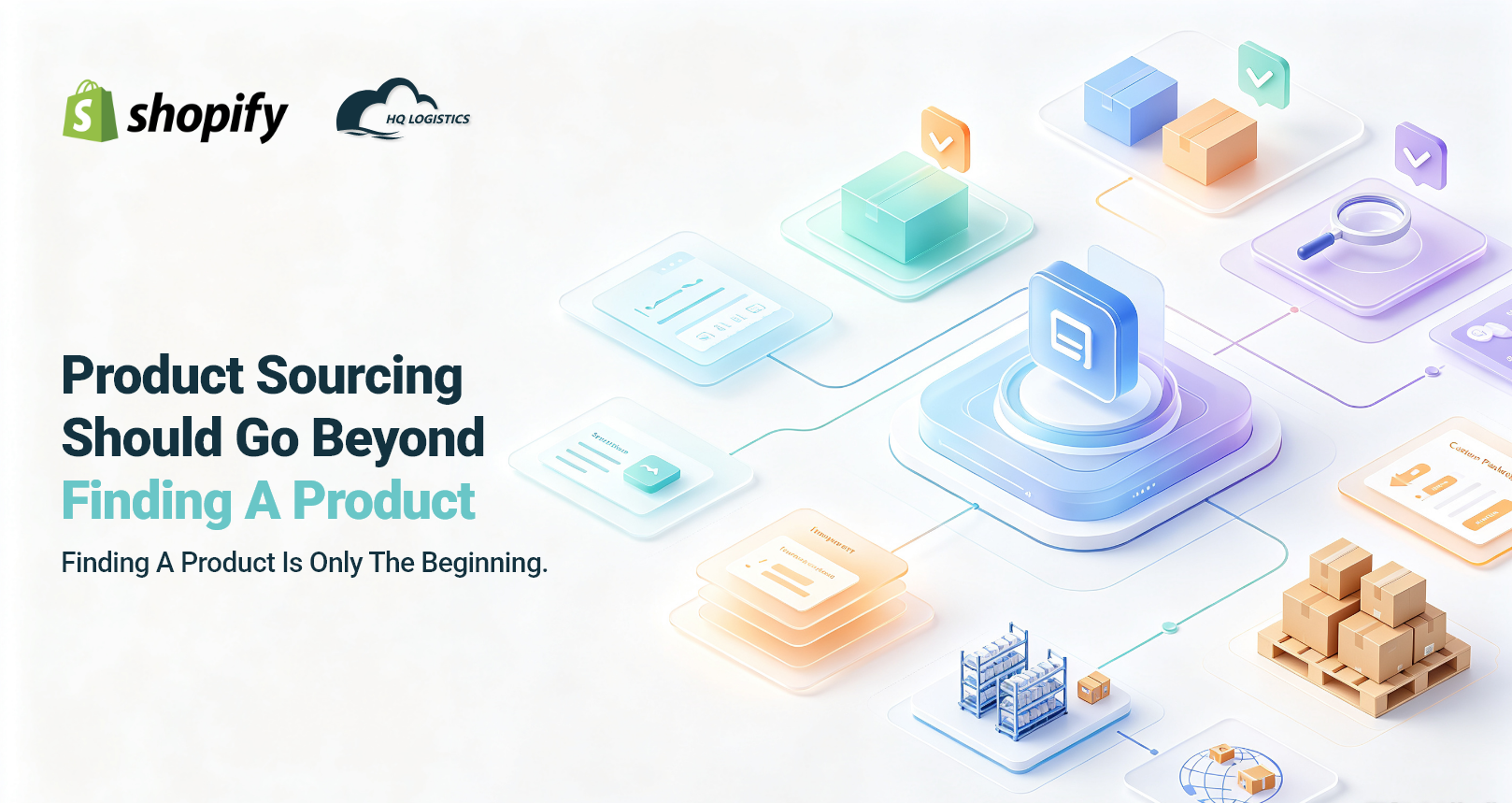
3. Product Sourcing Should Go Beyond Finding a Product
Finding a product is only the beginning.
A growing brand may need to answer:
Who manufactures it?
Can the supplier maintain quality?
Can production scale?
Are there alternative suppliers?
Can the product be customized?
Can packaging be customized?
Can inventory be replenished quickly?
A stronger sourcing strategy looks at the entire product lifecycle:
Product Research → Supplier Selection → Sample Testing → Quality Control → Production → Fulfillment
This is a major shift from simply finding a product at the lowest price.
4. Quality Control Becomes More Important as Orders Grow
Quality problems become more expensive when order volume increases.
For example:
1% Defect Rate × 100 Orders = 1 Potential Problem
1% Defect Rate × 1,000 Orders = 10 Potential Problems
And that's before considering:
Returns
Refunds
Replacement Costs
Negative Reviews
Customer Support
This is why growing brands should think about quality control before fulfillment.
A better workflow is:
Supplier → Warehouse → Quality Inspection → Fulfillment → Customer
Instead of:
Supplier → Customer → Discover Problem
HQ can support product quality inspection before orders are shipped.
This is particularly useful for categories where product consistency matters, including:
Baby Products | Pet Products | Small Electronics | Beauty Products | Supplements | Branded Products
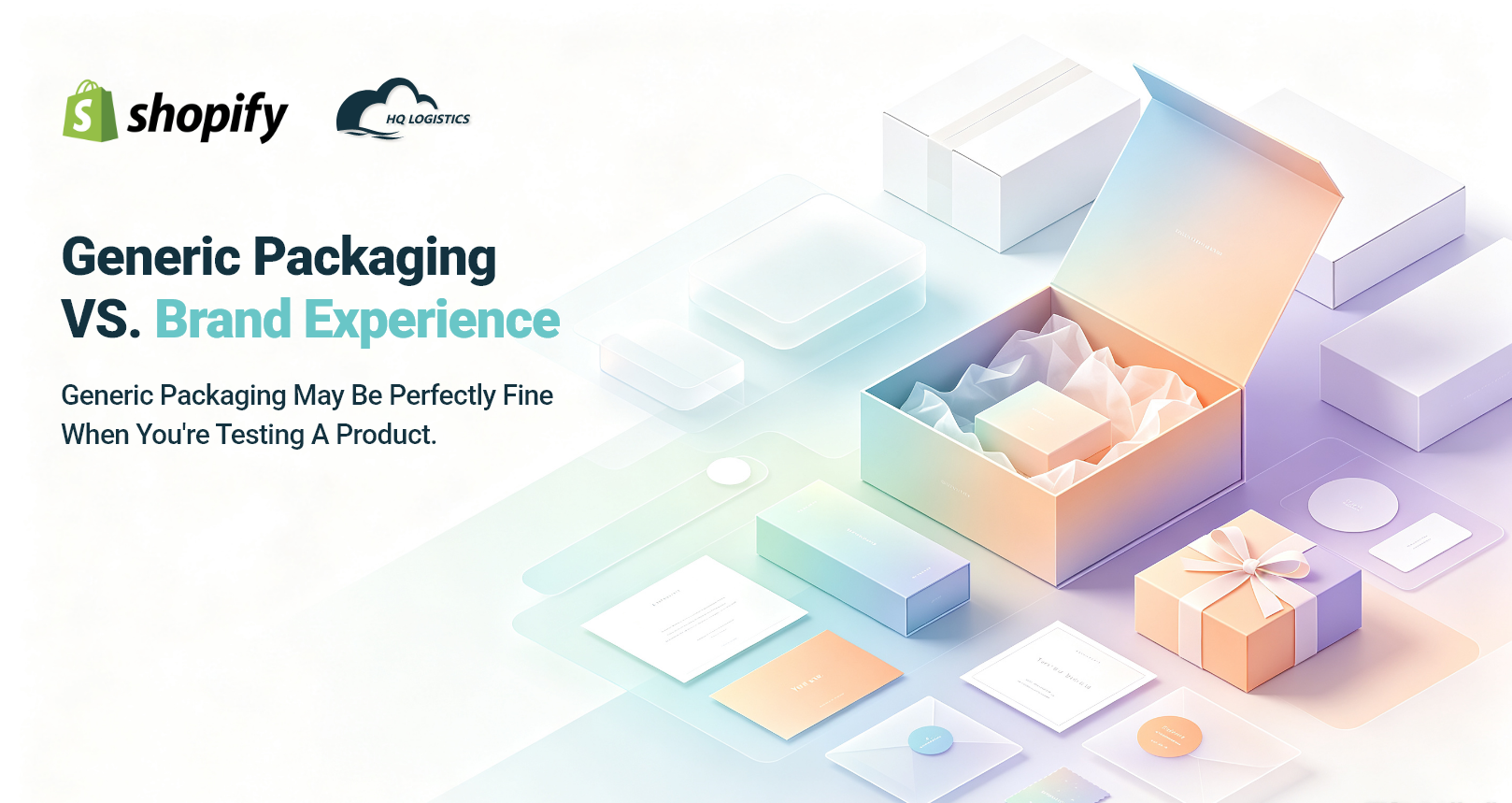
5. Generic Packaging vs. Brand Experience
Generic packaging may be perfectly fine when you're testing a product.
But eventually, customers should recognize your brand.
That can mean moving from:
Generic Product → Generic Packaging
to:
Branded Product → Branded Customer Experience
Depending on your product, you may need:
Custom Boxes | Branded Bags | Labels | Hangtags | Product Inserts | Thank-You Cards | Instruction Cards
This is an important area for growing Shopify brands.
Your supplier isn't just handling a product anymore.
They're helping you create the experience that reaches your customer.
HQ can support custom packaging as part of a broader fulfillment strategy.
For suitable European products, brands can also explore eco-friendly packaging options.
6. Shipping Should Be More Flexible as Your Business Grows
When you're shipping a small number of orders, one shipping channel may be enough.
But as your product range expands, one route may no longer work for everything.
Different products can have different shipping requirements.
For example:
Standard Products → Standard Ecommerce Channel
Battery Products → Suitable Specialized Channel
U.S. Bestsellers → U.S. Fulfillment
EU Bestsellers → EU Fulfillment
High-Priority Orders → Faster Shipping Option
This means growing brands need to think beyond:
“What's the cheapest shipping method?”
Instead ask:
“What's the right shipping solution for this product, destination, and order volume?”
HQ supports multiple shipping channels so brands can build a more flexible logistics strategy.
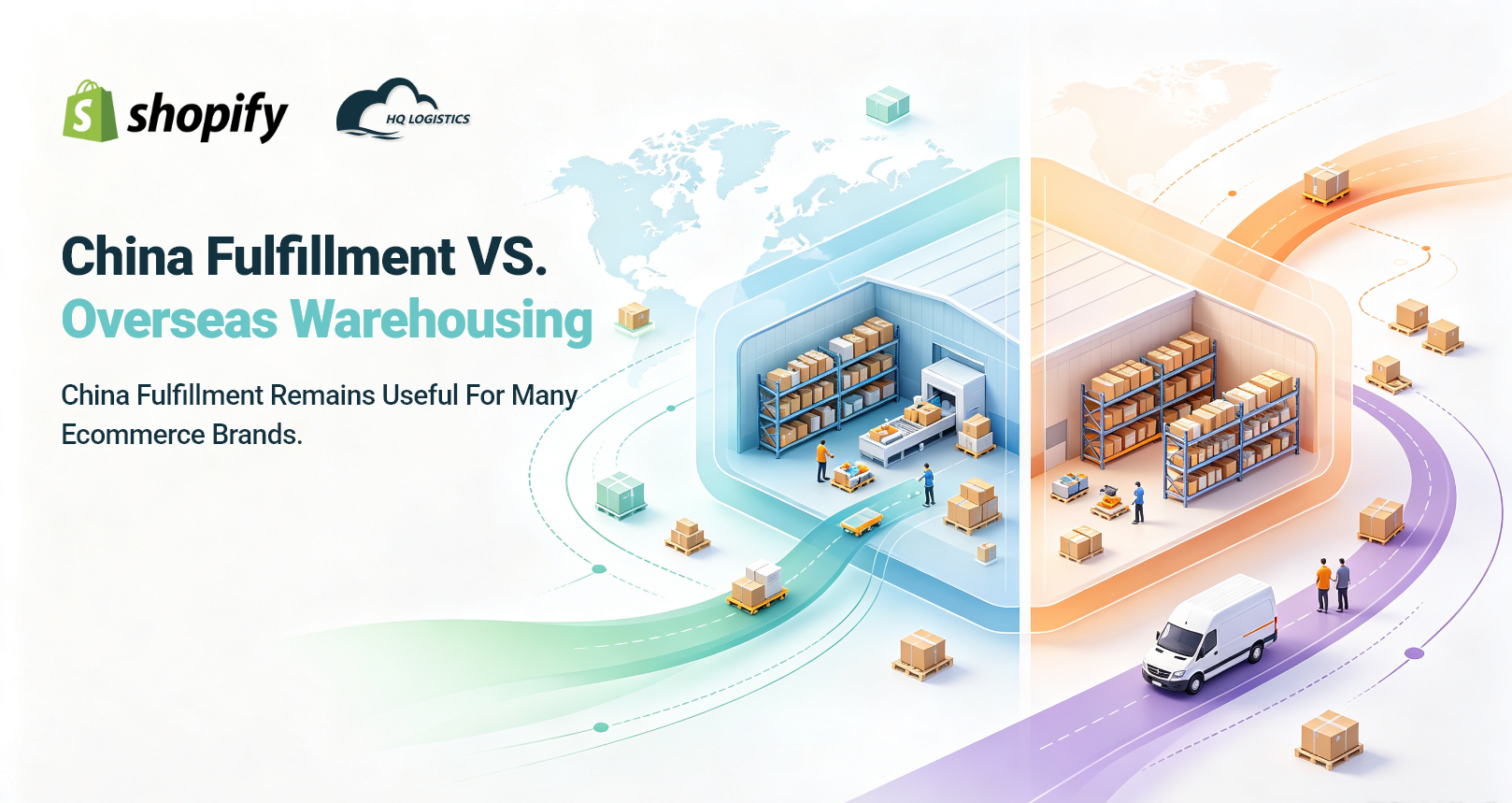
7. China Fulfillment vs. Overseas Warehousing
China fulfillment remains useful for many ecommerce brands.
It's especially helpful for:
New Products
Low-Volume Products
Product Testing
Long-Tail SKUs
You don't necessarily need to move every product overseas.
A hybrid model can be more practical.
New Product
China Sourcing → China Fulfillment → Test Demand
Proven U.S. Bestseller
China → U.S. Warehouse → U.S. Customer
Proven EU Bestseller
China → EU Warehouse → EU Customer
This allows brands to combine flexibility with faster local fulfillment where demand is stable.
8. When Does a U.S. Warehouse Make Sense?
For brands with stable U.S. demand, overseas warehousing can become an important part of the fulfillment strategy.
For example:
China Sourcing → QC → Bulk Inventory → U.S. Warehouse → U.S. Customer
Instead of shipping every order internationally from China, proven products can be positioned closer to U.S. customers.
This can help with:
Domestic U.S. Fulfillment | Delivery Speed | Shipping Efficiency | Inventory Planning | Peak-Season Capacity
But overseas warehousing isn't automatically the right answer for every SKU.
For new products, it can make more sense to test demand first.
Test → Prove Demand → Stock Bestsellers → Fulfill Locally
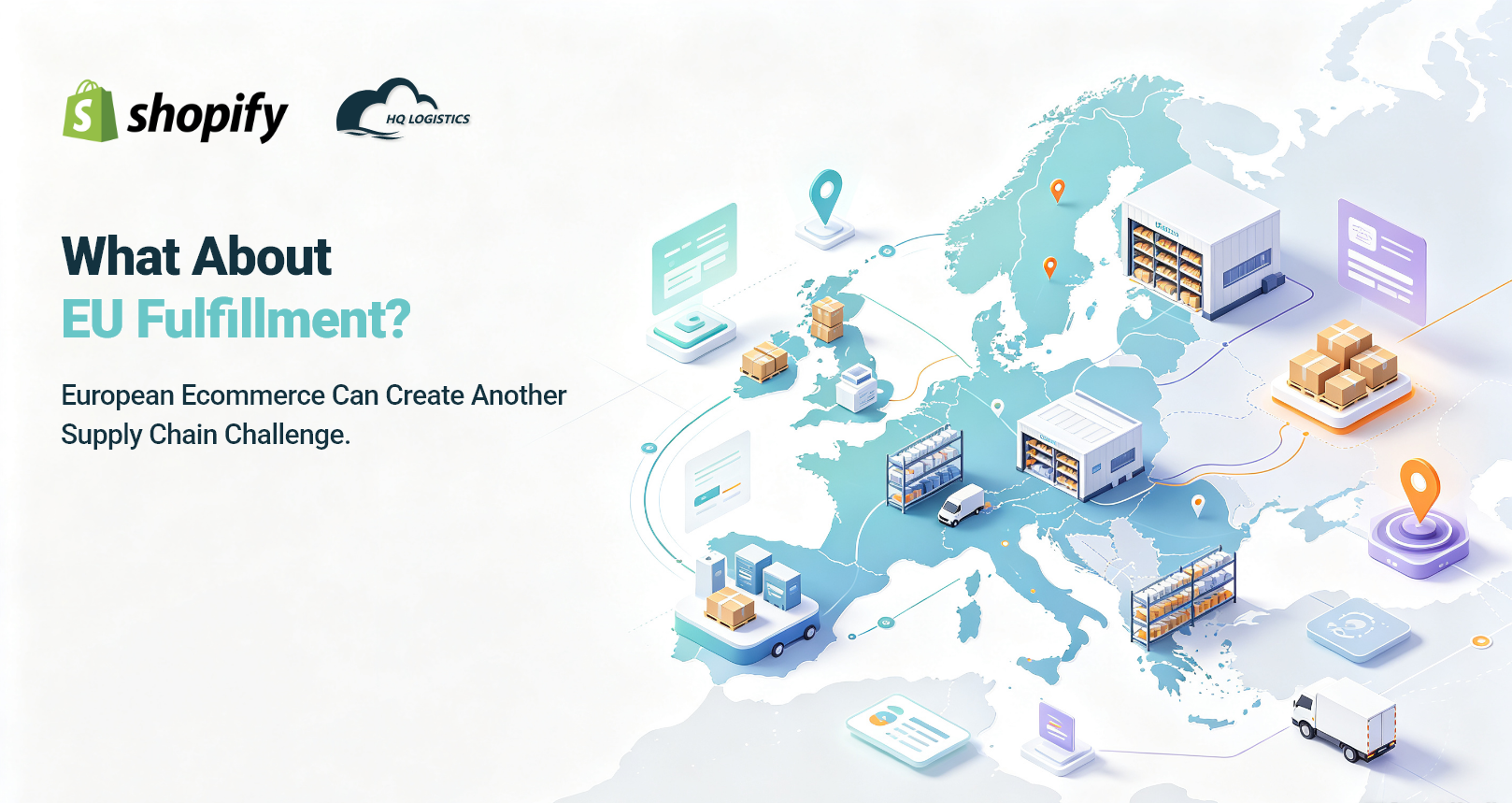
9. What About EU Fulfillment?
European ecommerce can create another supply chain challenge.
You may have customers in:
Germany | France | Italy | Spain | Other EU Markets
Shipping every order individually from China can become less efficient as European order volume grows.
A more localized strategy can be:
China → EU Warehouse → Multiple EU Markets
This can help brands position inventory closer to European customers.
For growing brands, a hybrid approach can work well:
New Products → China
Proven EU Products → EU Warehouse
The important point is that fulfillment should follow your sales data.
Don't move inventory overseas simply because you can.
Move the right products based on demand.
10. CJ Dropshipping vs. HQ for Growing Shopify Brands
For a growing Shopify store, the biggest difference isn't necessarily whether you can fulfill an order.
Both models can support order fulfillment.
The bigger question is how much supply chain support you need around the order.
CJ Dropshipping
A traditional dropshipping workflow may be suitable when your main priorities are:
Product Testing | Product Sourcing | Low MOQ | Automated Order Processing | Basic Fulfillment | Testing Multiple Products
This can be useful for sellers who are still searching for winning products.
HQ Fulfillment
HQ is positioned for brands that need more control and support across:
Sourcing | Supplier Management | Quality Inspection | Custom Packaging | Inventory Planning | China Fulfillment | U.S. Warehousing | EU Fulfillment | Multiple Shipping Channels
The difference can be summarized as:
Product Testing → Dropshipping Model
Brand Growth → Full Supply Chain Model
Of course, these stages can overlap.
A store can start with dropshipping and gradually move toward a more structured fulfillment strategy.
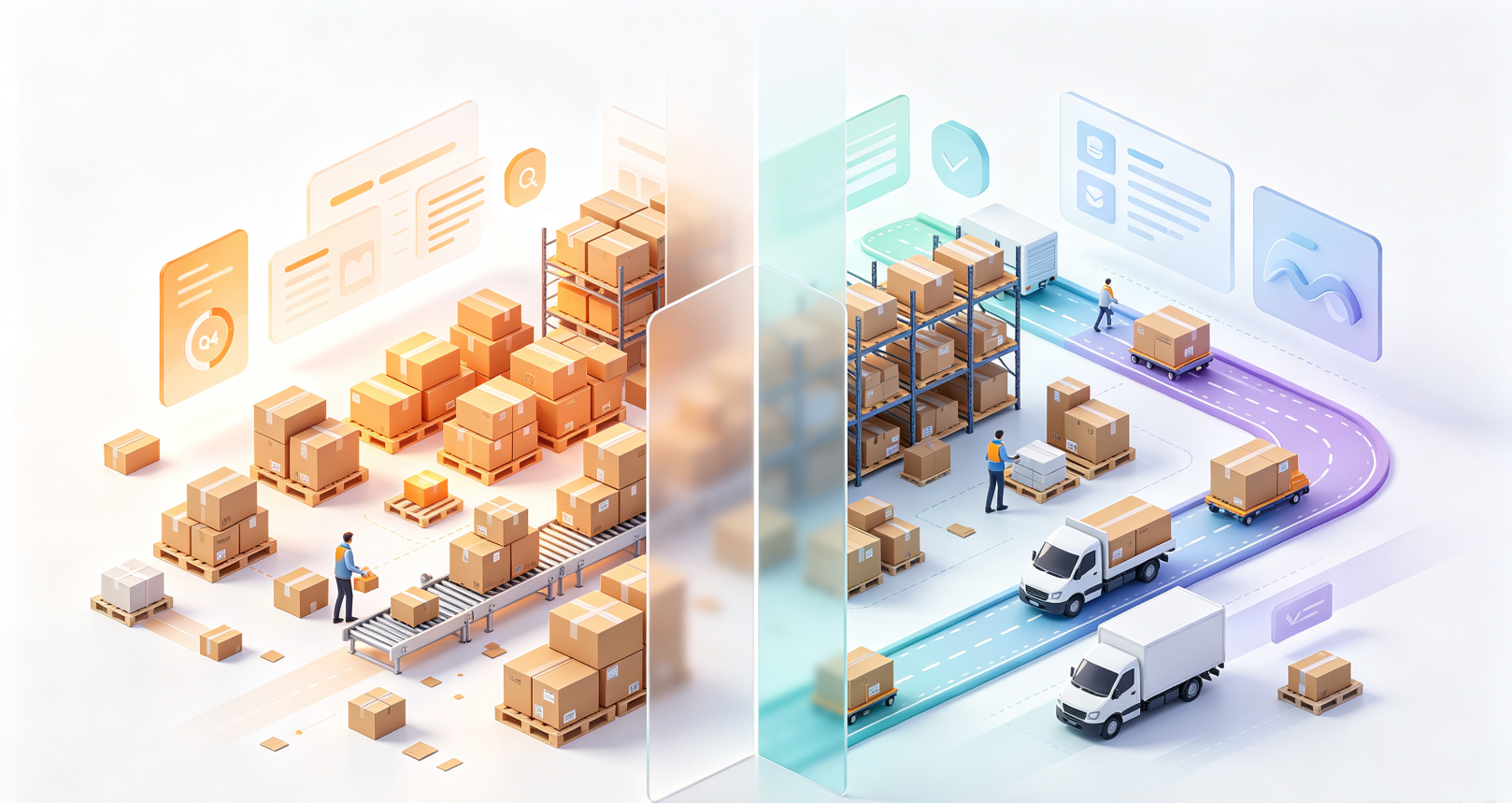
11. CJ vs. HQ: Which Is Better for Q4?
Q4 can change everything.
Order volume can increase quickly during:
Halloween → Black Friday → Cyber Monday → Christmas
A supplier that handles normal demand may struggle during peak season.
Before Q4, ask:
Can My Supplier Handle Higher Order Volume?
Can They Replenish Fast Enough?
Do They Have Backup Suppliers?
Can They Maintain Product Quality?
Can They Support Custom Packaging?
Do They Have Multiple Shipping Channels?
Can They Support Overseas Warehousing?
This is where supply chain flexibility becomes extremely important.
A growing brand shouldn't prepare for Q4 only by increasing advertising.
You also need to prepare:
Products → Suppliers → Inventory → Warehouse → Fulfillment → Shipping
12. Why Multiple Shipping Channels Matter During Peak Season
Peak season can create pressure on logistics capacity.
Shipping prices may change.
Transit times may fluctuate.
Some routes may become congested.
If your entire business depends on one channel, you have fewer alternatives.
A more flexible strategy is Primary Channel → Alternative Channel → Backup Channel
.This gives your fulfillment team more options when conditions change.
For brands selling different products to different markets, this flexibility can be particularly valuable.
13. Compare Total Fulfillment Cost — Not Just Product Price
One common mistake is comparing suppliers based only on unit price.
Imagine:
Supplier A = $4.00
Supplier B = $4.30
Supplier A looks cheaper.
But what if Supplier A also creates:
Higher Defect Rates
More Returns
Higher Packaging Costs
Higher Shipping Costs
Slower Processing
More Customer Service Issues
Your actual cost may be higher.
A better formula is:
Total Fulfillment Cost = Product + QC + Packaging + Fulfillment + Shipping + Returns
The cheapest supplier isn't always the lowest-cost supply chain.
14. When Should You Move Beyond Basic Dropshipping?
You don't need to switch fulfillment models just because your store has more orders.
Instead, look for signs that your current system is becoming a bottleneck.
You May Be Ready to Upgrade If:
Your Orders Are Growing Quickly
Best Sellers Keep Going Out of Stock
Product Quality Is Inconsistent
Your Supplier Responds Too Slowly
You Need Custom Packaging
You Need Multiple Suppliers
Shipping Costs Are Rising
Customers Expect Faster Delivery
You're Entering the U.S. or EU
You're Preparing for Q4
You Need Overseas Warehousing
These are signs that your business may need more than basic dropshipping.
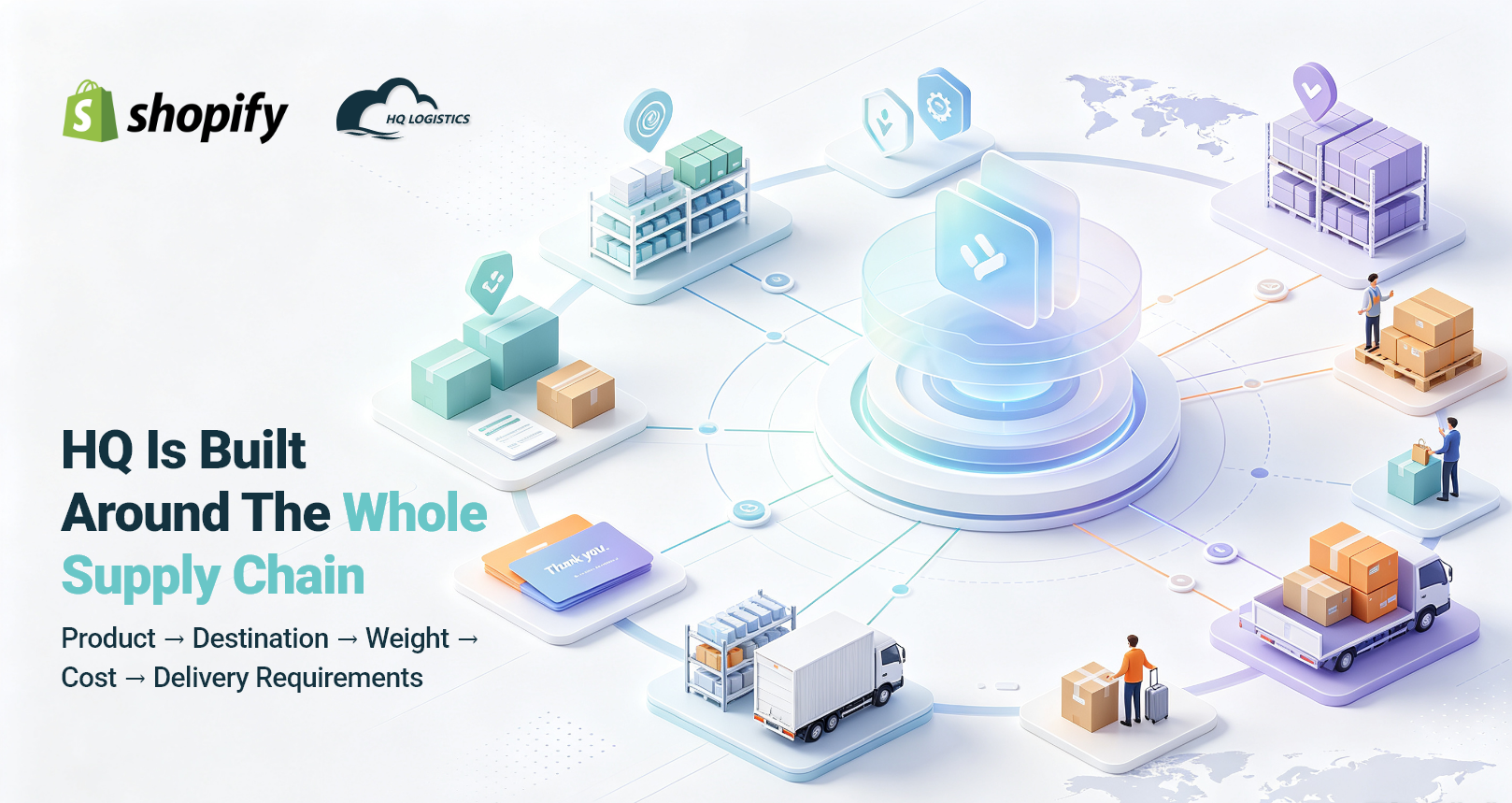
15. HQ Is Built Around the Whole Supply Chain
HQ's approach is to connect the major parts of ecommerce fulfillment through a complete process: China Sourcing → Supplier Management → Quality Inspection → Custom Packaging → Inventory → Warehousing → Order Fulfillment → Global Logistics
.This allows growing brands to work on more than just individual orders.
Product Sourcing
Find products and supplier options based on your requirements.
Multiple Suppliers
Create alternative sourcing options for important products and reduce dependence on one supplier.
Quality Inspection
Check products before fulfillment to help reduce avoidable quality problems.
Custom Packaging
Build a stronger brand experience with:
Custom Boxes | Labels | Inserts | Thank-You Cards | Hangtags
China Fulfillment
Keep new and lower-volume products flexible while testing demand.
U.S. Overseas Warehouse
Pre-stock proven products for domestic U.S. fulfillment when demand supports it.
EU Fulfillment
Position proven inventory in Europe and fulfill across multiple EU markets.
Multiple Shipping Channels
Choose logistics based on:
Product → Destination → Weight → Cost → Delivery Requirements
This creates a supply chain that can adapt as your brand grows.
CJ Dropshipping vs. HQ: A Practical Way to Decide
Instead of asking which company is universally better, look at your current business stage.
If You're Mainly Testing Products
You may prioritize:
Fast Product Discovery | Low Initial Commitment | Simple Order Fulfillment | Flexible Product Testing
A dropshipping model can make sense here.
If You Have Proven Bestsellers
Your priorities may become:
Stable Suppliers | Quality Control | Inventory Planning | Custom Packaging | Multiple Shipping Channels | Overseas Warehousing
At this stage, a broader fulfillment model may make more sense.
If You're Building a Long-Term Brand
You may need:
Sourcing + Supplier Management + QC + Branding + Warehousing + Fulfillment + Logistics
That's where HQ's fulfillment model is designed to provide additional support.
The Best Fulfillment Strategy Should Fit Your Brand
There is no single fulfillment strategy that works for every ecommerce seller.
A new Shopify store may need flexibility.
A growing brand may need supplier stability.
A mature brand may need inventory planning and multiple warehouses.
The important thing is to build a supply chain around your actual business needs.
Think about:
Product Category | Order Volume | Target Market | Customer Expectations | Inventory Turnover | Shipping Cost | Brand Positioning | Growth Plans
Your fulfillment partner should fit these requirements.
Final Thoughts
CJ Dropshipping vs. HQ Fulfillment isn't simply a comparison between two fulfillment providers.
It's a comparison between two different stages of ecommerce growth.
For product testing, a traditional dropshipping model can provide flexibility.
But once your store has proven winners, higher order volume, stronger branding requirements, and customers across multiple markets, your supply chain may need more support.
That can mean:
Multiple Suppliers | Quality Inspection | Custom Packaging | Multiple Shipping Channels | China Fulfillment | U.S. Warehousing | EU Fulfillment | Better Inventory Planning
The goal isn't to move away from dropshipping just for the sake of changing suppliers.
The goal is to move from Testing Products
to Building a Brand and eventually to Building a Scalable Supply Chain.For growing ecommerce brands, the right fulfillment partner is the one that can support where your business is going, not just where it is today.
CJ Dropshipping vs. HQ Fulfillment
ultimately comes down to one question:Do you need a supplier that helps you fulfill orders, or a supply chain partner that helps you manage growth?
FAQs
Is HQ Fulfillment better than CJ Dropshipping?
There isn't one universal answer. CJ Dropshipping can be useful for product testing and traditional dropshipping, while HQ is positioned for growing brands that need broader support across sourcing, supplier management, QC, packaging, warehousing, fulfillment, and logistics.
What is the difference between CJ Dropshipping and HQ Fulfillment?
The main difference is the scope of support. A traditional dropshipping model focuses heavily on sourcing and order fulfillment. HQ focuses on a broader supply chain model that can include multiple suppliers, quality inspection, custom packaging, inventory planning, China fulfillment, U.S. warehousing, EU fulfillment, and multiple shipping channels.
Is CJ Dropshipping good for Shopify stores?
CJ Dropshipping can be useful for Shopify sellers who are testing products, sourcing products, and managing dropshipping orders. As a store grows, however, sellers may need to evaluate whether their current supplier can support more complex sourcing, inventory, branding, and fulfillment requirements.
When should I switch from dropshipping to fulfillment?
Consider upgrading when you have proven bestsellers, stable order volume, frequent stockouts, quality issues, increasing shipping costs, custom branding requirements, or growing demand in the U.S. or EU.
Should I use multiple suppliers?
Multiple suppliers can provide backup sourcing options and reduce dependence on a single supplier. You don't need multiple suppliers for every product, but having alternatives for key bestsellers can make your supply chain more flexible.
Can HQ provide custom packaging?
Yes. HQ can support custom packaging, labels, inserts, thank-you cards, hangtags, and other branding elements depending on the product and requirements.
Can HQ provide U.S. and EU fulfillment?
Yes. HQ can support China fulfillment as well as U.S. overseas warehousing and EU fulfillment. A hybrid strategy can be used to keep new products flexible while positioning proven products closer to customers.
Does HQ support multiple shipping channels?
Yes. HQ can provide multiple logistics options so brands can select shipping solutions based on the product, destination, weight, cost, and delivery requirements.
Should I change suppliers before Q4?
If your current supplier has problems with capacity, quality, inventory, packaging, or shipping, reviewing alternative suppliers before Q4 can help reduce peak-season risk. It is better to test a new supply chain before peak demand arrives than to change everything after problems occur.