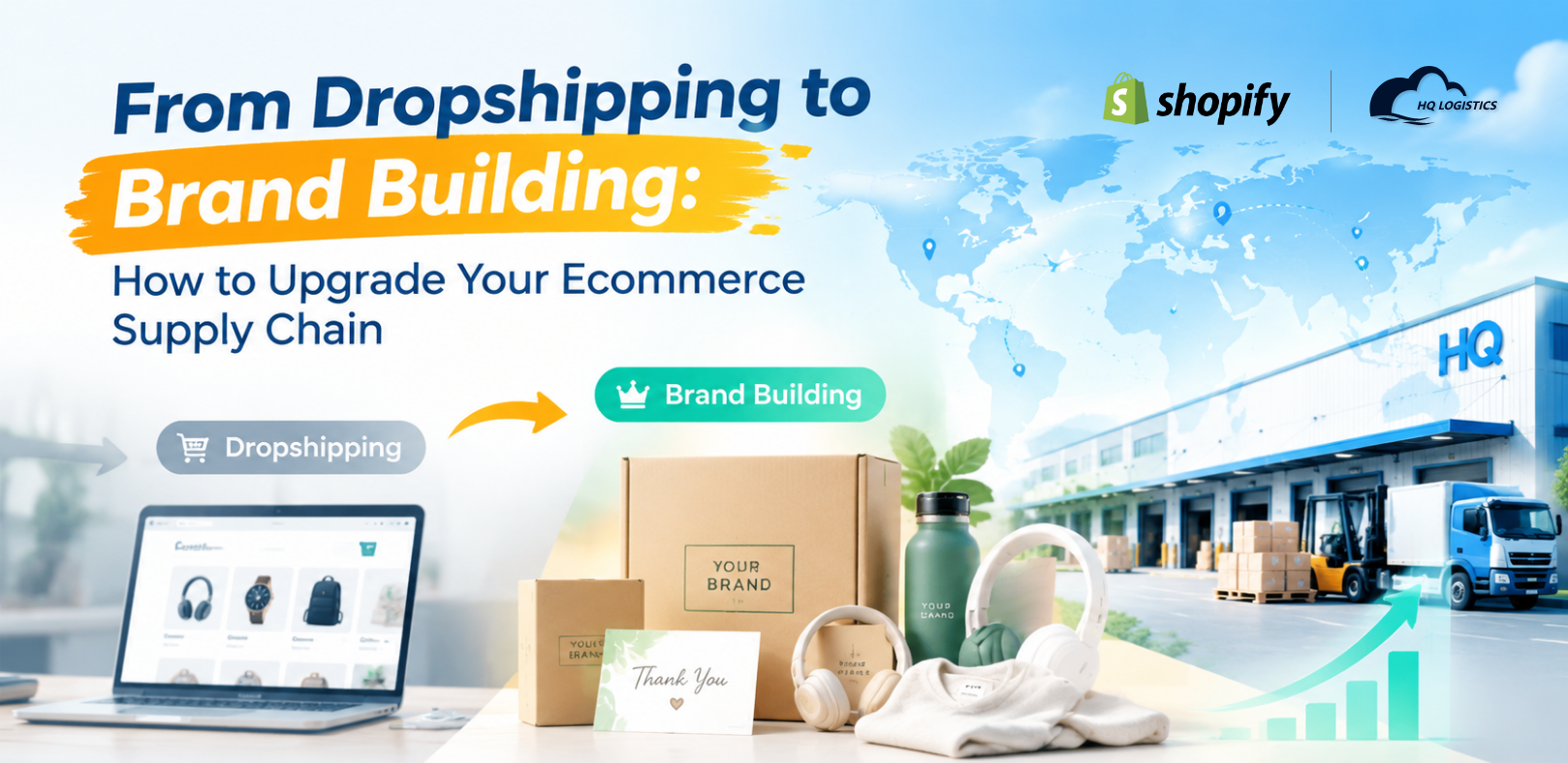
From Dropshipping to Brand Building: How to Upgrade Your Ecommerce Supply Chain
From Dropshipping to Brand Building: How to Upgrade Your Ecommerce Supply Chain
Starting an ecommerce business has never been easier.
With dropshipping, sellers can quickly test products, launch stores, and reach customers without investing heavily in inventory.
But as your store grows, the challenges also grow.
More orders create more complexity.
More customers create higher expectations.
More sales require better systems.
At some point, many Shopify brands face the same question:
“Is my current dropshipping model ready for the next stage of growth?”
The transition from dropshipping to brand building is not about changing your business overnight.
It is about upgrading your supply chain step by step.
From:
Finding Products → Fulfilling Orders
to:
Building Products → Managing Suppliers → Creating Experiences → Scaling Globally
Why Dropshipping Is a Great Starting Point
Dropshipping provides many advantages for new ecommerce sellers.
You can:
Test products quickly | Avoid large inventory investments | Launch a store with lower risk | Explore different markets | Identify potential winning products
For beginners, this model makes sense.
You don't need to immediately build a complex supply chain.
You can start with:
Product Research → Supplier → Customer
This simple structure helps many entrepreneurs discover what works.
But once you find winning products, your priorities start changing.
The Challenge: A Successful Product Needs a Better System
A product that sells 5 orders per day and a product that sells 500 orders per day require completely different operations.
At the beginning, you may only focus on:
Product Cost
Shipping Price
Order Processing
But growth introduces new questions:
Can the supplier maintain quality?
Can inventory keep up with demand?
Can customers receive orders faster?
Can packaging represent my brand?
Can I scale without losing control?
This is when many sellers realize:
Your product is growing faster than your supply chain.
The Difference Between Dropshipping and Brand Building
The biggest difference is the level of control.
Traditional Dropshipping Model
A basic dropshipping workflow:
Find Product → List Product → Receive Order → Supplier Ships → Customer Receives
The main goal is:
Test Products and Generate Sales
This model works well for:
New stores | Product testing | Low order volume | Market research
Brand Building Model
A growing brand needs a more complete system:
Product Sourcing → Supplier Management → Quality Control → Packaging → Inventory → Fulfillment → Customer Experience
The goal changes from:
“Can I sell this product?”
to:
“Can I build a reliable business around this product?”
1. Move From Finding Products to Building Products
Many dropshippers focus on finding trending products.
But successful brands think differently.
They ask:
How can I improve this product?
How can I make customers remember my brand?
How can I create a better experience?
Brand building may include:
Product improvements | Custom packaging | Better materials | Product bundles | Unique designs | Brand storytelling
The product itself becomes part of your competitive advantage.
Instead of selling the same item as everyone else, you create something customers recognize.
2. Upgrade From One Supplier to a Supplier Network
When your store is small, one supplier may be enough.
But relying on one supplier becomes risky as your business grows.
Imagine your best-selling product suddenly takes off.
Your orders increase:
20 Orders/Day → 100 Orders/Day → 300 Orders/Day
Then your supplier:
Runs out of stock | Cannot increase production | Has quality problems | Responds slowly
Growth becomes limited by supplier capacity.
A stronger supply chain may include:
Main Supplier → Alternative Supplier → Backup Supplier
This does not mean working with dozens of suppliers.
It means having reliable options for important products.
3. Add Quality Control Before Customers Find Problems
In traditional dropshipping, products often go directly from supplier to customer.
This can create challenges.
A small quality issue can become:
Customer Complaint → Refund → Negative Review → Lost Customer
As brands grow, quality control becomes essential.
A better process is:
Supplier → Warehouse → Quality Inspection → Fulfillment → Customer
Quality checks can include:
Product appearance | Function testing | Accessories | Packaging | Product consistency
This is especially important for categories like:
Small Electronics | Baby Products | Pet Products | Beauty Products | Supplements
The bigger your brand becomes, the less room there is for quality problems.
4. Build a Better Packaging Experience
Packaging is often the first physical interaction between customers and your brand.
A generic package can make a premium product feel ordinary.
Growing brands often upgrade from:
Generic Packaging
to:
Branded Customer Experience
This can include:
Custom boxes | Branded labels | Thank-you cards | Product inserts | Instructions | Hangtags
Packaging helps customers remember your brand and creates opportunities for repeat purchases.
For European markets, brands can also explore eco-friendly packaging options to support sustainability goals.
5. Improve Fulfillment Speed and Reliability
Customers today expect fast and reliable delivery.
A product may be great, but slow fulfillment can damage your brand.
Common customer complaints include:
Long delivery times | Missing tracking updates | Delayed orders | Poor communication
As you scale, fulfillment becomes a key part of your customer experience.
A better fulfillment structure may include:
Inventory Planning → Warehouse → Pick & Pack → Shipping → Tracking
The goal is not only to ship orders.
The goal is to create a reliable delivery experience.
6. Use Different Fulfillment Strategies for Different Products
Not every product needs the same fulfillment method.
A common mistake is using one solution for everything.
A smarter approach is:
New Products
China Sourcing → China Fulfillment → Test Demand
Keep inventory flexible while you discover whether the product can succeed.
Proven Products
China Sourcing → Quality Check → Overseas Warehouse → Local Fulfillment
For products with stable demand, moving inventory closer to customers can improve delivery speed.
This hybrid model allows brands to balance flexibility and efficiency.
7. Consider U.S. and EU Warehousing for Growth
When brands expand internationally, fulfillment becomes more complicated.
Customers expect faster delivery.
Shipping costs become more important.
Local fulfillment can become a competitive advantage.
U.S. Fulfillment
For stable U.S. products:
China → U.S. Warehouse → U.S. Customer
Benefits may include:
Faster domestic delivery | Better customer experience | Easier inventory management
EU Fulfillment
For European customers:
China → EU Warehouse → Multiple EU Markets
This allows brands to serve customers across countries such as:
Germany | France | Italy | Spain | Other EU markets
The key is choosing the right products.
Not every SKU needs overseas inventory.
Start with proven winners.
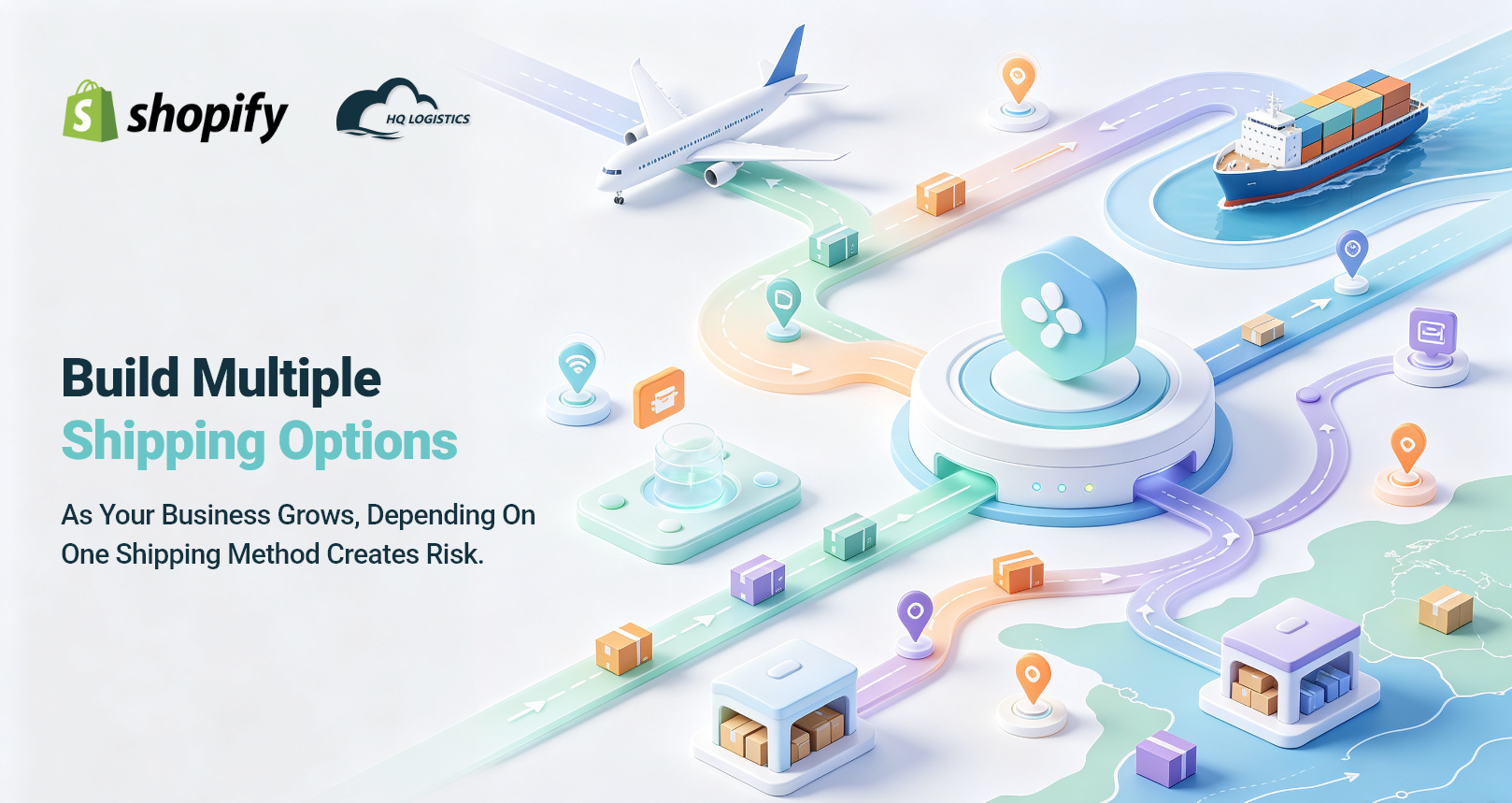
8. Build Multiple Shipping Options
As your business grows, depending on one shipping method creates risk.
Different products and destinations require different solutions.
For example:
Standard Products → Standard Shipping Channel
Battery Products → Specialized Shipping Solutions
U.S. Orders → U.S. Fulfillment
EU Orders → EU Fulfillment
A flexible logistics strategy gives brands more control over:
Cost | Delivery time | Reliability | Customer expectations
9. Focus on Total Cost, Not Just Product Price
Many sellers choose suppliers based only on unit price.
But the cheapest product is not always the lowest-cost solution.
Your real cost includes:
Product Cost | Quality Issues | Packaging | Fulfillment | Shipping | Returns | Customer Service
A supplier that saves $0.50 on product cost but creates more problems may actually cost more.
Growing brands should optimize the entire supply chain.
10. Work With a Partner That Supports Growth
The role of a supplier changes as your brand grows.
At the beginning, you need:
Product Access
Low Risk
Fast Testing
Later, you need:
Supplier Management
Quality Control
Inventory Planning
Brand Packaging
Fulfillment
Global Logistics
A strong fulfillment partner should support your next stage, not only your current stage.
How HQ Helps Brands Move From Dropshipping to Growth
HQ supports ecommerce brands through a more complete supply chain approach:
Product Sourcing
Help brands find suitable products and supplier options.
Multiple Supplier Support
Create more flexibility for important products and reduce dependency on one source.
Quality Inspection
Check products before fulfillment to improve consistency.
Custom Packaging
Support:
Custom boxes | Labels | Inserts | Thank-you cards | Branded packaging
China Fulfillment
Provide flexibility for new products and testing.
U.S. Warehouse
Support faster fulfillment for proven U.S. products.
EU Warehouse
Help brands serve multiple European markets with localized fulfillment.
Multiple Shipping Channels
Match products with suitable logistics solutions based on:
Product + Destination + Cost + Delivery Requirements
When Should You Upgrade Your Supply Chain?
You may be ready to move beyond basic dropshipping when:
✅ Your orders are increasing
✅ You have consistent bestselling products
✅ Customers expect faster delivery
✅ Quality issues are increasing
✅ You need custom packaging
✅ You want stronger branding
✅ You are expanding to new markets
✅ Your supplier cannot keep up
✅ You need better inventory control
These are signs that your business is becoming a brand.
A Simple Upgrade Roadmap
You don't need to build everything at once.
A practical roadmap:
Stage 1: Product Testing
Dropshipping → Find Winning Products
Stage 2: Product Optimization
Improve Quality → Improve Packaging
Stage 3: Brand Building
Custom Products → Better Customer Experience
Stage 4: Scaling
Inventory → Warehousing → Global Fulfillment
The goal is continuous improvement.
Final Thoughts
The journey from dropshipping to brand building is a natural step for successful ecommerce businesses.
Dropshipping helps you discover opportunities.
But long-term growth requires more control.
A scalable ecommerce supply chain includes:
Reliable Suppliers
Quality Control
Better Packaging
Inventory Planning
Flexible Shipping
Warehousing
Customer Experience
The question is no longer:
“Can I sell this product?”
The question becomes:
“Can I build a brand around this product and scale it successfully?”
The right supply chain helps transform:
A Product Idea → A Growing Store → A Sustainable Brand
FAQs
When should I move from dropshipping to a fulfillment model?
Consider upgrading when you have consistent sales, winning products, higher order volume, quality concerns, or customers expecting faster delivery.
Is dropshipping still useful for ecommerce brands?
Yes. Dropshipping is a valuable way to test products and markets. Many successful brands start with dropshipping before building a more advanced supply chain.
What is the biggest difference between dropshipping and brand building?
Dropshipping focuses on selling products quickly, while brand building focuses on creating a reliable system around products, customers, quality, and long-term growth.
Do growing brands need multiple suppliers?
Not always. However, having alternative suppliers for important products can reduce risk and improve flexibility.
Should I move inventory to a U.S. or EU warehouse?
For proven products with stable demand, overseas warehousing can improve fulfillment speed and customer experience. New products are often better tested before moving inventory.
How can custom packaging help ecommerce brands?
Custom packaging creates a stronger brand experience, improves customer recognition, and helps businesses move beyond generic dropshipping.
What should I look for in a fulfillment partner?
Look for support across sourcing, quality control, packaging, inventory management, fulfillment, shipping, and international expansion.