How to Build a More Sustainable Packaging Strategy for Your European Customers
How to Build a More Sustainable Packaging Strategy for Your European Customers
European ecommerce is becoming increasingly competitive.
Customers are not only comparing product prices and delivery times. They are also paying more attention to how products are packaged, how much packaging is used, and whether the packaging fits their expectations around sustainability.
For ecommerce brands selling across Europe, packaging is therefore more than protection.
It can influence customer experience, shipping costs, brand perception, and operational efficiency.
But building a more sustainable packaging strategy does not simply mean replacing every plastic bag with paper.
A better approach is to look at the entire packaging process and find practical ways to reduce unnecessary materials while keeping products protected during fulfillment and delivery.
In this guide, we will look at 7 practical ways to build a more sustainable packaging strategy for European customers.
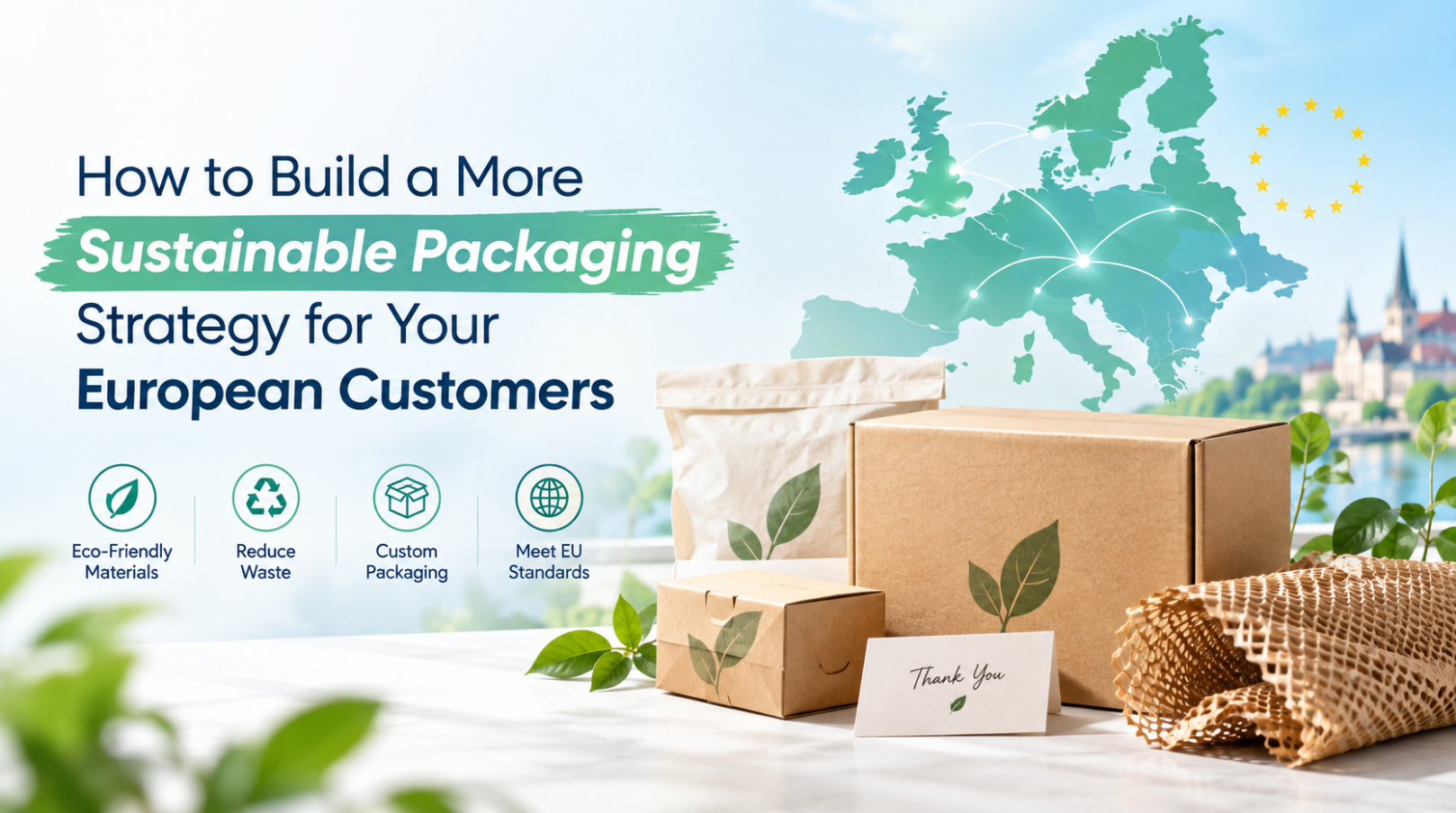
Why Sustainable Packaging Matters for European Ecommerce
Packaging serves an important purpose.
It protects products during storage, picking, packing, transportation, and last-mile delivery.
However, excessive packaging can create unnecessary material usage and increase shipping volume.
For ecommerce brands, this can lead to several problems:
Too Much Packaging | Excessive Material Use | Larger Shipping Dimensions | Higher Fulfillment Costs | More Packaging Waste | Poor Customer Experience
At the same time, switching to sustainable packaging without considering product protection can create another problem.
Damaged products can lead to returns, replacements, additional shipping, and customer complaints.
The goal should therefore be better packaging—not simply less packaging.
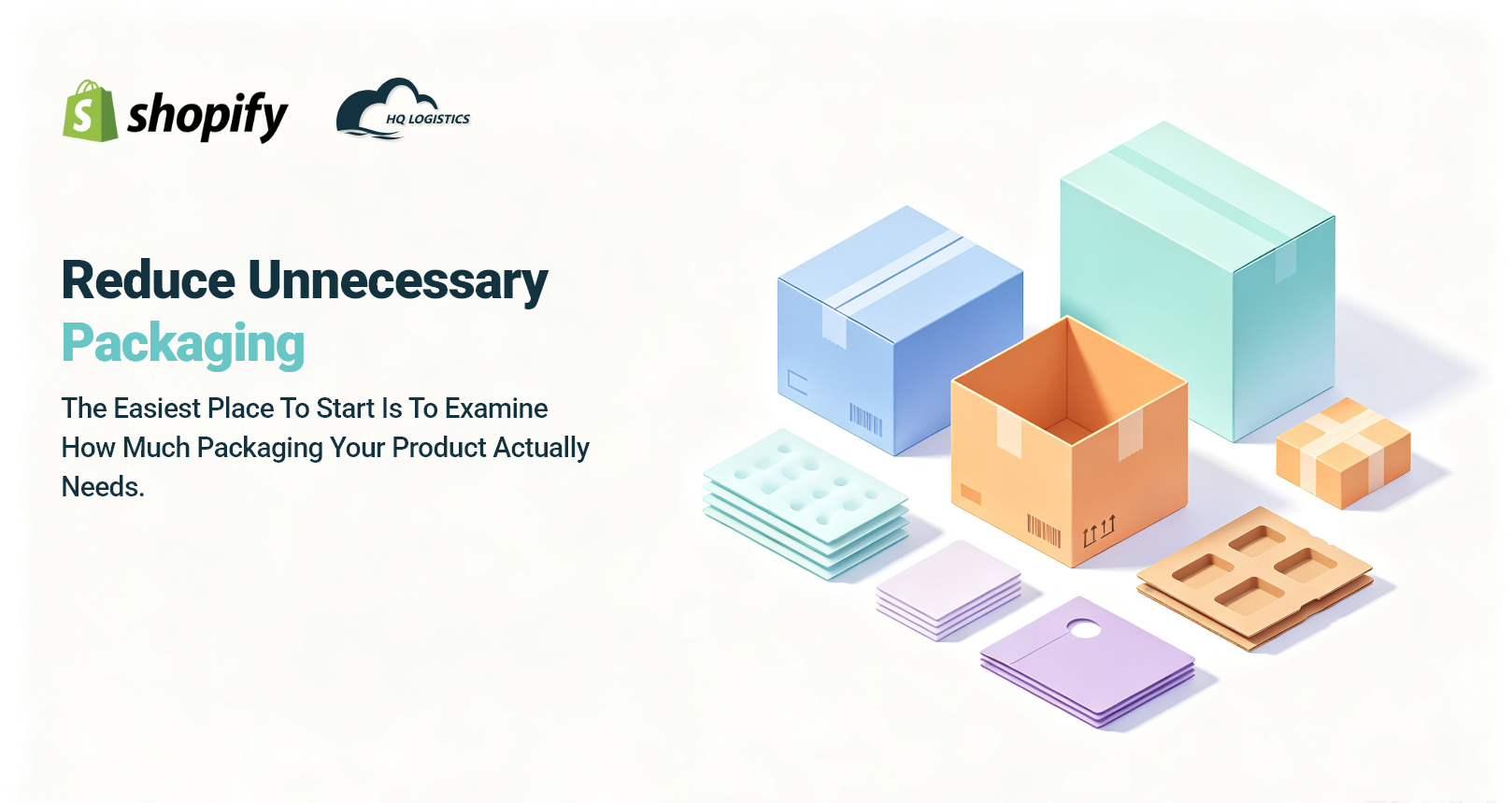
1. Reduce Unnecessary Packaging
The easiest place to start is to examine how much packaging your product actually needs.
Some ecommerce products are placed inside multiple layers of packaging even though one or two well-designed layers would be enough.
Review every layer:
Product Packaging | Protective Layer | Inner Packaging | Outer Packaging | Shipping Mailer or Box
Ask whether each layer has a clear purpose.
If a material does not protect the product, improve the customer experience, or provide necessary product information, consider whether it can be removed.
Reducing unnecessary packaging can lower material consumption while potentially reducing packing time and shipping volume.
2. Choose More Sustainable Packaging Materials
After reducing unnecessary packaging, look at the materials you use.
Depending on the product, brands may consider materials such as:
Recycled Paper | Corrugated Cardboard | Recycled Cardboard | Paper Mailers | Recyclable Materials | Reusable Packaging
However, there is no single packaging material that is automatically the best choice for every ecommerce business.
A sustainable packaging decision should consider the product, destination market, durability, recycling systems, cost, and applicable requirements.
For example, paper-based packaging can work well for many lightweight products, while products that need moisture or impact protection may require additional solutions.
The right material is the one that balances protection, functionality, sustainability, and cost.
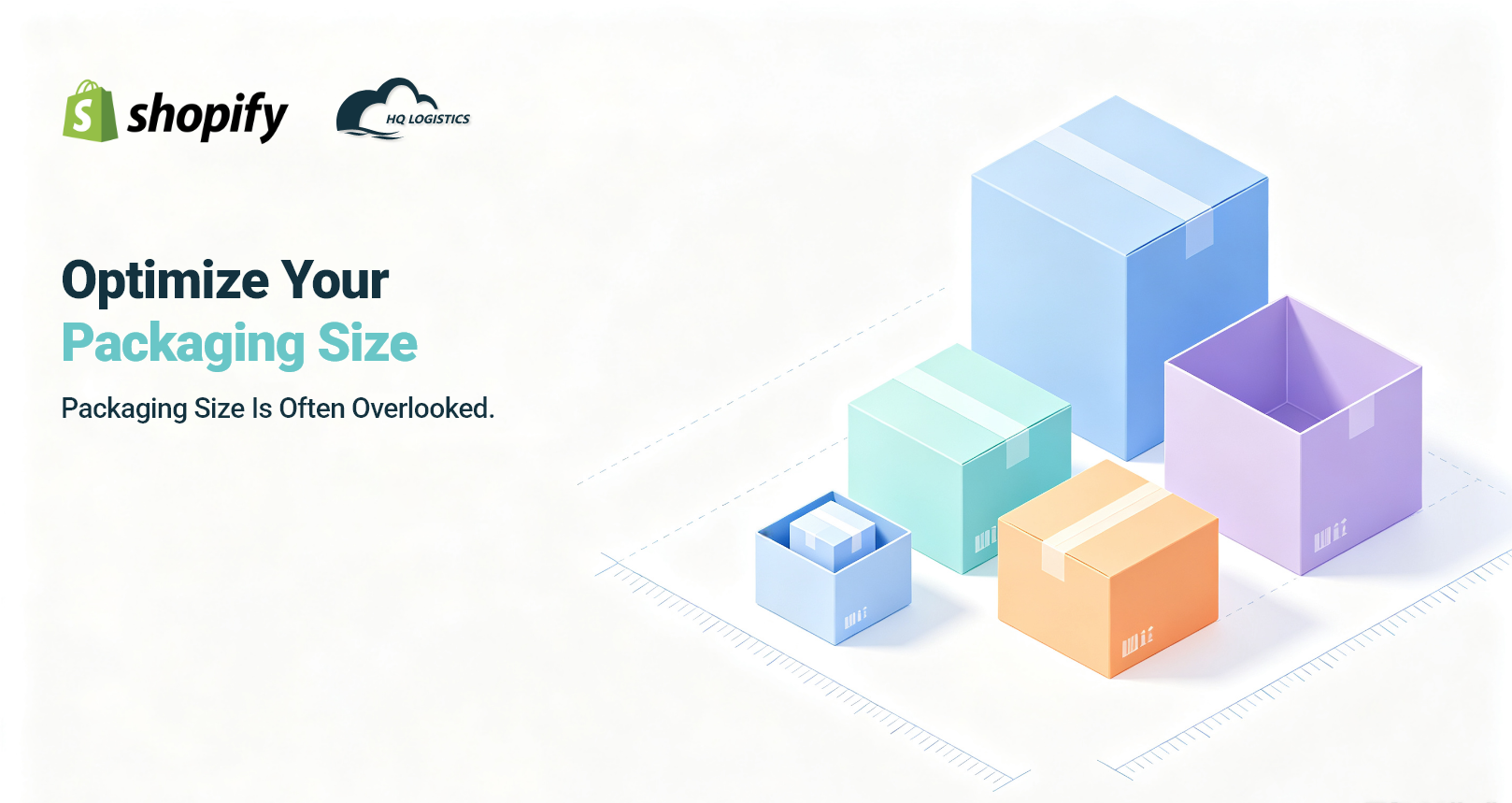
3. Optimize Your Packaging Size
Packaging size is often overlooked.
A product may be small, but if it is shipped in a much larger box, you are effectively transporting empty space.
That can affect both shipping efficiency and packaging consumption.
Consider matching packaging more closely to the actual product size.
Smaller Boxes | Right-Sized Mailers | Less Empty Space | Better Product Fit | Lower Shipping Volume
Right-sized packaging can also make warehouse operations more efficient.
For ecommerce brands shipping thousands of orders, even a small reduction in package size can become meaningful at scale.
This is particularly important when shipping internationally, where dimensional weight can influence transportation costs.
4. Design Packaging Around the Product
Not every product needs the same level of protection.
A soft textile product may need very different packaging from a ceramic item or small electronic product.
Instead of using one packaging solution for everything, create packaging based on product characteristics.
For Soft Products
Products such as baby clothing, pet accessories, or fabric goods may work well with lightweight mailers or compact packaging when sufficient protection is provided.
For Small Electronics
Small electronic products may require additional protection against impact, moisture, and handling during transportation.
Right-sized protective packaging can help balance product safety with material usage.
For Baby Products
Baby products require special attention to product protection, cleanliness, labeling, and applicable safety requirements.
Packaging should support these requirements without adding unnecessary layers.
The key principle is simple:
Use enough packaging to protect the product—but avoid packaging that does not add value.
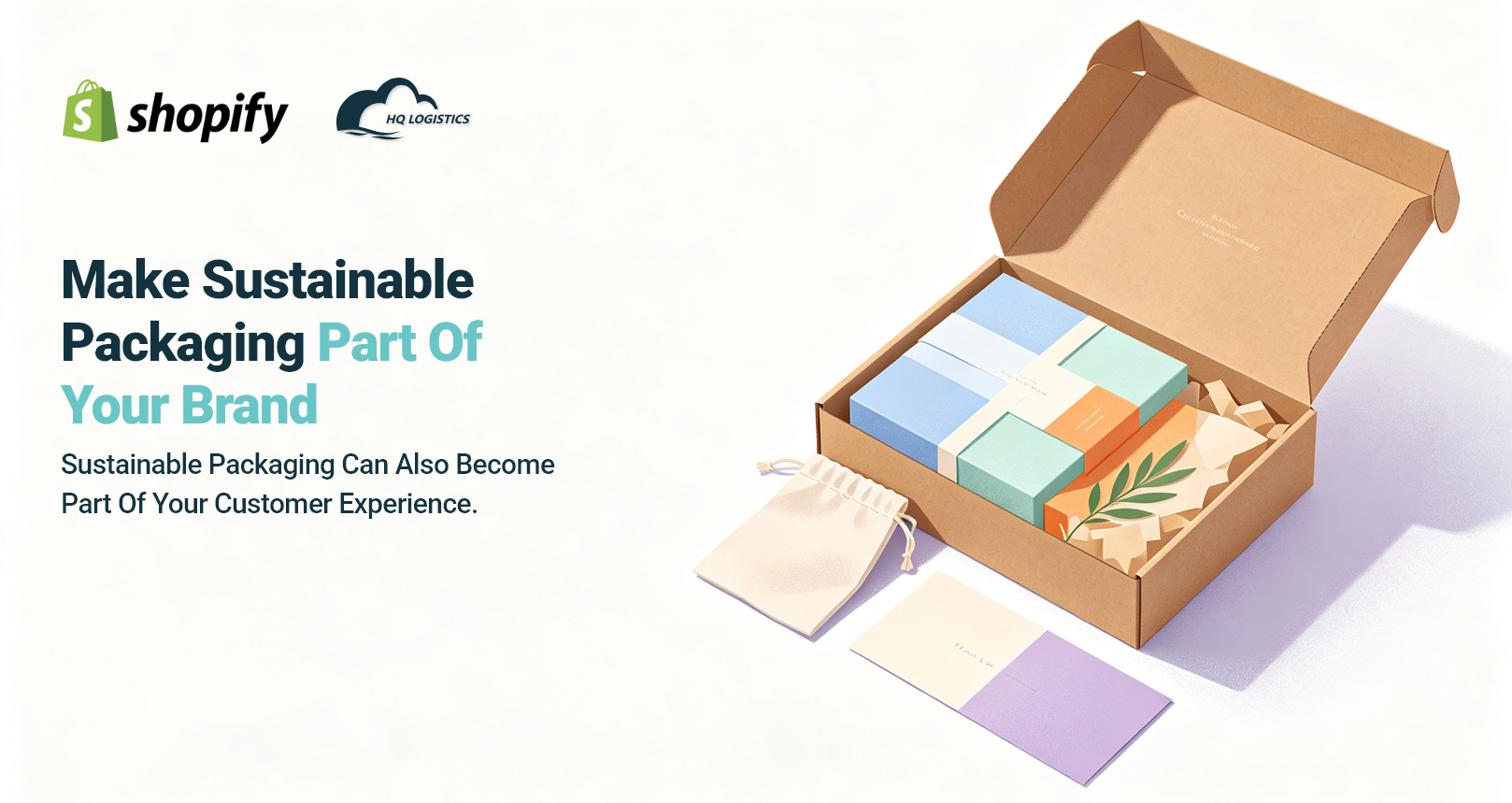
5. Make Sustainable Packaging Part of Your Brand
Sustainable packaging can also become part of your customer experience.
For growing ecommerce brands, packaging is often the first physical interaction customers have with the brand.
A thoughtfully designed package can communicate your brand identity before the customer even sees the product.
You can consider:
Branded Recyclable Boxes | Sustainable Mailers | Minimalist Packaging | Recycled Paper Inserts | Thank-You Cards | Simple Product Instructions
The design does not need to be complicated.
In many cases, a clean and consistent packaging design can create a stronger brand impression than excessive printing and decorative materials.
The objective is to make your packaging recognizable without making it unnecessarily complicated.
6. Consider Packaging During Product Sourcing
Packaging decisions should not happen only after a product has already been sourced.
They should be considered during the sourcing stage.
When evaluating suppliers, ask:
Can They Provide Sustainable Packaging? | Can Packaging Be Customized? | Can They Reduce Packaging Size? | Can They Support Branded Materials? | Can They Maintain Consistent Packaging Quality?
This is especially important when working with multiple suppliers.
If different suppliers use completely different packaging, your customers may receive inconsistent brand experiences.
A more organized supply chain can establish common packaging requirements across suppliers.
For example:
Product Specifications → Supplier Selection → Sample Approval → Packaging Design → Quality Inspection → Fulfillment
This approach makes packaging part of the overall product strategy.
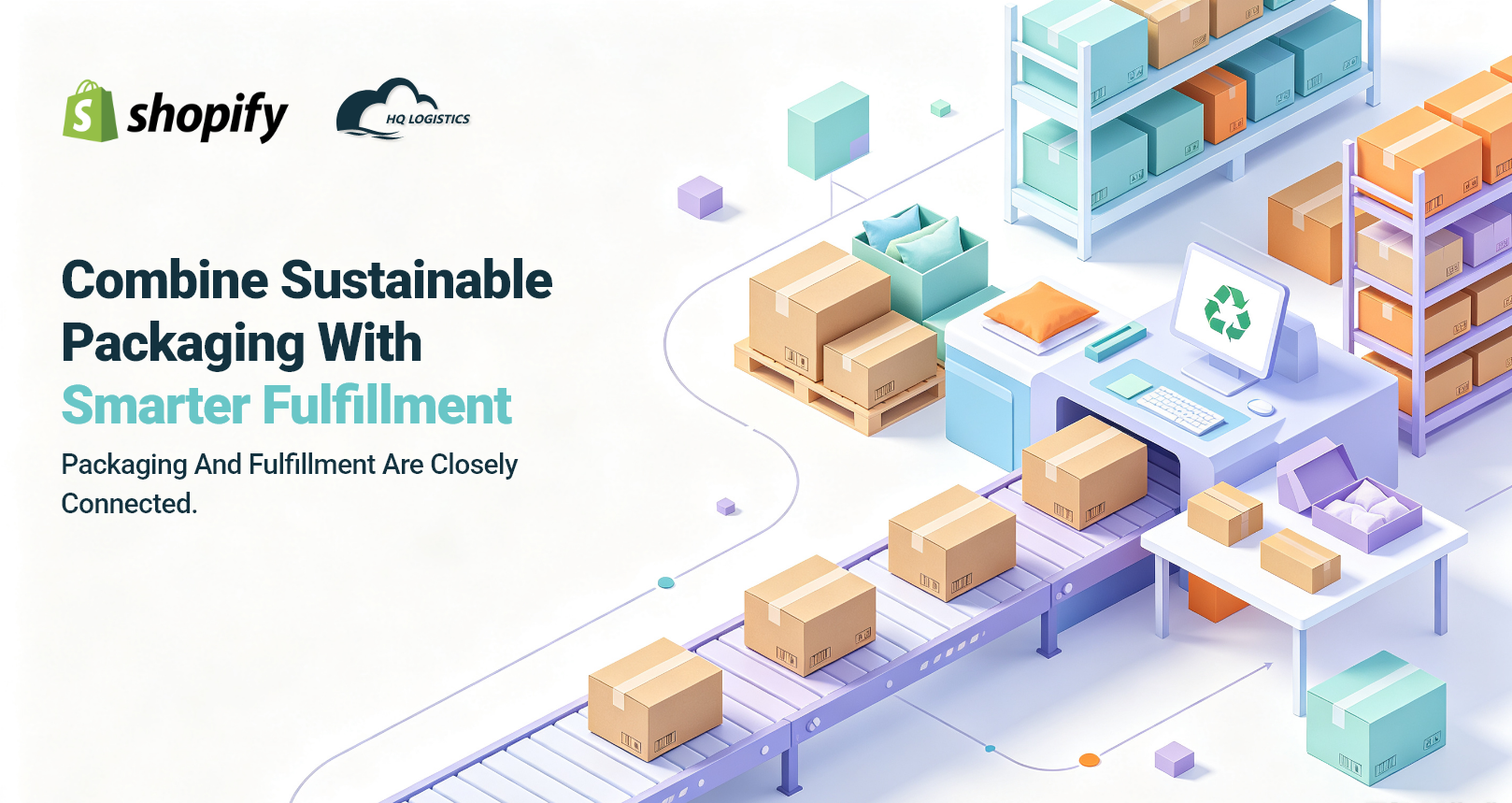
7. Combine Sustainable Packaging With Smarter Fulfillment
Packaging and fulfillment are closely connected.
A more efficient fulfillment process can help brands control packaging usage, packing time, storage space, and shipping volume.
For ecommerce brands selling across Europe, EU fulfillment can also change how inventory and packaging are managed.
Instead of shipping every European order individually from China, brands with stable European demand may consider storing inventory closer to customers.
An EU warehouse can support fulfillment across multiple European markets, while packaging requirements can be prepared before orders are shipped.
For example:
China Sourcing → EU Inventory → Quality Inspection → Sustainable Packaging → EU Fulfillment → Local Delivery
This can create a more integrated approach to European ecommerce fulfillment.
Sustainable Packaging Does Not Mean Higher Costs
One common concern is that sustainable packaging must always be more expensive.
That is not necessarily the case.
A well-designed packaging strategy can reduce costs in other areas.
Consider the total cost:
Packaging Material | Packaging Size | Warehouse Space | Packing Time | Shipping Volume | Product Damage | Returns
Using less material, reducing package dimensions, and improving packing efficiency can potentially offset the additional cost of certain sustainable materials.
Instead of asking:
“Is sustainable packaging more expensive?”
Ask:
“What is the total cost of my packaging strategy?”
This gives you a much more useful way to evaluate packaging decisions.
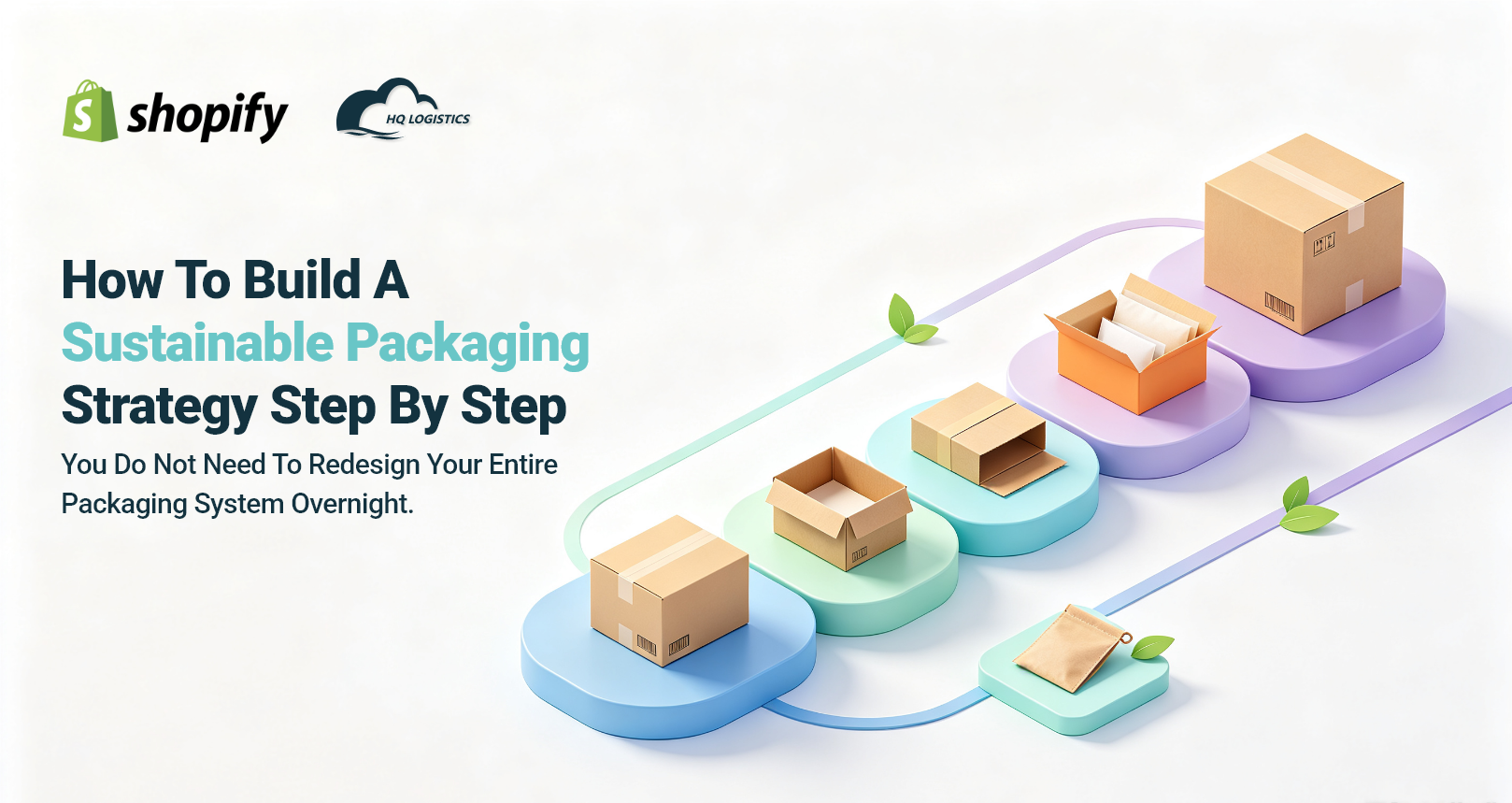
How to Build a Sustainable Packaging Strategy Step by Step
You do not need to redesign your entire packaging system overnight.
Start with your best-selling products.
Step 1: Audit Your Current Packaging
Record every packaging layer and material currently used.
Product Packaging | Protective Materials | Shipping Box | Mailer | Inserts | Labels
Identify unnecessary materials and oversized packaging.
Step 2: Identify Your Biggest Opportunities
Focus on products with high order volume.
If one product generates thousands of monthly orders, improving its packaging can have a much bigger impact than changing a low-volume product.
Step 3: Test Alternative Materials
Compare different packaging options based on:
Protection | Cost | Size | Appearance | Durability | Sustainability | Customer Experience
Always test packaging before implementing it at scale.
Step 4: Optimize Package Dimensions
Measure the actual product and test different packaging sizes.
The goal is to minimize empty space while maintaining sufficient protection.
Step 5: Standardize Packaging Requirements
If you work with multiple suppliers, create clear packaging specifications.
This can include:
Material | Size | Printing | Labels | Protective Requirements | Packing Method
Step 6: Monitor the Results
After implementation, track:
Packaging Cost | Shipping Cost | Damage Rate | Return Rate | Packing Time | Customer Feedback
A sustainable packaging strategy should improve the overall supply chain—not just one metric.
Common Sustainable Packaging Mistakes
Replacing Everything With Paper
Paper is not automatically the right solution for every product.
Packaging still needs to protect products during transportation.
Using Oversized Sustainable Boxes
A recyclable box can still be inefficient if it is significantly larger than the product.
Material choice and package size both matter.
Ignoring Product Damage
Reducing packaging too aggressively can increase damage and returns.
A damaged product may create a larger environmental and financial impact than using slightly more protective packaging.
Designing Packaging Without Considering Fulfillment
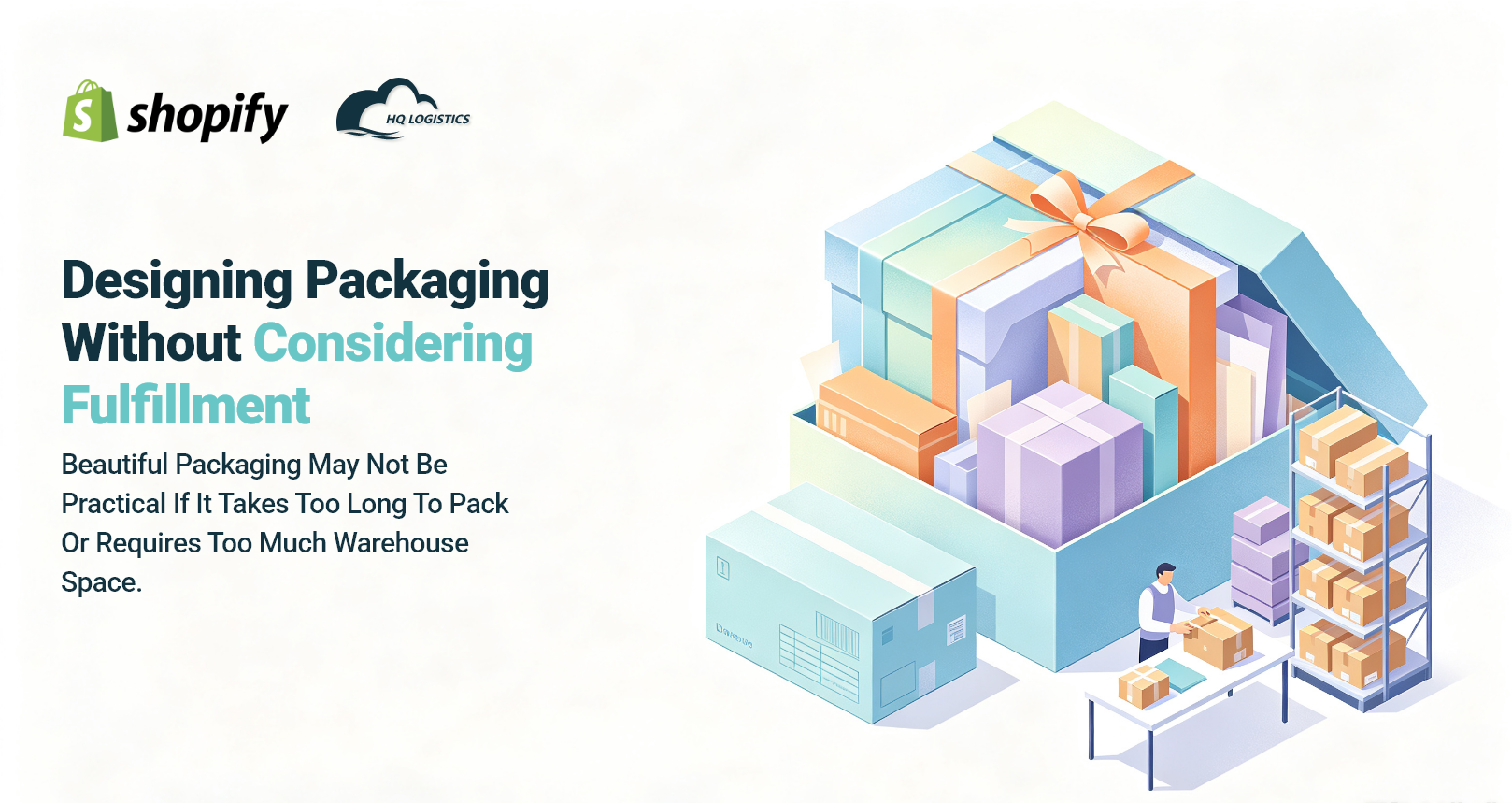
Beautiful packaging may not be practical if it takes too long to pack or requires too much warehouse space.
Packaging should work for both the customer and the fulfillment operation.
Treating Sustainability as a Marketing Claim Only
Customers can see the physical packaging they receive.
The best sustainable packaging strategy should be reflected in actual material choices, package size, and operational practices.
How HQ Can Support Sustainable Packaging for European Ecommerce
For brands selling to European customers, HQ can help connect packaging with sourcing and fulfillment.
HQ can support product sourcing, supplier management, quality inspection, custom packaging, warehousing, and fulfillment as part of one supply chain strategy.
For European fulfillment, brands can consider EU warehousing when their sales volume and inventory requirements make it suitable.
HQ can also support customized packaging solutions, including branded packaging, labels, inserts, thank-you cards, and other packaging elements.
For brands looking for more sustainable options, packaging materials can be evaluated based on the product, shipping requirements, and target market.
The goal is not simply to provide “green packaging.”
It is to help brands build packaging that is:
Protective | Efficient | Brand-Friendly | Cost-Conscious | More Sustainable | Suitable for Ecommerce Fulfillment
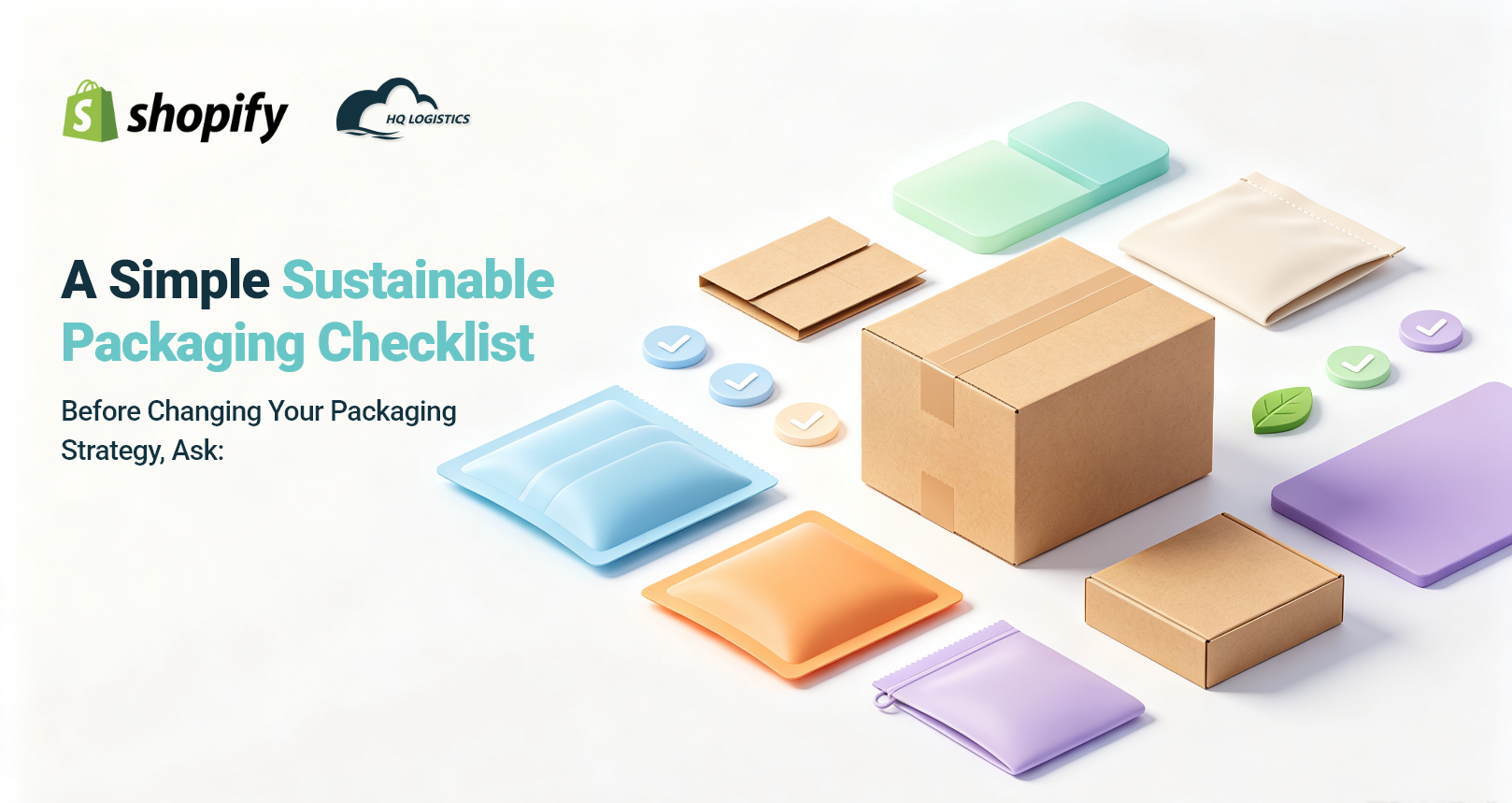
A Simple Sustainable Packaging Checklist
Before changing your packaging strategy, ask:
Can I remove unnecessary packaging? | Can I reduce package dimensions? | Can I use recycled or recyclable materials where appropriate? | Does the packaging adequately protect the product? | Can I reduce empty space? | Can my supplier support customized packaging? | Can packaging requirements be standardized across suppliers? | Can my fulfillment partner support the new packaging? | Have I tested the new packaging before scaling? | Does the packaging meet applicable requirements in my target European markets?
Final Thoughts
Building a more sustainable packaging strategy does not require a complete transformation overnight.
Start by understanding your current packaging.
Remove what is unnecessary. Choose materials carefully. Optimize package dimensions. Protect products properly. Build packaging into your sourcing strategy. Then connect packaging with your fulfillment operations.
For ecommerce brands selling across Europe, the best packaging strategy is not simply the one that uses the least material.
It is the one that creates the right balance between product protection, customer experience, shipping efficiency, cost, and sustainability.
As your European ecommerce business grows, smarter packaging can become an important part of a smarter supply chain.
Better Packaging. Better Fulfillment. A Better Customer Experience.
FAQs
1. What is sustainable packaging for ecommerce?
Sustainable ecommerce packaging generally focuses on reducing unnecessary materials, optimizing package size, using appropriate recycled or recyclable materials, and improving packaging efficiency while still protecting products.
2. Is paper packaging better than plastic packaging?
Not always. The right choice depends on the product, protection requirements, durability, recycling systems, shipping conditions, and applicable requirements. Packaging should be evaluated as a complete system rather than by material alone.
3. How can sustainable packaging reduce ecommerce costs?
Right-sized packaging can reduce material usage, package volume, warehouse space, and potentially shipping costs. The exact savings depend on the product, packaging design, shipping method, and order volume.
4. Can I use custom sustainable packaging for my ecommerce brand?
Yes. Brands can explore customized boxes, mailers, labels, inserts, thank-you cards, and other packaging options. The appropriate solution depends on the product and fulfillment requirements.
5. Should European ecommerce brands use an EU warehouse?
An EU warehouse can be useful for brands with stable demand across European markets. It can position inventory closer to customers and support fulfillment across multiple EU countries, depending on the warehouse network and business requirements.