Fulfillment for Shopify, Wix, WooCommerce, and Etsy: How to Choose the Right Partner
Fulfillment for Shopify, Wix, WooCommerce, and Etsy: How to Choose the Right Partner
As your ecommerce store grows, fulfillment can quickly become one of the biggest challenges in your business.
At the beginning, you may be able to manage orders yourself or work with a basic dropshipping supplier. But once your store starts receiving more orders, you need a more organized system for inventory, sourcing, quality control, packaging, order processing, and shipping.
This is especially important for sellers using platforms such as Shopify, Wix, WooCommerce, and Etsy.
The right fulfillment partner can help you process orders faster, improve the customer experience, and build a supply chain that can support your next stage of growth.
So, how should you choose the right fulfillment partner?
This guide explains what ecommerce sellers should look for before making a decision.
What Is an Ecommerce Fulfillment Partner?
A fulfillment partner is a company that helps ecommerce businesses manage some or all of the operational work between receiving inventory and delivering orders to customers.
Depending on the provider, services may include:
Product Sourcing | Supplier Management | Inventory Storage | Quality Inspection | Order Processing | Pick & Pack | Custom Packaging | Shipping | Tracking | Returns Support
A traditional fulfillment company may mainly focus on storing and shipping inventory.
A more complete fulfillment partner can also support sourcing, supplier management, packaging, inventory planning, and multiple shipping solutions.
For growing ecommerce brands, this broader support can become increasingly important.
Why Fulfillment Matters for Shopify, Wix, WooCommerce, and Etsy Sellers
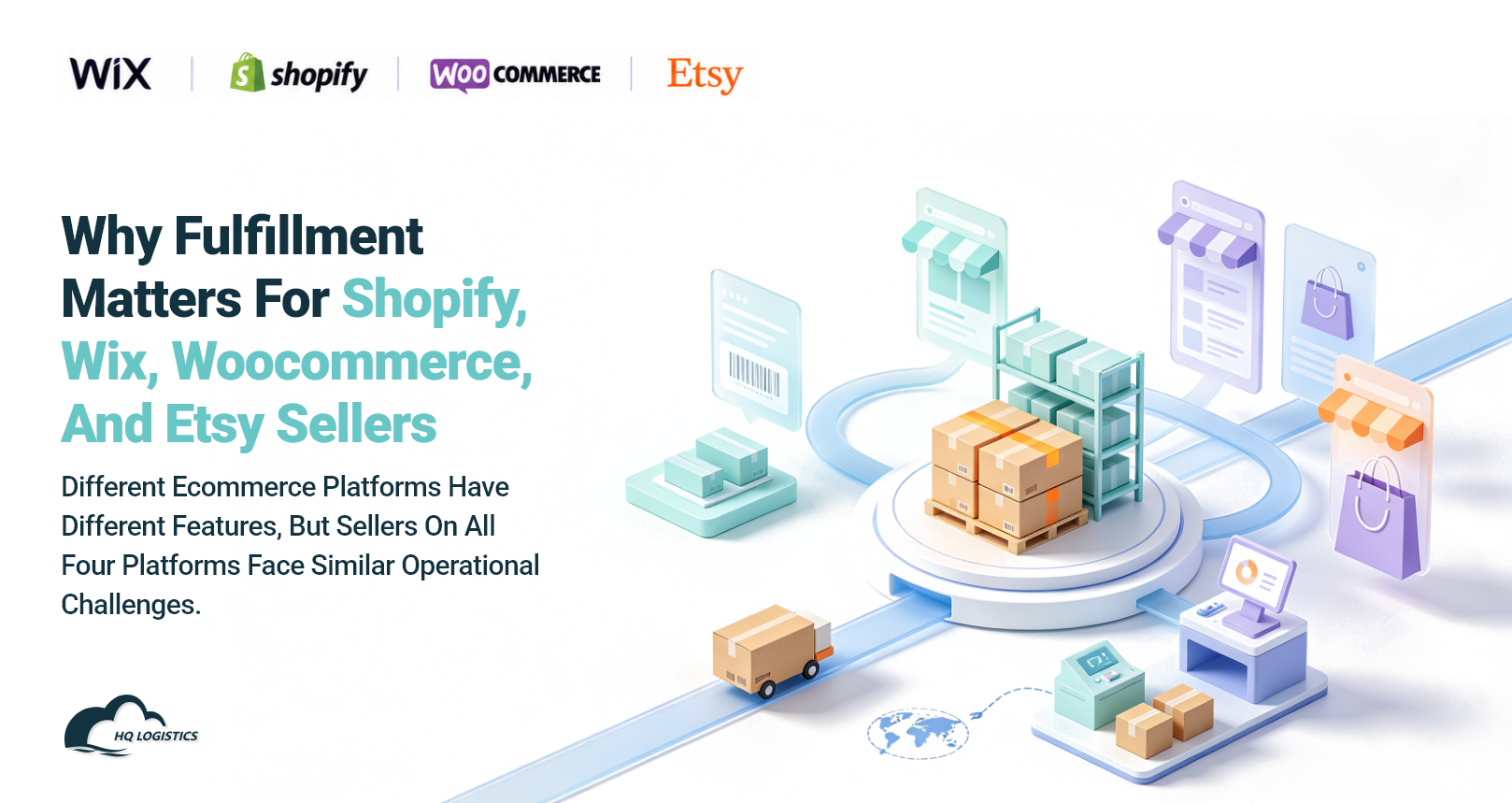
Different ecommerce platforms have different features, but sellers on all four platforms face similar operational challenges.
As order volume increases, manual fulfillment becomes harder to manage.
You may start experiencing:
More Orders | More Inventory | More Supplier Communication | More Packaging Requirements | More Shipping Options | More Customer Service Requests
At the same time, customers expect fast and reliable delivery.
A fulfillment partner can take much of the operational pressure away from the seller so you can focus more on marketing, product development, customer acquisition, and brand growth.
1. Check Which Ecommerce Platforms the Fulfillment Partner Supports
The first question is simple:
Can the fulfillment partner connect with your ecommerce platform?
If you sell on Shopify, Wix, WooCommerce, or Etsy, your fulfillment workflow should be easy to manage.
Look for support such as:
Shopify Integration | WooCommerce Integration | Etsy Integration | Wix Order Management | Automatic Order Sync | Inventory Sync | Tracking Updates
Automated order synchronization can reduce manual data entry and help minimize fulfillment errors.
For example, when a customer places an order on your store, the order can be sent to the fulfillment system for processing.
After fulfillment, tracking information can then be synchronized back to your ecommerce platform.
A connected workflow can look like:
Customer Order → Store Platform → Fulfillment System → Pick & Pack → Shipping → Tracking Update
The fewer manual steps involved, the easier it becomes to manage a growing order volume.
2. Look Beyond Order Fulfillment
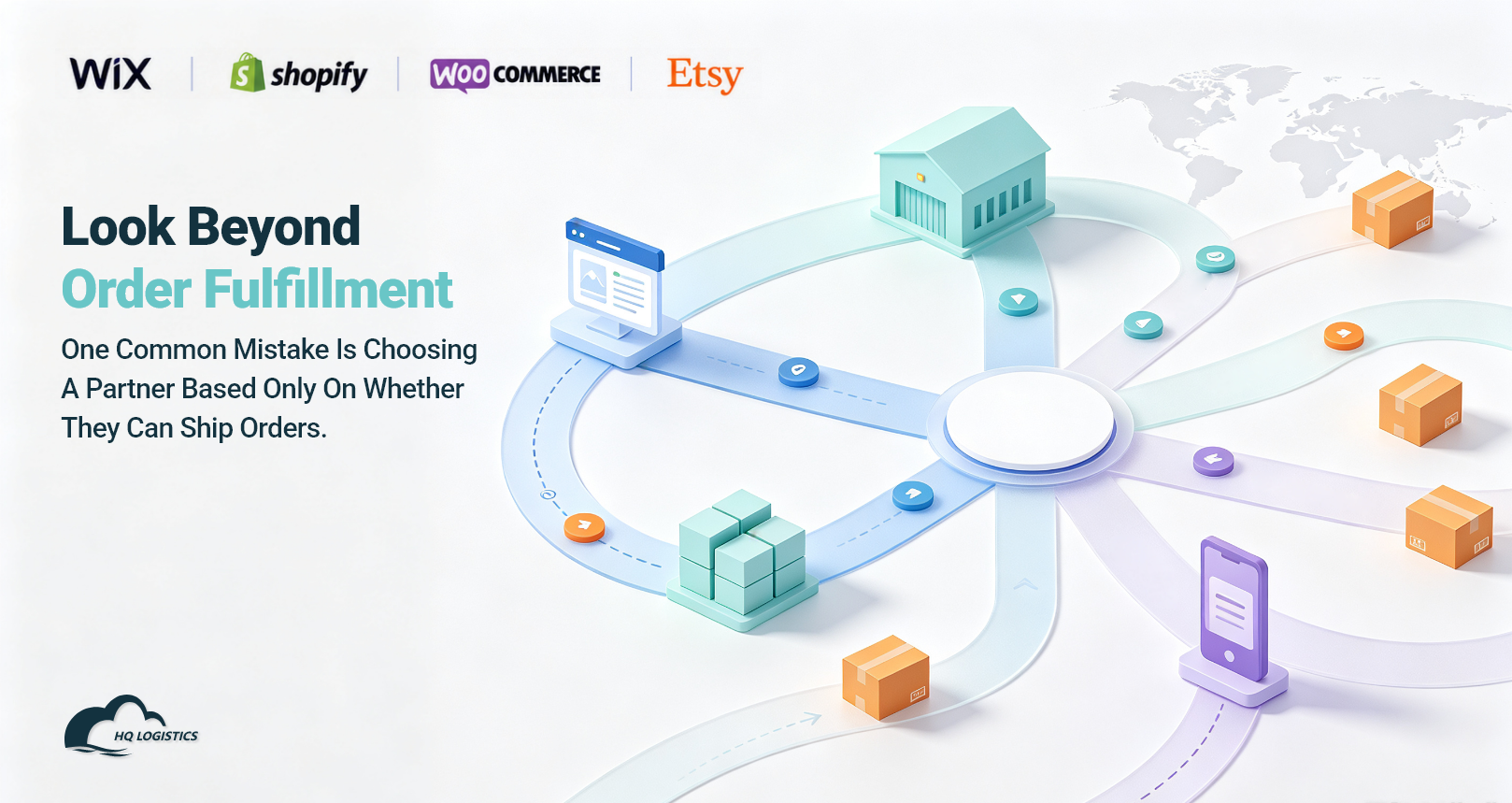
One common mistake is choosing a partner based only on whether they can ship orders.
Fulfillment is connected to many other parts of your supply chain.
For growing brands, it can be useful to work with a partner that can also support:
Product Sourcing | Supplier Selection | Quality Control | Inventory Planning | Packaging | Warehousing | Fulfillment | Global Shipping
This is particularly important if your business is moving from simple dropshipping toward brand building.
For example, you may start by selling a standard product.
As sales increase, you may want to improve the product, change the packaging, add branded inserts, or work with a different supplier.
If your fulfillment partner can support these steps, you may not need to rebuild your supply chain every time your business changes.
3. Check Product Sourcing Capabilities
A fulfillment partner can be more valuable when it can help you find and manage suitable suppliers.
This is especially relevant for brands sourcing products from China.
Instead of relying on one supplier, a more flexible sourcing system may provide multiple supplier options.
Product Search | Supplier Comparison | Sample Testing | Price Comparison | Supplier Backup | Product Customization
Multiple supplier options can also help reduce dependency on a single source.
If your main supplier experiences production delays or inventory problems, having alternative suppliers can provide additional flexibility.
For growing ecommerce brands, supplier management should be viewed as part of fulfillment—not as a completely separate process.
4. Make Quality Control Part of Fulfillment
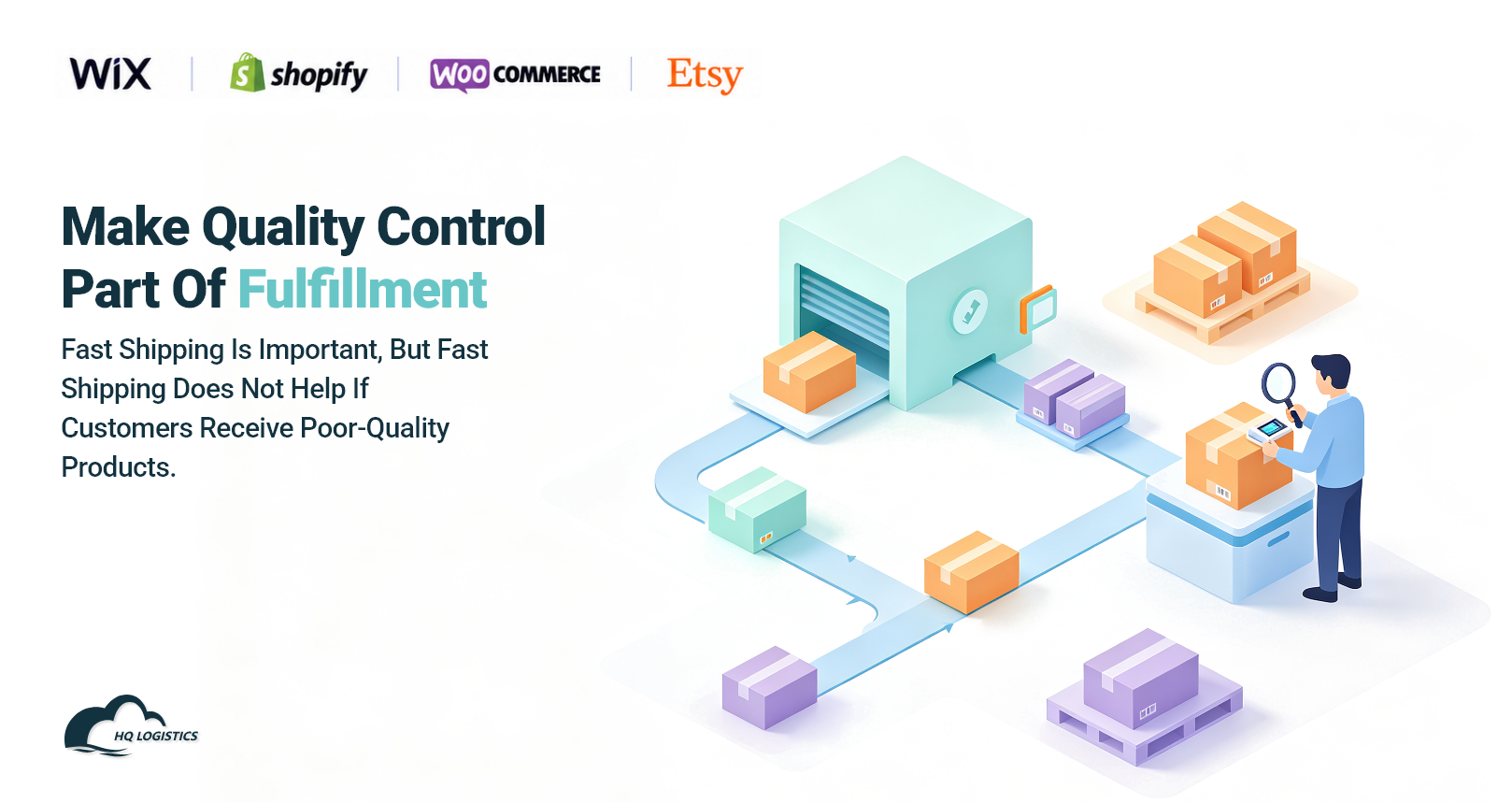
Fast shipping is important, but fast shipping does not help if customers receive poor-quality products.
Quality control should therefore be considered before products enter the fulfillment process.
A fulfillment partner may support checks such as:
Product Appearance | Quantity | Size | Color | Function | Packaging | Product Specifications
For products such as baby products, beauty products, pet products, and small electronics, quality consistency can be particularly important.
A good fulfillment workflow should connect:
Sourcing → Sample Approval → Supplier Production → Quality Inspection → Warehouse → Fulfillment
This gives brands more opportunities to identify problems before products reach customers.
5. Ask About Custom Packaging
As your ecommerce brand grows, generic packaging may no longer be enough.
Customers increasingly associate packaging with the overall brand experience.
A fulfillment partner should ideally be able to support different packaging requirements.
These may include:
Custom Boxes | Branded Mailers | Product Labels | Hangtags | Inserts | Thank-You Cards | Logo Printing | Custom Packing Instructions
For growing brands, custom packaging can also help create a more consistent customer experience across different sales channels.
If you sell through Shopify, Wix, WooCommerce, and Etsy, your fulfillment process should still maintain the same brand standards.
For brands reaching 50+ orders per day, custom packaging can become especially useful as order volume grows.
6. Compare Fulfillment Speed
Delivery speed is one of the most important factors when choosing a fulfillment partner.
Customers generally do not want to wait weeks for an ecommerce order.
When comparing fulfillment providers, look at the entire timeline rather than only the advertised shipping speed.
Consider:
Order Processing Time | Picking Time | Packing Time | Carrier Handover | Transit Time | Final-Mile Delivery
A fulfillment partner may offer different shipping options depending on the destination and product.
For growing brands, a 3–8 day delivery option
can provide a useful balance between speed and cost for many international orders, depending on the destination and shipping channel.When evaluating delivery promises, always ask whether the stated timeframe refers to processing time, transit time, or the complete delivery period.
7. Check Daily Fulfillment Capacity
Your fulfillment partner should be able to support your current business—and your future growth.
A company that can handle your current order volume may not necessarily be able to handle a major sales increase.
Ask about:
Daily Order Capacity | Warehouse Space | Peak-Season Capacity | Staffing | Processing Speed | Backup Operations
For example, a fulfillment operation with a capacity of up to 20,000 orders per day can provide more room for brands that expect significant order growth.
Capacity becomes particularly important during seasonal campaigns and major sales periods.
You do not want a successful marketing campaign to create an operational bottleneck.
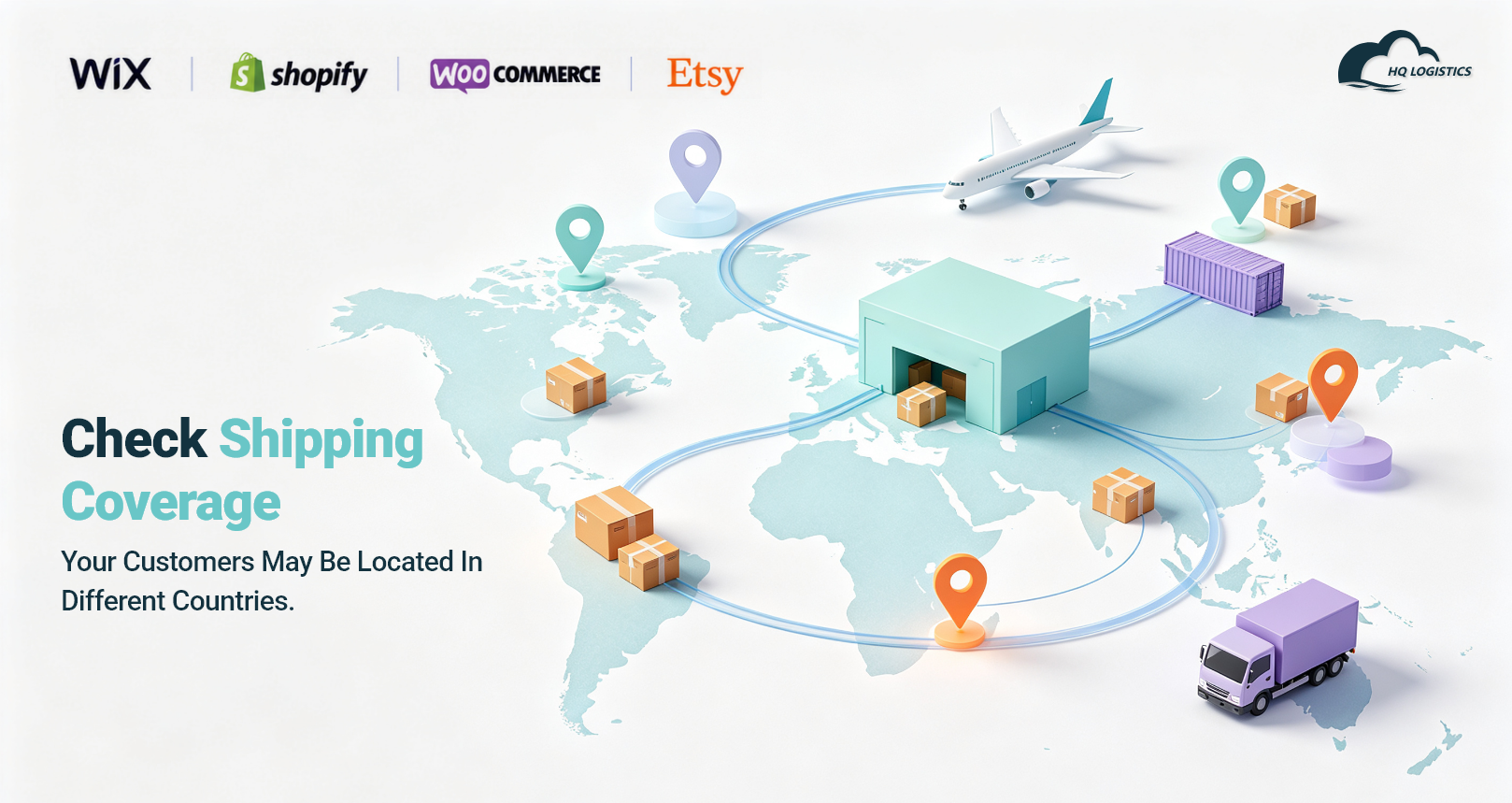
8. Check Shipping Coverage
Your customers may be located in different countries.
A fulfillment partner should therefore offer shipping solutions that match your target markets.
For example:
US | Europe | UK | Australia
Instead of using one shipping method for every destination, a flexible fulfillment partner may offer multiple logistics channels based on:
Destination | Product Type | Weight | Delivery Speed | Cost | Shipping Requirements
Multiple shipping channels can help brands choose a solution that fits different products and markets.
This is especially useful when you sell products with different sizes, weights, or shipping requirements.
9. Look at the Total Fulfillment Cost
The cheapest product supplier is not always the cheapest fulfillment solution.
You should evaluate the total cost of getting a product from the supplier to your customer.
Consider:
Product Cost | Sourcing Cost | Packaging | Storage | Picking & Packing | Shipping | Returns | Product Damage | Customer Service
For example, a lower product price may not provide a real advantage if the supplier has higher shipping costs or poor product quality.
Similarly, a slightly more expensive fulfillment solution may make sense if it provides better packaging, faster processing, fewer mistakes, and more reliable shipping.
The goal is to understand your total fulfillment cost per order, not just the product price.
10. Make Sure the Partner Can Scale With Your Brand
A fulfillment partner should not only solve today's problems.
It should also support your future growth.
Your needs may change as your store develops.
You may move from:
Dropshipping → Inventory Storage → Custom Packaging → Overseas Warehousing → Multi-Market Fulfillment
Your product range may also expand.
You might start with one product and eventually sell dozens of SKUs across multiple markets.
A scalable fulfillment partner should be able to support these changes without forcing you to completely rebuild your operations.
Shopify, Wix, WooCommerce, or Etsy: What Should Sellers Look For?
Although each platform has a different ecosystem, the core fulfillment requirements are similar.
Shopify Fulfillment
Shopify sellers often need automated order processing, inventory synchronization, tracking updates, custom packaging, and flexible global shipping.
For stores with rapidly increasing order volume, fulfillment automation can help reduce manual work.
Wix Fulfillment
Wix sellers can benefit from a fulfillment workflow that connects store orders with inventory, warehouse operations, and shipping.
The goal is to make order fulfillment as simple as possible while maintaining control over product and customer information.
WooCommerce Fulfillment
WooCommerce gives sellers significant flexibility, which means fulfillment integration should be able to fit their existing store workflow.
Inventory management, order synchronization, shipping options, and tracking are important areas to evaluate.
Etsy Fulfillment
Etsy sellers may have more product-specific packaging and presentation requirements, especially for handmade, personalized, lifestyle, and niche products.
A fulfillment partner that supports custom packaging and flexible product handling can be useful as Etsy order volume grows.
When Should You Switch to a Professional Fulfillment Partner?
You do not necessarily need a professional fulfillment partner from day one.
However, several signs may indicate that your current setup is becoming difficult to manage.
Your Order Volume Is Increasing | You Spend Too Much Time Processing Orders | Inventory Is Becoming Difficult to Track | Customers Are Waiting Too Long | Product Quality Is Inconsistent | You Need Custom Packaging | You Need Multiple Shipping Options | Your Current Supplier Cannot Scale
If several of these problems are happening at the same time, it may be worth evaluating a more structured fulfillment solution.
How HQ Supports Shopify, Wix, WooCommerce, and Etsy Sellers
For growing ecommerce brands, HQ provides a broader fulfillment solution that connects sourcing, supplier management, quality control, packaging, warehousing, fulfillment, and global shipping.
The goal is to give sellers one operational system instead of managing every part of the supply chain separately.
HQ supports ecommerce businesses selling through platforms such as:
Shopify | Wix | WooCommerce | Etsy
Key fulfillment capabilities include:
3–8 Day Delivery Options | Free Custom Packaging From 50 Orders/Day | Up to 20,000 Orders/Day Fulfillment Capacity | Shipping to US, Europe, UK & Australia | Product Sourcing | Quality Inspection | Warehouse Fulfillment | Multiple Shipping Channels
For brands that are growing beyond basic dropshipping, this can provide a more integrated way to manage their supply chain.
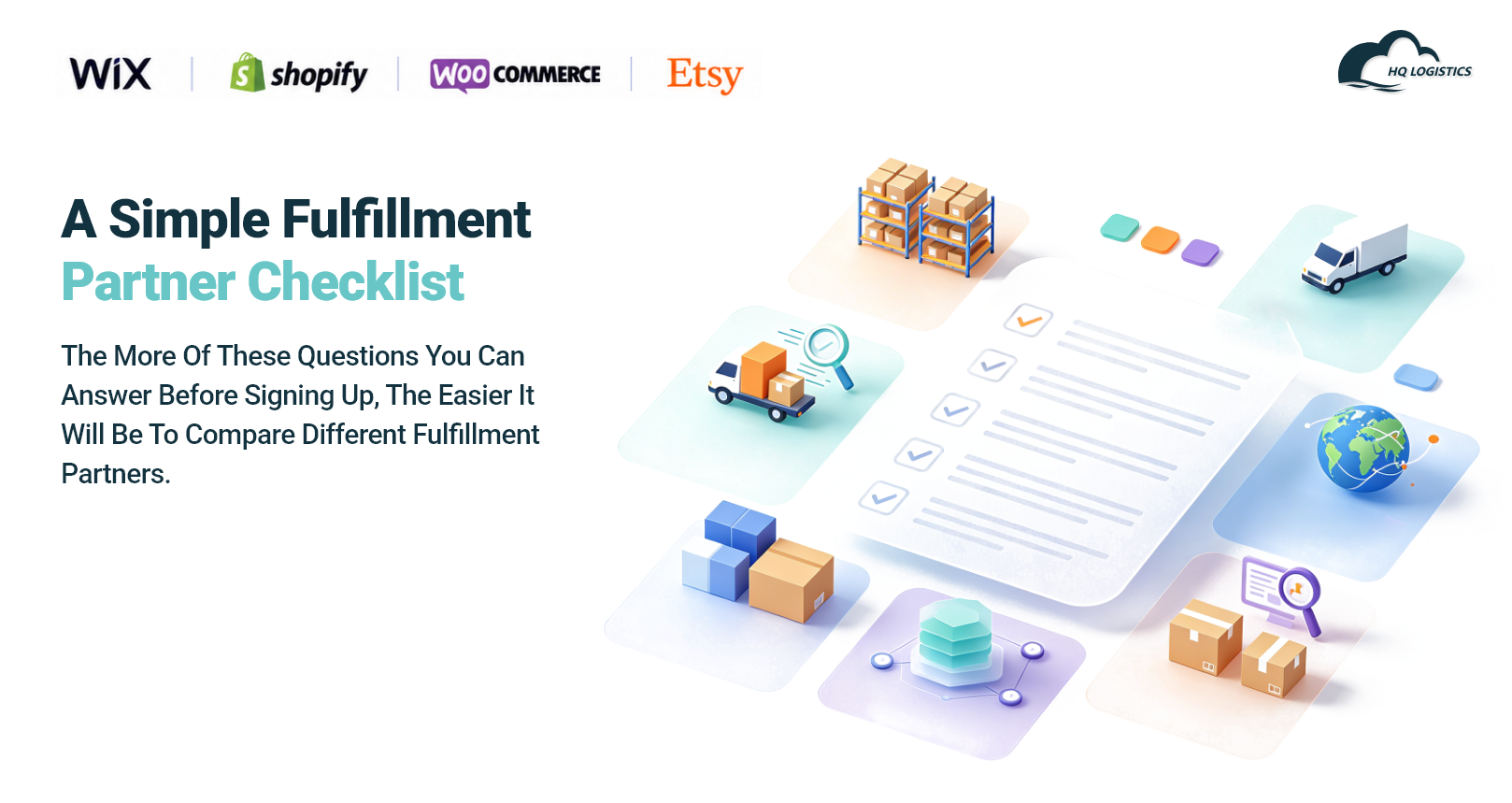
A Simple Fulfillment Partner Checklist
Before choosing a fulfillment partner, ask:
Does it support my ecommerce platform? | Can it automatically process orders? | Can it sync inventory and tracking? | Can it help with product sourcing? | Does it offer quality inspection? | Can it provide custom packaging? | What is the actual order processing time? | What shipping options are available? | What countries can it serve? | How much daily order volume can it handle? | Can it support peak-season growth? | What is the total fulfillment cost? | Can it support my brand as it grows?
The more of these questions you can answer before signing up, the easier it will be to compare different fulfillment partners.
Final Thoughts
Choosing a fulfillment partner is not simply about finding a company that can pick, pack, and ship your orders.
For growing ecommerce brands, fulfillment is closely connected to product sourcing, supplier management, quality control, packaging, inventory, shipping, and customer experience.
Whether you sell through Shopify, Wix, WooCommerce, or Etsy, the right fulfillment setup should make your operations easier today while giving your brand room to grow tomorrow.
Look beyond the lowest price.
Evaluate speed, capacity, platform integration, sourcing, quality control, packaging, shipping coverage, and total fulfillment cost.
A fulfillment partner should not become another limitation for your business.
It should become part of the infrastructure that helps your ecommerce brand scale.
Better Fulfillment. More Flexible Supply Chains. Built for Global Ecommerce Growth.
FAQs
1. What is the difference between a fulfillment center and a fulfillment agent?
A fulfillment center primarily handles inventory storage, order processing, picking, packing, and shipping. A fulfillment agent may provide broader support such as product sourcing, supplier communication, quality inspection, packaging, and logistics coordination.
2. Can one fulfillment partner support Shopify, Wix, WooCommerce, and Etsy?
Yes. Some fulfillment providers support multiple ecommerce platforms and can connect orders, inventory, and tracking information across different channels. Always confirm the specific integrations available before choosing a provider.
3. How fast can ecommerce fulfillment be?
Delivery speed depends on the destination, product, shipping channel, and processing time. Some international fulfillment solutions can provide delivery options in approximately 3–8 days, but sellers should confirm the actual transit time for their specific products and destinations.
4. Can a fulfillment center provide custom packaging?
Many fulfillment providers offer custom packaging services, including branded boxes, mailers, labels, inserts, and thank-you cards. Minimum order requirements may apply depending on the packaging solution.
5. When should an ecommerce brand switch to a fulfillment partner?
Brands may consider professional fulfillment when order volume increases, manual fulfillment becomes time-consuming, inventory becomes harder to manage, customers experience shipping delays, or the brand needs better sourcing, packaging, and logistics support.
 fulfillment for Shopify, Shopify fulfillment, Wix fulfillment, WooCommerce fulfillment, Etsy fulfillment, ecommerce fulfillment, fulfillment center, China fulfillment center, fulfillment partner, fulfillment agent, global fulfillment, custom packaging, 3–8 day fulfillment, ecommerce fulfillment center, Learn how to choose the right fulfillment partner for Shopify, Wix, WooCommerce, and Etsy, including sourcing, quality control, custom packaging, shipping, and fulfillment capacity.