From 10 to 1,000 Orders a Day: How to Build a Scalable Fulfillment System
From 10 to 1,000 Orders a Day: How to Build a Scalable Fulfillment System
Getting your first 10 orders a day is exciting.
Getting to 100 orders a day means your ecommerce business is gaining traction.
But when your store reaches 500 or 1,000 orders a day, fulfillment becomes a completely different challenge.
At this stage, simply having a supplier and a warehouse is no longer enough. You need a fulfillment system that can handle more orders, more inventory, more products, more packaging requirements, and higher customer expectations without creating operational bottlenecks.
For Shopify, WooCommerce, Wix, Etsy, and other ecommerce brands, the goal is not just to fulfill today's orders.
It is to build a system that can grow with your brand.
Here are the key steps to building a scalable fulfillment system from 10 to 1,000 orders a day.
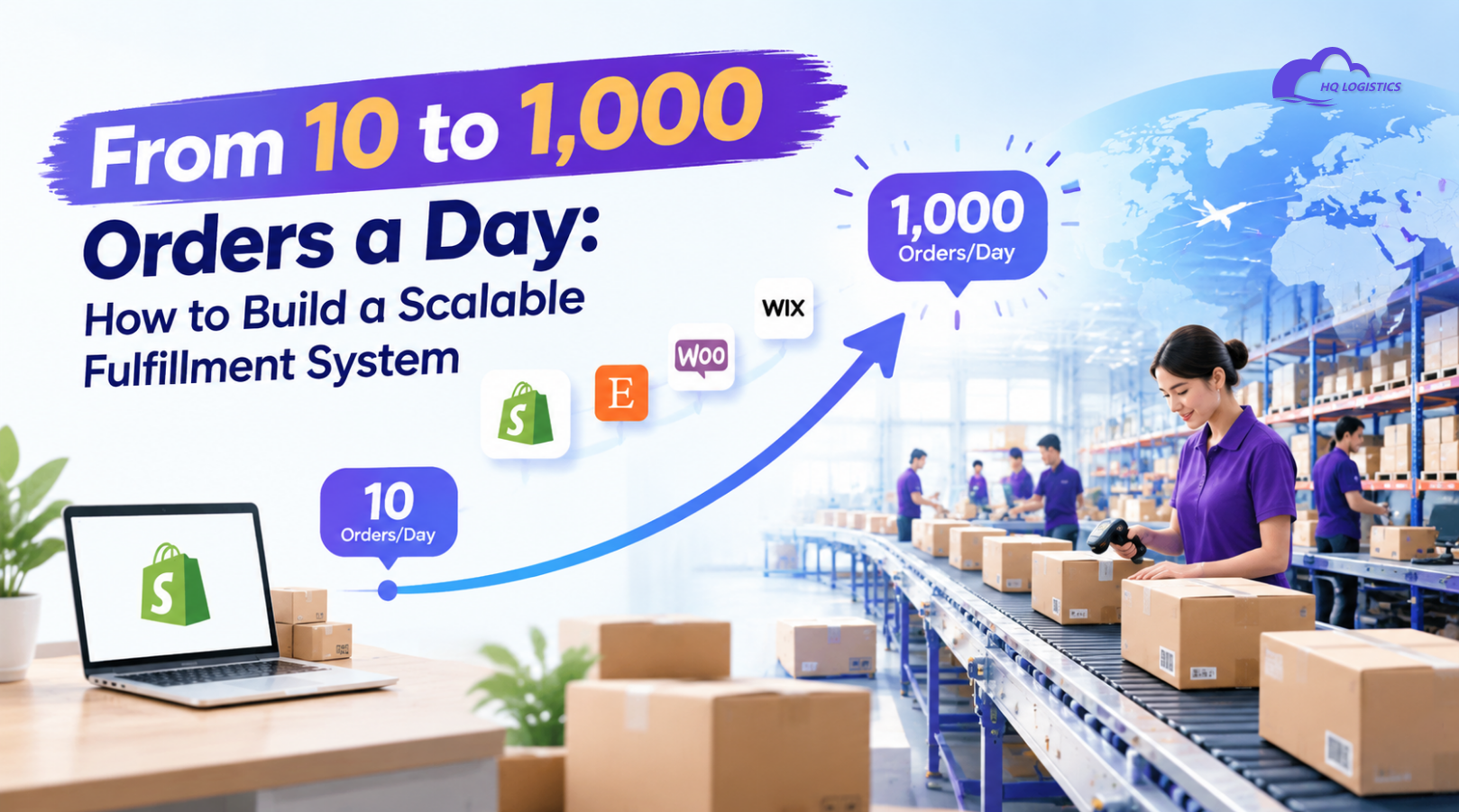
1. Understand What Changes as Order Volume Grows
A fulfillment process that works perfectly for 10 orders a day may become inefficient at 100 orders.
At 1,000 orders a day, the same process can quickly create delays.
The difference is not simply the number of packages.
Higher order volume usually means more operational complexity:
More Orders | More SKUs | More Inventory | More Suppliers | More Packaging | More Shipping Channels | More Customer Expectations
At 10 orders a day, you may be able to manage fulfillment manually.
At 100 orders a day, you need more structured processes.
At 500+ orders a day, automation, inventory planning, warehouse processes, and supplier coordination become increasingly important.
At 1,000 orders a day, fulfillment should operate as a system rather than a collection of individual tasks.
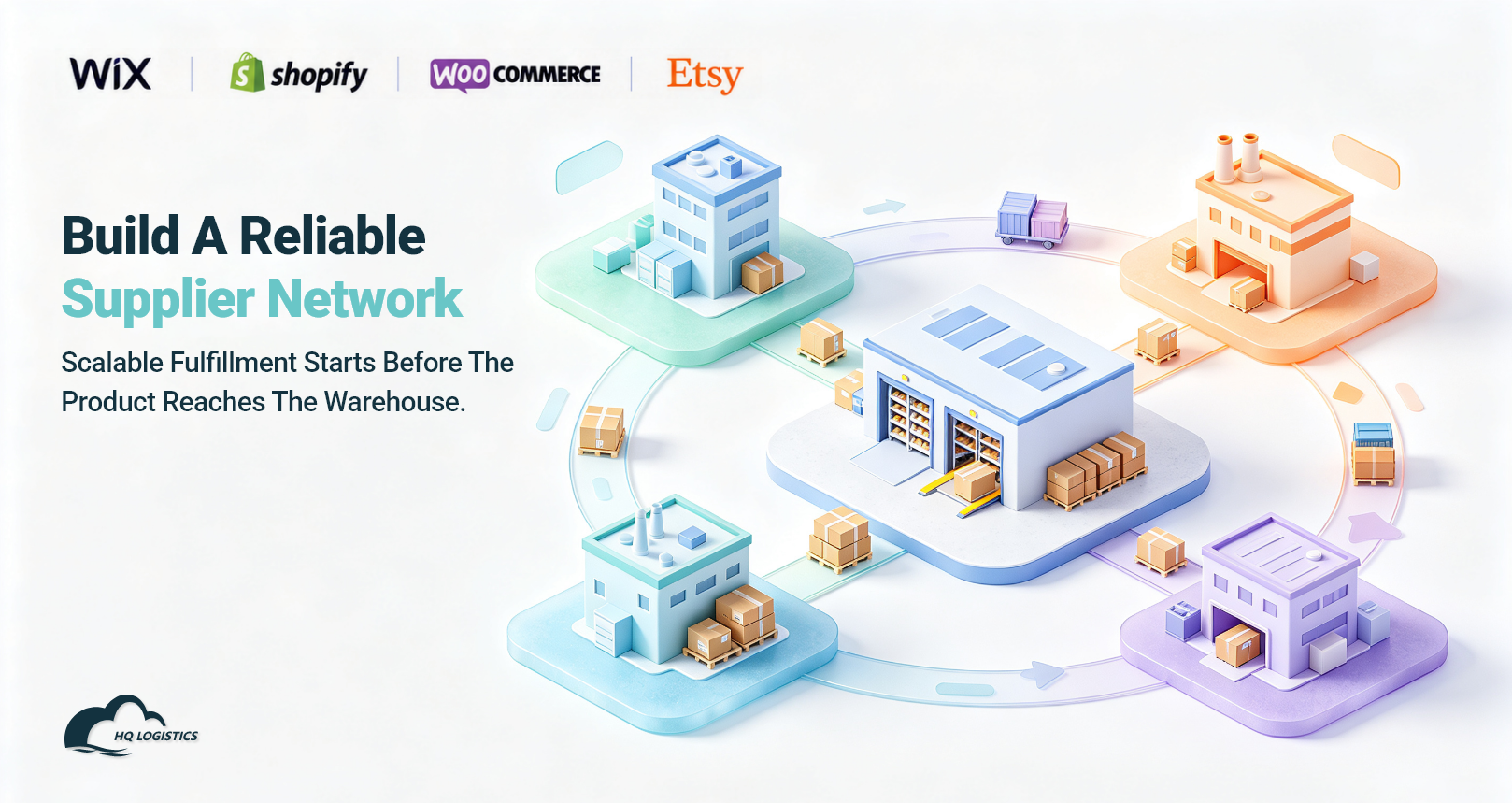
2. Build a Reliable Supplier Network
Scalable fulfillment starts before the product reaches the warehouse.
If your supplier cannot consistently produce your products, faster warehouse processing will not solve the problem.
As order volume increases, brands should evaluate suppliers based on more than product price.
Consider:
Product Quality | Production Capacity | Lead Time | MOQ | Quality Control | Communication | Backup Capacity | Customization
A supplier that handles 10 orders a day may struggle when demand suddenly increases tenfold.
This is why growing ecommerce brands should think about supplier scalability early.
Don't Depend on a Single Source
Using multiple qualified suppliers can provide additional flexibility.
If one supplier experiences production delays, raw-material shortages, or capacity limitations, alternative suppliers may help reduce the impact on your inventory.
However, managing multiple suppliers can also increase complexity.
A fulfillment partner with sourcing and supplier-management capabilities can help coordinate suppliers, compare quotations, monitor product quality, and organize inventory more efficiently.
3. Plan Inventory Before You Need It
Inventory planning becomes more important as your sales volume grows.
When you sell 10 orders a day, being out of stock may affect a small number of customers.
At 1,000 orders a day, a stockout can stop a large part of your operation.
For example, if your best-selling product sells 500 units a day and your replenishment takes two weeks, you need to plan inventory far ahead of the actual stockout date.
Your inventory strategy should consider:
Average Daily Orders | Sales Growth | Product Lead Time | Supplier Capacity | Safety Stock | Seasonal Demand | Warehouse Capacity | Shipping Time
The goal is not simply to hold as much inventory as possible.
It is to hold the right inventory in the right location at the right time.
Peak Season Requires More Planning
Demand can change quickly during promotional periods, holidays, and seasonal campaigns.
If your advertising suddenly doubles order volume, your fulfillment system needs enough inventory and processing capacity to handle the increase.
That is why peak-season inventory planning should start before sales accelerate.
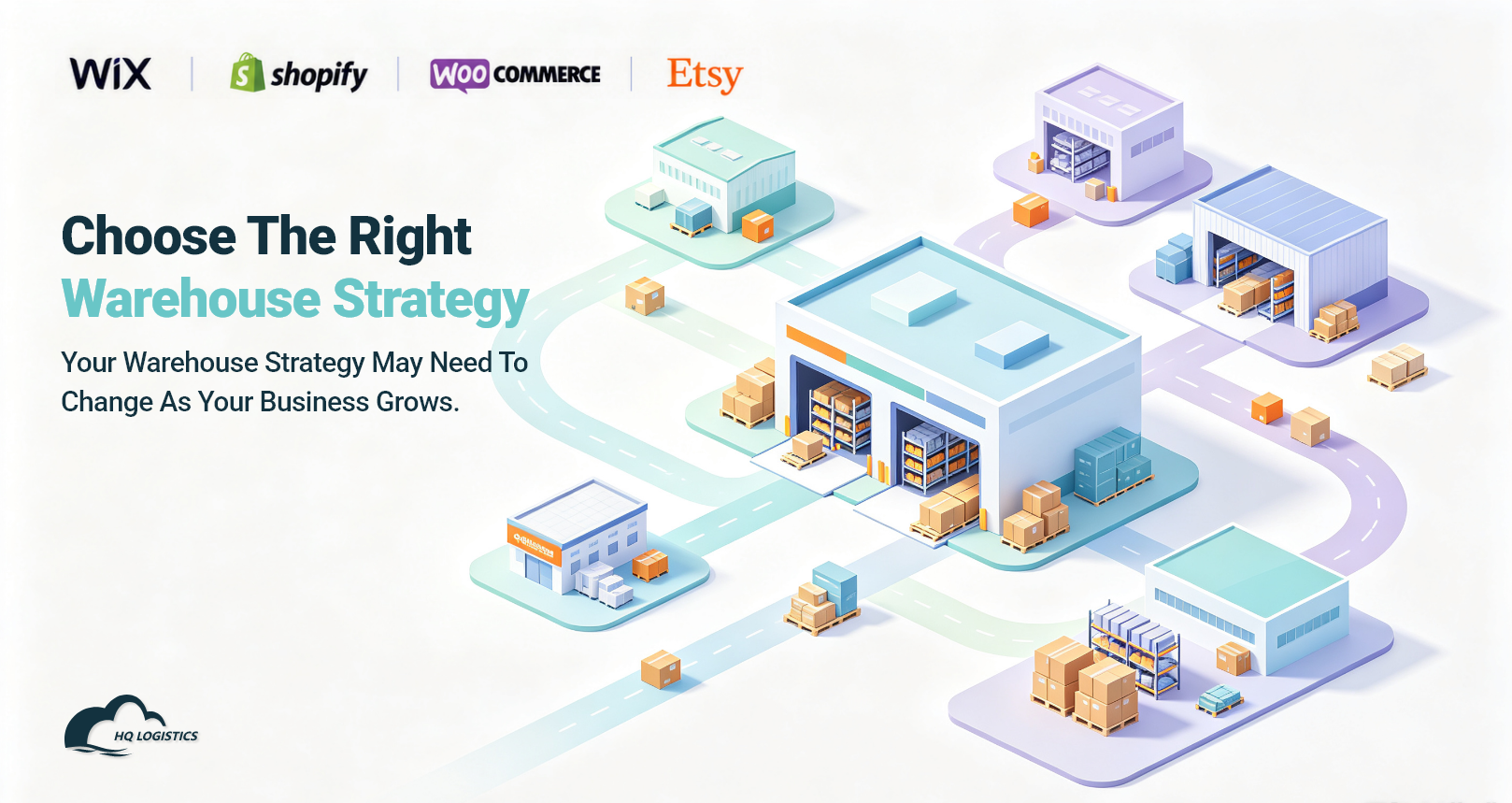
4. Choose the Right Warehouse Strategy
Your warehouse strategy may need to change as your business grows.
At the beginning, shipping every order directly from a China fulfillment center may be practical.
As order volume increases, you may start considering overseas inventory.
For example:
China Warehouse → Global Shipping
can evolve into:
China Warehouse + U.S. Warehouse + EU Warehouse → Regional Fulfillment
The right structure depends on your customer locations, sales volume, inventory turnover, product characteristics, and shipping economics.
When Should You Consider an Overseas Warehouse?
There is no universal order number that determines when you should move inventory overseas.
Instead, look at your data.
If a large percentage of your orders consistently comes from one market, storing inventory closer to those customers may become worth considering.
For example, a brand with strong U.S. demand may consider U.S. warehousing for domestic fulfillment.
A brand with growing sales across multiple EU countries may consider an EU warehouse strategy.
The objective is simple:
Put inventory closer to where demand is strongest.
5. Connect Your Store With Your Fulfillment System
Manual order processing becomes increasingly difficult as order volume grows.
Imagine copying customer information from your ecommerce platform into a spreadsheet, sending orders manually to a warehouse, and updating tracking information one order at a time.
That might work for a small store.
It becomes a serious bottleneck at hundreds of orders per day.
A scalable fulfillment system should connect your ecommerce store with your warehouse and fulfillment operation.
For example:
Customer Places Order → Order Automatically Synced → Inventory Checked → Warehouse Picks Product → Product Packed → Shipment Created → Tracking Synced Back
This reduces manual work and gives your team more time to focus on growth.
For ecommerce brands, integrations with platforms such as Shopify, Wix, WooCommerce, and Etsy can help create a more connected fulfillment workflow.
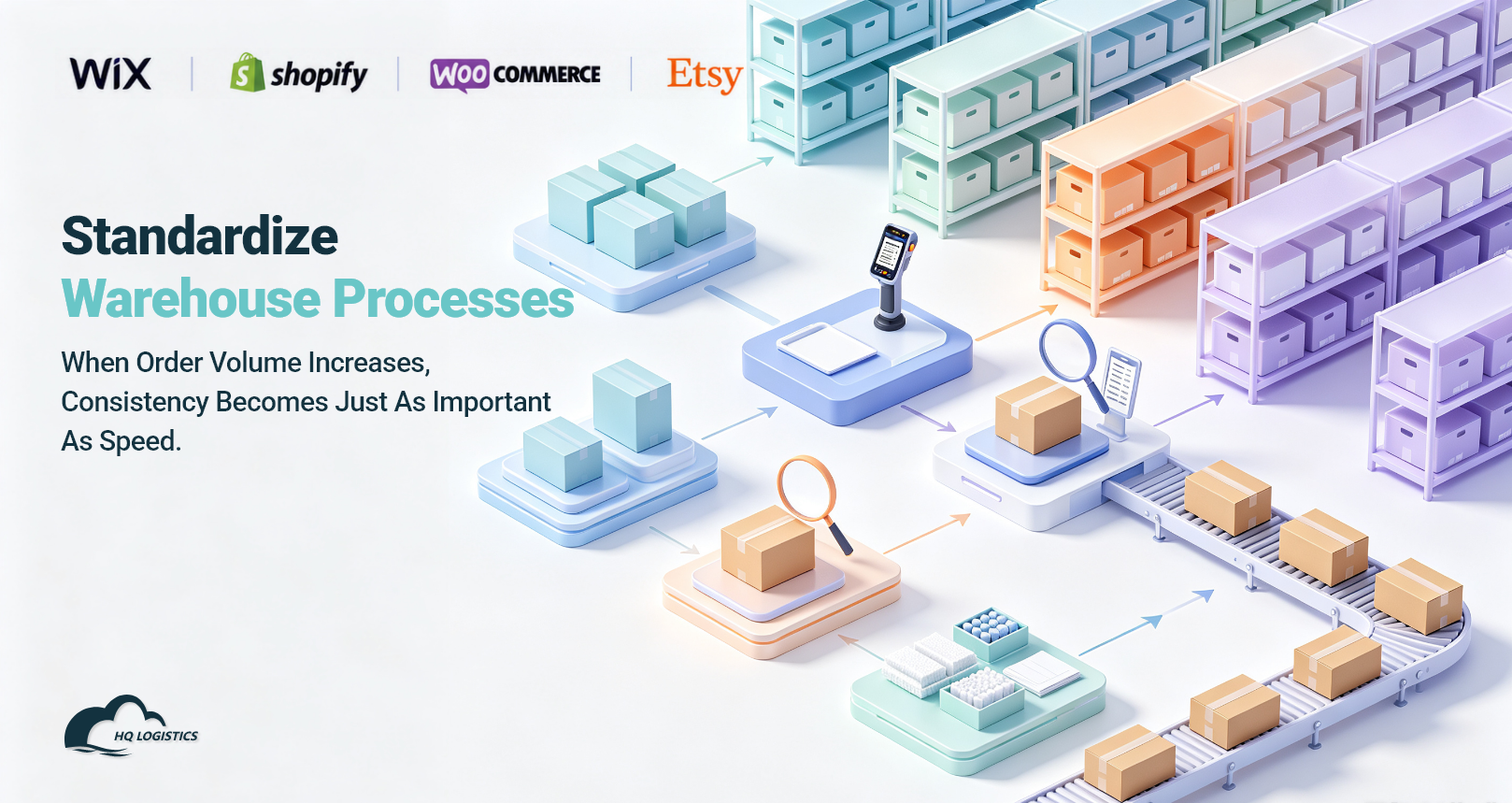
6. Standardize Warehouse Processes
When order volume increases, consistency becomes just as important as speed.
A warehouse should have standardized processes for:
Receiving | Inventory Storage | SKU Management | Picking | Quality Checking | Packing | Labeling | Shipping | Returns
Without standardized procedures, increasing order volume can lead to more picking errors, missing products, incorrect packaging, and shipping delays.
A scalable warehouse should make it easy for workers to understand what needs to happen at every stage.
Organize SKUs Clearly
SKU management becomes particularly important for brands with many products or product variants.
Products should have clear SKU codes, storage locations, packaging instructions, and inventory records.
This helps warehouse teams find products faster and reduces fulfillment errors.
7. Build Quality Control Into the Fulfillment Process
More orders mean more opportunities for mistakes.
If your fulfillment accuracy is 99%, that may sound high.
But at 1,000 orders a day, even a small error rate can affect multiple customers every day.
Quality control should therefore be built into the workflow rather than treated as an afterthought.
Depending on the product, QC can include:
Product Appearance | Quantity | Size | Color | Product Variant | Packaging | Labels | Accessories | Visible Damage
For branded products, QC can also include checking custom packaging and inserts before orders are shipped.
A strong quality-control process helps protect both customer experience and brand reputation.
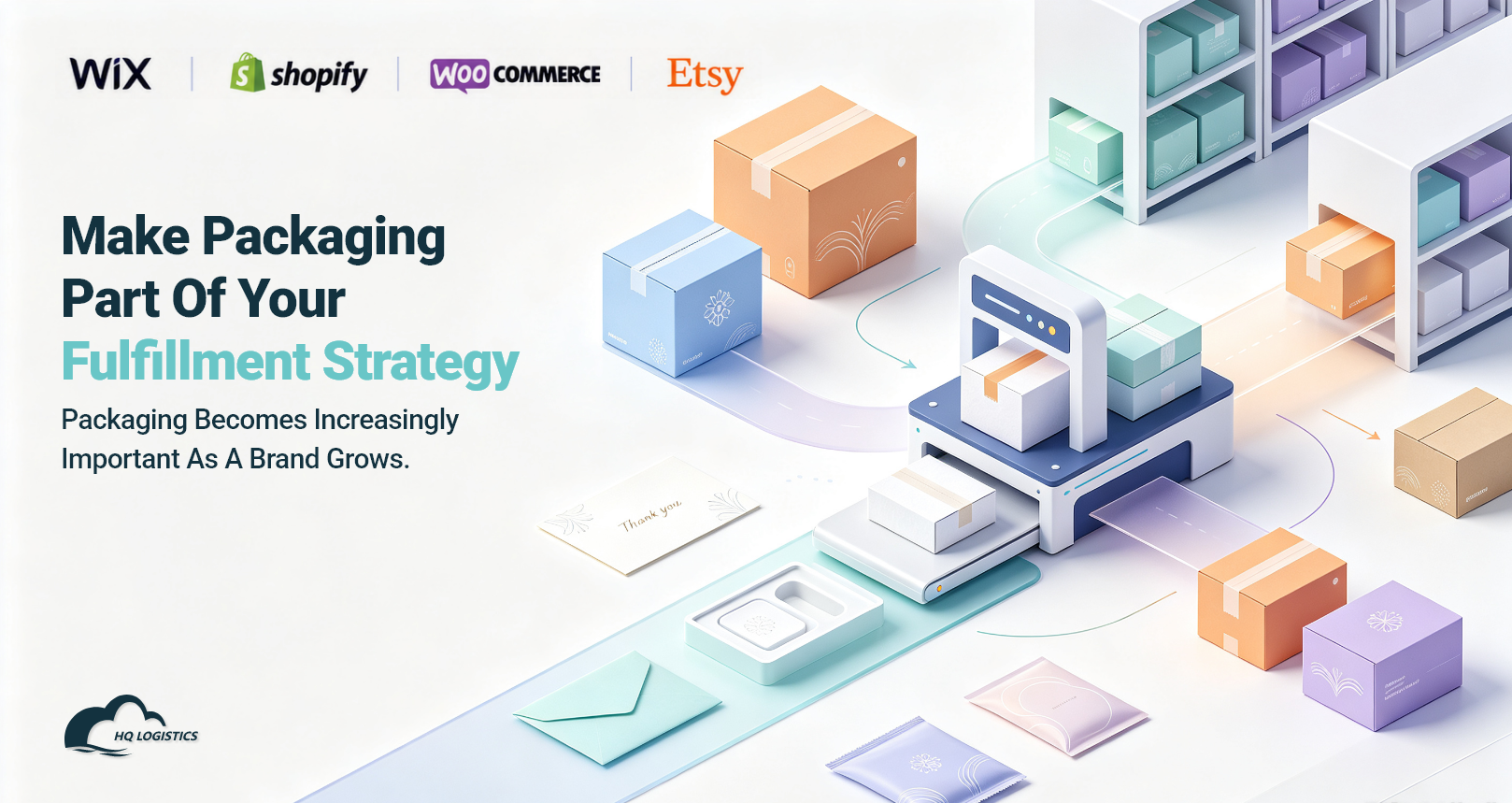
8. Make Packaging Part of Your Fulfillment Strategy
Packaging becomes increasingly important as a brand grows.
At 10 orders a day, you may use standard packaging.
At 1,000 orders a day, standardized packaging can help your warehouse process orders faster and more consistently.
At the same time, growing brands may want packaging that creates a stronger brand experience.
This can include:
Custom Boxes | Branded Mailers | Thank-You Cards | Product Inserts | Custom Labels | Hangtags | Protective Packaging
The key is to standardize the packaging process.
Your fulfillment team should know exactly which packaging materials belong to each SKU or product line.
This reduces confusion and helps maintain consistency across thousands of orders.
Free Custom Packaging Can Support Growing Brands
For qualifying high-volume brands, HQ offers free custom packaging from 50 orders/day, helping sellers create a more consistent branded experience while scaling fulfillment.
9. Prepare Multiple Shipping Options
Shipping becomes another major consideration as your order volume grows.
At low volume, you may rely on one preferred shipping channel.
At high volume, depending entirely on one channel can create unnecessary risk.
A scalable fulfillment strategy can include multiple shipping options based on:
Destination | Product Type | Weight | Delivery Time | Shipping Cost | Battery Restrictions | Customs Requirements
For example, your U.S. orders may use different channels from your European or Australian orders.
Products with batteries, liquids, or other special characteristics may also require different transportation solutions.
Having access to multiple shipping channels can give fulfillment teams more flexibility when prices, capacity, or transit conditions change.
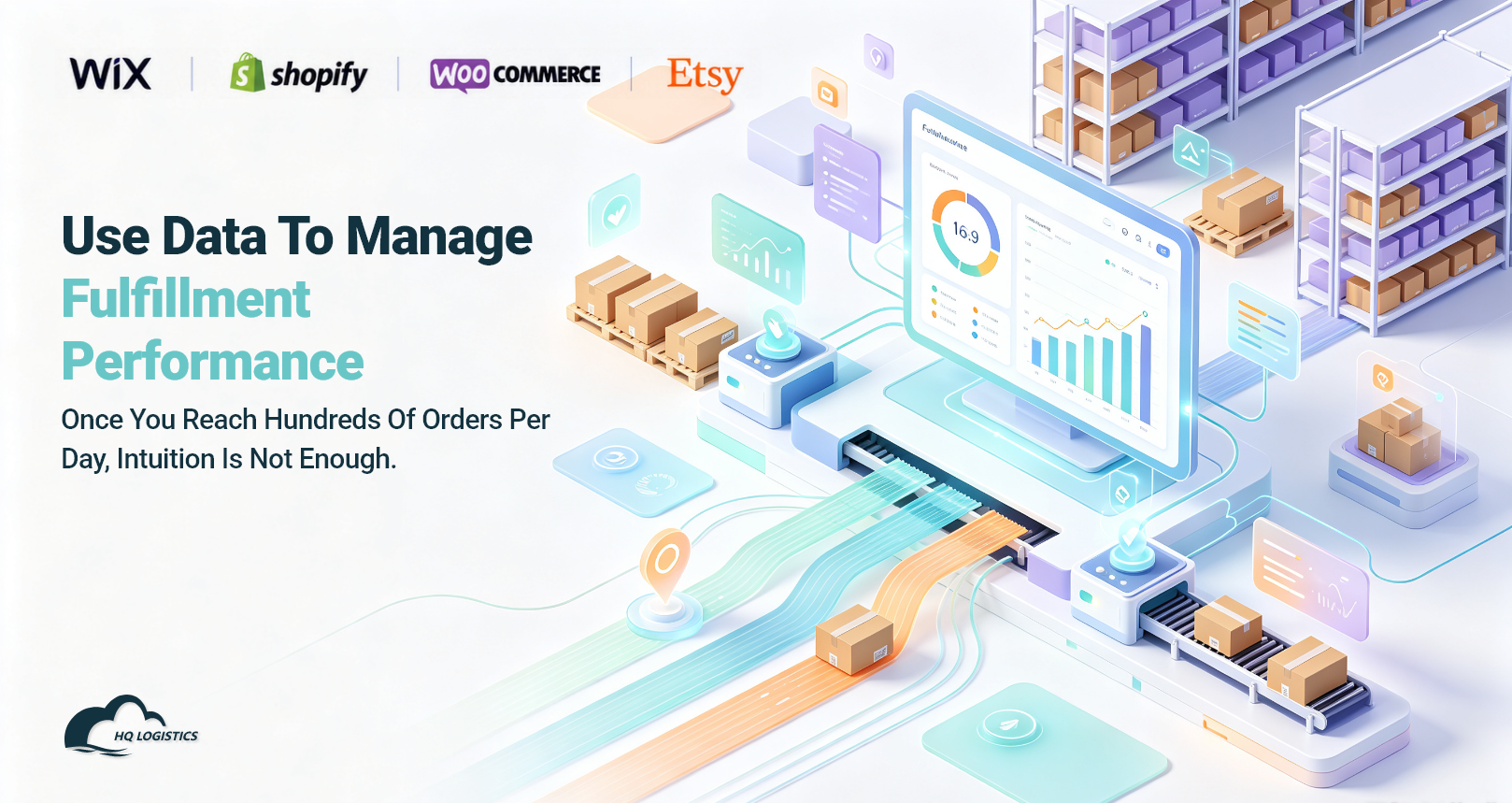
10. Use Data to Manage Fulfillment Performance
Once you reach hundreds of orders per day, intuition is not enough.
You need data.
Useful fulfillment metrics can include:
Order Accuracy | Processing Time | On-Time Shipment Rate | Inventory Accuracy | Stockout Rate | Shipping Cost per Order | Return Rate | Damaged Order Rate
Tracking these metrics can help identify bottlenecks.
For example, if order volume is increasing but processing time is also increasing, the warehouse may need additional labor, better SKU organization, more automation, or a different workflow.
The numbers can show you where the problem is.
11. Design Your Fulfillment System in Stages
You do not need a 1,000-orders-per-day infrastructure when you are only shipping 10 orders a day.
The smarter approach is to build progressively.
Stage 1: 10–50 Orders a Day
At this stage, focus on getting the basics right.
Reliable Supplier | Product Quality | Basic Inventory Tracking | Consistent Packaging | Stable Shipping | Basic Store Integration
The goal is to establish a repeatable process.
Stage 2: 50–200 Orders a Day
Your operation is becoming more complex.
Start focusing on:
Automated Order Sync | Better Inventory Planning | SKU Organization | Quality Control | Custom Packaging | Multiple Shipping Channels
At this point, manual processes should gradually be replaced by standardized workflows.
Stage 3: 200–500 Orders a Day
Fulfillment becomes a core business function.
You may need:
Dedicated Account Management | Stronger Warehouse Processes | Multiple Suppliers | Safety Stock | Better Reporting | Regional Inventory Planning
This is also a good time to evaluate whether overseas warehousing could improve your fulfillment strategy.
Stage 4: 500–1,000+ Orders a Day
At high volume, your fulfillment operation needs to be built for scale.
The focus shifts toward:
Supply Chain Management | Warehouse Capacity | Automated Workflows | Inventory Forecasting | Multiple Suppliers | Multiple Shipping Channels | Regional Fulfillment | Performance Monitoring
At this level, fulfillment is no longer just about picking and packing.
It becomes part of your overall supply chain strategy.
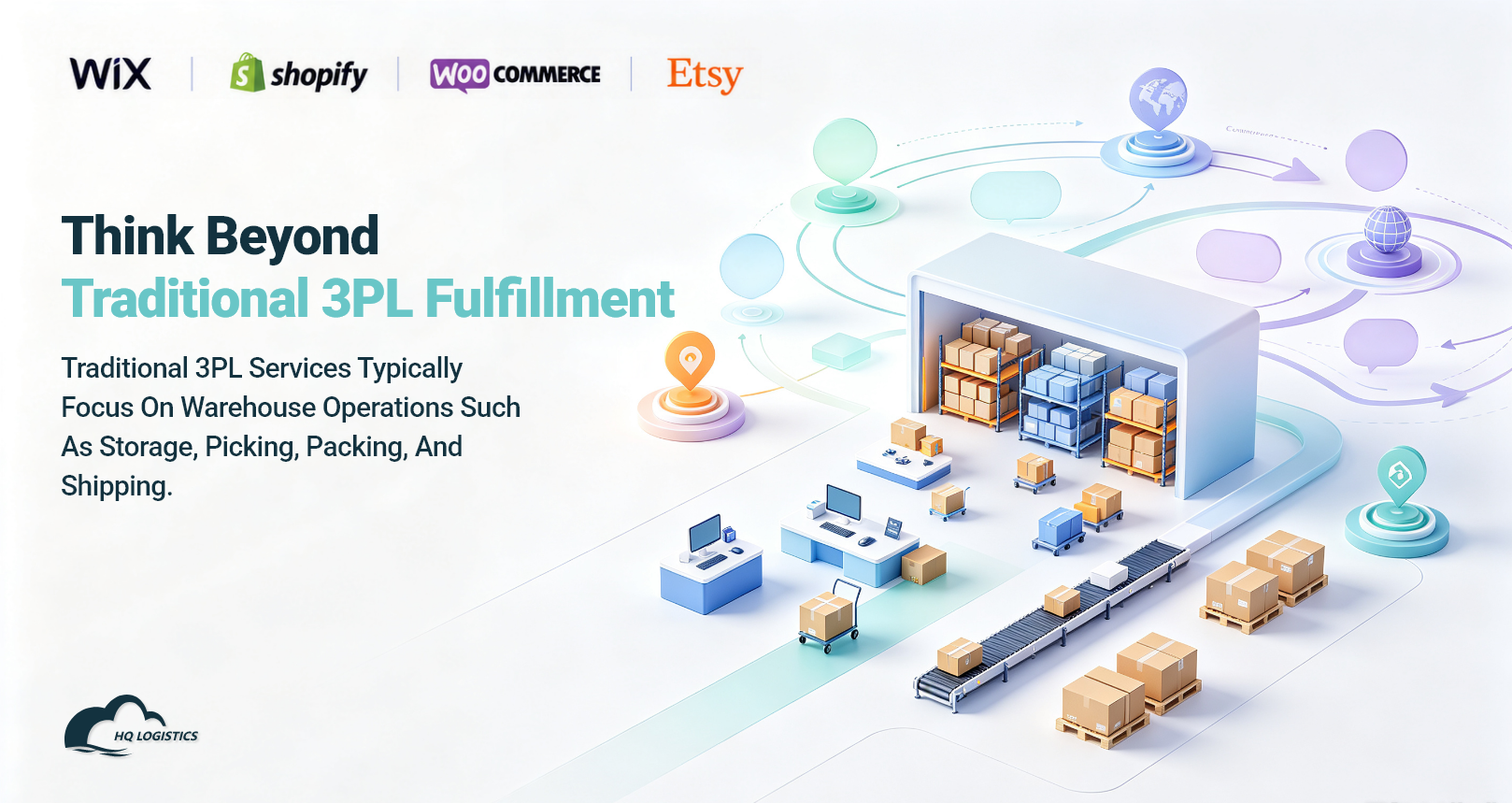
12. Think Beyond Traditional 3PL Fulfillment
Traditional 3PL services typically focus on warehouse operations such as storage, picking, packing, and shipping.
Growing ecommerce brands may need support further upstream.
For example:
Supplier Sourcing | Supplier Management | Product Optimization | Inventory Planning | Warehousing | Quality Control | Custom Packaging | Fulfillment | Global Shipping
This is closer to a 4PL-style approach.
Instead of simply asking:
“Who can ship my orders?”
a growing brand should ask:
“Who can help me build a supply chain that scales with my business?”
That difference becomes increasingly important when your store moves from hundreds to thousands of orders.
How HQ Helps Growing Ecommerce Brands Scale Fulfillment
HQ provides an integrated fulfillment solution for growing ecommerce brands.
Instead of managing sourcing, suppliers, inventory, packaging, warehouse operations, and shipping separately, brands can connect these processes through one fulfillment partner.
HQ supports:
Product Sourcing | Supplier Coordination | Quality Inspection | Warehouse Storage | Custom Packaging | Order Fulfillment | Multiple Shipping Channels | Global Delivery
For growing brands, HQ offers:
3–8 Day Global Delivery | Free Custom Packaging From 50 Orders/Day | 20,000 Orders/Day Fulfillment Capacity | Shipping to US · Europe · UK · Australia
HQ also supports ecommerce platforms including Shopify, Wix, WooCommerce, and Etsy, helping brands connect their stores with a more structured fulfillment workflow.
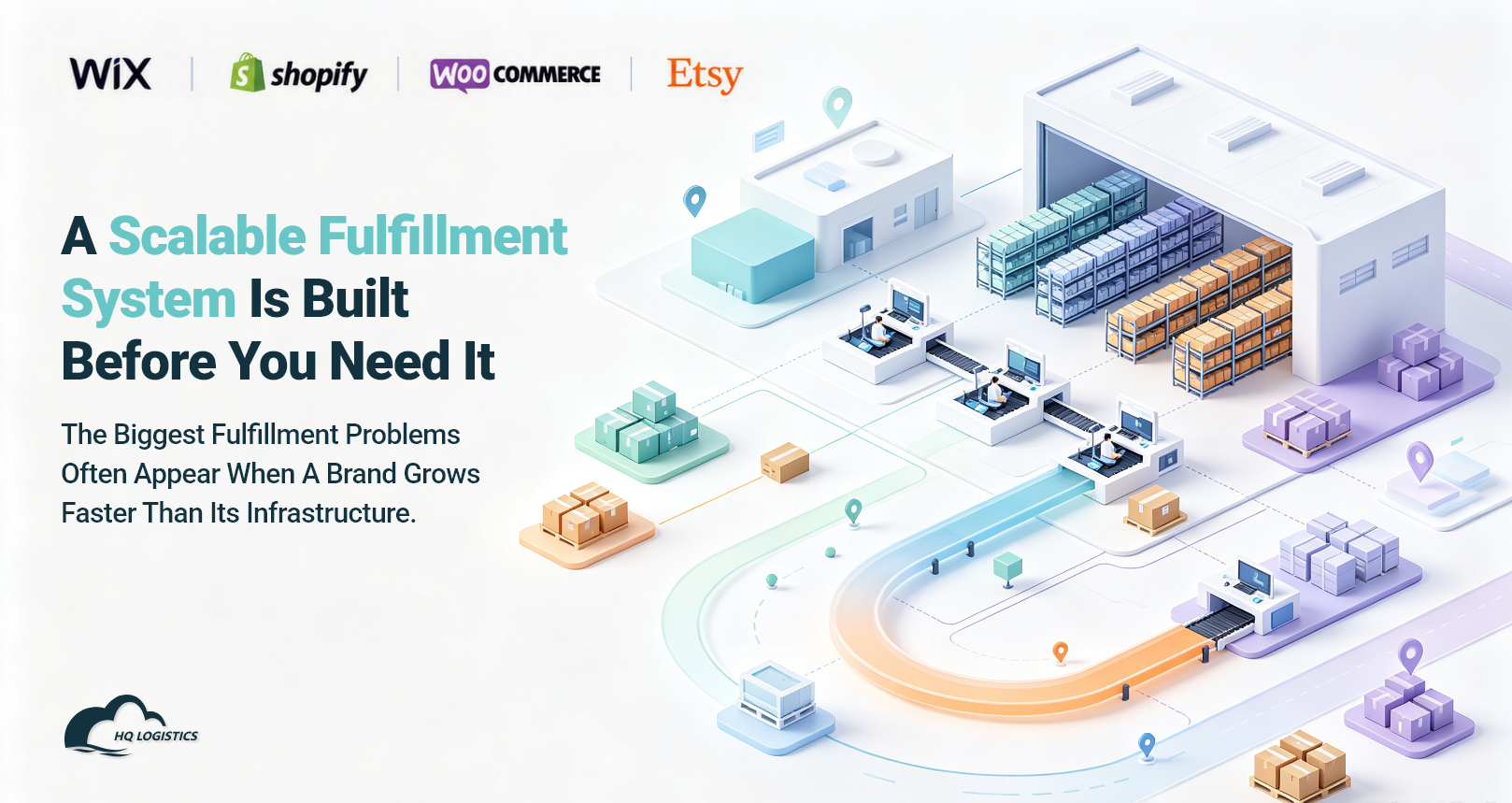
A Scalable Fulfillment System Is Built Before You Need It
The biggest fulfillment problems often appear when a brand grows faster than its infrastructure.
You get more orders, but inventory cannot keep up.
You have enough inventory, but the warehouse cannot process it quickly enough.
The warehouse can process orders, but packaging creates delays.
Orders are ready, but your shipping channel has limited capacity.
These problems are easier to prevent than to fix after they start affecting customers.
A scalable fulfillment system connects the entire process:
Source → Plan → Store → Inspect → Pick → Pack → Ship → Track → Optimize
Whether you are currently shipping 10 orders a day or preparing for 1,000, the goal should be the same:
Build a fulfillment system that grows with your brand—not one that slows it down.
FAQs
1. When should an ecommerce brand upgrade its fulfillment system?
There is no single order volume that applies to every business. However, increasing manual work, frequent stockouts, fulfillment delays, rising error rates, and growing customer complaints are common signs that your current system needs to change.
2. Can one fulfillment center handle 1,000 orders a day?
It can, depending on warehouse capacity, SKU complexity, order characteristics, staffing, automation, and operating processes. The important question is whether the warehouse can consistently handle your peak daily volume, not just your average volume.
3. Should I use multiple suppliers as my store grows?
Multiple qualified suppliers can provide additional sourcing flexibility and reduce dependence on a single supplier. However, supplier management becomes more complex, so brands need clear quality standards and inventory coordination.
4. When should I consider a U.S. or EU warehouse?
Consider regional warehousing when you have consistent demand in a particular market and the potential benefits of local fulfillment justify the additional inventory and warehouse costs.
5. What fulfillment metrics should ecommerce brands track?
Useful metrics include order accuracy, processing time, on-time shipment rate, inventory accuracy, stockout rate, shipping cost per order, return rate, and damaged-order rate.
6. What is the difference between 3PL and 4PL fulfillment?
A traditional 3PL generally focuses on logistics operations such as warehousing, picking, packing, and shipping. A 4PL-style model can extend further into supplier management, sourcing, inventory planning, logistics optimization, and broader supply-chain coordination.
Final Thoughts
Going from 10 to 1,000 orders a day is not simply about getting more customers.
It requires a fulfillment system capable of handling greater volume without sacrificing inventory accuracy, product quality, delivery performance, or customer experience.
Start with reliable suppliers and clean inventory management. Then add automation, standardized warehouse processes, quality control, custom packaging, multiple shipping options, and regional fulfillment as your business grows.
The earlier you build these foundations, the easier it becomes to scale.
From 10 to 1,000 orders a day, your fulfillment system should be built for the next stage—not just the current one.