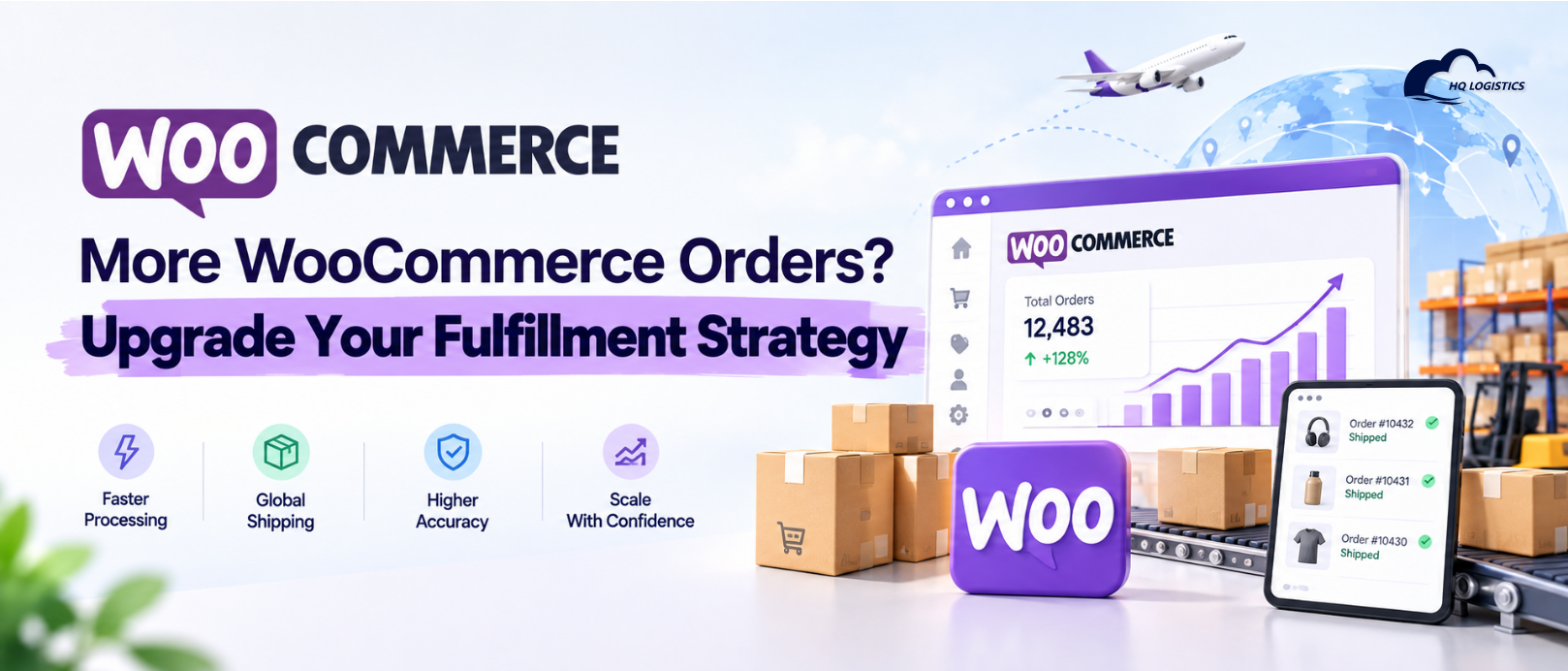
More WooCommerce Orders? Upgrade Your Fulfillment Strategy
More WooCommerce Orders? Upgrade Your Fulfillment Strategy
More WooCommerce orders are a good sign—but they can quickly create new fulfillment challenges.
When your store is small, processing orders manually or shipping directly from your supplier may be manageable.
But as daily orders increase, the same fulfillment process can become slow, difficult to track, and expensive to manage.
Inventory needs to be organized. Orders need to be processed accurately. Products need to be packed consistently. Shipping needs to be reliable.
And if you're selling to customers across multiple countries, your fulfillment strategy becomes even more important.
For growing WooCommerce brands, the question is no longer simply "How do I ship my orders?"
It's:
"How do I build a fulfillment system that can grow with my store?"
Why More WooCommerce Orders Change Everything
A fulfillment process that works for 10 orders a day may not work for 100 or 1,000.
As your order volume increases, small inefficiencies can quickly become larger operational problems.
You may start seeing:
More Inventory Management | More Manual Order Processing | More Packaging Work | More Customer Tracking Questions | Higher Shipping Costs | More Stockout Risk | More Pressure on Your Team
Growth creates opportunities, but it also exposes weaknesses in your existing fulfillment system.
That's why fulfillment should be treated as part of your growth strategy—not simply an operational task.
Signs Your WooCommerce Fulfillment Strategy Needs an Upgrade
You don't need to wait until fulfillment becomes a major problem.
Several warning signs can indicate that your current system is no longer suitable for your store.
Your Team Is Processing Orders Manually
If employees are spending hours downloading orders, checking inventory, creating shipping labels, and updating tracking information, your fulfillment process may not be scalable.
Automation can reduce repetitive work and give your team more time to focus on marketing, customer service, and product development.
Orders Are Growing Faster Than Your Inventory System
More orders mean more inventory movement.
If you don't have accurate inventory information, you may sell products that are already out of stock or discover shortages too late.
A centralized inventory system can help you monitor stock levels and plan replenishment more effectively.
Shipping Takes Too Much Time
If products are still being processed individually from suppliers after each order is placed, your fulfillment speed may become a bottleneck.
As order volume increases, having inventory positioned in a fulfillment center can make the process more efficient.
Customers Are Asking About Tracking
Shipping delays and unclear tracking information can create additional customer-service work.
A better fulfillment system should provide reliable tracking updates and make shipment information easier to manage.
Packaging Is Becoming Difficult to Manage
As your brand grows, packaging becomes more than putting a product into a box.
You may need:
Branded Boxes | Custom Labels | Inserts | Thank-You Cards | Product Bundles | Protective Packaging
A fulfillment partner should be able to follow your packaging requirements consistently.
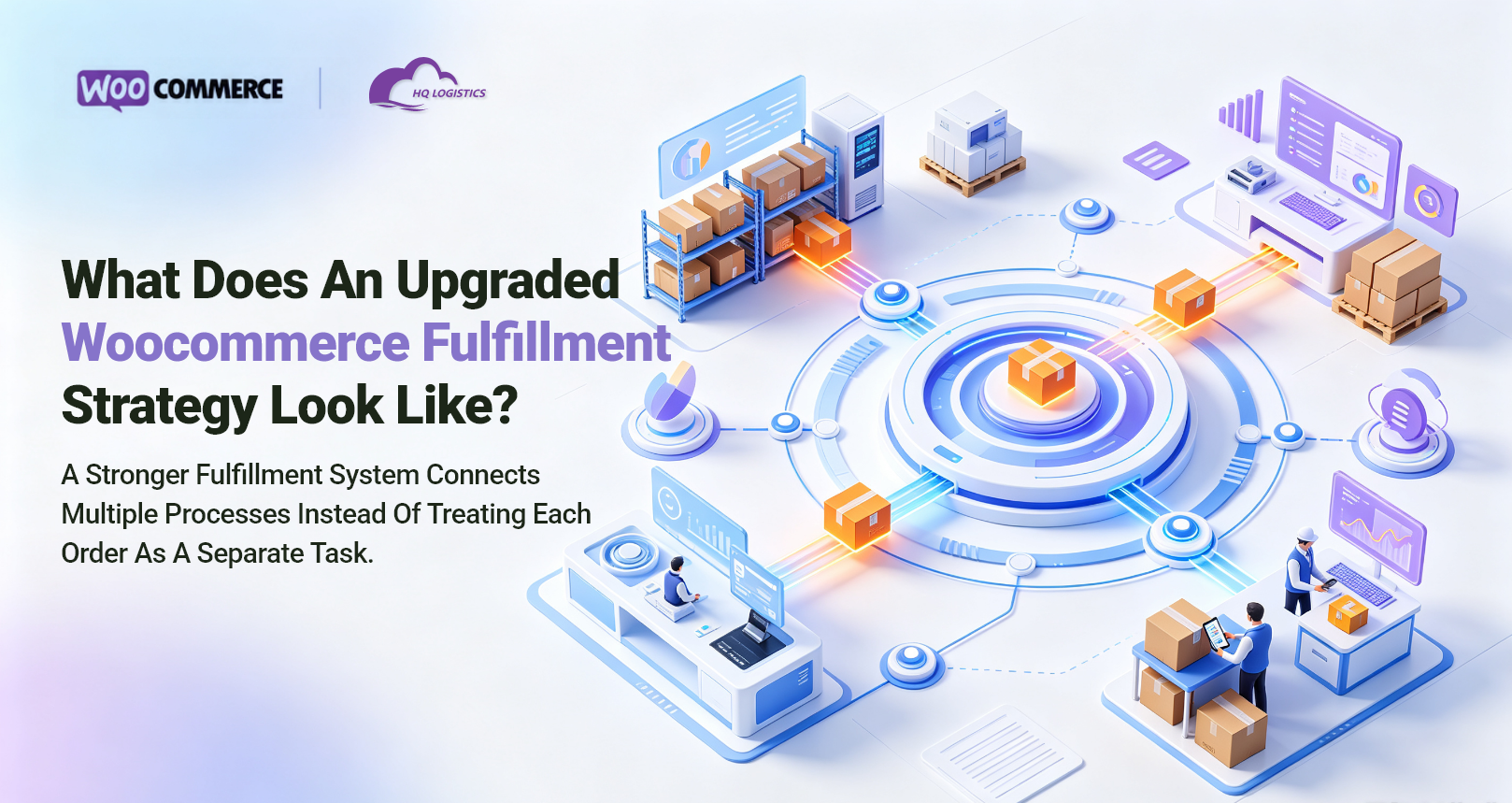
What Does an Upgraded WooCommerce Fulfillment Strategy Look Like?
A stronger fulfillment system connects multiple processes instead of treating each order as a separate task.
A typical workflow might look like:
WooCommerce Order → Order Sync → Inventory Check → Pick → Quality Check → Pack → Ship → Tracking Update
The goal is to reduce unnecessary manual steps while keeping control over inventory and customer orders.
This becomes increasingly important as your daily order volume grows.
1. Connect WooCommerce With Your Fulfillment System
Your ecommerce store and fulfillment operation should communicate with each other.
When a customer places an order, the order should move into your fulfillment system without unnecessary manual entry.
A connected workflow can help with:
Order Synchronization | Inventory Updates | Shipping Information | Tracking Updates | Order Status Management
This reduces repetitive tasks and can also help lower the risk of manual data-entry errors.
For growing stores, automation is one of the simplest ways to make fulfillment more scalable.
2. Centralize Inventory Management
Inventory problems can become expensive when your WooCommerce store grows.
You need to know:
How Much Stock Do I Have?
Where Is It Stored?
Which Products Are Selling Fastest?
When Should I Reorder?
How Much Safety Stock Do I Need?
A centralized fulfillment operation can make inventory easier to monitor.
Instead of managing product stock through multiple disconnected suppliers or locations, you can create a clearer inventory structure.
3. Improve Quality Control Before Shipping
More orders mean more opportunities for mistakes.
A product that is shipped incorrectly can create additional costs through refunds, replacements, returns, and customer-service work.
Quality control can include:
Product Inspection | Quantity Check | SKU Verification | Packaging Check | Order Accuracy
For brands selling products with different sizes, colors, variations, or bundles, SKU accuracy becomes particularly important.
Quality control should be part of the fulfillment process—not something you think about only after a customer complains.
4. Standardize Your Packaging
Growing brands often want their orders to look more professional.
Instead of using generic packaging for every order, you can create standardized packaging instructions for your fulfillment team.
For example:
Product → Branded Packaging → Thank-You Card → Protective Material → Shipping Package
This creates a more consistent unboxing experience.
It can also make the fulfillment process easier because warehouse staff don't need to decide how each order should be packed.
For growing WooCommerce brands, custom packaging can help connect fulfillment with brand building.
5. Choose Shipping Channels Based on Your Markets
Not every order should necessarily use the same shipping method.
Your best shipping option may depend on:
Destination | Product Type | Package Weight | Delivery Expectations | Shipping Cost | Order Volume
A growing WooCommerce store may serve customers in the U.S., Europe, the UK, Australia, Canada, and other markets.
Using a fulfillment partner with multiple shipping channels can give your business more flexibility.
Instead of using one shipping solution for every destination, you can choose a channel based on the actual order requirements.
6. Consider Overseas Warehousing
If most of your customers are located in a specific market, storing inventory closer to those customers may improve fulfillment efficiency.
For example, if your WooCommerce store has a large and stable U.S. customer base, a U.S. warehouse can allow orders to be fulfilled domestically.
The supply chain may look like:
China Supplier → Bulk Shipment → U.S. Warehouse → U.S. Customer
This is different from shipping every order individually from China.
For growing brands, overseas warehousing can potentially improve delivery speed and change the overall fulfillment cost structure.
However, inventory should be planned carefully.
Moving too much inventory overseas can tie up capital, while moving too little can lead to stockouts.
7. Build a Replenishment System
Fulfillment doesn't start when a customer clicks "Buy."
It starts much earlier.
Your inventory planning should connect sales data with supplier production and warehouse stock.
For example:
Sales Forecast → Inventory Planning → Supplier Production → Bulk Shipping → Warehouse Stock → Customer Fulfillment
This gives your team more time to react before inventory becomes a problem.
For fast-growing WooCommerce stores, replenishment planning becomes especially important before major promotions and peak seasons.
8. Prepare for Order Volume Spikes
Your average daily order volume isn't always your highest order volume.
A successful advertising campaign, product launch, holiday promotion, or seasonal event can suddenly increase demand.
If your store normally processes 100 orders per day but receives 500 orders after a promotion, your fulfillment operation needs enough capacity to handle the increase.
Before a major campaign, check:
Inventory | Supplier Capacity | Packaging Materials | Warehouse Capacity | Pick & Pack Capacity | Shipping Channels
A strong fulfillment strategy should be designed around both normal demand and potential demand spikes.
WooCommerce Fulfillment: In-House vs. Fulfillment Partner
As your store grows, you may need to decide whether to continue fulfilling orders yourself or work with a professional fulfillment partner.
In-House Fulfillment
In-house fulfillment gives you direct control over your inventory and packing process.
It can work well when:
Order Volume Is Low | Product Range Is Small | You Have Available Storage Space | Your Team Can Handle Fulfillment
But as order volume increases, warehouse space, labor, packaging, inventory management, and shipping operations can become more difficult to manage.
Professional Fulfillment
A fulfillment partner can take over many operational tasks.
This may include:
Warehousing | Inventory Management | Quality Inspection | Pick & Pack | Custom Packaging | Shipping | Tracking
This allows your team to focus more on growing the WooCommerce business instead of processing every order manually.
The right choice depends on your order volume, margins, products, markets, and growth plans.
How to Choose a WooCommerce Fulfillment Partner
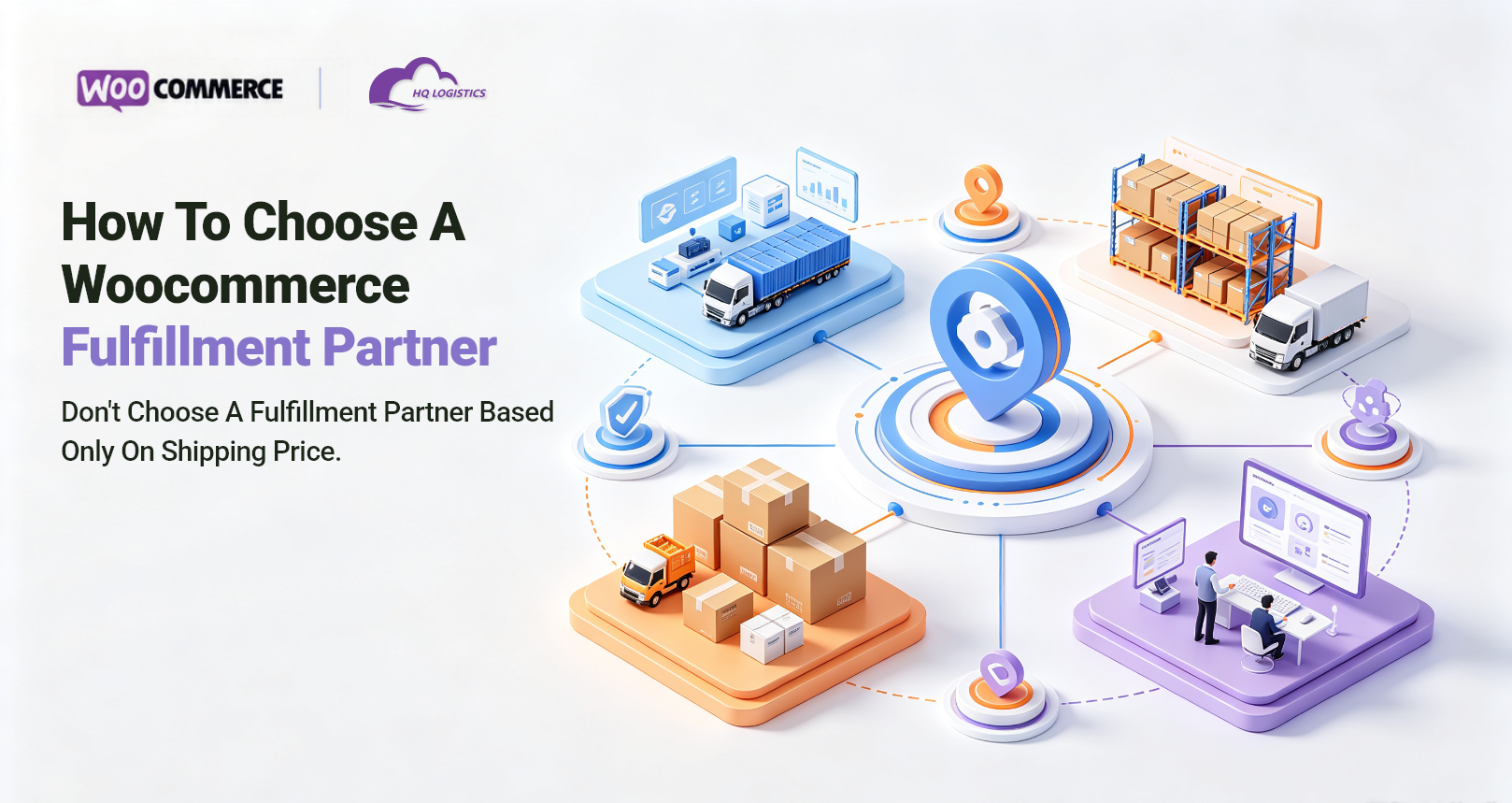
Don't choose a fulfillment partner based only on shipping price.
Look at the entire fulfillment operation.
WooCommerce Integration
Make sure the fulfillment system can connect with your WooCommerce store and support automated order processing.
Warehouse Capacity
Your fulfillment partner should have enough capacity for your current inventory and expected growth.
Order Processing Speed
Ask how quickly orders can move from the WooCommerce store to warehouse processing and shipment.
Quality Control
Find out whether products can be inspected before fulfillment and how incorrect or damaged items are handled.
Custom Packaging
If your brand depends on a strong unboxing experience, make sure the fulfillment partner can support your packaging requirements.
Shipping Coverage
Check whether the partner can serve your major customer markets with suitable shipping options.
Scalability
The fulfillment solution should be able to handle increased order volumes without forcing you to rebuild your entire operation.
A Simple WooCommerce Fulfillment Workflow
A scalable WooCommerce fulfillment system can be structured like this:
1. Customer Places Order
The order is automatically received from your WooCommerce store.
2. Inventory Is Checked
The fulfillment system confirms that the required SKU is available.
3. Product Is Picked
Warehouse staff locate and pick the correct product.
4. Quality and Order Check
The SKU, quantity, and packaging requirements are checked.
5. Order Is Packed
The product is packed according to your brand's packaging instructions.
6. Order Is Shipped
The most suitable shipping channel is selected based on the destination and product requirements.
7. Tracking Is Updated
Tracking information is synchronized so customers can follow the shipment.
This process can reduce manual work and make fulfillment easier to scale.
How HQ Supports Growing WooCommerce Brands
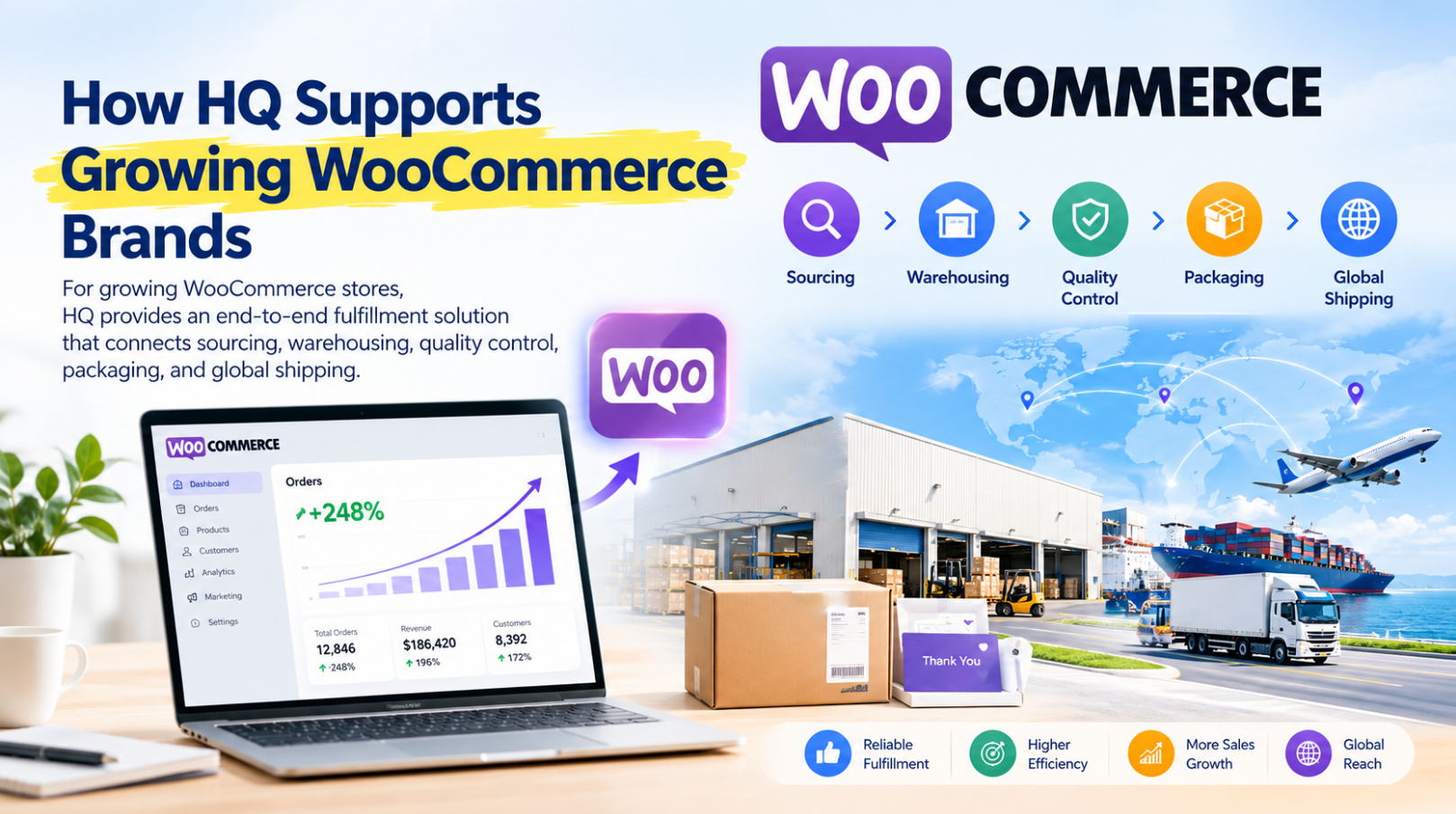
For growing WooCommerce stores, HQ provides an end-to-end fulfillment solution that connects sourcing, warehousing, quality control, packaging, and global shipping.
HQ can help brands manage:
🔎 Product Sourcing | ✅ Quality Inspection | 📦 Inventory Storage | 🎨 Custom Packaging | ⚡ Order Fulfillment | 🌍 Global Shipping
HQ supports ecommerce platforms including WooCommerce, Shopify, Wix, and Etsy
.For growing stores, fulfillment capacity and delivery speed are also important:
⚡ 3–8 Days Delivery
📦 Free Custom Packaging From 50 Orders/Day
🚚 20,000 Orders/Day Fulfillment Capacity
🌍 Shipping to US · Europe · UK · Australia
Instead of building every fulfillment process internally, WooCommerce brands can use a centralized fulfillment partner to manage more of the operational work behind their stores.
FAQs
What is WooCommerce fulfillment?
WooCommerce fulfillment is the process of receiving customer orders from a WooCommerce store, managing inventory, picking and packing products, shipping orders, and updating tracking information.
When should a WooCommerce store use a fulfillment center?
A fulfillment center may become useful when order volume increases, inventory takes up too much space, shipping becomes difficult to manage, or your team spends too much time processing orders.
Can WooCommerce connect to a fulfillment company?
Yes. A fulfillment system can integrate with WooCommerce so that orders and relevant fulfillment information can be synchronized. The exact integration method depends on the fulfillment provider.
Is a fulfillment center cheaper than fulfilling orders myself?
Not necessarily in every situation. The total cost depends on storage, labor, packaging, shipping, order volume, and other operational factors. A fulfillment partner can become more cost-efficient as order volume grows, but brands should compare the complete cost structure.
Can a WooCommerce fulfillment partner provide custom packaging?
Many fulfillment providers offer custom packaging services. Depending on the provider, this can include branded boxes, labels, inserts, thank-you cards, and other packaging materials.
Final Thoughts
More WooCommerce orders mean more opportunities to grow—but they also require a more organized fulfillment strategy.
What works for 10 orders a day may not work for 100.
And what works for 100 may not be enough for 1,000.
The solution is not simply to ship faster.
You need to build a system that connects:
Inventory → Quality Control → Packaging → Warehousing → Order Processing → Shipping → Tracking
As your WooCommerce store grows, upgrading fulfillment can help reduce manual work, improve operational consistency, and create a stronger foundation for scaling into new markets.
More WooCommerce orders? Build a fulfillment strategy that grows with them.