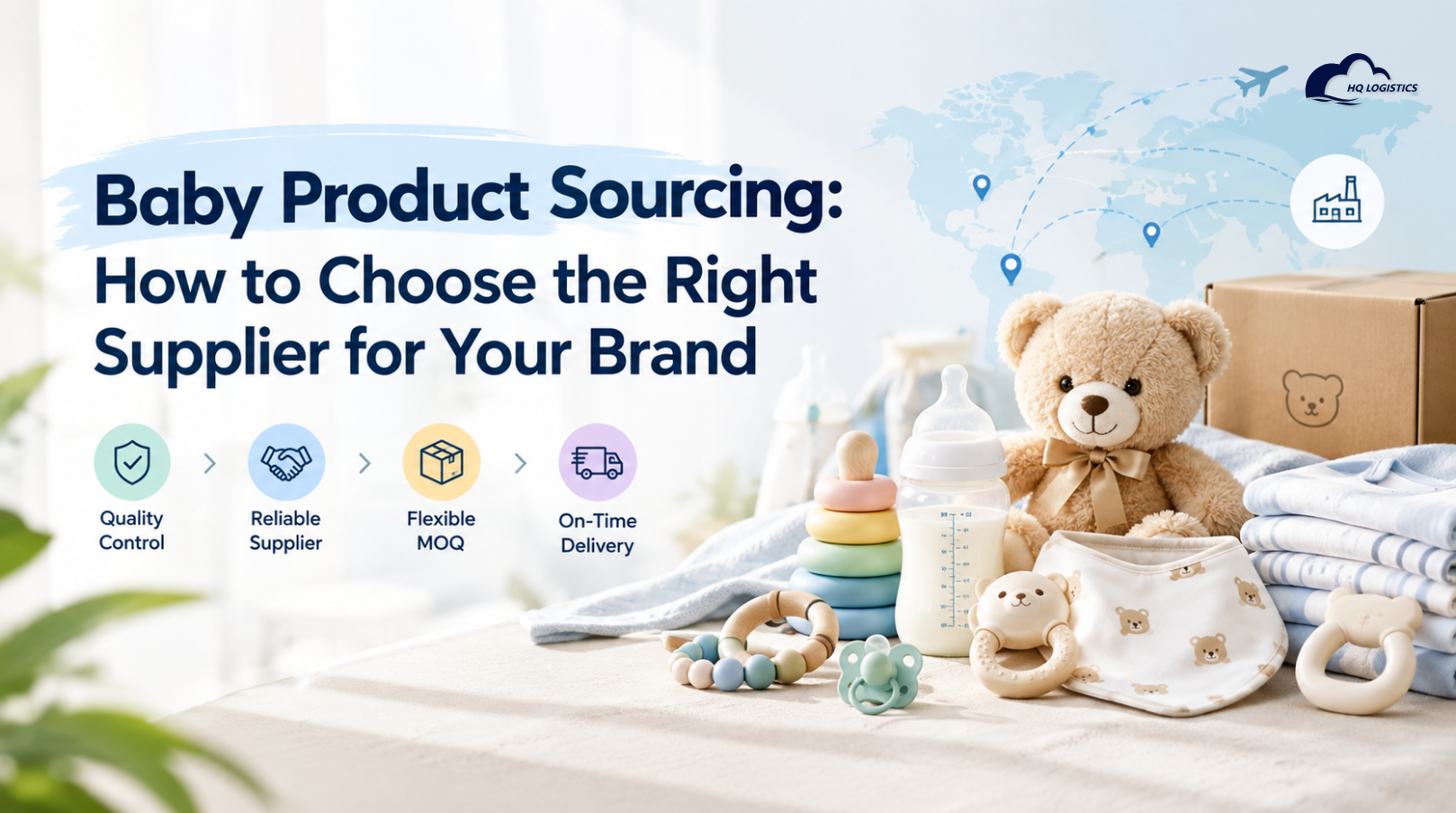
Baby Product Sourcing: How to Choose the Right Supplier for Your Brand
Baby Product Sourcing: How to Choose the Right Supplier for Your Brand
Selling baby products online can be a strong opportunity for ecommerce brands, but sourcing these products requires more attention than simply finding the lowest supplier price.
Parents expect baby products to be safe, reliable, and consistent. For brands, that means choosing the right supplier is about much more than product cost.
You also need to consider product quality, materials, certifications, production capacity, packaging, lead times, and fulfillment.
Whether you sell baby products on Shopify, Etsy, WooCommerce, Amazon, or another ecommerce platform, your supplier can have a direct impact on your customer experience.
So, how do you choose the right supplier for your baby product brand?
Why Baby Product Sourcing Requires More Attention
Baby products are used directly by infants and young children, so product quality and safety are especially important.
A small quality issue that might be overlooked in another product category can become a serious customer concern when it involves baby products.
For example, brands may need to pay closer attention to:
Materials | Product construction | Small parts | Edges and surfaces | Product dimensions | Packaging | Product labeling | Applicable safety requirements
The exact requirements depend on the product and the market where it will be sold.
That is why baby product sourcing should start with product requirements and quality standards—not simply supplier price.
1. Start With the Product, Not the Supplier
One common sourcing mistake is finding a supplier first and then deciding what the product should look like.
A better approach is to define the product requirements before contacting suppliers.
Think about the product's intended age range, materials, dimensions, colors, functions, packaging, target market, and expected selling price.
For example, a baby feeding product may have very different sourcing requirements from a nursery storage product or a baby toy.
Before requesting quotations, clearly define:
Product type | Target customer | Age range | Materials | Size and weight | Product functions | Color options | Packaging requirements | Target market
The more specific your product requirements are, the easier it becomes to compare suppliers accurately.
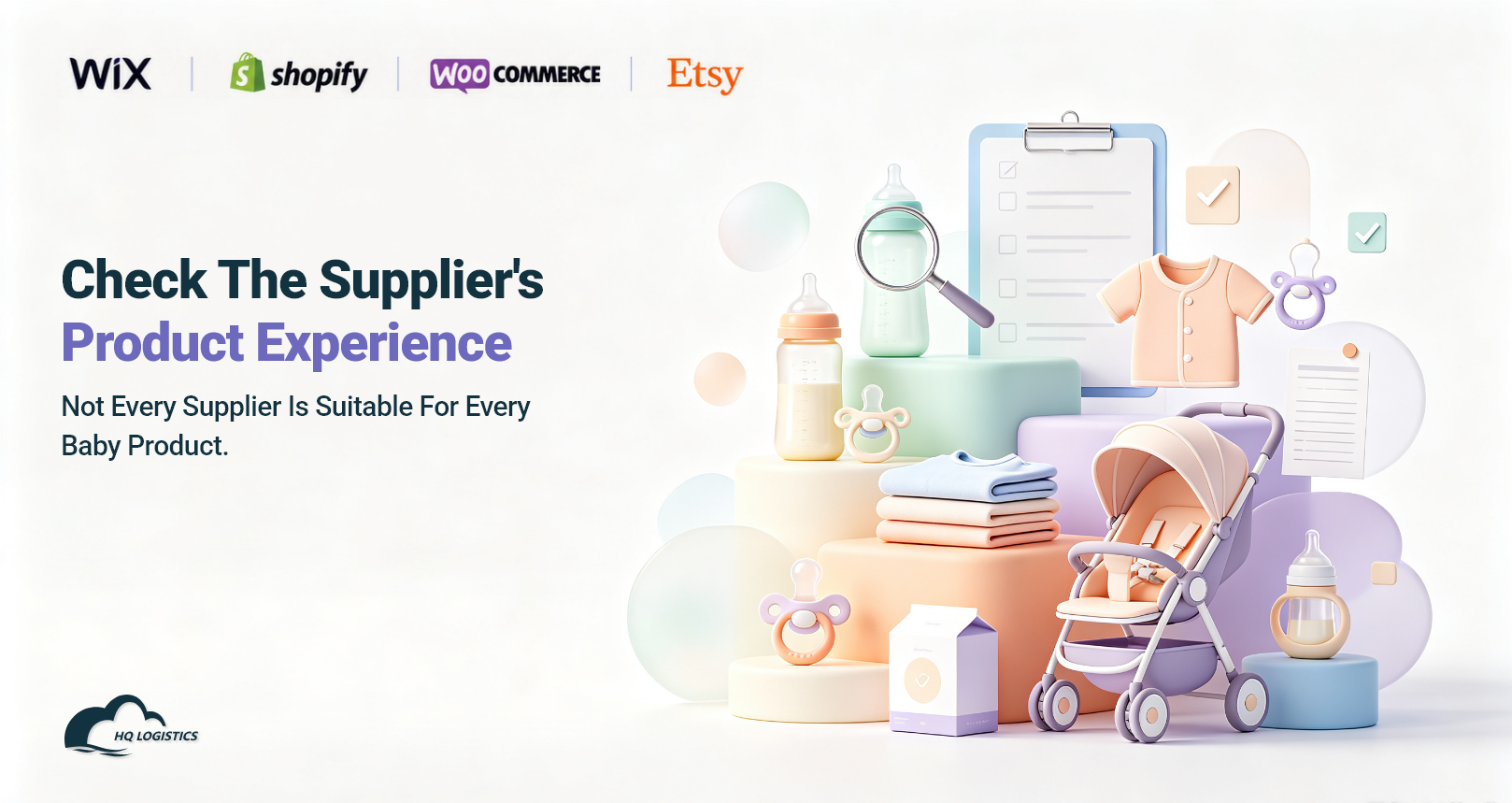
2. Check the Supplier's Product Experience
Not every supplier is suitable for every baby product.
A supplier that produces general household products may not have the same experience as a manufacturer specializing in baby products.
When evaluating a supplier, look at its experience with similar products.
Ask about:
Previous baby products | Production experience | Main export markets | Available materials | Customization capabilities | Quality control process | Production capacity
A supplier with relevant experience may already understand common product specifications, packaging requirements, and quality concerns in your target market.
3. Ask About Materials and Product Specifications
Materials matter when sourcing baby products.
Do not simply ask, “What material is this product?”
Ask for specific information about the material, construction, and relevant specifications.
For example, depending on the product, you may need to understand whether it uses:
Food-contact materials | BPA-free materials | Non-toxic materials | Child-safe fabrics | Appropriate coatings | Durable plastics | Certified materials
Do not assume that a supplier's marketing description automatically proves compliance.
Ask for documentation where appropriate and verify whether the information applies to the exact product and version you plan to sell.
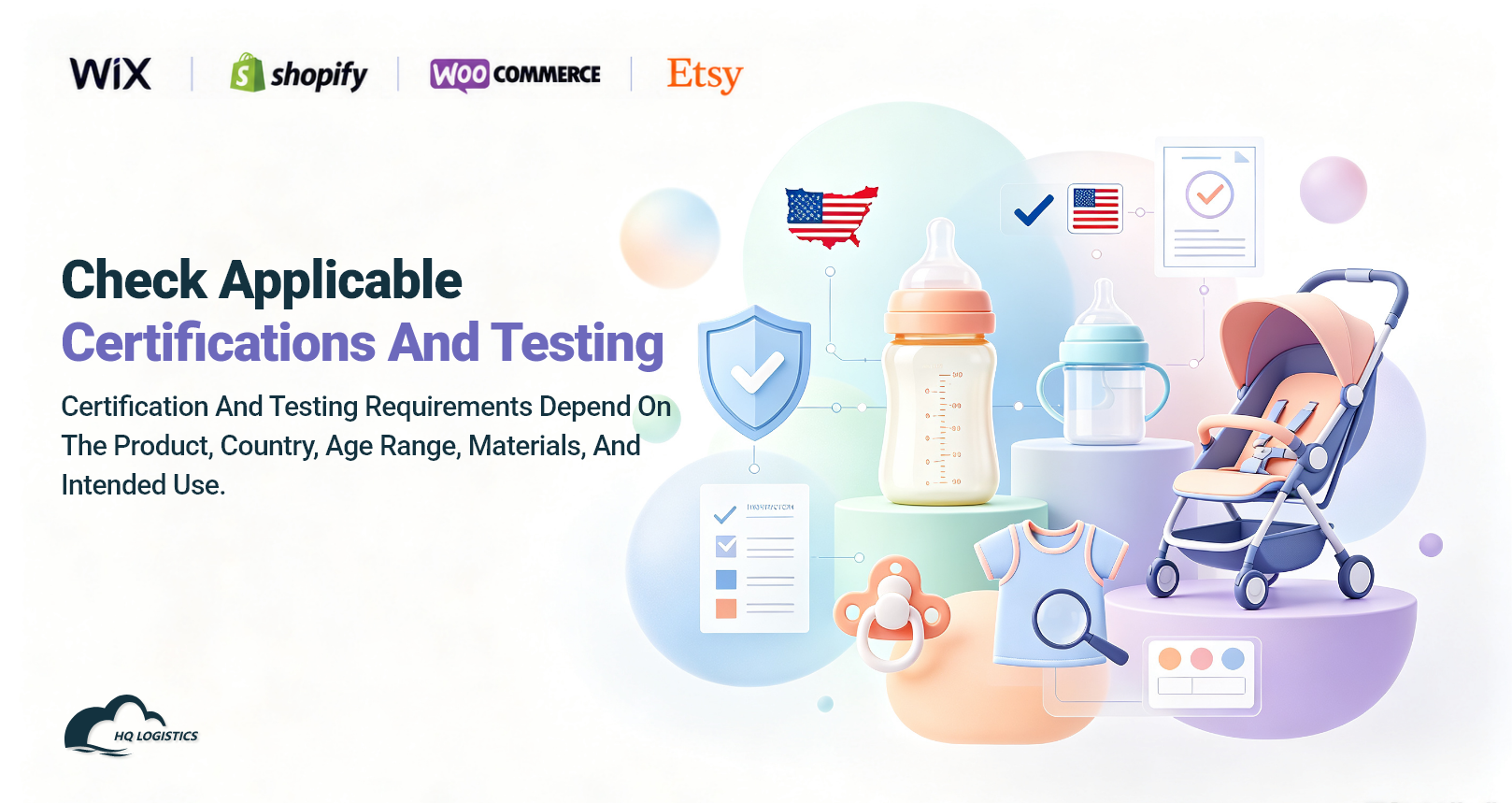
4. Check Applicable Certifications and Testing
Certification and testing requirements depend on the product, country, age range, materials, and intended use.
For example, products sold in the United States may be subject to requirements from agencies and regulations such as the Consumer Product Safety Commission (CPSC).
Products sold in Europe may be subject to EU product safety requirements and applicable standards.
This means you should identify the requirements for your target market before placing a large order.
Ask your supplier for relevant:
Test reports | Certificates | Compliance documents | Material documentation | Product specifications | Factory quality records
Do not rely only on a logo or certificate image sent by a supplier.
Check whether the documentation is current, relevant to the product, and applicable to the market where you intend to sell.
5. Always Request Samples
Never rely entirely on product photos or supplier descriptions when sourcing baby products.
A sample allows you to evaluate the actual product before committing to larger inventory.
When reviewing a sample, check:
Material quality | Product construction | Stitching | Seams | Edges | Size | Weight | Functionality | Packaging | Labels | Overall finish
For baby products, it can also be useful to compare samples from several suppliers.
Two suppliers may offer similar products at similar prices, but the actual quality can be very different.
Sample testing gives you a better basis for making a sourcing decision.
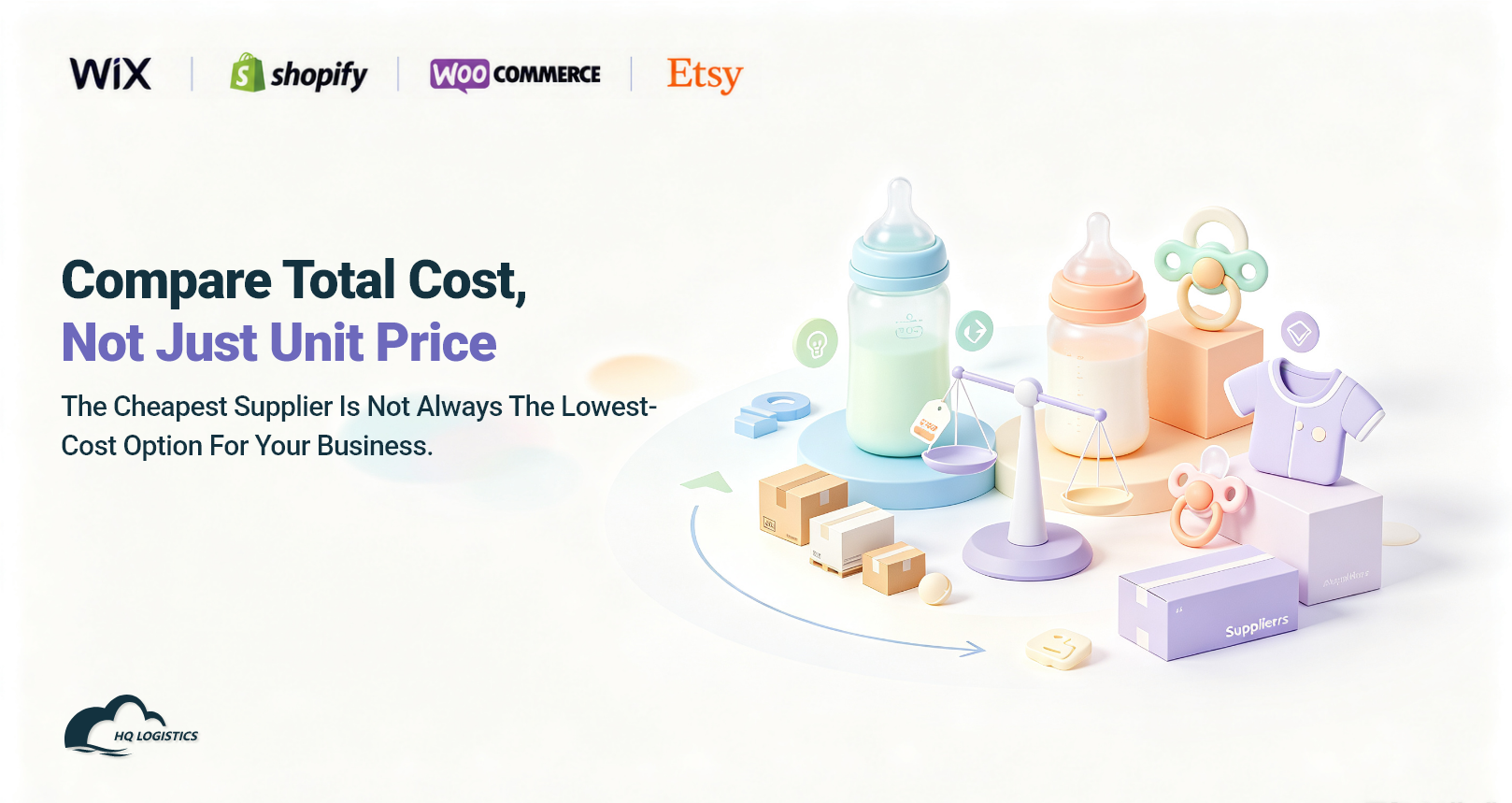
6. Compare Total Cost, Not Just Unit Price
The cheapest supplier is not always the lowest-cost option for your business.
A low product price may come with longer production times, higher defect rates, weaker packaging, or limited customization.
Your real sourcing cost may include:
Product cost | Sample cost | Customization cost | Packaging cost | Inspection cost | Shipping cost | Import-related costs | Storage cost | Potential replacement costs
For ecommerce brands, the goal should be to understand the total landed and fulfillment cost rather than comparing supplier quotations based only on the unit price.
A slightly higher product cost may make sense if it comes with better quality, stronger packaging, more reliable production, or easier fulfillment.
7. Evaluate Production Capacity
A supplier may be able to handle your current order volume but struggle when your brand starts growing.
This is especially important for products that become seasonal or suddenly gain popularity.
Ask potential suppliers about:
Daily production capacity | Monthly production capacity | Minimum order quantity | Lead time | Peak-season capacity | Raw material availability | Backup production options
If your brand grows from 50 orders per day to 500, your supplier needs to be able to support the increased demand.
A sourcing strategy should therefore consider not only today's volume but also your expected growth.
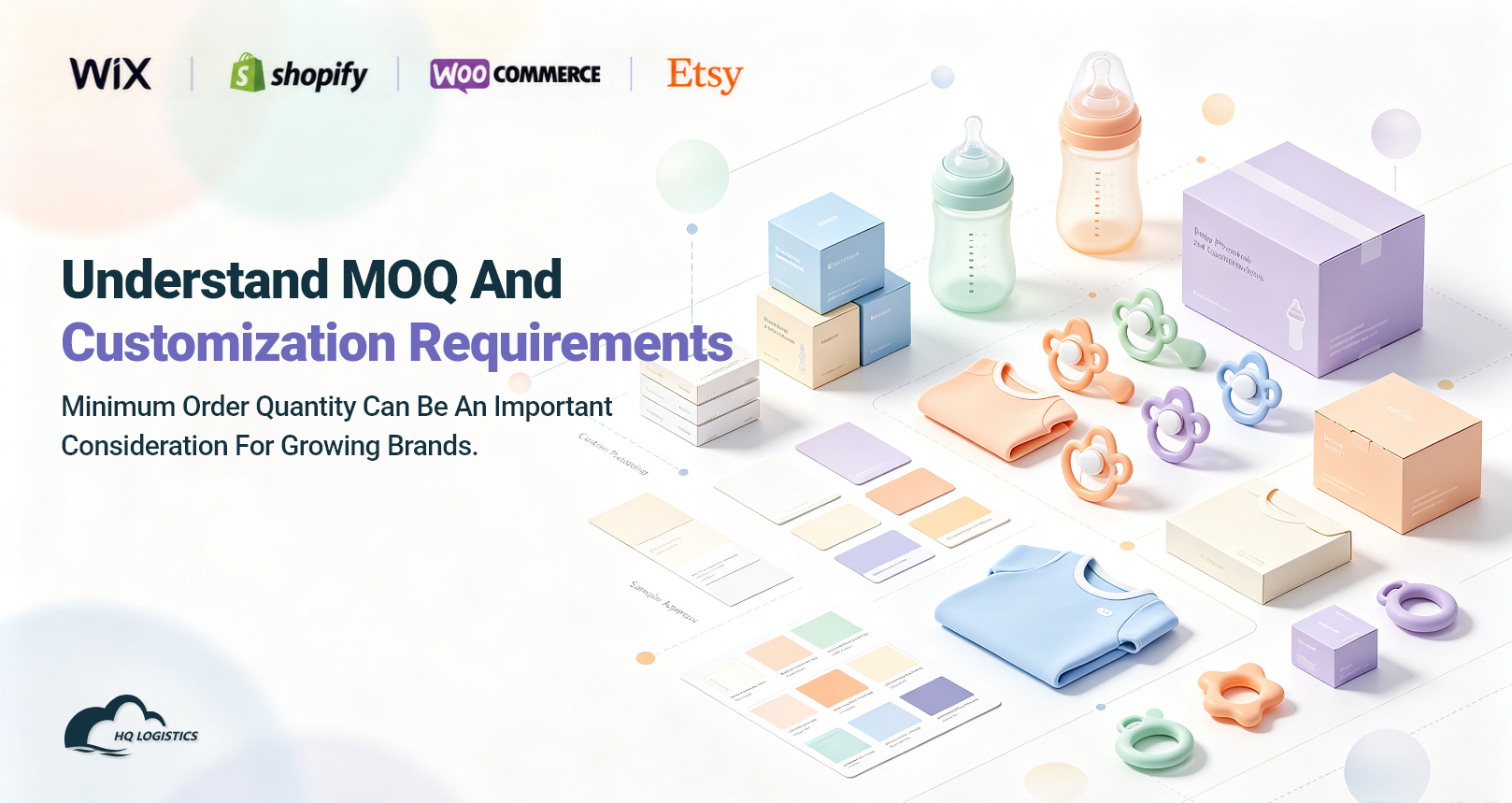
8. Understand MOQ and Customization Requirements
Minimum order quantity can be an important consideration for growing brands.
A supplier may offer attractive pricing but require thousands of units for each order.
That can create unnecessary inventory risk if you are still testing the product.
Ask about:
Standard MOQ | Custom product MOQ | Custom packaging MOQ | Logo MOQ | Color MOQ | Reorder MOQ | Sample MOQ
If you are building a new baby product brand, starting with a manageable quantity can allow you to test demand before committing too much capital to inventory.
9. Look Beyond the Factory: Consider Fulfillment
Choosing a supplier is only one part of the supply chain.
After production, your products still need to be inspected, stored, packed, and shipped.
This is where sourcing and fulfillment can work together.
A more connected workflow can look like:
Supplier Sourcing → Sample Testing → Production → Quality Inspection → Warehousing → Custom Packaging → Order Fulfillment → Global Shipping
When sourcing and fulfillment are managed separately, communication can become more complicated.
A fulfillment partner that also supports sourcing can help connect these stages into one supply chain.
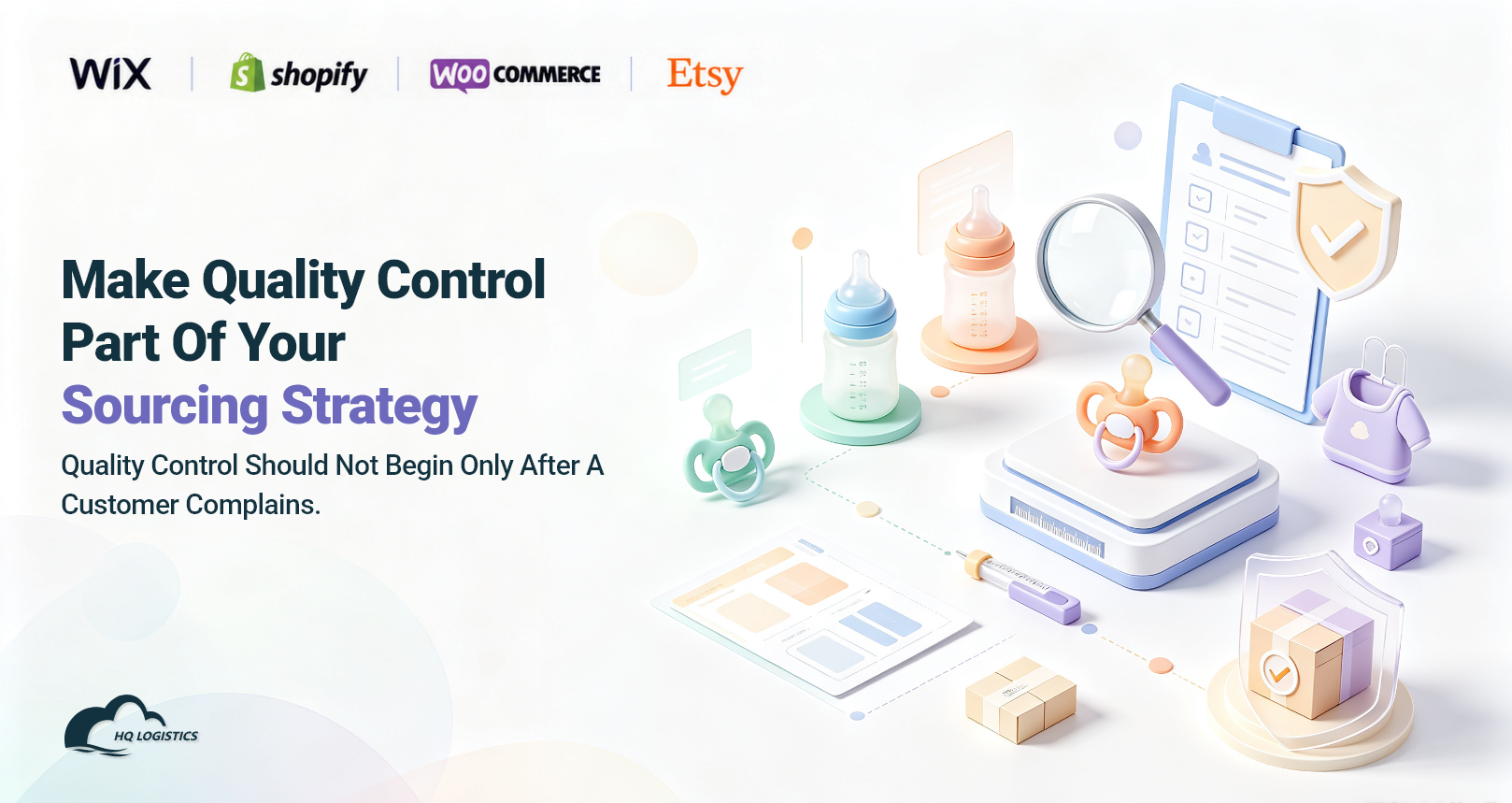
10. Make Quality Control Part of Your Sourcing Strategy
Quality control should not begin only after a customer complains.
For baby products, quality checks should be incorporated into the sourcing and fulfillment process.
Depending on the product, inspections can cover:
Appearance | Dimensions | Materials | Functionality | Packaging | Labels | Quantity | Defects | Accessories
You can also establish your own quality standards before production begins.
For example, instead of simply telling a supplier to “make a high-quality product,” define specific requirements for dimensions, materials, colors, packaging, and acceptable defects.
Clear specifications make supplier communication much easier.
11. Think About Packaging From the Beginning
Baby products often involve strong emotional and visual branding.
Parents may pay attention not only to the product itself but also to how it arrives.
Packaging can help communicate your brand identity while protecting the product during transportation.
Depending on your product and target market, you may consider:
Custom boxes | Branded mailers | Product inserts | Thank-you cards | Hangtags | Custom labels | Protective packaging | Eco-friendly packaging
For brands selling in Europe, eco-friendly packaging may also be worth considering as part of the overall brand strategy.
The important point is to discuss packaging early instead of treating it as an afterthought.
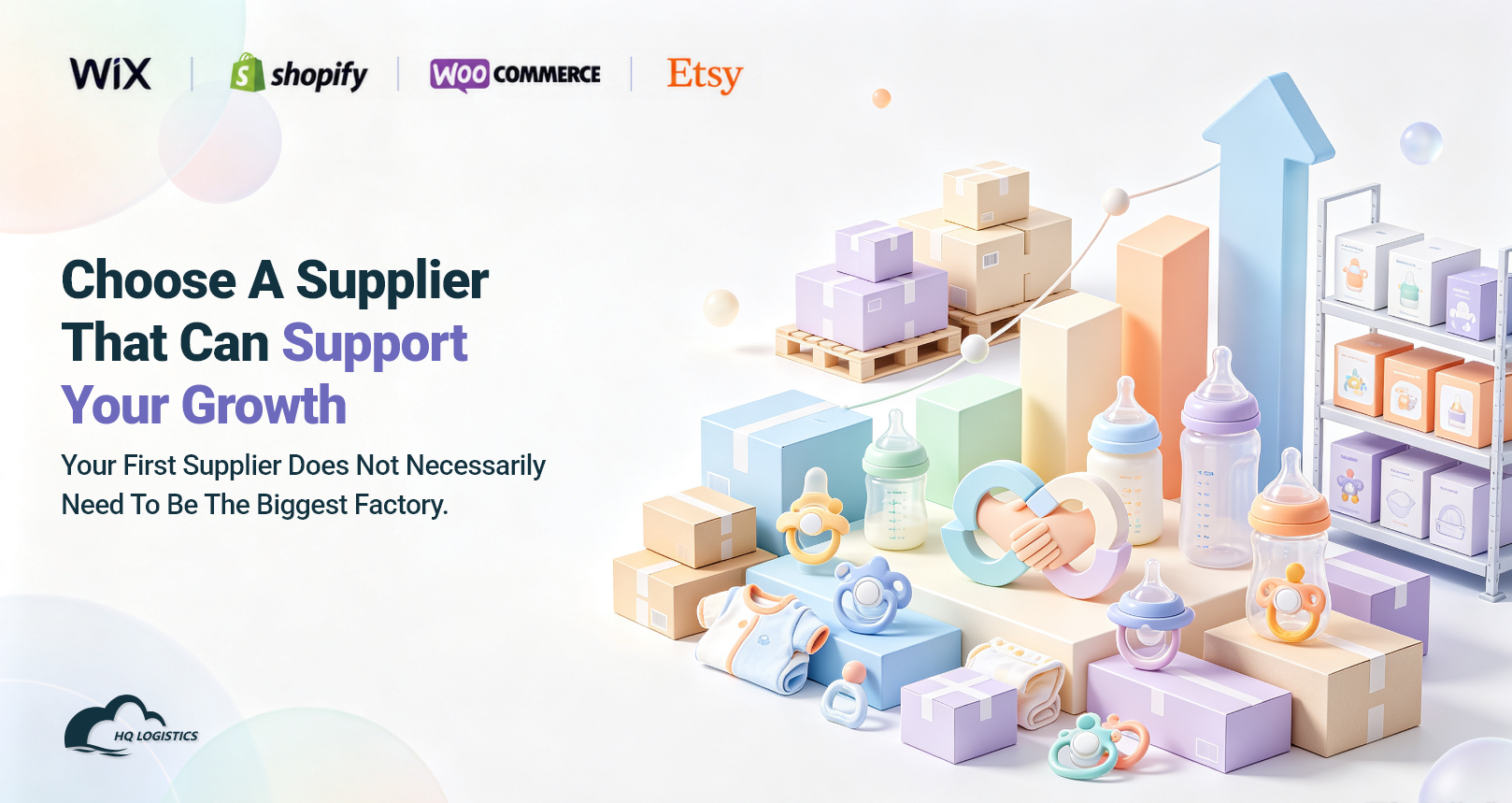
12. Choose a Supplier That Can Support Your Growth
Your first supplier does not necessarily need to be the biggest factory.
What matters is whether the supplier fits your current business stage and future plans.
A good sourcing partner should be able to communicate clearly, maintain consistent quality, provide realistic lead times, and support your expected order volume.
As your brand grows, you may also want to add:
More product variations | Custom branding | Custom packaging | Larger production runs | Multiple suppliers | International fulfillment | Overseas warehousing
The supplier relationship should be able to evolve as your business evolves.
Should You Use One Supplier or Multiple Suppliers?
There is no universal answer.
Using one supplier can make communication and product management simpler.
Working with multiple qualified suppliers can provide additional sourcing options and reduce dependence on a single production source.
For growing baby product brands, a diversified supplier strategy may be useful when you need additional production capacity, alternative products, or backup sourcing.
The important point is to manage supplier relationships systematically.
You should know which supplier handles each product, what the backup option is, and how quality is controlled across suppliers.
Common Baby Product Sourcing Mistakes
Choosing the Cheapest Supplier
A low quotation does not automatically mean lower overall cost.
Consider product quality, lead time, packaging, shipping, defect rates, and other costs before making a decision.
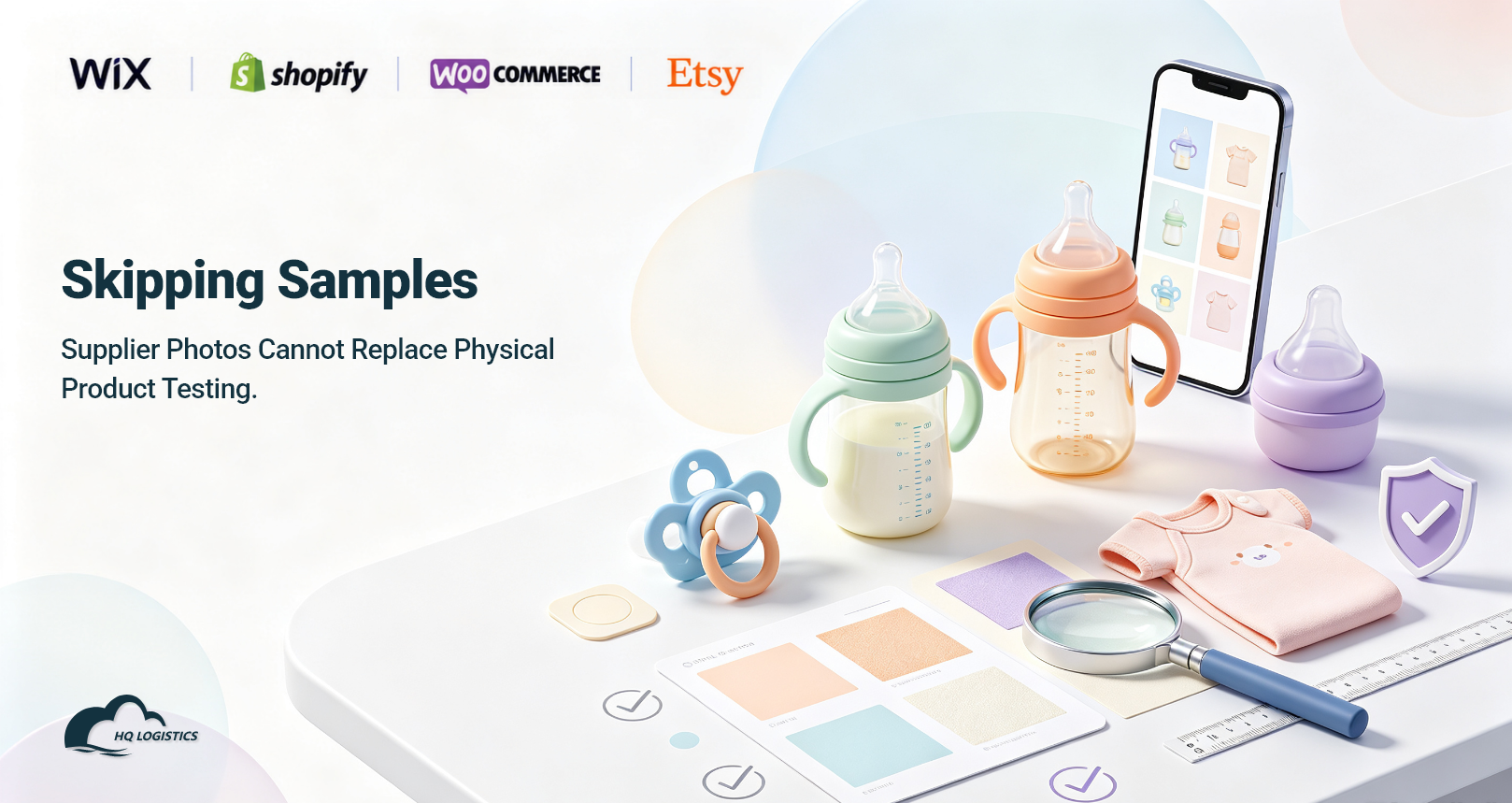
Skipping Samples
Supplier photos cannot replace physical product testing.
Always evaluate samples before committing to larger quantities.
Ignoring Compliance Requirements
Different baby products and markets can have different safety and compliance requirements.
Identify the applicable requirements before production.
Ordering Too Much Inventory
Large MOQs can create unnecessary inventory risk, especially when you are testing a new product.
Consider demand forecasts and reorder times before placing large orders.
Treating Packaging as an Afterthought
Poor packaging can damage products during transportation and weaken the customer experience.
Plan packaging together with sourcing and fulfillment.
Relying on One Supplier Without a Backup Plan
If your main supplier experiences production delays or capacity issues, your entire business can be affected.
Consider whether a second qualified supplier makes sense for important products.
How HQ Supports Baby Product Sourcing and Fulfillment
For ecommerce brands sourcing baby products from China, HQ can support more than simply finding a supplier.
Our sourcing and fulfillment workflow can connect:
Product Sourcing | Supplier Matching | Sample Coordination | Quality Inspection | Inventory Management | Custom Packaging | Warehousing | Order Fulfillment | Global Shipping
HQ can also help growing brands coordinate product sourcing with their fulfillment strategy.
This means you can consider product quality, packaging, inventory, and shipping together instead of treating each stage as a separate process.
For brands selling through Shopify, Etsy, WooCommerce, Wix, and other ecommerce channels, this can create a more organized supply chain from supplier to customer.
FAQs About Baby Product Sourcing
How do I find a reliable baby product supplier?
Start by defining your product requirements and target market. Then compare suppliers based on relevant experience, product quality, documentation, production capacity, MOQ, lead times, customization options, and communication.
What should I check when sourcing baby products?
Important factors can include materials, product construction, applicable safety requirements, certifications or testing, packaging, supplier experience, production capacity, MOQ, lead time, and total cost.
Should I request samples before ordering baby products?
Yes. Samples allow you to evaluate the actual product and compare different suppliers before committing to larger quantities.
Is the cheapest baby product supplier the best choice?
Not necessarily. Product price is only one part of the total cost. Quality, defect rates, lead time, packaging, shipping, and supplier reliability can also affect your overall business cost.
Can a fulfillment company help source baby products?
Yes. Some fulfillment companies also provide product sourcing and supplier coordination. This can connect sourcing, quality control, warehousing, packaging, and fulfillment into one workflow.

Final Thoughts
Choosing the right supplier is one of the most important steps when building a baby product brand.
The right sourcing strategy should look beyond price.
Product Quality | Safety Requirements | Supplier Experience | Production Capacity | MOQ | Lead Time | Packaging | Quality Control | Fulfillment
By evaluating these factors before placing a large order, you can build a supply chain that is better prepared for long-term growth.
For baby product brands, sourcing and fulfillment should work together.
Start with the right supplier. Build the right supply chain. Then scale with confidence.
Baby product sourcing | Baby product supplier | Sourcing baby products | Baby product fulfillment | China baby product supplier | Baby product sourcing company