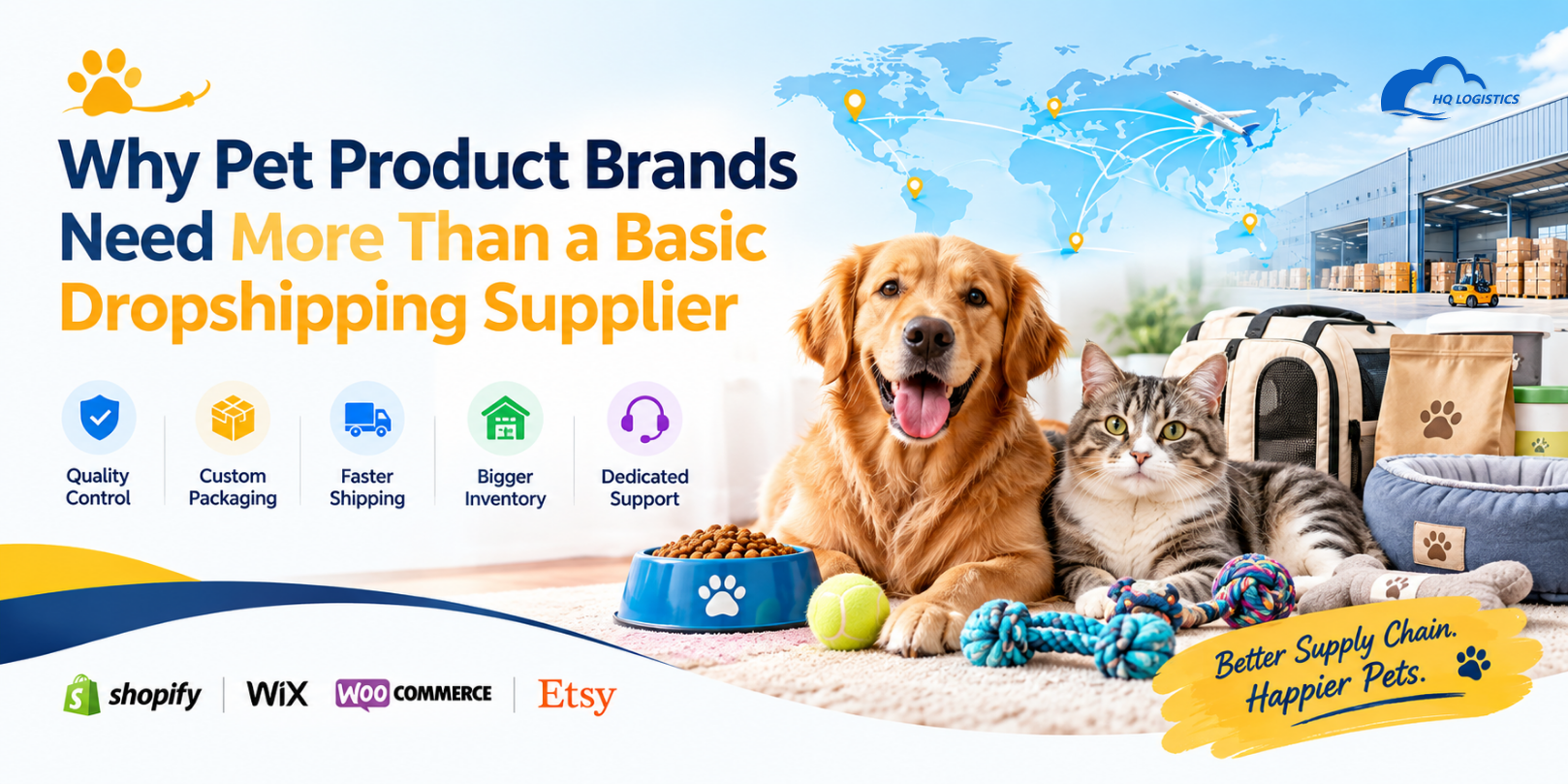
Why Pet Product Brands Need More Than a Basic Dropshipping Supplier
Why Pet Product Brands Need More Than a Basic Dropshipping Supplier
Pet products can be a great opportunity for ecommerce brands.
From interactive toys and grooming tools to feeding accessories, travel products, beds, collars, and personalized pet products, there are many categories for online sellers to explore.
But building a successful pet brand takes more than finding a supplier who can source a product and ship an order.
As your store grows, you may need better product quality control, more reliable sourcing, custom packaging, inventory planning, and faster fulfillment.
That's why growing pet product brands often need more than a basic dropshipping supplier.
Pet Products Are About More Than Price
When choosing a supplier, price is usually one of the first things ecommerce sellers look at.
But for pet products, the lowest product price does not always mean the lowest overall cost.
A poor-quality toy can lead to customer complaints.
Weak packaging can result in damaged products.
Inconsistent product quality can lead to refunds and replacements.
Slow fulfillment can create negative customer experiences.
For pet brands, the real cost of a product includes much more than the supplier's unit price.
You also need to consider:
Product quality | Quality control | Packaging | Shipping | Returns | Replacements | Delivery speed | Customer experience
A reliable supply chain can help you manage these factors more effectively.
1. Pet Product Quality Matters
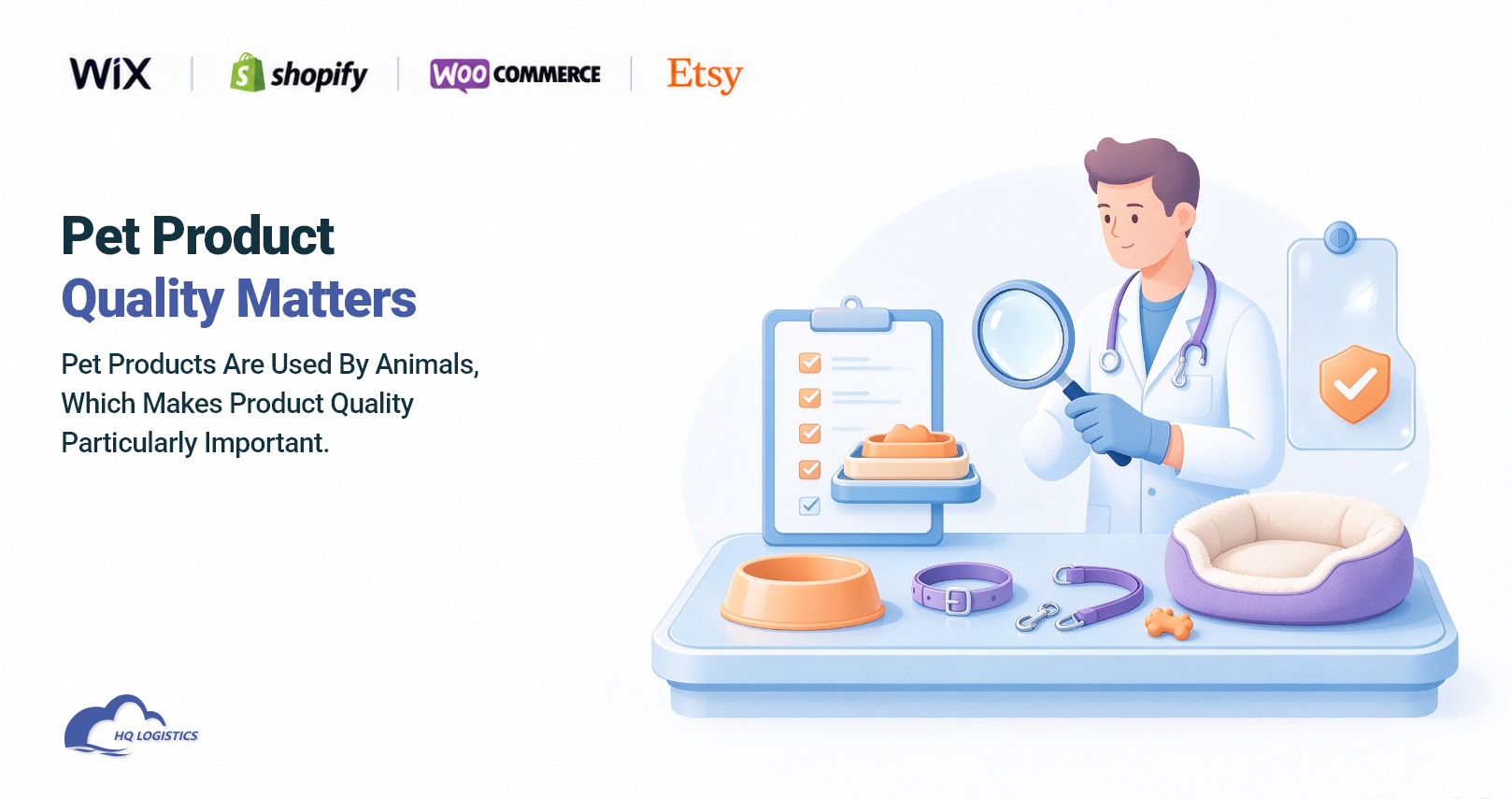
Pet products are used by animals, which makes product quality particularly important.
For example, sellers should pay attention to materials, construction, size, durability, and product design when sourcing pet toys, feeding accessories, collars, harnesses, and other products.
A supplier should be able to provide clear product information and consistent quality.
Before scaling a winning pet product, consider ordering samples and checking the actual product rather than relying only on supplier photos.
2. Quality Inspection Should Be Part of the Process
Finding a supplier is only the beginning.
When order volume increases, checking every product yourself becomes difficult.
A fulfillment partner can integrate quality inspection into the supply chain before products are shipped to customers.
Depending on the product, quality checks can include:
Appearance | Quantity | Size | Materials | Accessories | Packaging | Basic product condition
This can help identify obvious issues before orders leave the warehouse.
For growing pet brands, quality control becomes especially important when working with multiple suppliers or scaling a product quickly.
3. You May Need More Than One Supplier
A basic dropshipping supplier may focus on a specific product or supplier network.
But as your pet brand expands, relying on only one source can create additional supply risk.
A more flexible sourcing strategy can give you access to multiple qualified suppliers and product options.
For example, your brand may eventually sell:
Pet toys | Grooming products | Feeding accessories | Pet travel products | Collars and harnesses | Pet beds | Personalized pet products
Different categories may require different supplier capabilities.
A broader sourcing network can make it easier to compare quality, pricing, production capacity, and customization options.
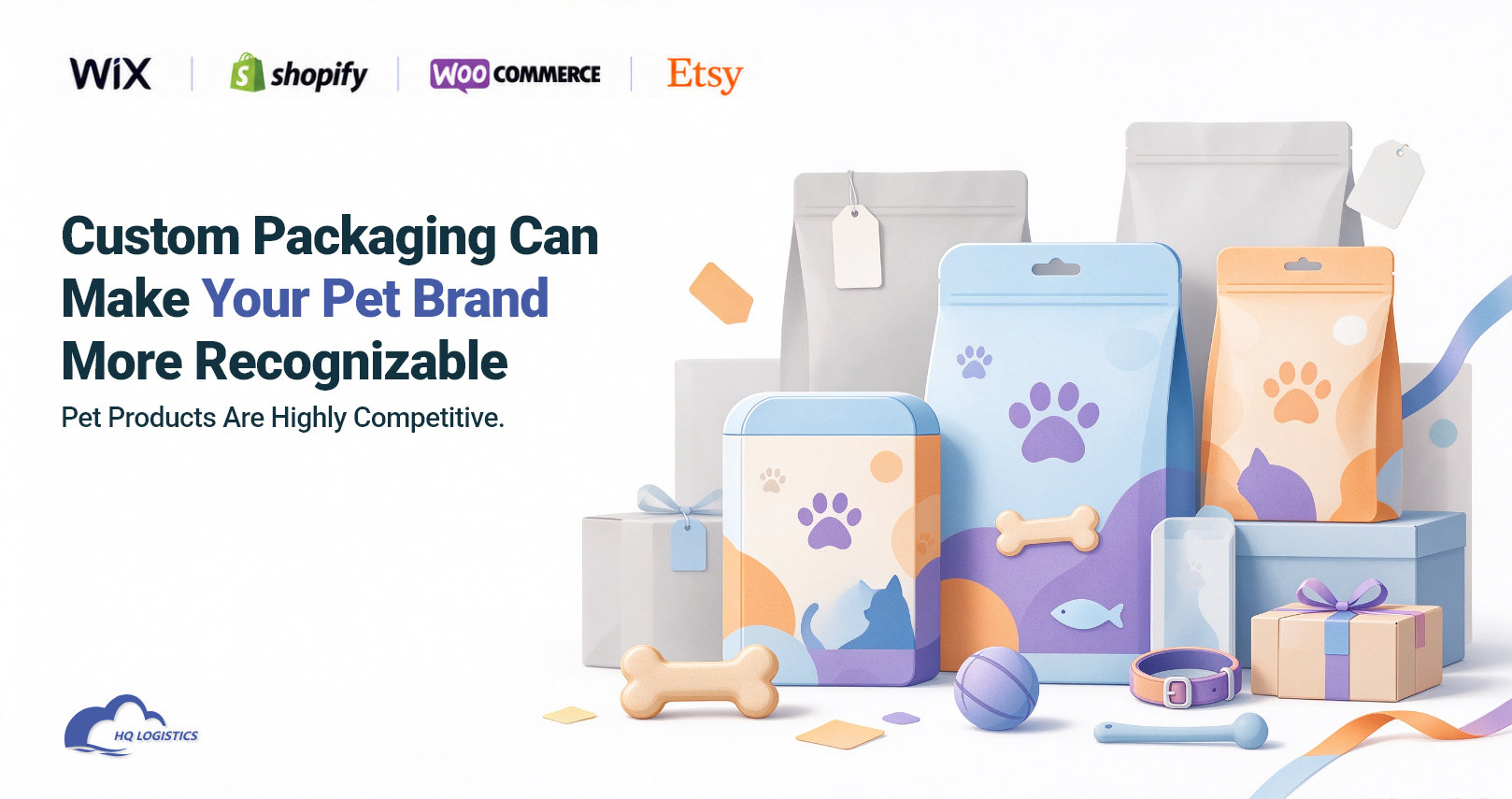
4. Custom Packaging Can Make Your Pet Brand More Recognizable
Pet products are highly competitive.
Two stores may sell similar toys or accessories, but the customer experience can feel completely different.
Custom packaging can help turn a generic product into part of your brand.
Depending on the product, you can consider:
Custom boxes | Branded mailers | Hangtags | Product labels | Thank-you cards | Custom inserts
A simple branded package can help customers remember your store and create a more consistent brand experience.
For eligible brands processing 50+ orders per day, HQ offers free custom packaging support.
5. Pet Products Need the Right Packaging
Not every pet product can be packed the same way.
A soft pet toy may need a different packaging solution from a metal grooming tool or a larger pet bed.
Packaging needs to balance product protection with shipping efficiency.
Oversized packaging can increase shipping costs.
Weak packaging can increase the risk of damage.
Too much packaging can also create unnecessary material costs.
The right fulfillment partner should understand how different products should be packed for international transportation.
6. Inventory Planning Becomes More Important as You Grow
Dropshipping can be useful when you're testing new products.
But once a pet product becomes a consistent seller, inventory planning becomes increasingly important.
Imagine your best-selling dog toy suddenly goes viral.
Orders increase from 20 per day to 200 per day.
If your supplier cannot keep up with demand, your store may start experiencing:
Stockouts | Longer processing times | Delayed shipments | Customer complaints | Lost sales
A stronger fulfillment strategy can combine supplier management, inventory planning, warehouse storage, and order fulfillment.
This gives your brand more visibility and control as demand changes.
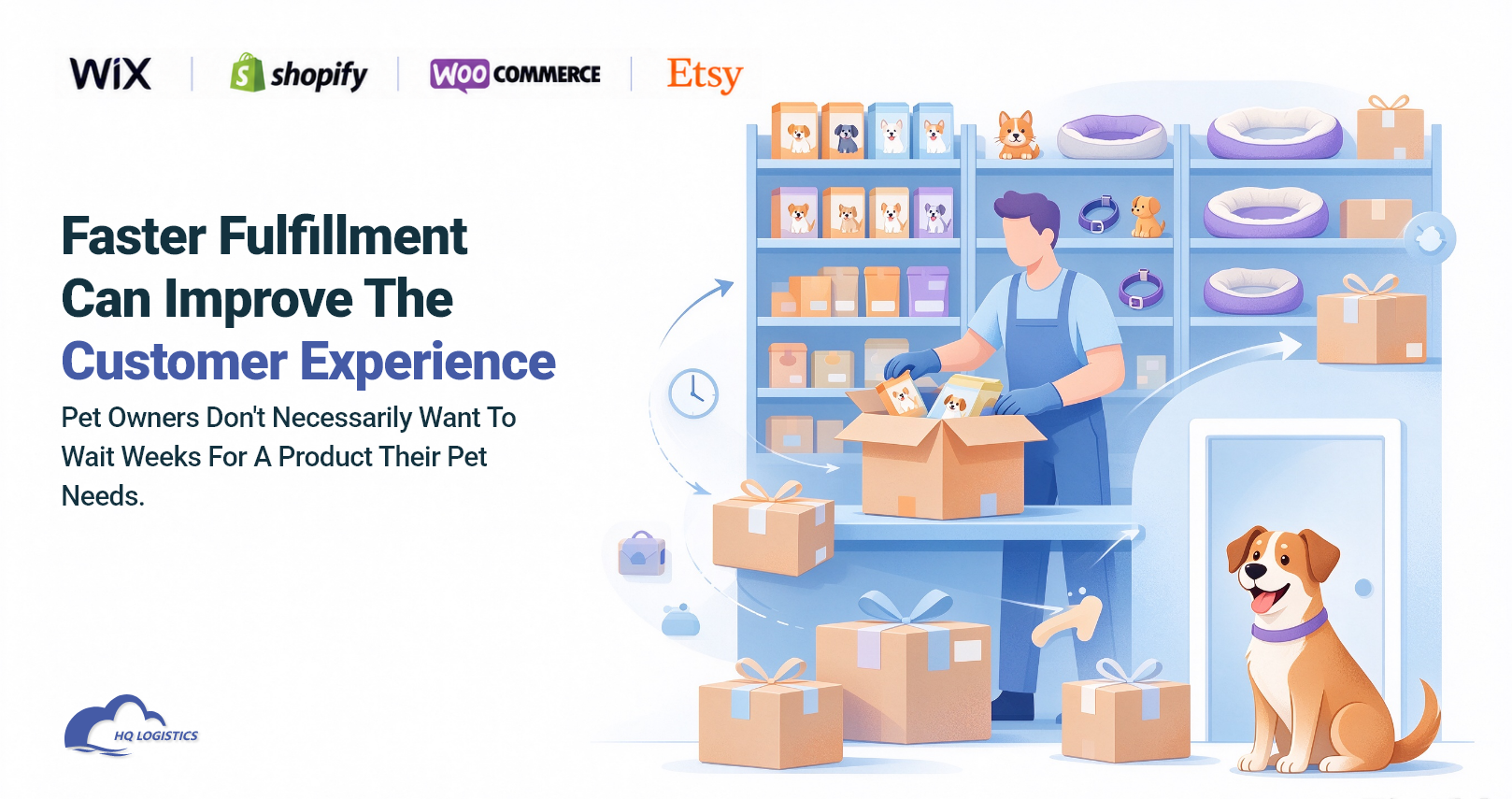
7. Faster Fulfillment Can Improve the Customer Experience
Pet owners don't necessarily want to wait weeks for a product their pet needs.
Whether it's a new toy, feeding accessory, grooming product, or travel item, customers increasingly expect clear and reasonable delivery times.
That's why fulfillment speed matters.
For eligible products and routes, HQ provides 3–8 day delivery options, helping ecommerce brands serve customers in major global markets.
Faster fulfillment can also make your advertising and product pages easier to manage because you can communicate more realistic delivery expectations.
8. Your Fulfillment Partner Should Support Your Growth
Your supply chain at 10 orders per day will not necessarily work the same way at 500 orders per day.
As your business grows, you may need:
More suppliers | More inventory | More warehouse space | More packaging | More quality control | More shipping options | More fulfillment capacity
A basic dropshipping supplier may be enough for product testing.
But a growing pet brand may need a partner that can support multiple stages of the supply chain.
That's the difference between simply shipping products and building a scalable fulfillment system.
9. Product Customization Can Help You Build a Real Brand
Selling generic pet products can make it difficult to differentiate your store.
Customization creates another opportunity.
Depending on the product, brands can explore:
Logo printing | Custom colors | Branded packaging | Hangtags | Product labels | Personalized accessories | Custom inserts
For example, a simple pet accessory can become a branded product through customized colors, packaging, and labeling.
This can help move your business from selling individual products toward building a recognizable pet brand.
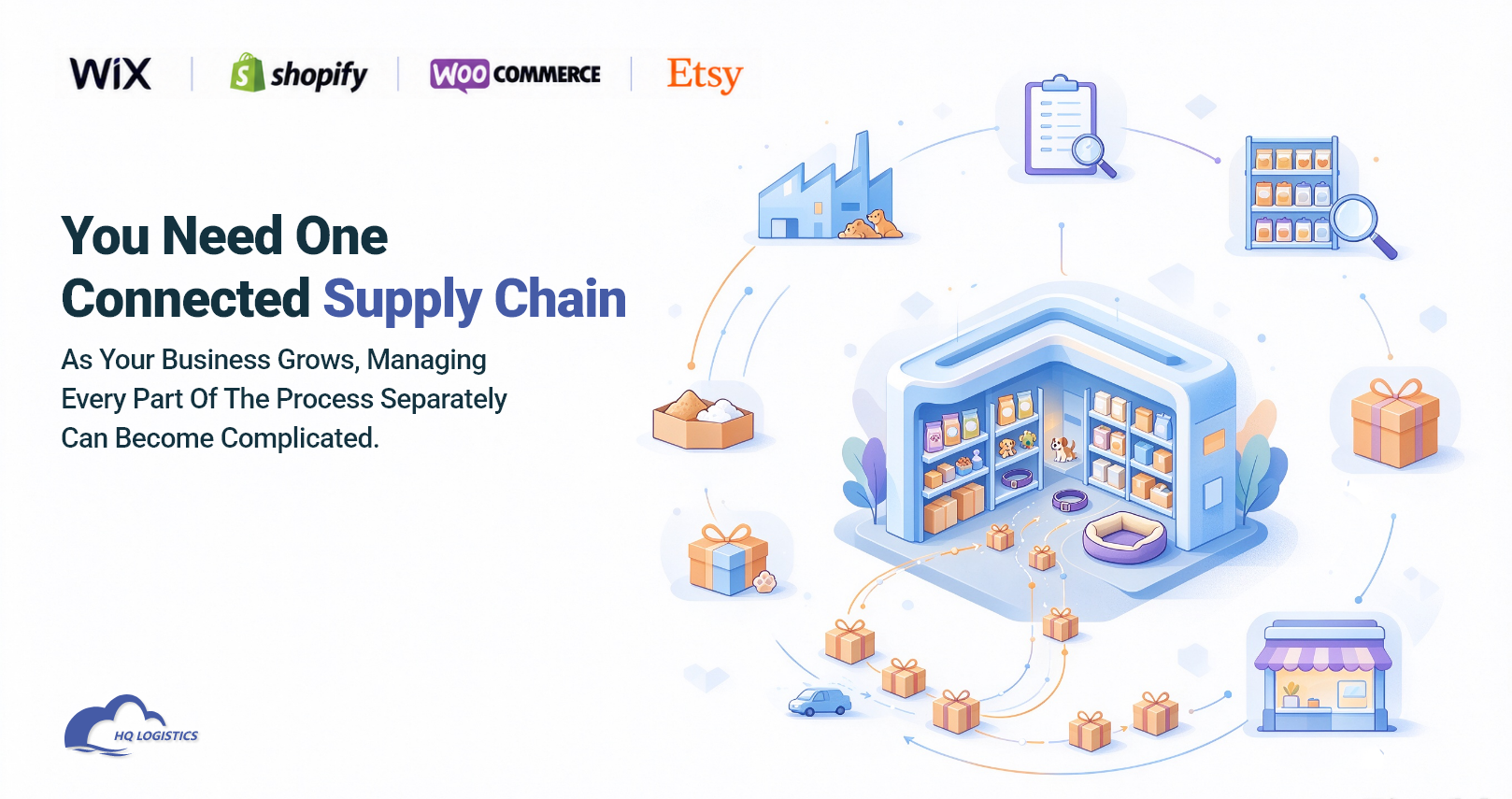
10. You Need One Connected Supply Chain
As your business grows, managing every part of the process separately can become complicated.
You may have one supplier for products, another company for packaging, another warehouse for inventory, and another provider for shipping.
More partners can mean more communication, more coordination, and more potential delays.
An integrated fulfillment partner can connect more of these steps:
Sourcing → Quality Inspection → Warehousing → Custom Packaging → Pick & Pack → Shipping → Tracking
This can make the overall process easier to manage.
What Should a Pet Product Fulfillment Partner Handle?
Before choosing a supplier or fulfillment partner, ask what they can actually support.
A strong solution should be able to help with:
Product Sourcing:
Find and compare suitable pet product suppliers.Quality Control:
Inspect products before fulfillment.Warehousing:
Store inventory and packaging materials.Custom Packaging:
Support branded boxes, mailers, inserts, labels, and other packaging.Inventory Management:
Help monitor stock levels and prepare for demand changes.Order Fulfillment:
Pick, pack, and process orders efficiently.Global Shipping:
Provide suitable shipping options for different markets.Customer Support:
Help resolve fulfillment or shipping issues when problems occur.The more your brand grows, the more these capabilities can matter.
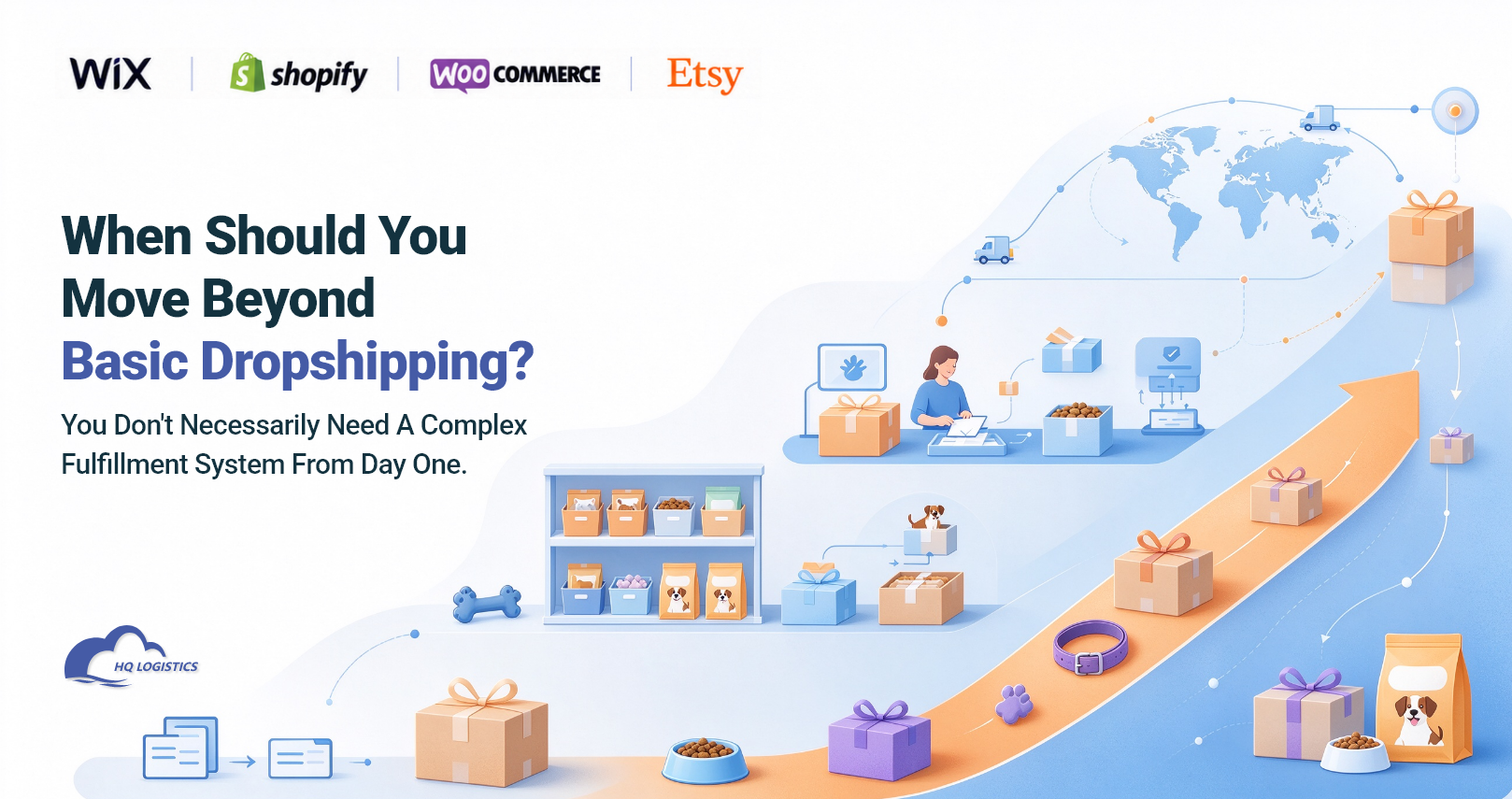
When Should You Move Beyond Basic Dropshipping?
You don't necessarily need a complex fulfillment system from day one.
If you're testing your first pet product and processing only a few orders per day, a simple supplier arrangement may be enough.
But you should consider upgrading your supply chain when:
Your orders are growing consistently | You have multiple winning products | Stockouts are becoming a problem | Product quality varies between batches | Customers expect faster delivery | You want custom packaging | You're entering new markets | You need better inventory control
At that point, your supply chain needs to grow alongside your brand.
How HQ Supports Growing Pet Product Brands
HQ goes beyond basic product sourcing and order shipping.
We help ecommerce brands connect sourcing, quality control, warehousing, custom packaging, fulfillment, and global shipping into one supply chain.
For pet product brands, support can include:
Pet product sourcing | Supplier comparison | Quality inspection | Product photography | Custom packaging | Thank-you cards | Hangtags | Inventory storage | Pick & pack | Global fulfillment
HQ also supports ecommerce brands selling through platforms such as Shopify, Wix, WooCommerce, and Etsy.
For eligible products and routes, HQ offers 3–8 day delivery options and up to 20,000 orders per day in fulfillment capacity for growing businesses.
The goal isn't simply to ship more orders.
It's to help your pet brand build a supply chain that can keep up with growth.
Final Thoughts
A basic dropshipping supplier can be useful when you're starting out.
But as your pet product brand grows, your needs can change.
You may need better sourcing, more consistent quality, custom packaging, stronger inventory planning, and faster fulfillment.
Instead of asking only:
“Who can supply this product?”
Start asking:
“Who can help me build a supply chain around my brand?”
That's the difference between simply selling pet products and building a scalable pet ecommerce business.