CJ Dropshipping vs. HQ Fulfillment: What Shopify Sellers Should Consider Before Peak Season
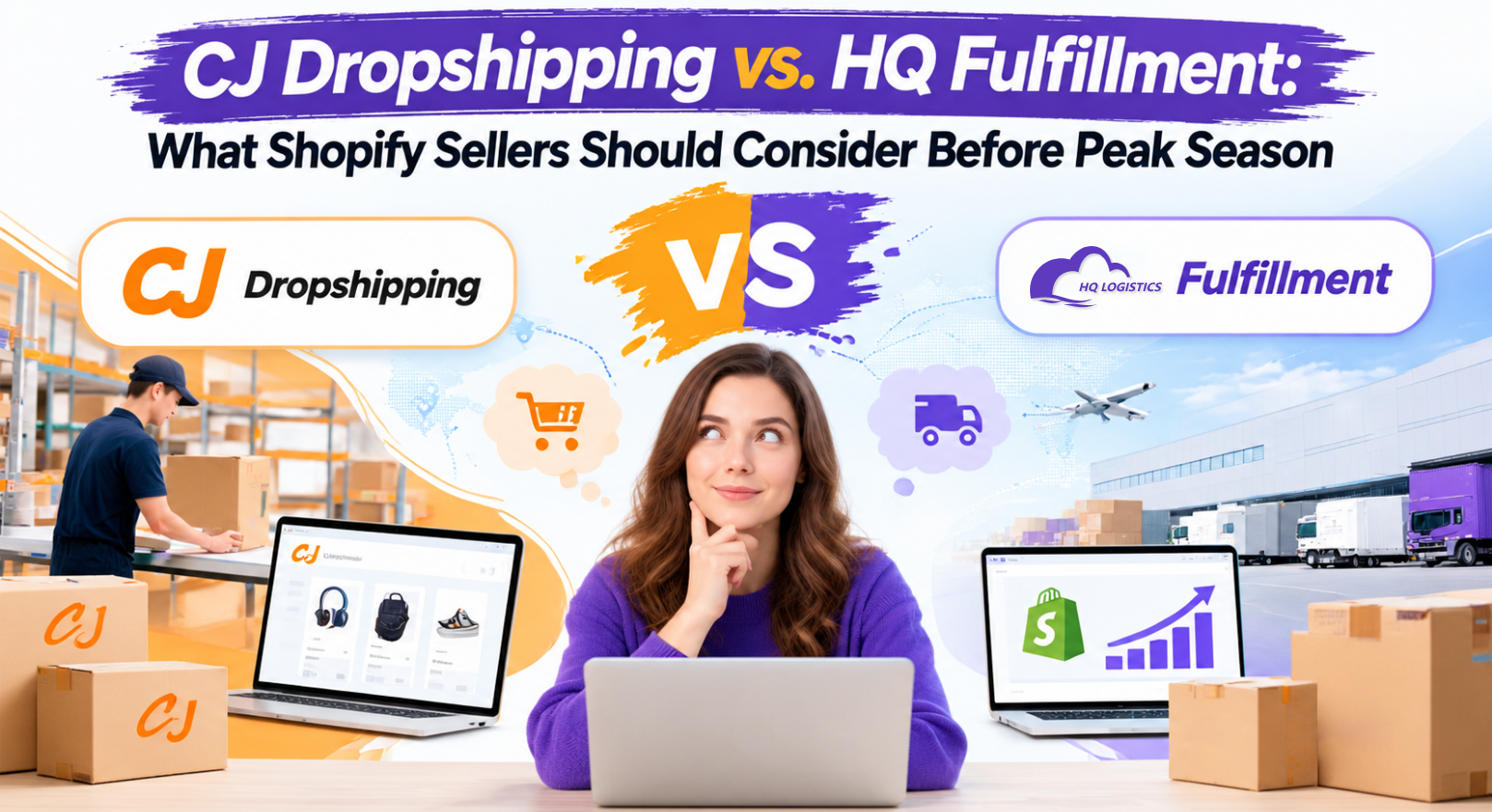
CJ Dropshipping vs. HQ Fulfillment: What Shopify Sellers Should Consider Before Peak Season
Peak season can change the way a Shopify store operates.
When daily orders increase, a supplier that worked well with 10 or 20 orders a day may become harder to manage at 100, 300, or more orders a day.
The question is not simply “Which supplier is cheaper?”
For growing Shopify brands, the more important question is:
Which fulfillment setup can support your products, order volume, inventory, branding, and delivery expectations during peak season?
Both CJ Dropshipping and HQ Fulfillment offer sourcing, warehousing, fulfillment, packaging, and international shipping services. However, their service structures and the way sellers may use them can be different.
Before peak season arrives, Shopify sellers should compare the complete fulfillment process—not just the shipping price.
1. Start With Your Current Order Volume
Your fulfillment needs change as your store grows.
A store testing products with a few orders per day may prioritize product sourcing and low upfront inventory costs.
A growing brand may have very different requirements.
You may need stable inventory, faster processing, quality inspection, custom packaging, better supplier coordination, and a clear plan for sudden order increases.
CJ Dropshipping supports product sourcing, store integration, warehousing, order fulfillment, custom packaging, and global shipping. Its Shopify integration also supports product importing, order automation, inventory synchronization, and tracking updates.
HQ focuses on a connected fulfillment workflow for growing brands, including sourcing, free warehousing, quality control, inventory planning, branded packaging, order fulfillment, and global delivery.
For Shopify sellers, the first question should therefore be:
How many orders do you expect during your next peak period?
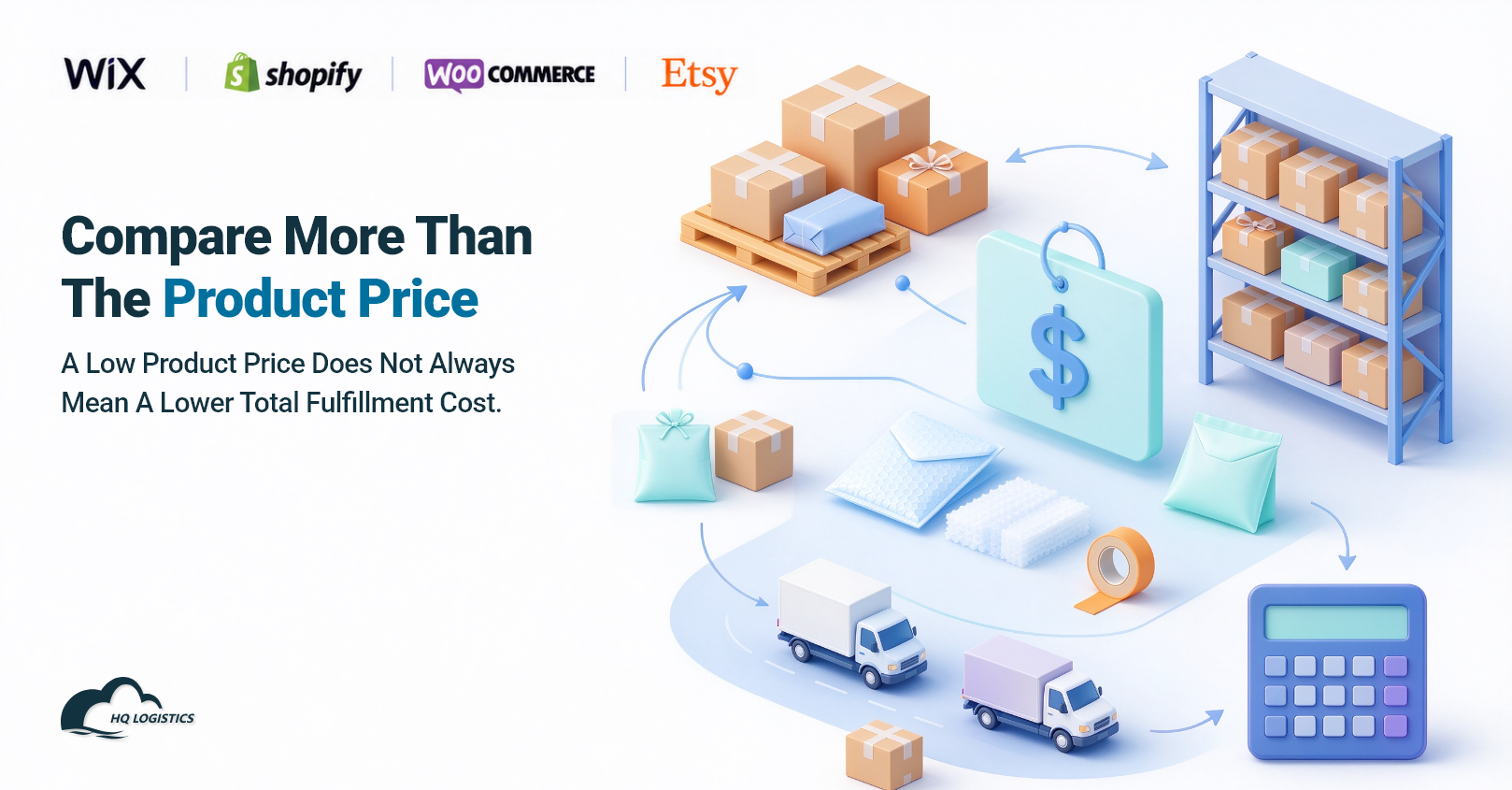
2. Compare More Than the Product Price
A low product price does not always mean a lower total fulfillment cost.
Your real cost can include:
Product cost | Sourcing cost | Inventory cost | Quality inspection | Packaging | Processing | Shipping | Returns | Customer support
During peak season, even a small delay or fulfillment problem can create additional customer service costs.
CJ's 3PL service, for example, explains that fulfillment costs can include shipping, inbound, outbound, and stocking-related fees depending on the fulfillment setup.
HQ publishes a different service structure for its growing-brand fulfillment offering, including free storage, free basic quality checks, free product sourcing, and volume-based pricing for fulfillment and shipping.
The important point is not that one pricing structure is automatically better.
Instead, Shopify sellers should request a complete quote based on their actual products, daily orders, destinations, and packaging requirements.
3. Inventory Planning Becomes More Important Before Peak Season
Peak season creates a common problem:
Your sales can grow faster than your inventory.
If your best-selling product suddenly receives hundreds of additional orders, waiting for products to move from the supplier to the warehouse can create fulfillment delays.
CJ recommends checking warehouse inventory because available inventory can be dispatched more quickly, while products without available warehouse stock may need to arrive from the supplier before packaging and quality inspection.
HQ also emphasizes inventory planning before campaigns and peak periods. Its fulfillment system allows sellers to pre-stock products or have HQ source products and manage inventory before fulfillment.
For your peak-season planning, ask:
Which SKUs are your best sellers?
How many days of inventory do you need?
Where will the inventory be stored?
How quickly can your supplier replenish it?
What happens if daily orders suddenly double?
These questions can be more important than the original product price.
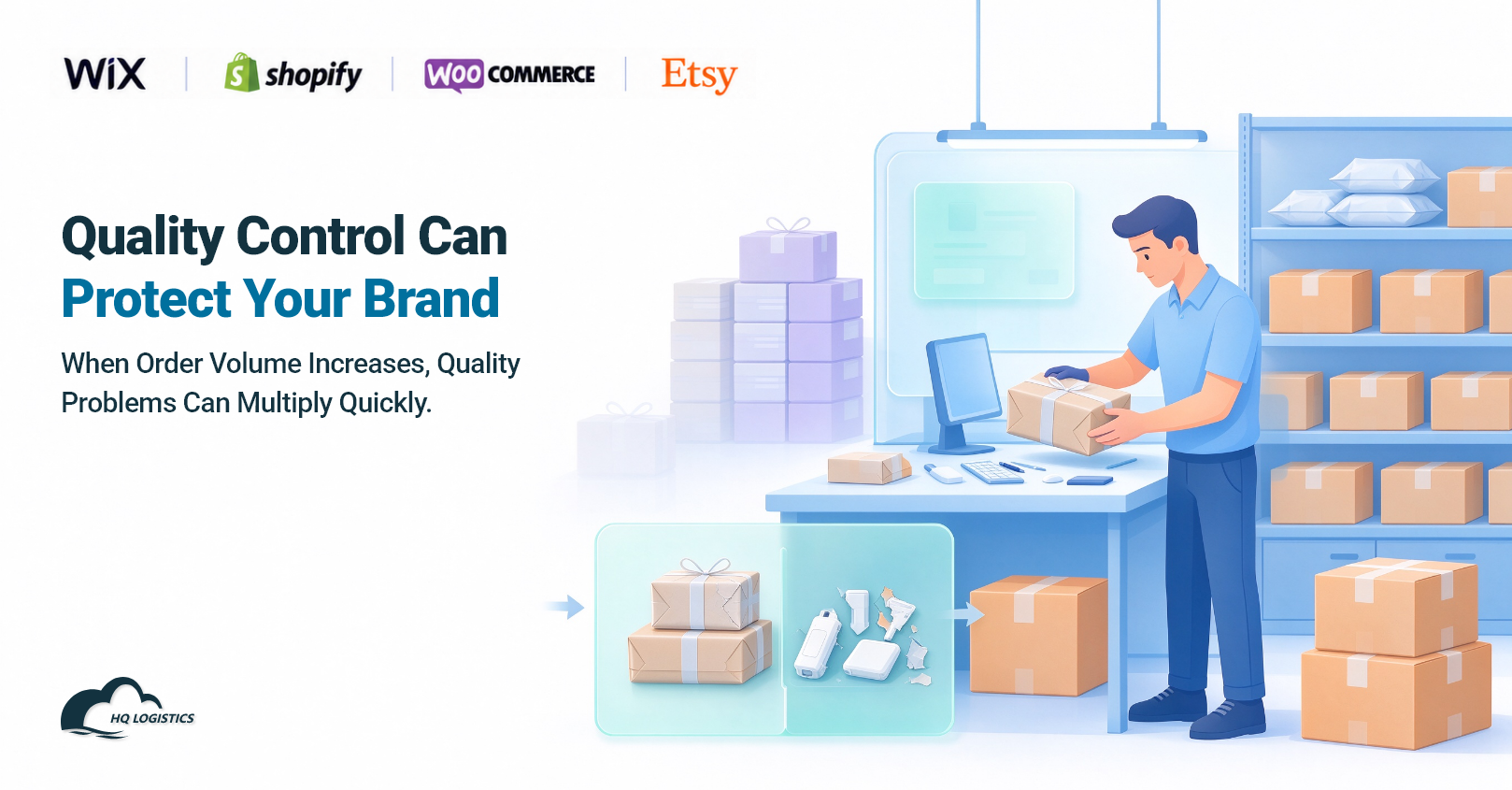
4. Quality Control Can Protect Your Brand
When order volume increases, quality problems can multiply quickly.
Imagine selling 500 units during a promotion and discovering that a batch has the wrong color, missing accessories, damaged packaging, or inconsistent quality.
The problem is no longer one bad order.
It can become hundreds of customer complaints.
Both CJ and HQ provide quality inspection services.
CJ states that products can be inspected before stocking and that orders can also receive quality inspection before dispatch.
HQ provides quality checks and can also offer photo/video QC so sellers can verify product condition before inventory is stocked or shipped.
For peak season, Shopify sellers should confirm exactly what their QC process includes.
Product appearance | Quantity | Size | Accessories | Packaging | Basic product condition
A clear QC process can help reduce avoidable fulfillment problems when order volume increases.
5. Custom Packaging Matters More as Your Brand Grows
For a small dropshipping store, standard packaging may be enough.
For a growing brand, the unboxing experience can become part of the customer experience.
CJ offers customized packaging, including logos, cards, stickers, bags, and other branded packaging options.
HQ also supports custom boxes, poly mailers, inserts, thank-you cards, labels, private-label fulfillment, and other branded fulfillment options.
HQ currently promotes free custom packaging from 50+ orders per day for eligible growing brands.
For Shopify sellers approaching peak season, this creates another question:
Can your fulfillment partner handle branding without slowing down fulfillment?
The ideal workflow should connect:
Product → Packaging → Warehouse → Pick & Pack → Shipping
rather than treating packaging as a separate process.
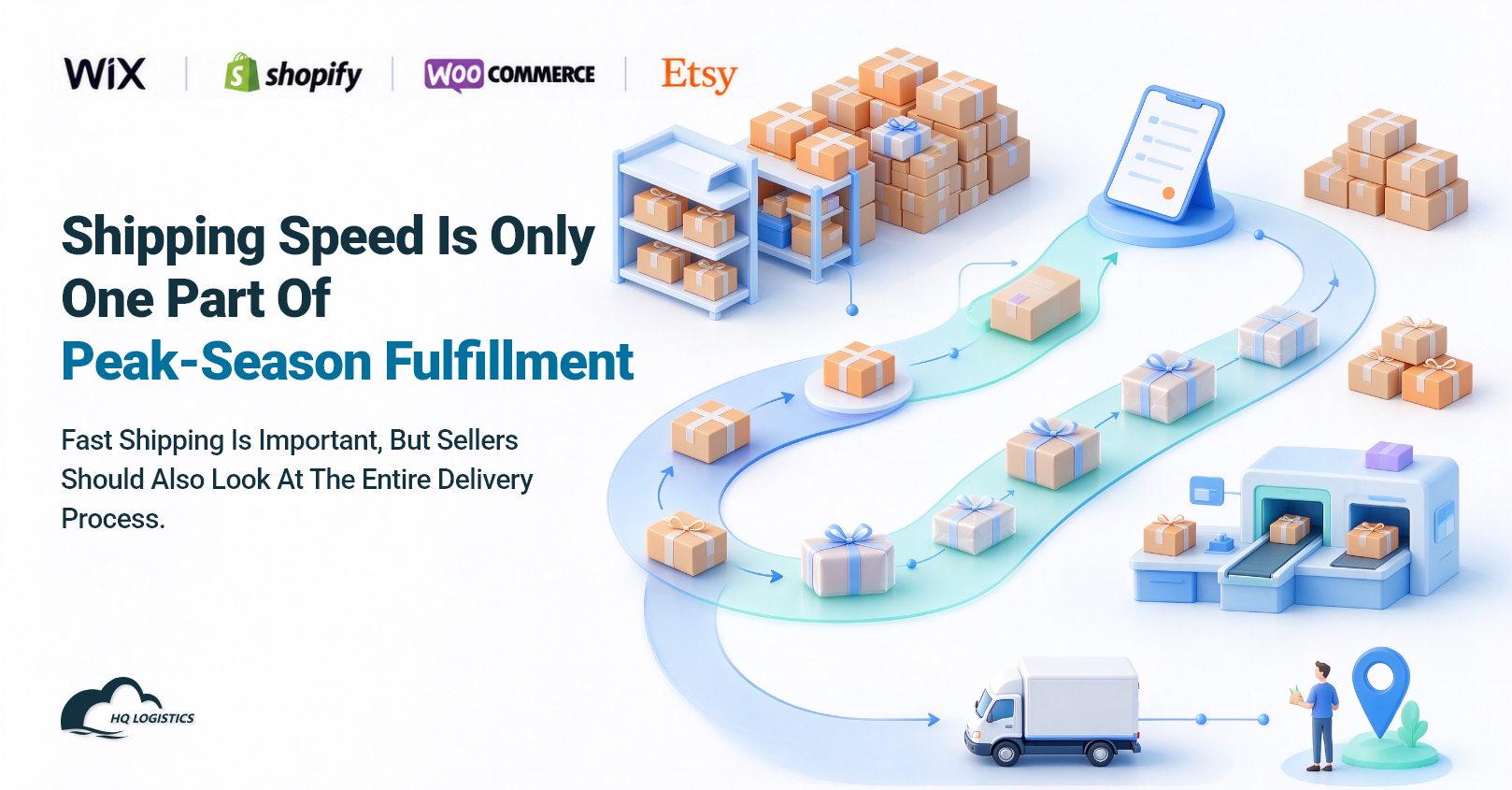
6. Shipping Speed Is Only One Part of Peak-Season Fulfillment
Fast shipping is important, but sellers should also look at the entire delivery process.
A fast shipping line cannot solve a problem if the order is still waiting for inventory, QC, packaging, or warehouse processing.
CJ promotes multiple international shipping options and fulfillment from China and overseas warehouses. Its Shopify materials also highlight global warehouse options and delivery services.
HQ offers multiple fulfillment and shipping routes, with its current service materials listing options such as 3–8 business days to the EU
and approximately 5–10 business days to the US, depending on the product, destination, route, customs, and peak conditions.For peak season, don't only ask:
“How fast is shipping?”
Also ask:
How fast can orders be processed?
How stable is the shipping route?
What happens when order volume increases?
How quickly are tracking numbers updated?
What is the backup plan if a shipping route becomes constrained?
7. Shopify Integration Should Reduce Manual Work
As order volume grows, manual order processing becomes increasingly risky.
Your fulfillment system should connect your Shopify store with inventory, order processing, shipping, and tracking.
CJ supports Shopify integration, automated order fulfillment, inventory synchronization, and tracking updates.
HQ also supports Shopify order synchronization and tracking synchronization. Its current workflow is designed around connecting the store, inventory, fulfillment team, and delivery channels.
A typical workflow should look like:
Shopify Store → Order Sync → Inventory Check → Quality Control → Pick & Pack → Shipping → Tracking Sync
The goal is simple:
More orders should not mean more manual work.
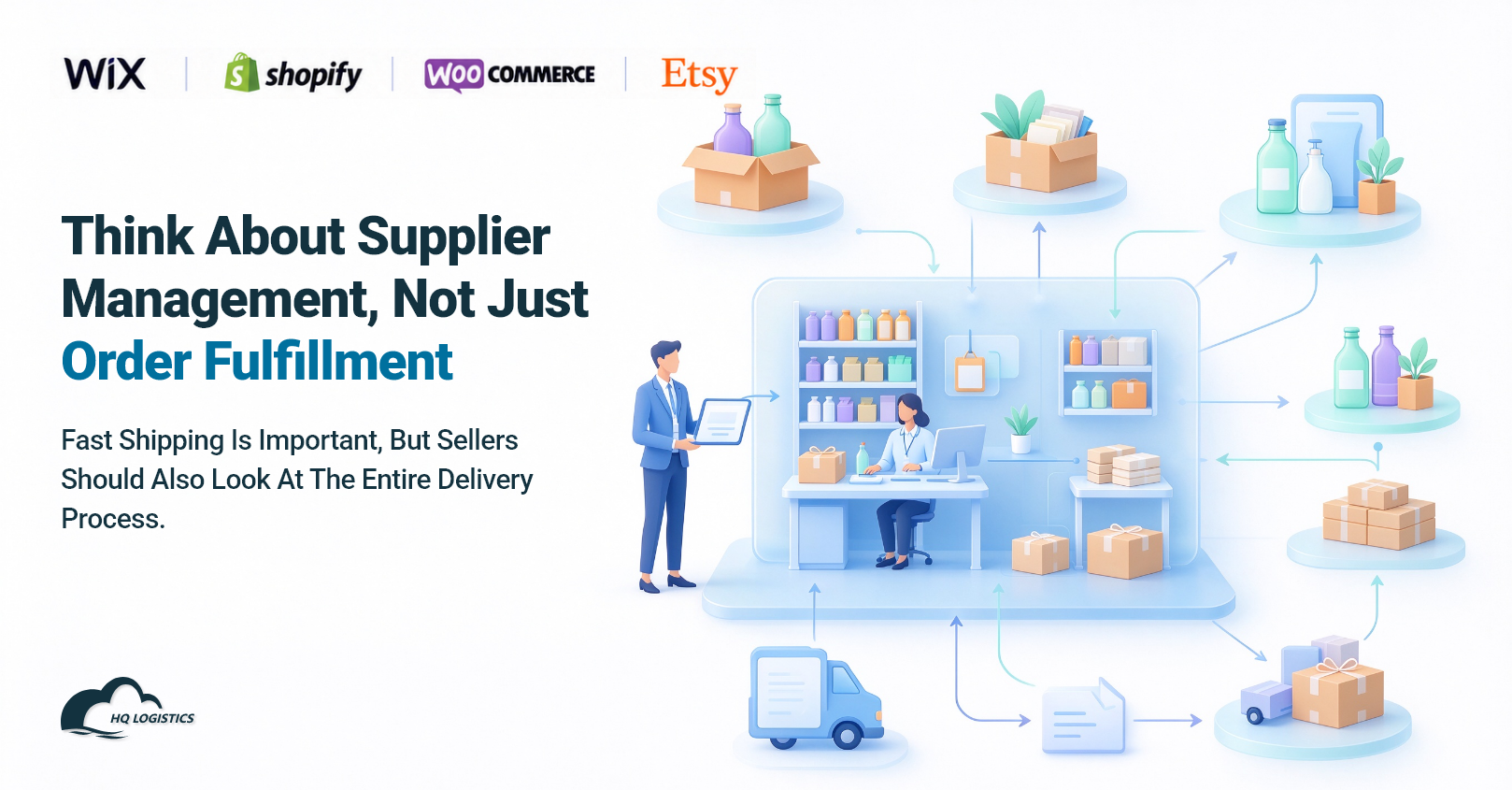
8. Think About Supplier Management, Not Just Order Fulfillment
One of the biggest differences between basic dropshipping and a more developed fulfillment strategy is supplier management.
As your business grows, you may need:
Multiple suppliers | Supplier comparison | Product sourcing | Quality control | Inventory planning | Packaging customization | Shipping optimization
CJ provides product sourcing and supplier-related services as part of its platform.
HQ also provides supplier comparison, factory sourcing, samples, quality control, inventory management, and fulfillment within one operational workflow.
This matters when you have several important SKUs.
If one supplier suddenly has a quality or production problem, having alternative sourcing options can help reduce supply risk.
For peak season, supplier flexibility can be just as important as shipping speed.
9. What Should Shopify Sellers Compare Before Switching?
Before changing your fulfillment partner, don't compare only the headline shipping price.
Use your actual store data.
Daily orders | Monthly orders | Top-selling SKUs | Product dimensions | Product weight | Main customer markets | Current shipping cost | Current processing time | Packaging requirements | Inventory levels | Expected peak-season volume
Then ask each fulfillment provider for a plan based on those numbers.
This makes the comparison much more useful than simply asking:
“How much is shipping to the US?”
10. CJ Dropshipping vs. HQ Fulfillment: What Should You Look At?
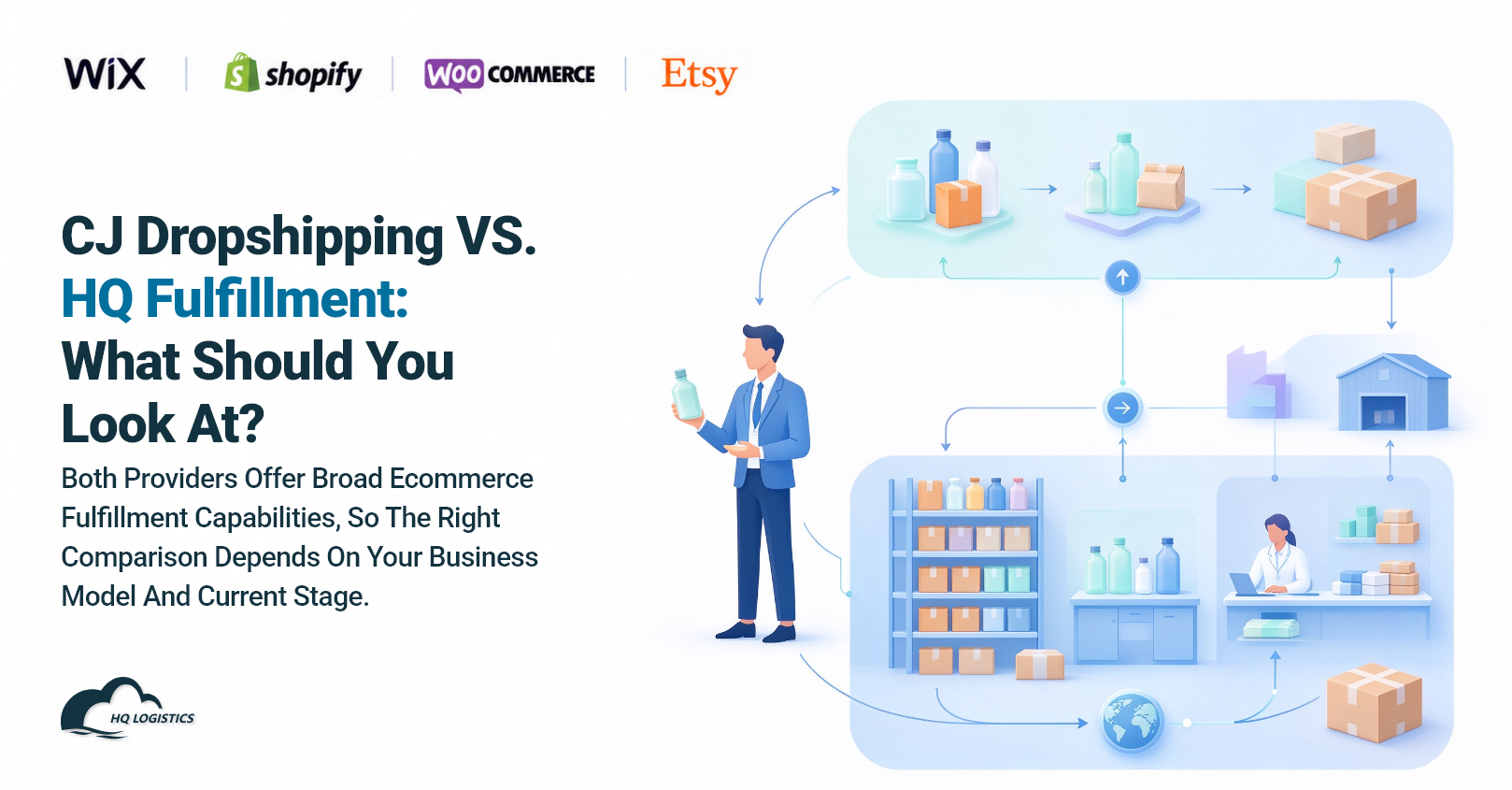
Both providers offer broad ecommerce fulfillment capabilities, so the right comparison depends on your business model and current stage.
For example:
Product sourcing:
Both can support product sourcing and supplier-related services.Shopify integration:
Both support Shopify-related order workflows and fulfillment.Warehousing:
Both provide warehouse-based fulfillment options.Quality control:
Both offer quality inspection services.Custom packaging:
Both provide branded/custom packaging options.Global shipping:
Both support international fulfillment and multiple shipping solutions.Peak-season planning:
This is where sellers should look more closely at inventory planning, processing capacity, supplier coordination, shipping stability, and dedicated operational support.The key is to compare the actual workflow and service terms offered to your store, rather than assuming that a general platform feature will work the same way for every seller.
11. When Should You Consider Moving From Basic Dropshipping?
You may want to review your current fulfillment setup if:
Your daily orders are increasing quickly | Your best-selling products frequently go out of stock | Your supplier cannot keep up with order growth | Customers are asking about delayed tracking | Quality problems are increasing | You want branded packaging | You are selling across multiple markets | Your team spends too much time managing orders | You are preparing for a major promotion | You need a clearer inventory and fulfillment plan
These are signs that your business may need more than simple product sourcing.
It may be time to build a more structured fulfillment system.
12. Prepare Your Fulfillment Before Peak Season
Peak season is not the best time to discover that your supplier cannot handle your order volume.
Start by reviewing your current operation.
Step 1:
Check your current daily and monthly order volume.Step 2:
Identify your top-selling SKUs.Step 3:
Review current inventory and replenishment times.Step 4:
Compare your current shipping costs and delivery times.Step 5:
Test product quality before increasing inventory.Step 6:
Confirm packaging and branding requirements.Step 7:
Ask your fulfillment partner about peak-season capacity.Step 8:
Prepare backup suppliers or shipping routes for critical products.Step 9:
Confirm tracking and customer-support workflows.Step 10:
Get a volume-based fulfillment quote before your sales peak.The earlier you review these areas, the more time you have to fix problems before your busiest sales period.
13. How HQ Fulfillment Supports Growing Shopify Brands
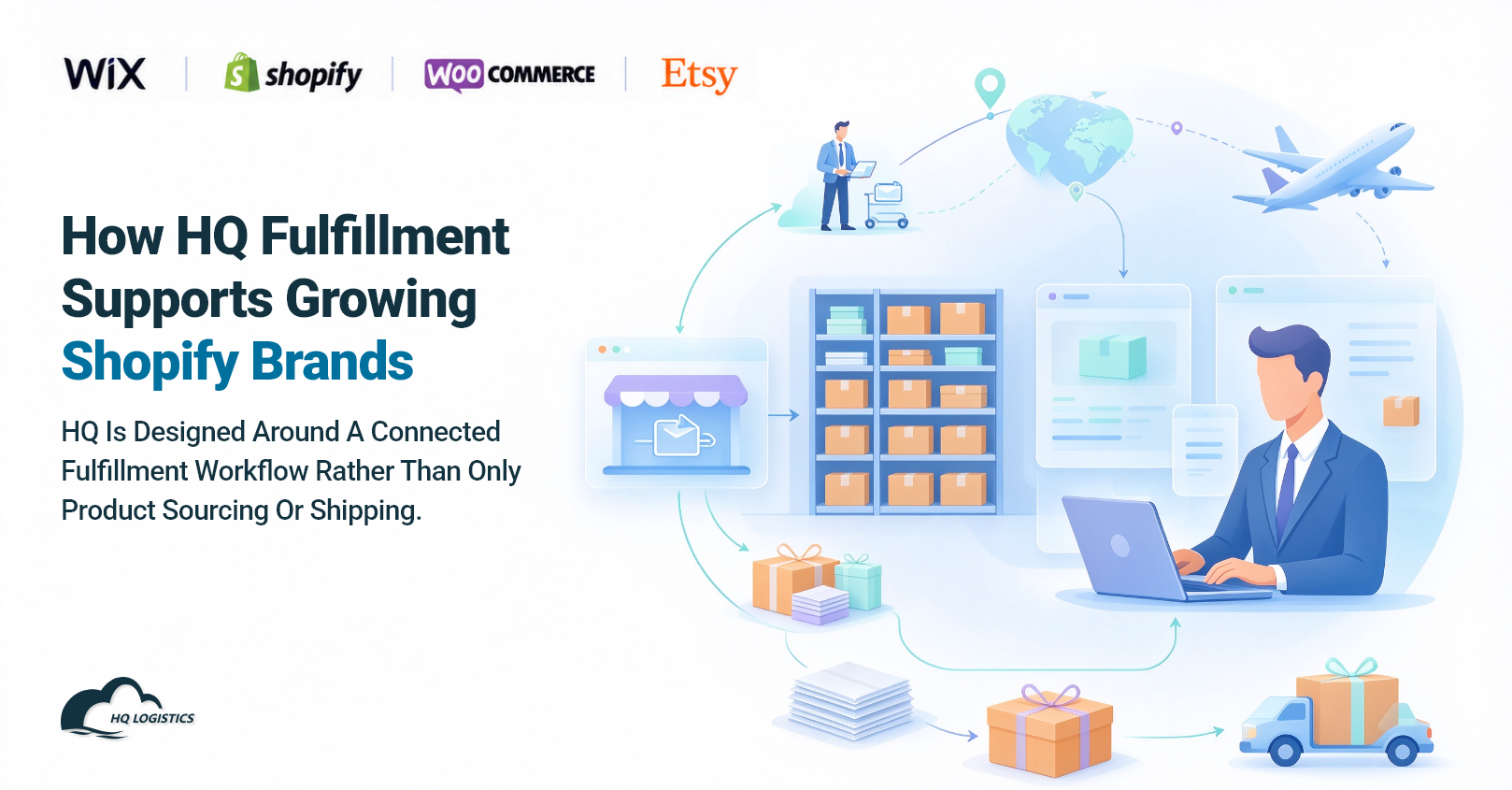
HQ is designed around a connected fulfillment workflow rather than only product sourcing or shipping.
The process can connect:
Product Sourcing → Supplier Management → Quality Inspection → Warehousing → Custom Packaging → Order Fulfillment → Global Shipping
HQ currently promotes no MOQ, free warehousing, product sourcing, quality control, inventory planning, branded packaging, Shopify order synchronization, and global delivery
for growing ecommerce brands.For brands preparing for peak season, HQ can also plan inventory and processing capacity in advance based on expected order volume.
HQ's current fulfillment materials list 15,000+ orders/day capacity, while the broader HQ Cloud Warehousing site lists 24,000+ storage space and 99.2%+ shipments sent on time. These figures refer to the respective service materials and should be confirmed for your specific fulfillment plan.
For eligible products and routes, HQ also offers fast global delivery options, including published EU and US delivery estimates.
FAQ
Is CJ Dropshipping good for Shopify stores?
CJ Dropshipping supports Shopify integration, product sourcing, inventory, fulfillment, custom packaging, and international shipping. It can be used by Shopify sellers at different stages. The right setup depends on your products, order volume, target markets, and fulfillment requirements.
Is HQ Fulfillment suitable for growing Shopify brands?
HQ focuses on growing Shopify and DTC brands that need sourcing, warehousing, quality control, inventory planning, branded packaging, fulfillment, and global shipping in one workflow.
Should I switch suppliers before peak season?
If your current supplier is already experiencing inventory, quality, processing, packaging, or shipping problems, it can be useful to review alternative fulfillment options before peak season.
However, switching should be planned carefully. Test products, confirm inventory, compare total costs, and make sure the new fulfillment workflow is ready before moving high-volume orders.
How early should Shopify sellers prepare for peak season?
There is no single timeline for every store. Sellers should start as soon as they have a clear sales forecast.
The earlier you can identify best-selling SKUs, expected order volume, inventory requirements, packaging needs, and shipping routes, the more time you have to test and adjust the fulfillment process.
What should I ask a fulfillment company before peak season?
Ask about processing capacity, inventory planning, sourcing, QC, warehouse locations, packaging, shipping routes, tracking synchronization, peak-season capacity, backup solutions, pricing, and dedicated support.
The goal is to understand what happens when your order volume increases—not only how the service works during normal weeks.

Final Thoughts
CJ Dropshipping and HQ Fulfillment both provide services that can support Shopify sellers, including sourcing, warehousing, fulfillment, packaging, and international shipping.
But as your store grows, the comparison should go beyond product sourcing or shipping prices.
Before peak season, look at the complete system:
Sourcing → Inventory → QC → Packaging → Fulfillment → Shipping → Tracking → Customer Experience
Your supplier should not only help you process today's orders.
Your fulfillment setup should also be ready for tomorrow's growth.
If your Shopify store is preparing for higher order volume this peak season, review your current products, daily orders, markets, shipping costs, and packaging requirements—and compare them against a fulfillment plan built around your actual business.
HQ Fulfillment — Sourcing, Warehousing, Quality Control, Custom Packaging and Global Fulfillment for Growing Shopify Brands.
 CJ Dropshipping vs HQ Fulfillment, CJ Dropshipping
alternative, Shopify fulfillment, Shopify fulfillment service, China fulfillment center, Shopify
dropshipping supplier, Shopify fulfillment partner, ecommerce fulfillment, peak season fulfillment, Q4
fulfillment, custom packaging fulfillment, Shopify order fulfillment, global ecommerce fulfillment,
fulfillment center for Shopify, HQ Fulfillment.
CJ Dropshipping vs HQ Fulfillment, CJ Dropshipping
alternative, Shopify fulfillment, Shopify fulfillment service, China fulfillment center, Shopify
dropshipping supplier, Shopify fulfillment partner, ecommerce fulfillment, peak season fulfillment, Q4
fulfillment, custom packaging fulfillment, Shopify order fulfillment, global ecommerce fulfillment,
fulfillment center for Shopify, HQ Fulfillment.