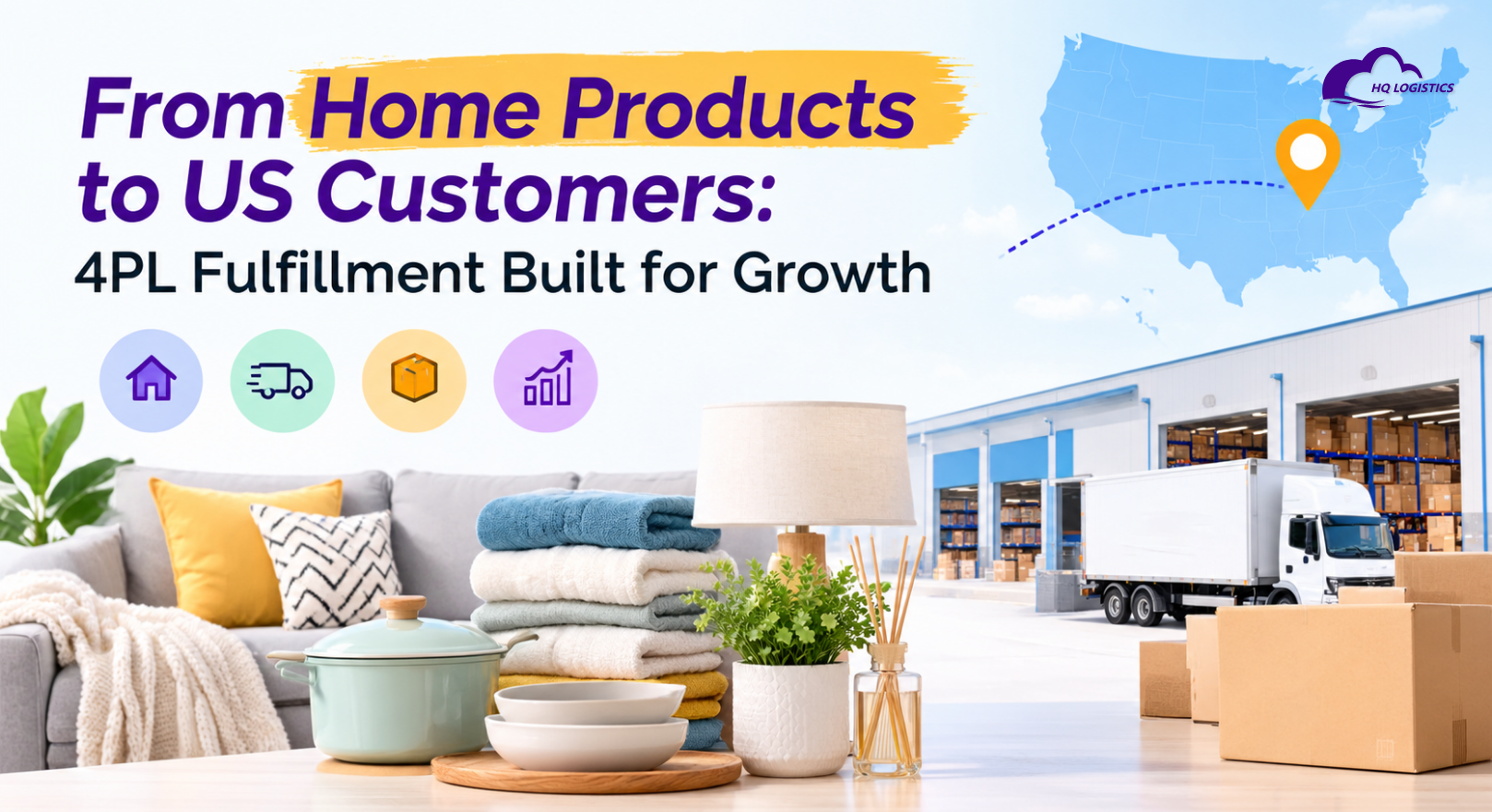
From Home Products to US Customers: 4PL Fulfillment Built for Growth
From Home Products to US Customers: 4PL Fulfillment Built for Growth
4PL fulfillment for home products
can help growing ecommerce brands connect sourcing, supplier management, inventory, packaging, and delivery into one more efficient supply chain.Selling home products to U.S. customers can look simple from the outside. A customer places an order, the product is packed, and the parcel is shipped.
But behind that order is a much bigger operation.
You need reliable suppliers, consistent product quality, reasonable sourcing costs, enough inventory, suitable packaging, accurate fulfillment, and delivery options that work for the U.S. market.
As your order volume grows, managing all of these pieces separately can become expensive and difficult.
That is where a 4PL fulfillment partner can make a difference.
Instead of simply storing and shipping products, a 4PL partner can help coordinate the supply chain from sourcing and supplier management to fulfillment and international delivery.
Why Home Products Need More Than Basic Fulfillment
Home products cover a wide range of categories, including kitchen accessories, storage products, home décor, organizers, lighting, cleaning tools, furniture accessories, bathroom products, and everyday household items.
Many of these products have different fulfillment requirements.
Some are bulky. Some need protective packaging. Some have multiple colors or sizes. Others need custom packaging to create a stronger brand experience.
For example, a home organization brand may start with a few dozen orders per day. At this stage, working with one supplier and shipping orders individually may seem manageable.
But once the store reaches hundreds of orders per day, problems can appear.
Inventory may not be replenished quickly enough. Product quality may vary between batches. Packaging may not protect products during long-distance transportation. Shipping costs may increase because of product dimensions. Multiple suppliers may also create additional coordination work.
A scalable home product fulfillment solution
needs to address these issues before they become major bottlenecks.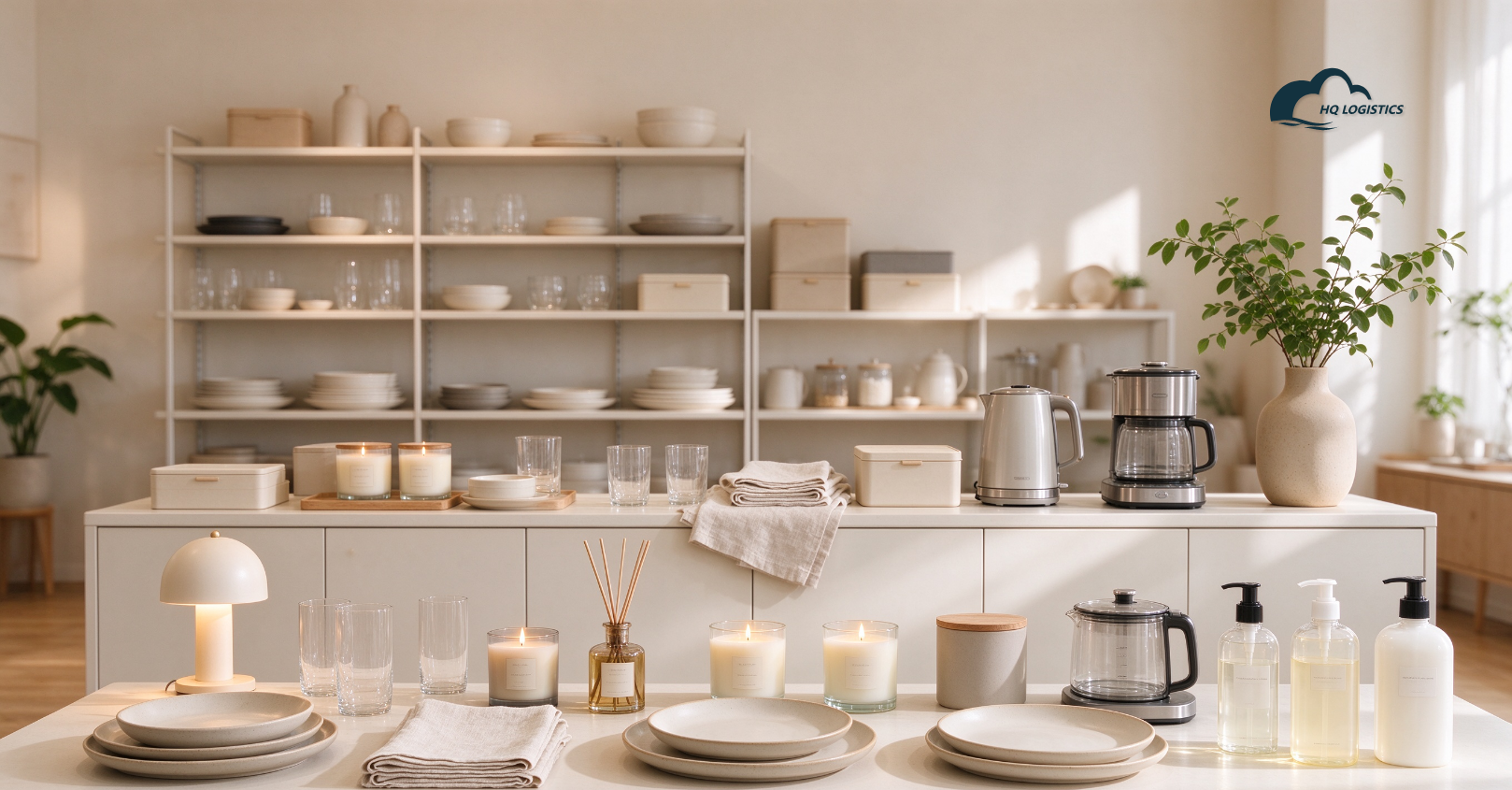
3PL vs. 4PL: What's the Difference?
Traditional 3PL fulfillment generally focuses on logistics operations.
A 3PL can provide warehousing, inventory storage, picking, packing, and shipping.
These services are important, but growing home product brands often need support before products even arrive at the warehouse.
A 4PL approach goes further.
3PL: Store → Pick → Pack → Ship
4PL: Source → Optimize → Manage → Fulfill → Scale
The difference is supply chain coordination.
A 4PL fulfillment partner can connect suppliers, sourcing, inventory planning, quality control, packaging, warehousing, fulfillment, and shipping into one workflow.
For a brand selling home products from China to U.S. customers, this can create a more connected path from factory to customer.
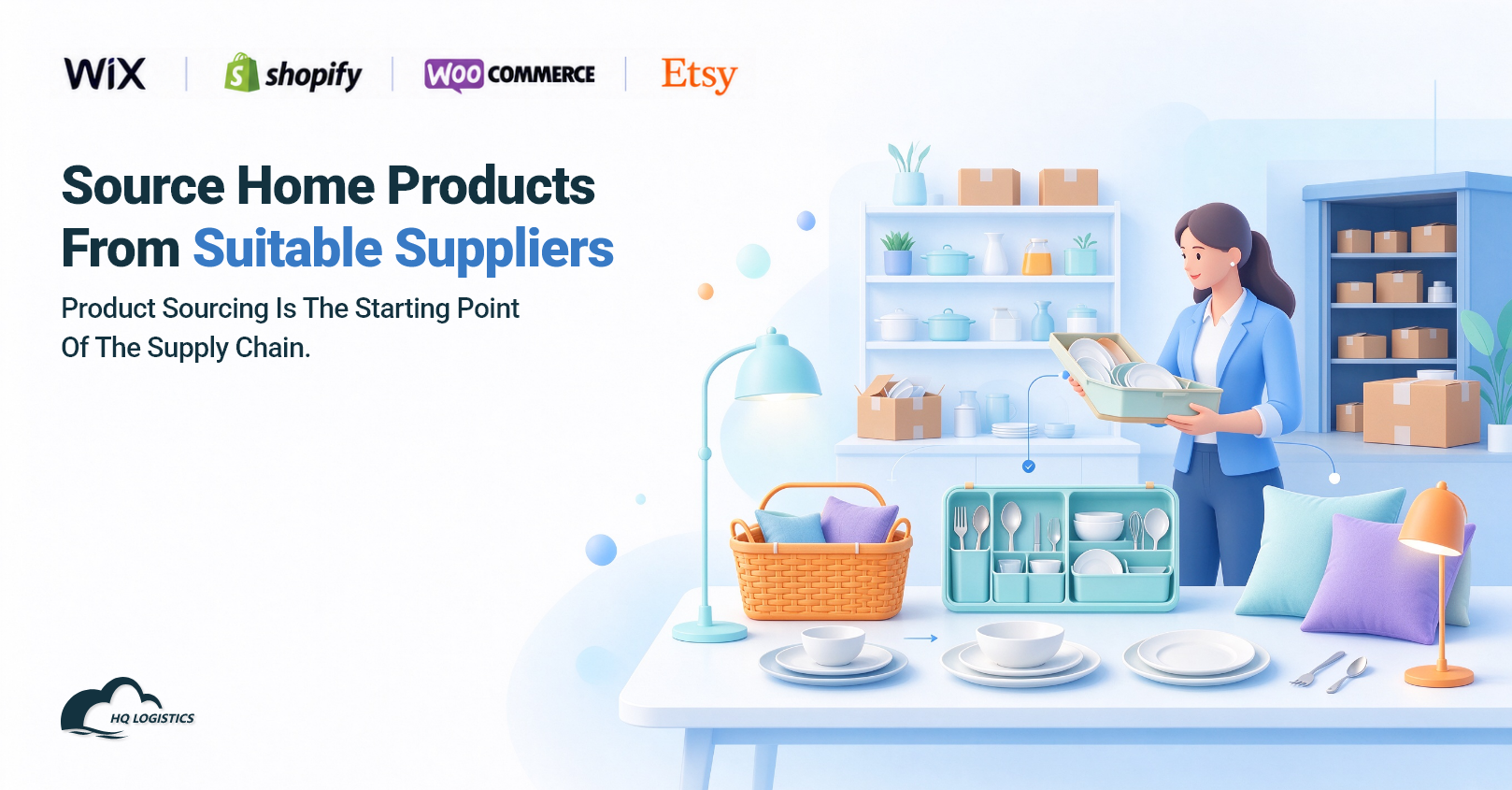
1. Source Home Products From Suitable Suppliers
Product sourcing is the starting point of the supply chain.
Finding a supplier is easy. Finding a supplier that can support your brand as order volume increases is more important.
A good sourcing process should consider product quality, factory capabilities, pricing, MOQ, production capacity, customization options, lead times, and long-term reliability.
For home products, supplier selection is particularly important because product dimensions, materials, finishes, and packaging can have a direct impact on customer experience and shipping costs.
A 4PL partner can help compare multiple suppliers instead of relying on a single source.
This can give growing brands more flexibility when prices change, demand increases, or a supplier cannot meet production requirements.
2. Optimize Product Costs and Supply Chain Spending
The lowest product price does not always mean the lowest total fulfillment cost.
For home products, shipping expenses can be affected by weight, dimensions, packaging materials, product volume, destination, and transportation method.
A product may have a low factory price but become expensive to ship because of oversized packaging.
This is why growing brands should look at total supply chain cost, rather than product cost alone.
A 4PL partner can review sourcing prices, packaging requirements, inventory planning, and logistics options together.
This creates opportunities to optimize the overall cost from supplier to customer.
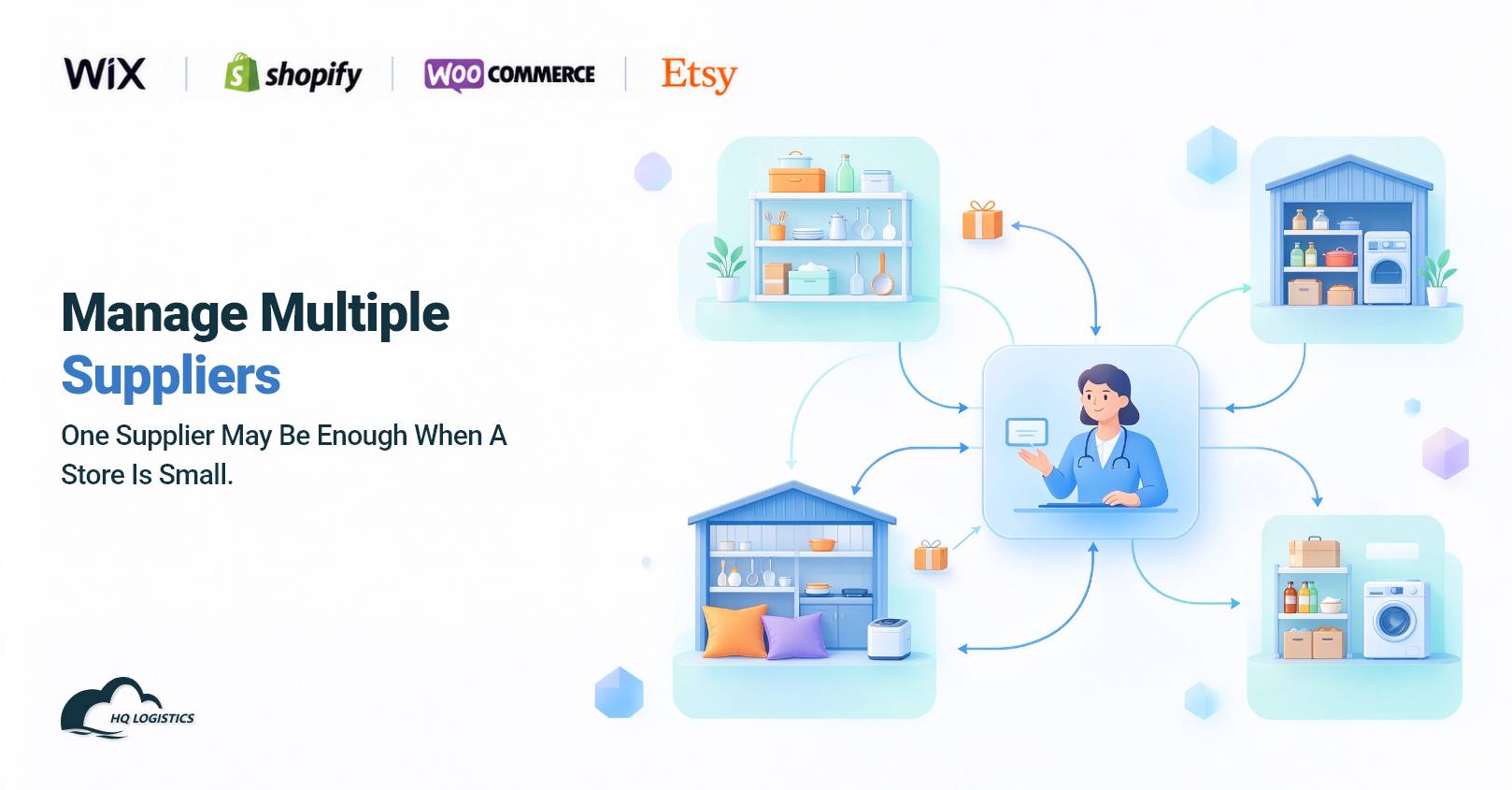
3. Manage Multiple Suppliers
One supplier may be enough when a store is small.
As the product catalog grows, however, multiple suppliers may become necessary.
Different factories may specialize in different products. One supplier may offer better pricing, while another may have stronger production capabilities or better customization options.
Managing several suppliers independently can create additional work for ecommerce brands.
A 4PL fulfillment partner can coordinate supplier communication, sourcing requests, product information, production schedules, quality checks, and delivery to the fulfillment center.
Instead of managing every supplier separately, the brand has one central supply chain partner.
4. Improve Quality Before Products Reach Customers
Quality problems can become expensive when products are already on their way to customers.
For home products, quality control may include checking product appearance, dimensions, materials, accessories, colors, functionality, packaging, and quantity.
A fulfillment partner can perform quality inspections before products enter inventory or before orders are shipped.
This helps identify problems earlier.
For example, if a batch of kitchen organizers has incorrect dimensions, damaged surfaces, or missing accessories, discovering the issue before customer delivery can prevent unnecessary returns and negative reviews.
For growing brands, quality control is part of fulfillment, not a separate afterthought.
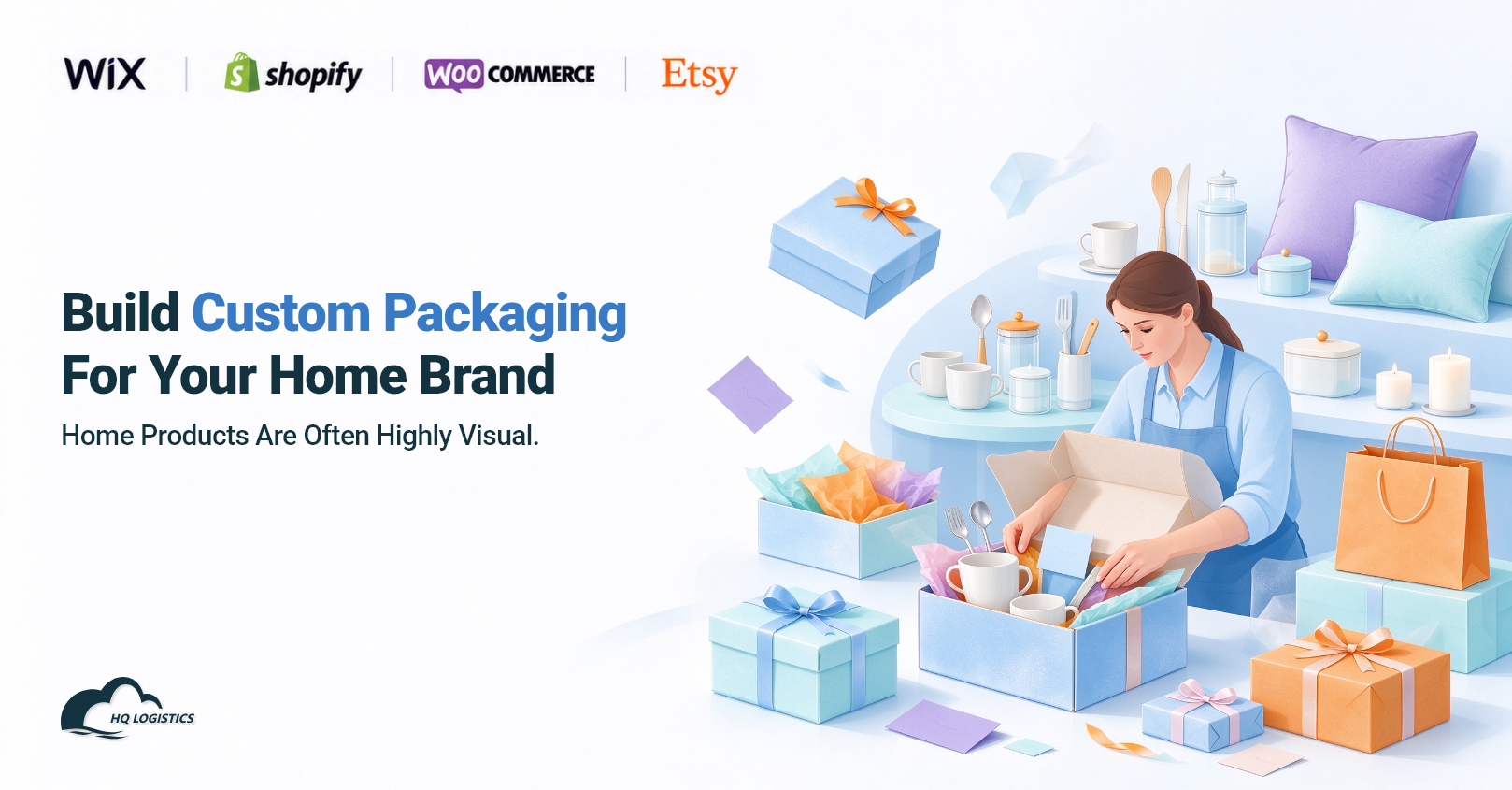
5. Build Custom Packaging for Your Home Brand
Home products are often highly visual.
Customers may see the packaging before they use the product, making packaging part of the overall brand experience.
Growing brands can use custom mailers, boxes, labels, inserts, thank-you cards, hangtags, and other branded materials to create a more consistent unboxing experience.
However, custom packaging should also be practical.
The packaging needs to protect the product without unnecessarily increasing dimensional weight or shipping costs.
A 4PL partner can connect packaging design with sourcing, inventory, and fulfillment.
For eligible brands processing 50+ orders per day, HQ can provide free custom packaging support, helping growing brands move beyond generic supplier packaging.
6. Store Inventory Where It Makes Sense
Inventory planning becomes increasingly important as order volume grows.
Too little inventory can lead to stockouts and missed sales.
Too much inventory can tie up cash and increase storage costs.
The right inventory strategy depends on sales volume, product lead time, seasonality, supplier capacity, and target markets.
For brands selling home products to U.S. customers, inventory can be positioned strategically based on the fulfillment model.
Products can be sourced and prepared in China, then managed through fulfillment operations and, when appropriate, U.S. warehousing for domestic orders.
The goal is not simply to store more inventory.
The goal is to have the right products available in the right place at the right time.
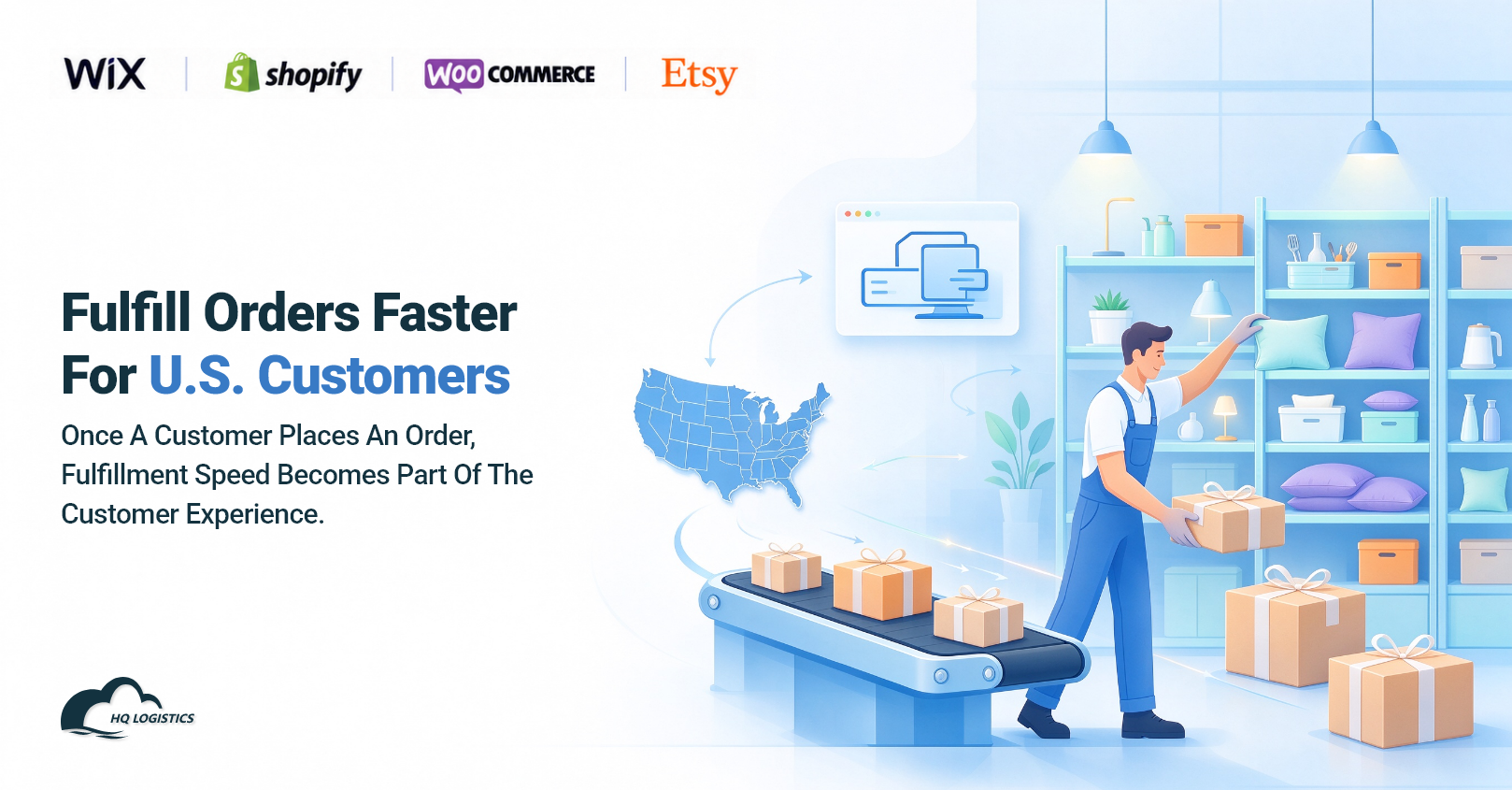
7. Fulfill Orders Faster for U.S. Customers
Once a customer places an order, fulfillment speed becomes part of the customer experience.
Slow processing can create shipping delays even when the transportation service itself is fast.
An integrated fulfillment process can connect inventory, order processing, picking, packing, quality checks, and shipping.
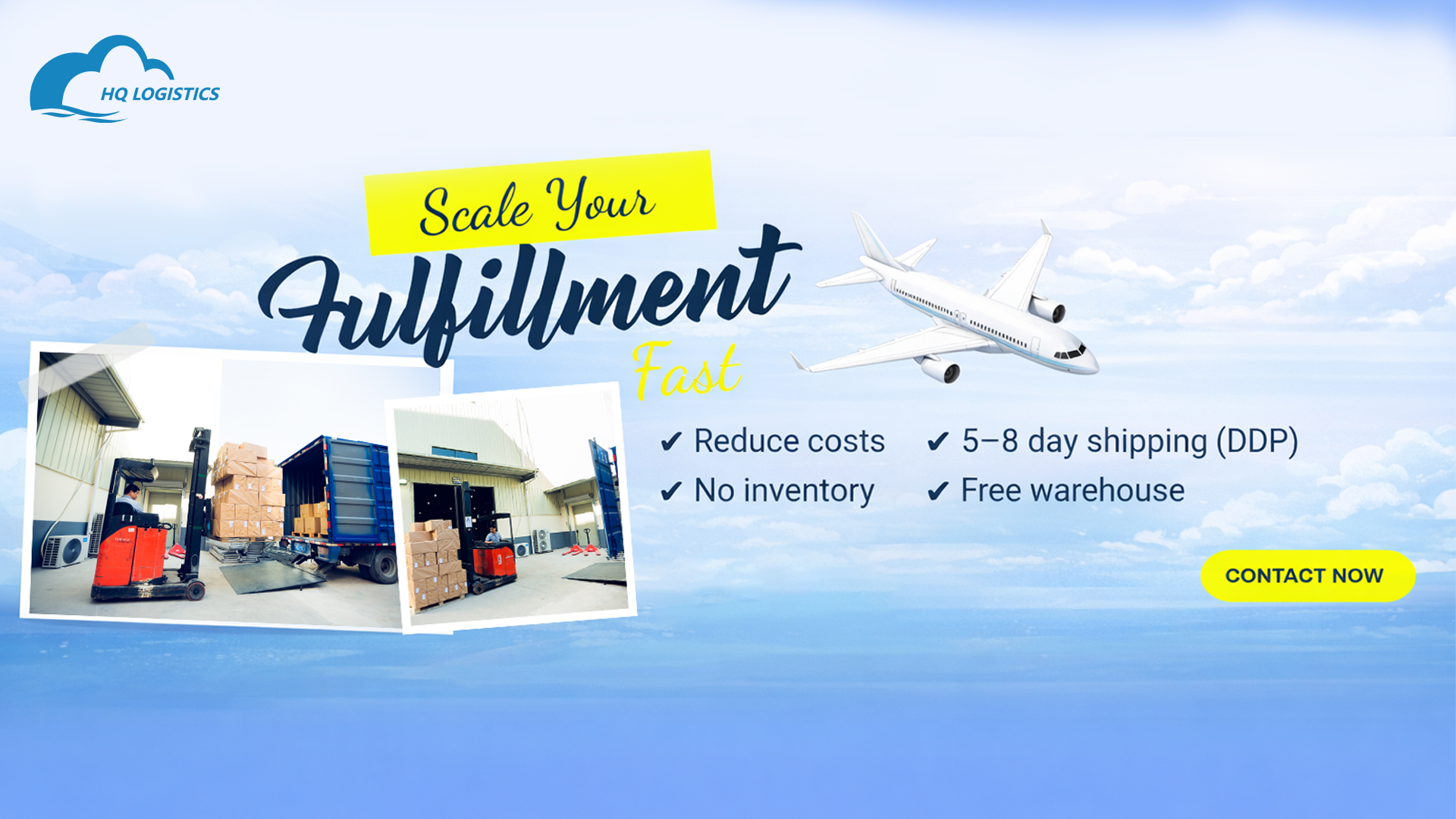
For eligible routes and products, HQ provides 3–8 day delivery options to help ecommerce brands serve customers in the U.S. and other major markets.
For growing home product brands, faster fulfillment can also make promotions and seasonal sales easier to manage.
When order volume suddenly increases, the fulfillment partner needs enough operational capacity to process the additional orders.
8. Prepare for Higher Order Volumes
Growth changes the requirements of your supply chain.
A system that works for 20 orders per day may not work the same way at 200 or 2,000 orders per day.
At higher volumes, brands need stronger inventory planning, supplier coordination, quality control, warehouse processes, packaging systems, and shipping capacity.
HQ provides fulfillment capacity of up to 20,000 orders per day, supporting ecommerce brands as their order volume grows.
The goal is to build the supply chain before growth creates operational pressure.
Why 4PL Makes Sense for Growing Home Product Brands
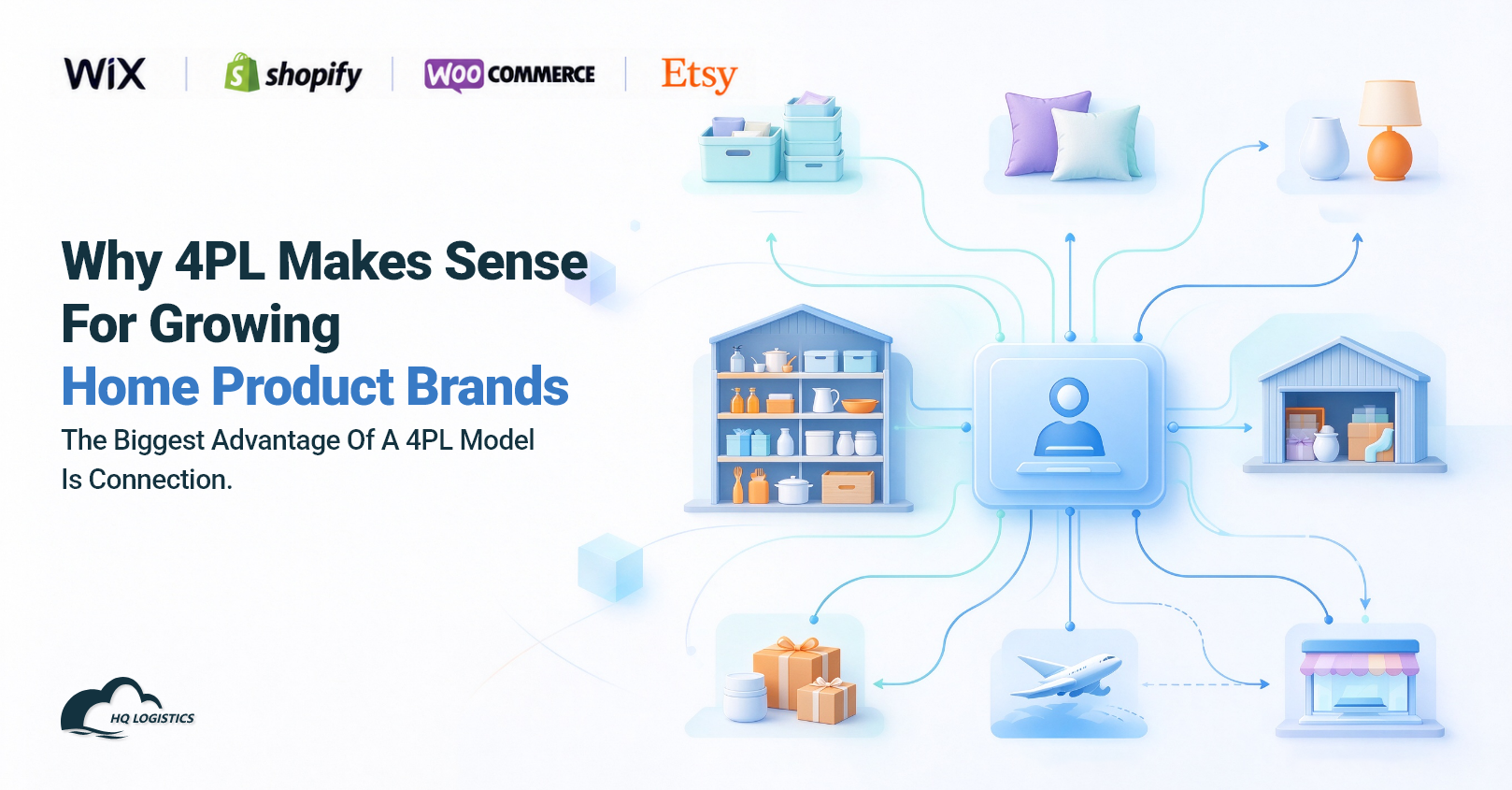
The biggest advantage of a 4PL model is connection.
Instead of treating sourcing, warehousing, packaging, and shipping as separate services, a 4PL partner can coordinate them as parts of the same supply chain.
For a home products brand, this can mean:
Factory → Sourcing → Quality Control → Custom Packaging → Inventory → Fulfillment → U.S. Shipping → Customer
Each stage affects the next one.
The supplier affects product quality.
The product affects packaging.
The packaging affects shipping cost.
Inventory planning affects delivery speed.
Fulfillment capacity affects how quickly orders can be processed.
A connected supply chain makes it easier to manage these relationships.
From China Supply Chain to U.S. Customers
For ecommerce brands selling home products in the U.S., China can provide access to a large manufacturing ecosystem and a wide range of product categories.
But access to suppliers is only the beginning.
The real challenge is building a reliable process between the factory and the final customer.
That process may include product sourcing, supplier comparison, price negotiation, quality inspection, inventory management, custom packaging, warehouse fulfillment, and international or domestic shipping.
This is where a China 4PL fulfillment partner can become more than a warehouse provider.
Instead of simply moving boxes, the partner helps coordinate the supply chain behind those boxes.
How HQ Supports Home Product Brands
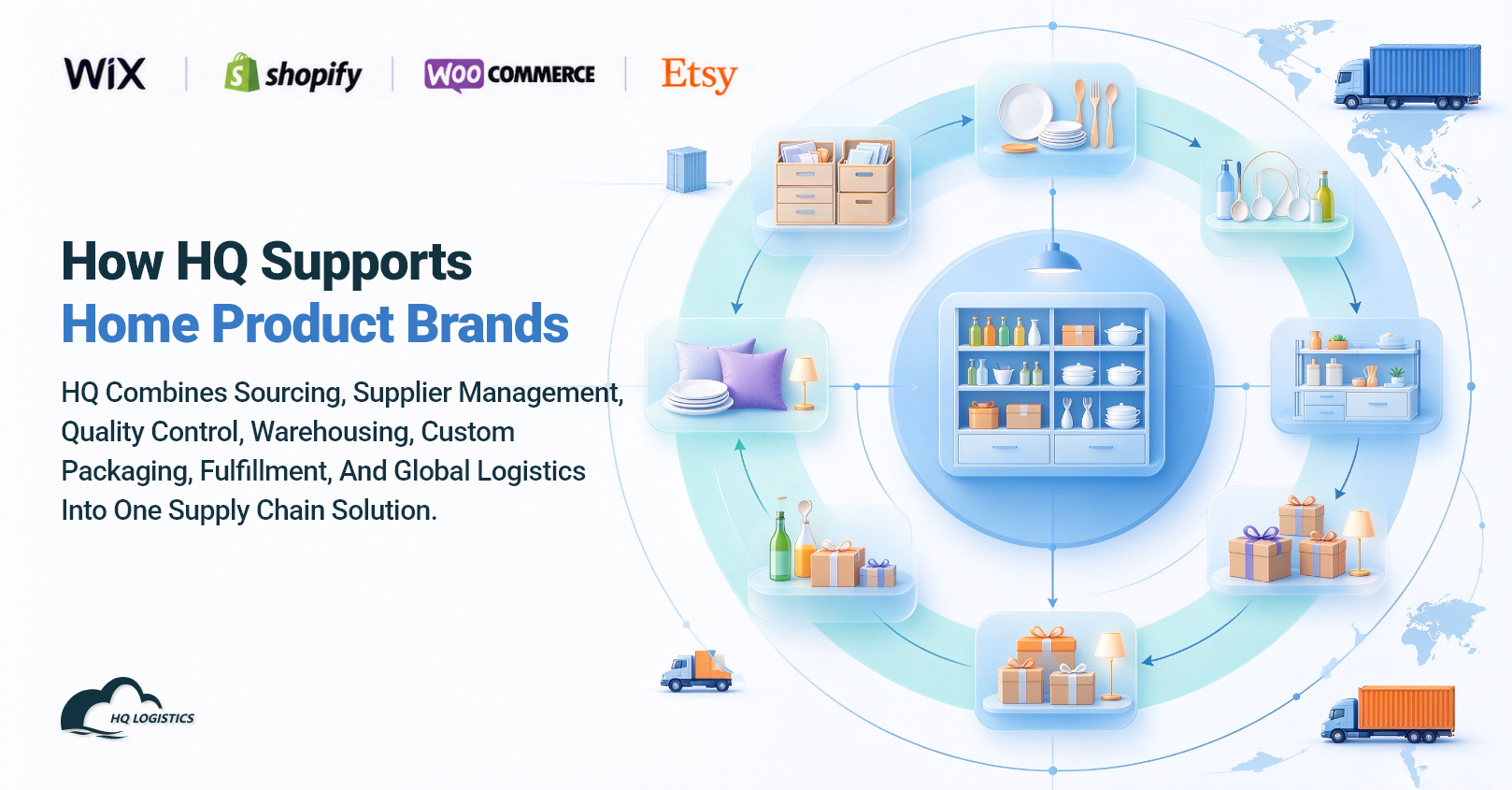
HQ combines sourcing, supplier management, quality control, warehousing, custom packaging, fulfillment, and global logistics into one supply chain solution.
For home product brands, HQ can support supplier sourcing, product comparison, quality inspection, inventory management, custom packaging, pick and pack, order fulfillment, and shipping.
HQ also works with ecommerce platforms including Shopify, Wix, WooCommerce, and Etsy, helping brands connect their online stores with fulfillment operations.
For eligible products and routes, HQ offers 3–8 day delivery options.
For brands processing 50+ orders per day, eligible custom packaging support can help create a more consistent branded customer experience.
With fulfillment capacity of up to 20,000 orders per day, the system is designed to support brands from early growth through higher-volume operations.
When Should You Consider 4PL Fulfillment?
You do not necessarily need a 4PL partner on day one.
But there are several signs that your current setup may be reaching its limits.
If you are managing multiple suppliers yourself, dealing with inconsistent product quality, spending too much time coordinating shipments, struggling with inventory planning, or preparing for significantly higher order volume, it may be time to look at a more integrated fulfillment model.
The same applies if your brand is moving from generic packaging toward a branded customer experience.
At this stage, fulfillment is no longer just about shipping orders.
It becomes part of your supply chain strategy.
4PL Fulfillment for Home Products: FAQs
What is 4PL fulfillment?
4PL fulfillment is a supply chain management model that goes beyond traditional warehousing and shipping. It can connect sourcing, supplier management, inventory planning, quality control, packaging, fulfillment, and logistics.
Is 4PL fulfillment suitable for home products?
Yes. Home products can have different sizes, weights, packaging requirements, and supplier requirements, making supply chain coordination especially important as order volume grows.
Can a 4PL partner help source home products?
Yes. A 4PL partner can help identify and compare suppliers, review product costs, coordinate sourcing, and manage supplier communication.
Can 4PL fulfillment support U.S. customers?
Yes. A 4PL fulfillment model can connect China sourcing and supply chain operations with international shipping and U.S. fulfillment options.
When should a Shopify home products brand consider 4PL?
A brand may consider 4PL when it starts managing multiple suppliers, increasing order volume, developing custom packaging, expanding product categories, or needing better coordination between sourcing and fulfillment.
Final Thoughts
Growing a home products brand is not only about finding products and getting more orders.
The bigger challenge is building a supply chain that can support those orders.
From sourcing and supplier management to quality control, custom packaging, inventory, fulfillment, and U.S. delivery, every stage matters.
A 4PL fulfillment model brings these stages together so your supply chain can become more connected and easier to scale.
If your home products brand is growing in the U.S. market, the right fulfillment partner can help you move from simply shipping products to building a stronger supply chain for long-term growth.
4PL fulfillment for home products connects sourcing, supply chain management, fulfillment, and global delivery—helping growing ecommerce brands build a more scalable path from factory to U.S. customer.