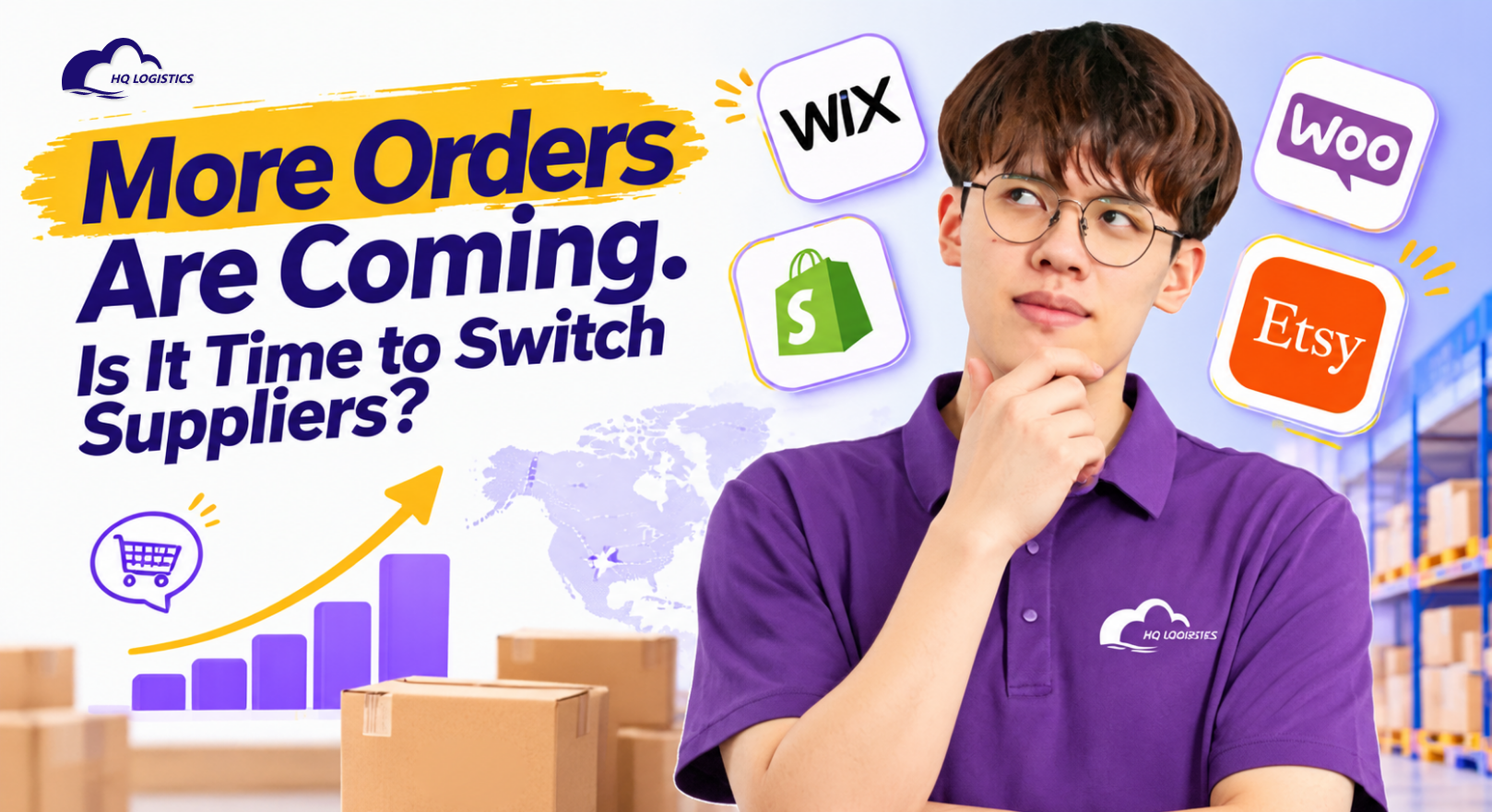
More Orders Are Coming. Is It Time to Switch Suppliers?
More Orders Are Coming. Is It Time to Switch Suppliers?
More orders are usually good news.
But what happens when your supplier is not ready for them?
For growing home brands, supplier problems do not always start with obvious shipping delays. Sometimes your orders are still leaving the warehouse on time, but inventory accuracy is getting worse, mistakes are increasing, costs are rising, and your team is spending more and more time chasing exceptions.
That is when you may be dealing with a bigger problem: your supplier's operating capacity is becoming a constraint on your growth.
Switching suppliers is not a decision to make lightly. Changing factories, fulfillment partners, inventory systems, and logistics processes takes time.
But staying with an overloaded supplier can also become expensive.
So how can you tell whether your current supplier is simply having a busy period—or whether your business has outgrown their operating model?
Here are six signals to watch.
Signal 1: Every Peak Season Becomes a Crisis
Home products often have strong seasonal demand.
Promotional periods, the holiday shopping season, and the Q1 home refresh period can create significant order spikes.
A supplier with enough capacity should be able to plan for these changes.
If every peak season turns into an emergency, however, that is a different story.
Maybe your supplier needs to hire temporary workers at the last minute.
Maybe warehouse space suddenly becomes unavailable.
Maybe inventory needs to be moved between facilities because there is not enough room.
Maybe your team has to repeatedly contact the supplier just to confirm whether orders can be processed.
One difficult season can happen to any supplier.
But if the same problems happen every year, it may indicate that your supplier's flexible capacity has reached its limit.
Ask yourself:
| Does our supplier plan capacity before peak season? | Can they handle temporary order spikes? | Do they have enough warehouse and fulfillment capacity? | Do they provide a clear peak-season plan? |
If the answer is consistently no, the problem may not be the season.
It may be the supplier's operating model.
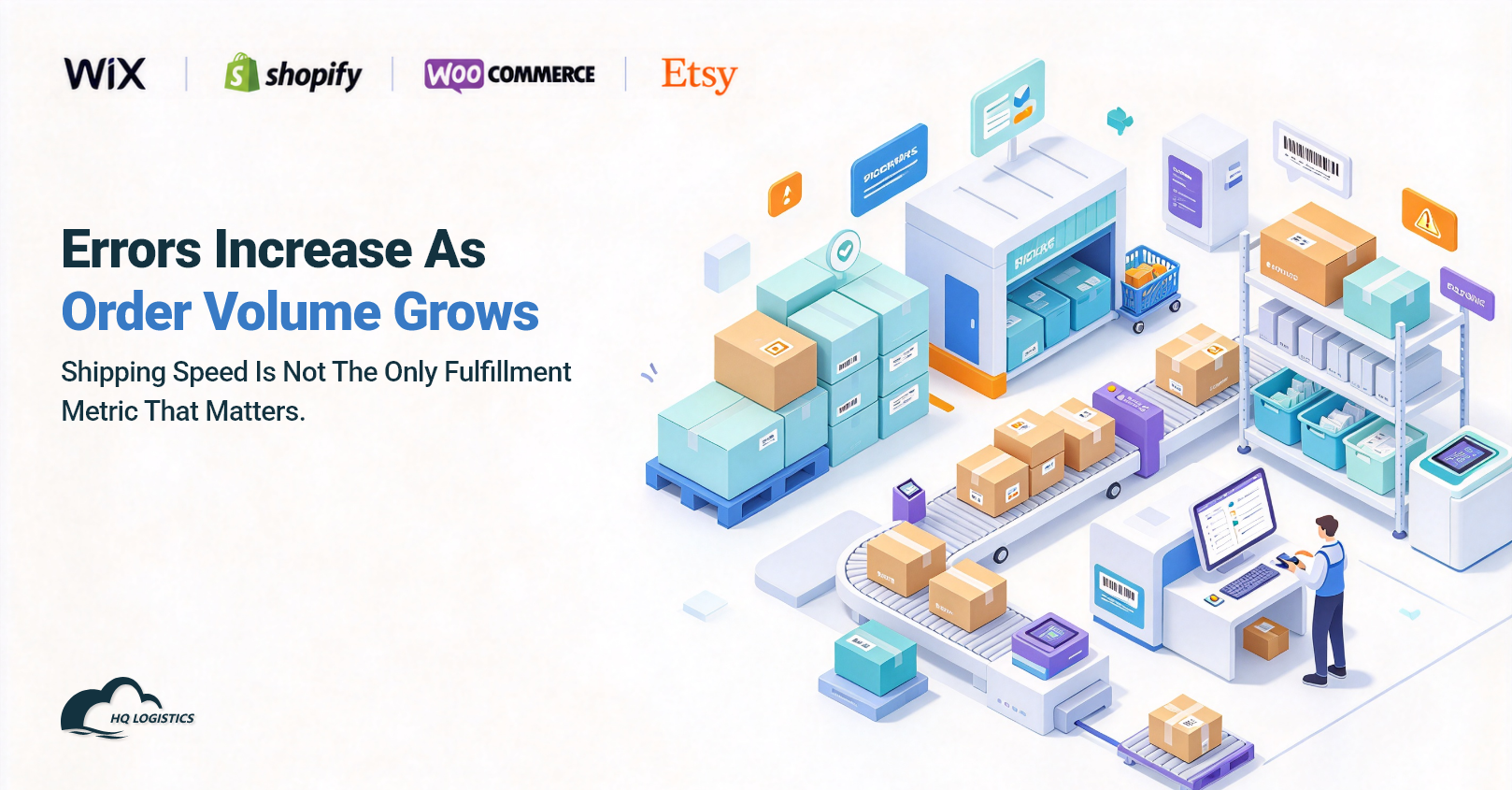
Signal 2: Errors Increase as Order Volume Grows
Shipping speed is not the only fulfillment metric that matters.
In fact, some operational problems appear before shipping speed noticeably declines.
As a supplier approaches its capacity limit, you may start seeing more:
Wrong products | Missing items | Incorrect quantities | Inventory discrepancies | Incorrect tracking information | Packing mistakes
For home products, these errors can be particularly expensive.
Imagine a customer orders a large home storage product but receives the wrong model.
The cost is not simply the original product.
You may also need to pay for customer service, return shipping, replacement shipping, repacking, and potentially the original transportation cost.
A single fulfillment error can quickly consume the margin from the order.
This is why growing brands should monitor fulfillment accuracy, not just fulfillment speed.
If order volume rises and error rates rise with it, your supplier may be struggling to scale its operations.
Signal 3: Costs Are Rising Faster Than Your Orders
Growing order volume should not automatically mean that every part of your fulfillment becomes more expensive.
Of course, some costs naturally change as your business grows.
But pay attention when new fees appear repeatedly.
You may start seeing:
Extended storage fees | Special handling fees | Peak-season surcharges | Extra packing fees | Additional processing fees
The important question is not simply whether your costs increased.
It is whether the additional cost comes with additional value.
If your supplier is charging more while inventory accuracy, fulfillment speed, quality control, and service remain unchanged, it may be time to review the entire fulfillment structure.
Growing brands should look at total fulfillment cost per order, rather than focusing only on the supplier's quoted product price.
A supplier with a slightly higher unit price may actually be more cost-effective if it provides better sourcing, fewer errors, better packaging, and more efficient fulfillment.
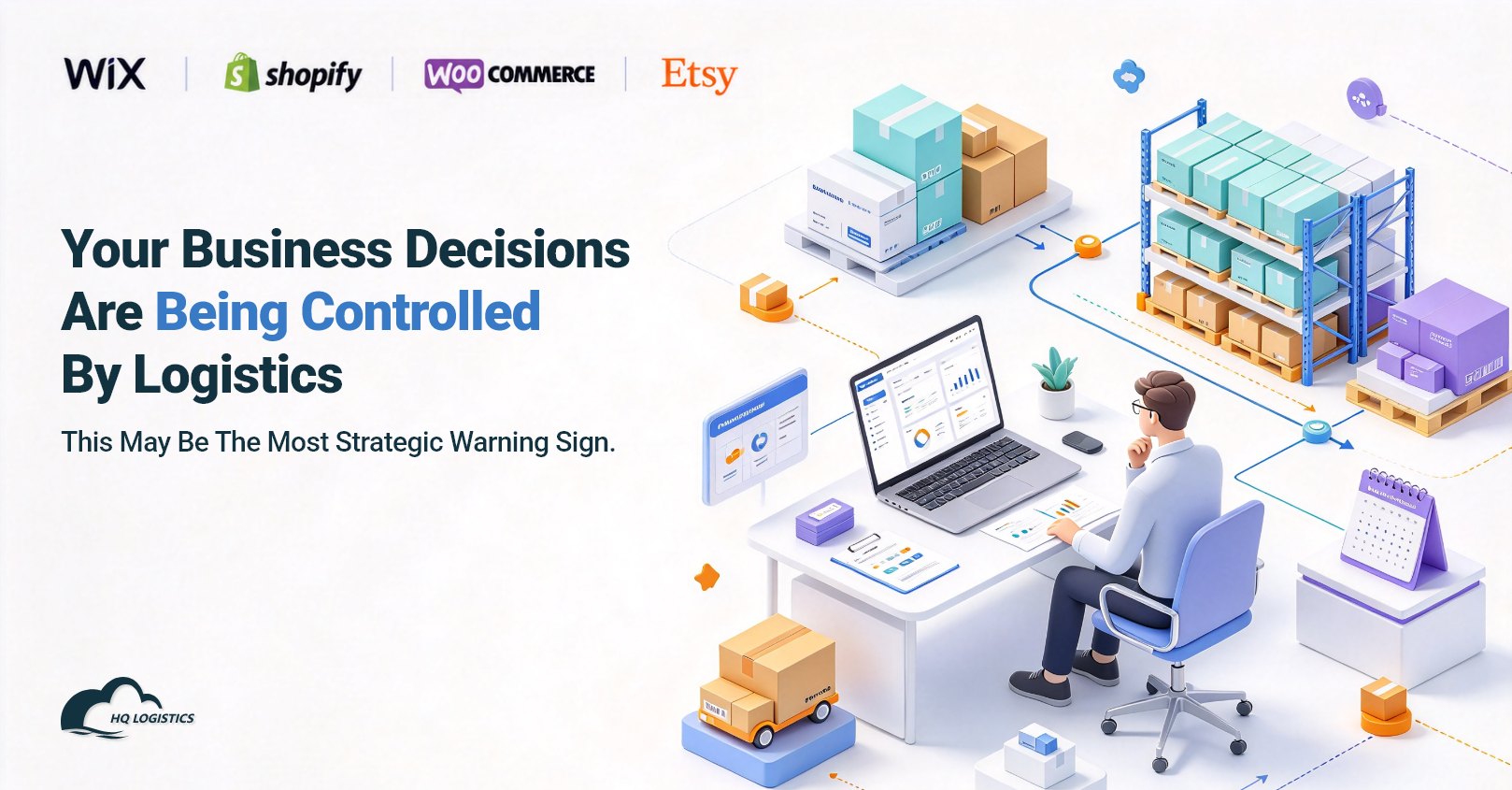
Signal 4: Your Business Decisions Are Being Controlled by Logistics
This may be the most strategic warning sign.
At some point, your supplier should support your business decisions—not determine them.
But imagine these conversations:
"We can't launch that new SKU because there isn't enough warehouse space."
"Let's delay the promotion because we're not sure we can process the extra orders."
"We can't add this sales channel because the supplier cannot connect with the platform."
"Let's not expand into another market because shipping is too complicated."
When logistics starts determining which products you can launch, which promotions you can run, or which channels you can enter, fulfillment has become a business constraint.
That is more serious than a delayed shipment.
Your supplier is no longer simply creating an operational inconvenience.
The supply chain is limiting your growth strategy.
Signal 5: Your Supplier Can Take Orders—but Can't Have a Real Planning Conversation
A supplier saying "No problem" is not necessarily a plan.
Growing brands need more detailed conversations.
For example:
How much additional inventory should we prepare before peak season?
Can you support five new SKUs next month?
How will you handle a sudden 2x increase in orders?
Can inventory be allocated across different fulfillment locations?
Can you support Shopify, WooCommerce, Etsy, or other sales channels?
What happens if one supplier cannot meet production requirements?
A scalable supplier should be able to discuss these questions with actual operational details.
That may include inventory forecasts, supplier capacity, warehouse space, processing capacity, packaging requirements, shipping options, and contingency plans.
If every question receives a vague "yes" without a concrete plan, your supplier may be treating your business primarily as an order volume rather than a long-term partnership.
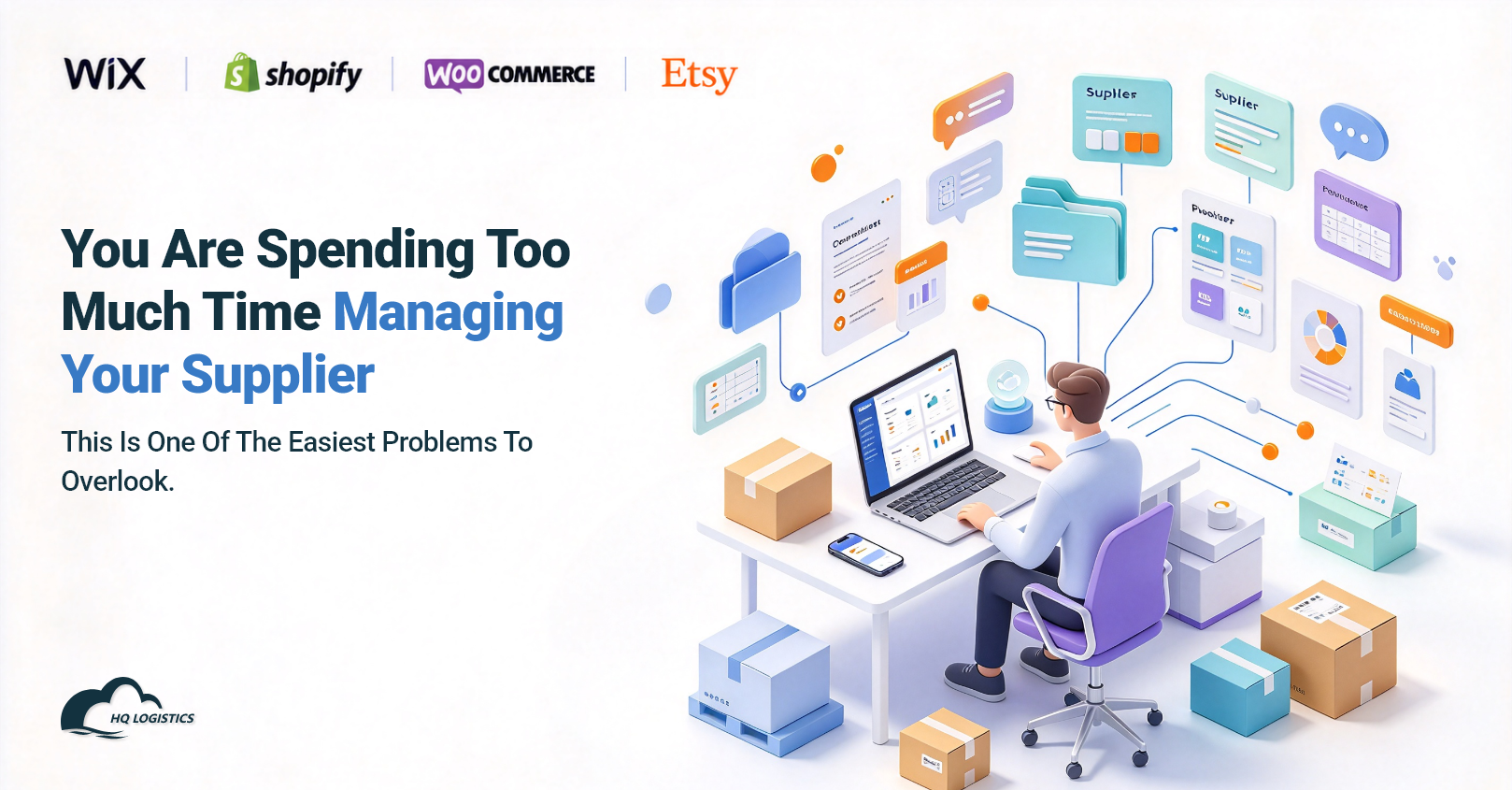
Signal 6: You Are Spending Too Much Time Managing Your Supplier
This is one of the easiest problems to overlook.
At first, supplier management may take only a few minutes a day.
Then your business grows.
Suddenly, you are checking inventory every morning.
You are asking where delayed orders are.
You are comparing supplier invoices.
You are confirming product specifications.
You are checking whether packaging has arrived.
You are following up on missing tracking numbers.
You are resolving quality issues.
You are coordinating different suppliers.
You are handling customer complaints caused by fulfillment problems.
Eventually, the founder or operations manager may spend hours every week managing logistics.
That time has a real business cost.
Every hour spent chasing fulfillment problems is an hour that cannot be spent on:
Product development | Marketing | Customer acquisition | New sales channels | Brand building | Strategic partnerships
If your team is spending a significant amount of time managing the supplier instead of managing the business, your current fulfillment setup may no longer be scalable.
Should You Switch Suppliers—or Change the Fulfillment Model?
Not every supplier problem means you need to replace your factory.
Sometimes the factory is perfectly capable of producing your products.
The real problem may be the fulfillment structure between the factory and your customers.
This is an important distinction.
You may have a good product supplier but an inefficient warehouse.
You may have competitive factory pricing but poor inventory management.
You may have reliable production but no custom packaging process.
You may have multiple suppliers but no central partner coordinating them.
In these situations, switching every supplier may create unnecessary disruption.
A better approach may be to review the entire supply chain.
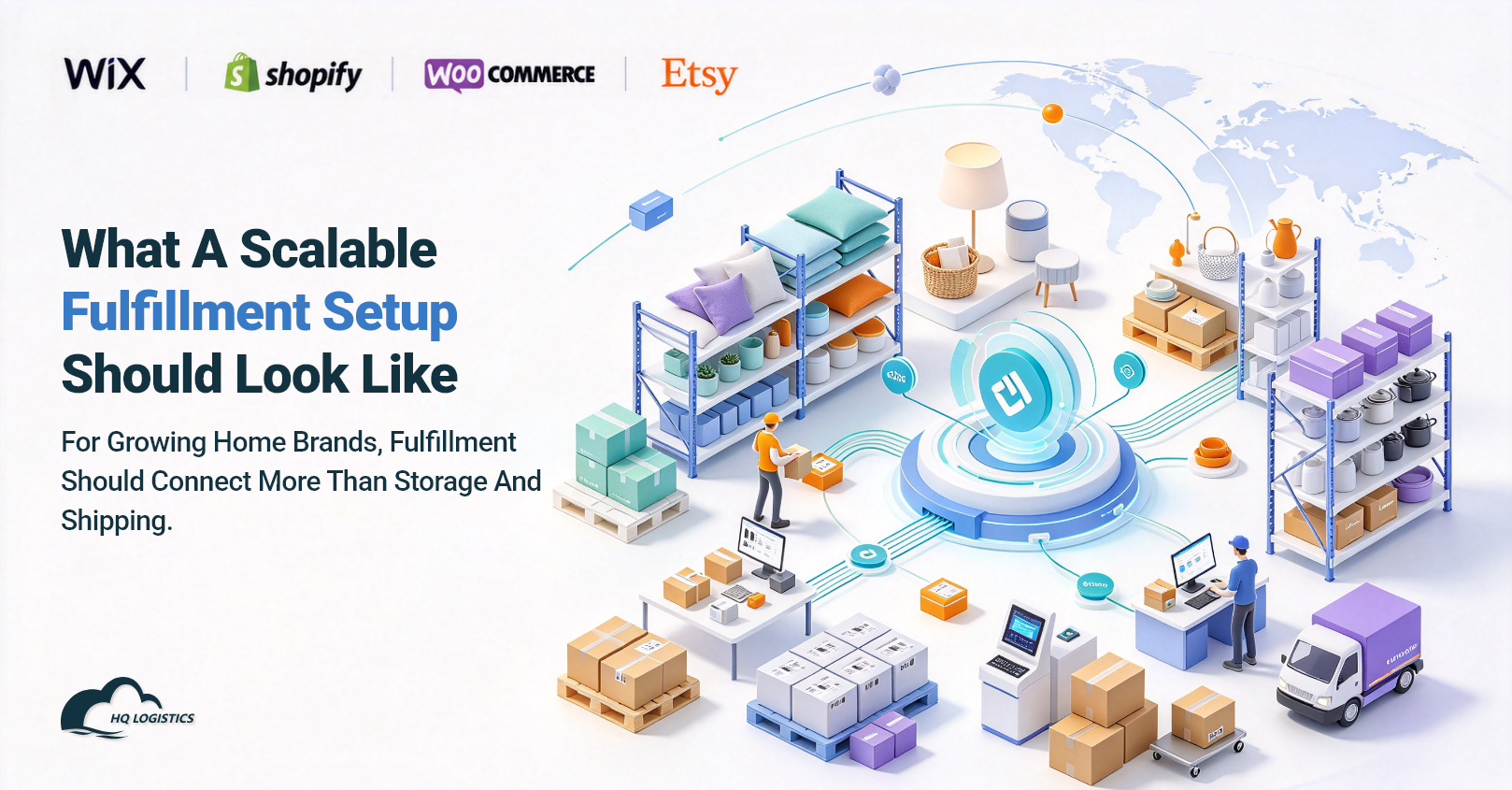
What a Scalable Fulfillment Setup Should Look Like
For growing home brands, fulfillment should connect more than storage and shipping.
A scalable system can connect:
Sourcing → Supplier Management → Quality Control → Inventory Planning → Warehousing → Custom Packaging → Order Fulfillment → Global Shipping
Each part affects the next.
Better sourcing can reduce product costs.
Better supplier management can improve production reliability.
Quality control can reduce returns and replacements.
Inventory planning can reduce stockouts.
Custom packaging can improve the customer experience.
Better fulfillment can reduce processing delays.
The result is a supply chain designed around growth rather than simply handling today's orders.
Why a 4PL Approach Can Help Growing Home Brands
Traditional 3PL fulfillment focuses mainly on warehousing and logistics.
A 4PL approach goes further by coordinating multiple parts of the supply chain.
For a growing home brand, that can mean working with a partner that helps manage:
Source
— Find and compare suitable suppliers.Optimize
— Review product costs, packaging, inventory, and logistics.Manage
— Coordinate suppliers, quality control, and inventory.Fulfill
— Pick, pack, process, and ship orders.Scale
— Build capacity for higher order volumes and new markets.This can be especially useful for brands working with multiple home product suppliers.
Instead of managing every supplier, warehouse, packaging provider, and logistics channel separately, you can have one partner coordinating the broader fulfillment process.
How HQ Supports Growing Home Brands
HQ provides an integrated fulfillment and supply chain solution covering sourcing, supplier management, quality inspection, warehousing, inventory management, custom packaging, fulfillment, and global shipping.
For eligible products and routes, HQ offers 3–8 day delivery options.
HQ also provides fulfillment capacity of up to 20,000 orders per day, giving growing brands more room to handle higher order volumes.
For eligible brands processing 50+ orders per day, HQ can provide free custom packaging support, helping brands move from generic supplier packaging toward a more consistent branded experience.
The goal is not simply to ship more boxes.
It is to create a fulfillment structure that can support the next stage of your business.
A Simple Supplier Health Check
Before deciding whether to switch suppliers, review your operation honestly.
Peak-season performance:
Does your supplier have a clear plan for demand spikes?Fulfillment accuracy:
Are mistakes increasing as your order volume grows?Cost structure:
Are additional fees appearing faster than the value you receive?Business flexibility:
Can you launch products, run promotions, and expand channels without supplier limitations?Planning support:
Can your supplier provide specific operational plans instead of general promises?Management time:
How much time does your team spend every week fixing supplier-related problems?If several of these areas are becoming problems at the same time, it may be time to review your current supply chain.
You Don't Have to Wait for a Major Failure
One common mistake is waiting until the supplier completely fails.
By then, you may already have delayed orders, unhappy customers, inventory problems, and lost sales.
A better approach is to review your fulfillment setup while things are still manageable.
Look at your current order volume.
Look at your expected growth.
Review your error rate.
Calculate your total fulfillment costs.
Check how much time your team spends managing suppliers.
Then ask one simple question:
Can our current supplier support the business we want to build next year—not just the business we have today?
If the answer is uncertain, it may be time to start evaluating alternatives.
FAQs
When should a home brand switch suppliers?
A brand should consider reviewing its supplier when recurring capacity problems, fulfillment errors, rising costs, limited flexibility, poor planning support, or excessive management time begin affecting growth.
Does slow shipping always mean I should switch suppliers?
No. Shipping delays are only one indicator. Inventory accuracy, fulfillment errors, cost increases, warehouse capacity, supplier communication, and business flexibility should also be considered.
What is supplier capacity in ecommerce?
Supplier capacity includes more than manufacturing. It can include production capacity, warehouse space, inventory processing, picking and packing capacity, quality control, packaging, and shipping operations.
Can I keep my factory but change my fulfillment partner?
Yes. A brand may keep its existing manufacturers while changing or adding a fulfillment partner to improve inventory management, packaging, order processing, and logistics coordination.
Why is 4PL useful for growing home brands?
A 4PL model can connect sourcing, supplier management, inventory planning, quality control, warehousing, packaging, fulfillment, and logistics, giving growing brands a more coordinated supply chain.

Final Thoughts
More orders should create opportunities—not operational emergencies.
If every peak season creates the same problems, fulfillment errors rise with order volume, costs keep increasing, or your team spends too much time managing suppliers, your business may be reaching the limits of its current supply chain.
You do not necessarily need to replace every supplier.
But you may need a fulfillment structure that is built for the next stage of growth.
Your supplier should not be the reason you slow down your business.
With the right sourcing, inventory, fulfillment, packaging, and logistics strategy, growing home brands can build a supply chain that is ready for more orders—not overwhelmed by them.
More Orders Are Coming. Make Sure Your Fulfillment Is Ready.