Scale Your US Orders with HQ Fulfillment
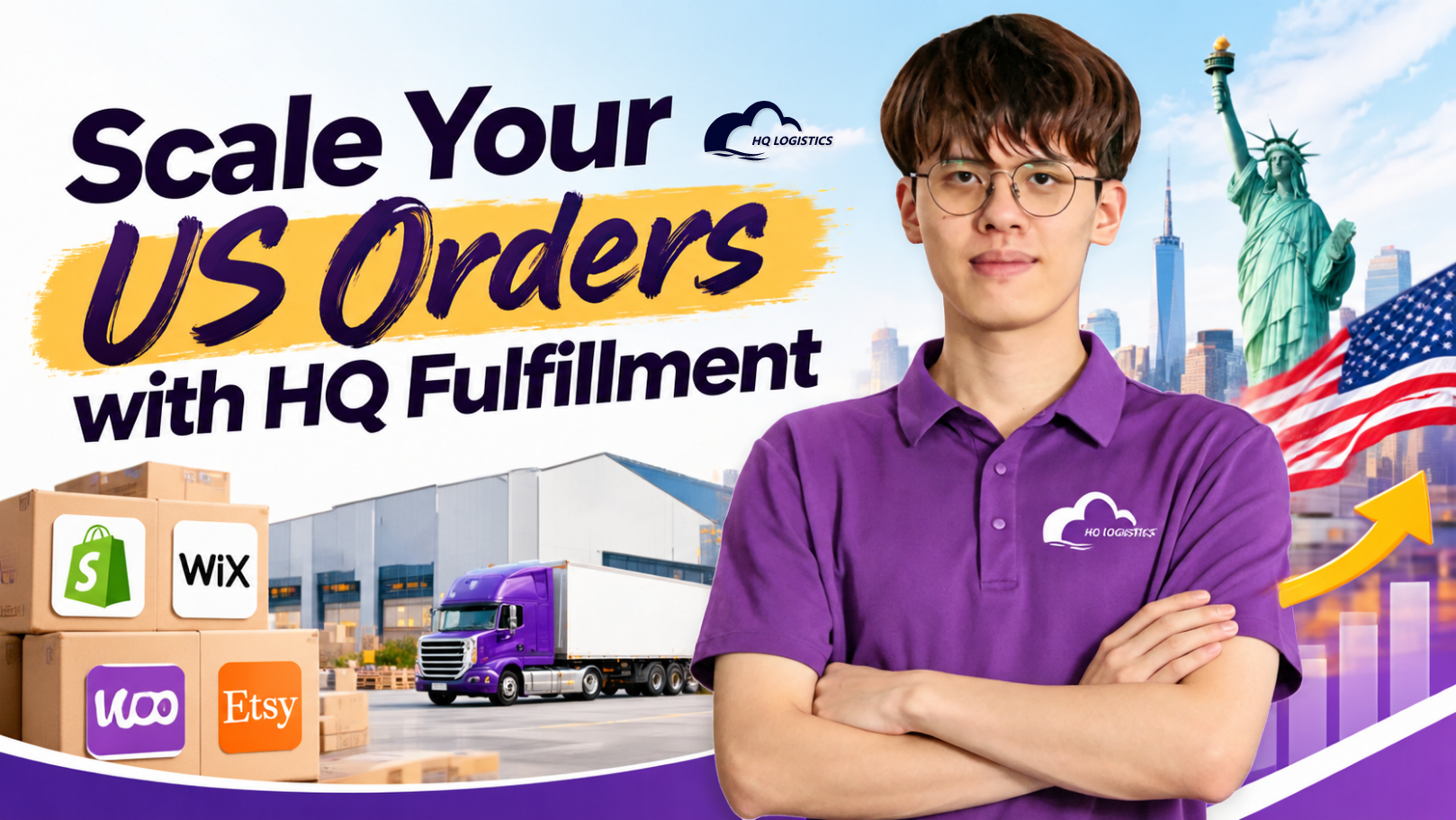
Scale Your US Orders with HQ Fulfillment
US fulfillment becomes more important as your ecommerce business grows.
At the beginning, shipping individual orders directly from China may be enough.
But as your US orders increase, fulfillment becomes more complicated.
You need reliable product sourcing, accurate quality control, warehouse storage, efficient order processing, competitive shipping rates, and predictable delivery times.
More orders should mean more growth—not more fulfillment headaches.
That's where HQ Fulfillment can help.
HQ connects China sourcing, warehousing, quality inspection, packing, fulfillment, and US shipping
in one workflow, giving growing Shopify and DTC brands a more coordinated way to manage their US orders.In this guide, we'll explain how HQ can help ecommerce brands scale US orders from China while keeping fulfillment more organized, flexible, and cost-conscious.
Why US Fulfillment Becomes More Important as Your Store Grows
When your store is generating only a few orders per day, managing fulfillment manually may seem simple.
You source the product, receive the order, arrange shipping, and send it to the customer.
But once order volume increases, the number of tasks increases too.
More products mean more supplier communication.
More orders mean more picking and packing.
More inventory means more warehouse management.
More US customers mean greater pressure on shipping speed and delivery reliability.
Eventually, fulfillment can become a bottleneck.
Your store may be ready to grow, but your fulfillment process may not be.
A scalable fulfillment setup should help you move from:
Supplier → Order → Shipping → Customer
to a more organized process:
Sourcing → QC → Warehouse → Order Processing → Packing → US Shipping → Customer
That's the approach behind HQ's US fulfillment solution.
1. Source Products From China
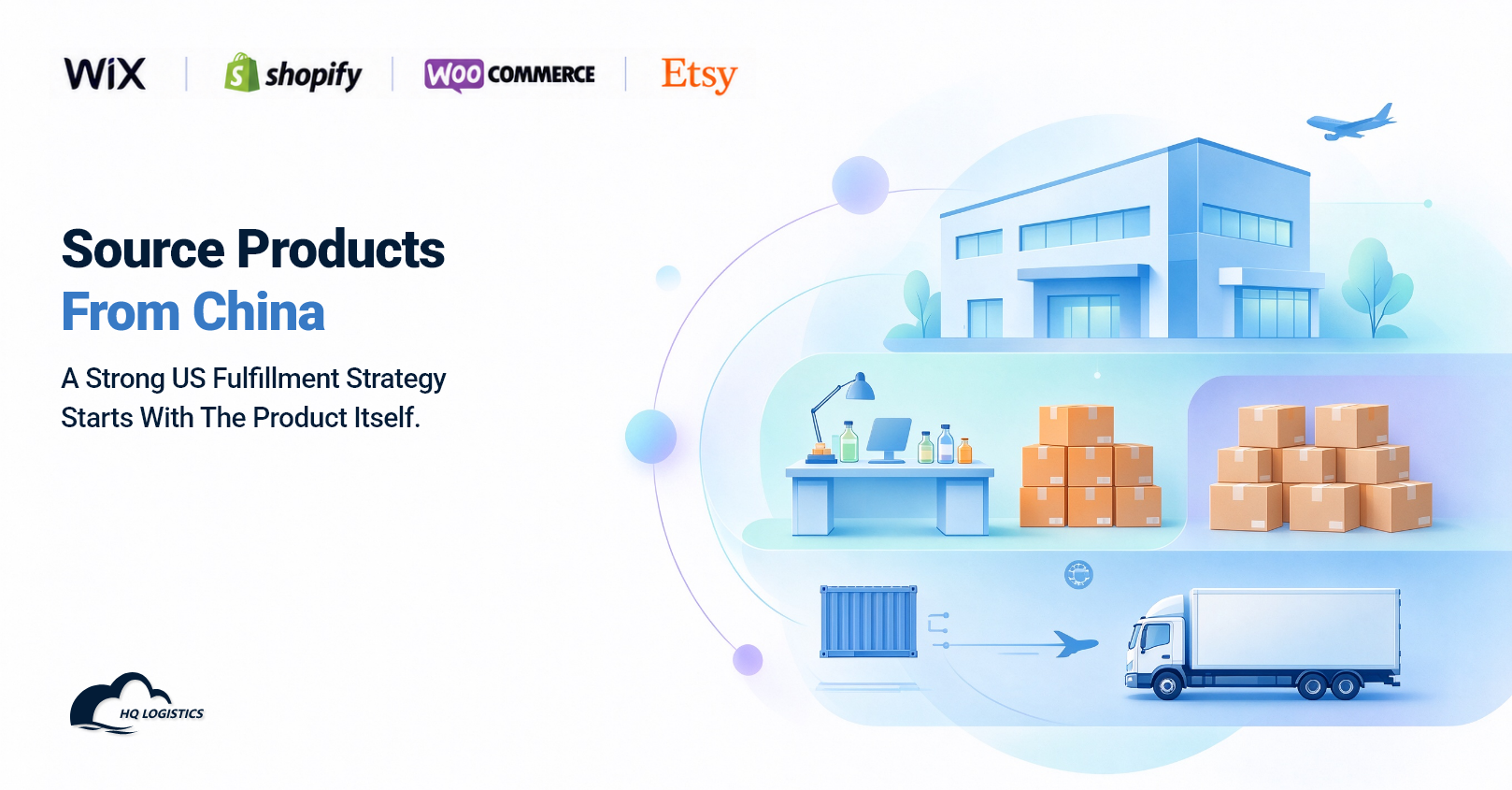
A strong US fulfillment strategy starts with the product itself.
For many ecommerce brands, China remains an important sourcing market because of its broad supplier network and manufacturing capabilities.
But finding a supplier is only the beginning.
Growing brands also need to consider:
Product quality | Supplier reliability | Product cost | Production capacity | Packaging | Replenishment speed | Shipping requirements
HQ can help brands coordinate product sourcing before inventory enters the fulfillment process.
This means you don't necessarily need to manage sourcing, warehousing, and shipping as completely separate operations.
The workflow can be connected:
Product Sourcing → Quality Inspection → Warehouse → Fulfillment → US Delivery
This can make it easier to manage growing order volume while keeping more parts of the supply chain connected.
2. Store Inventory in China Before Orders Arrive
One of the biggest advantages of a structured fulfillment model is having inventory ready before customer orders arrive.
Instead of purchasing and shipping products one order at a time, growing brands can consolidate inventory and prepare products in advance.
HQ's US fulfillment campaign highlights free warehouse storage
as part of the fulfillment solution.This can help sellers:
Reduce repeated supplier coordination | Consolidate inventory | Prepare products before orders arrive | Simplify order processing | Improve fulfillment efficiency
For brands with growing US demand, having inventory prepared in a warehouse can also make it easier to respond when sales suddenly increase.
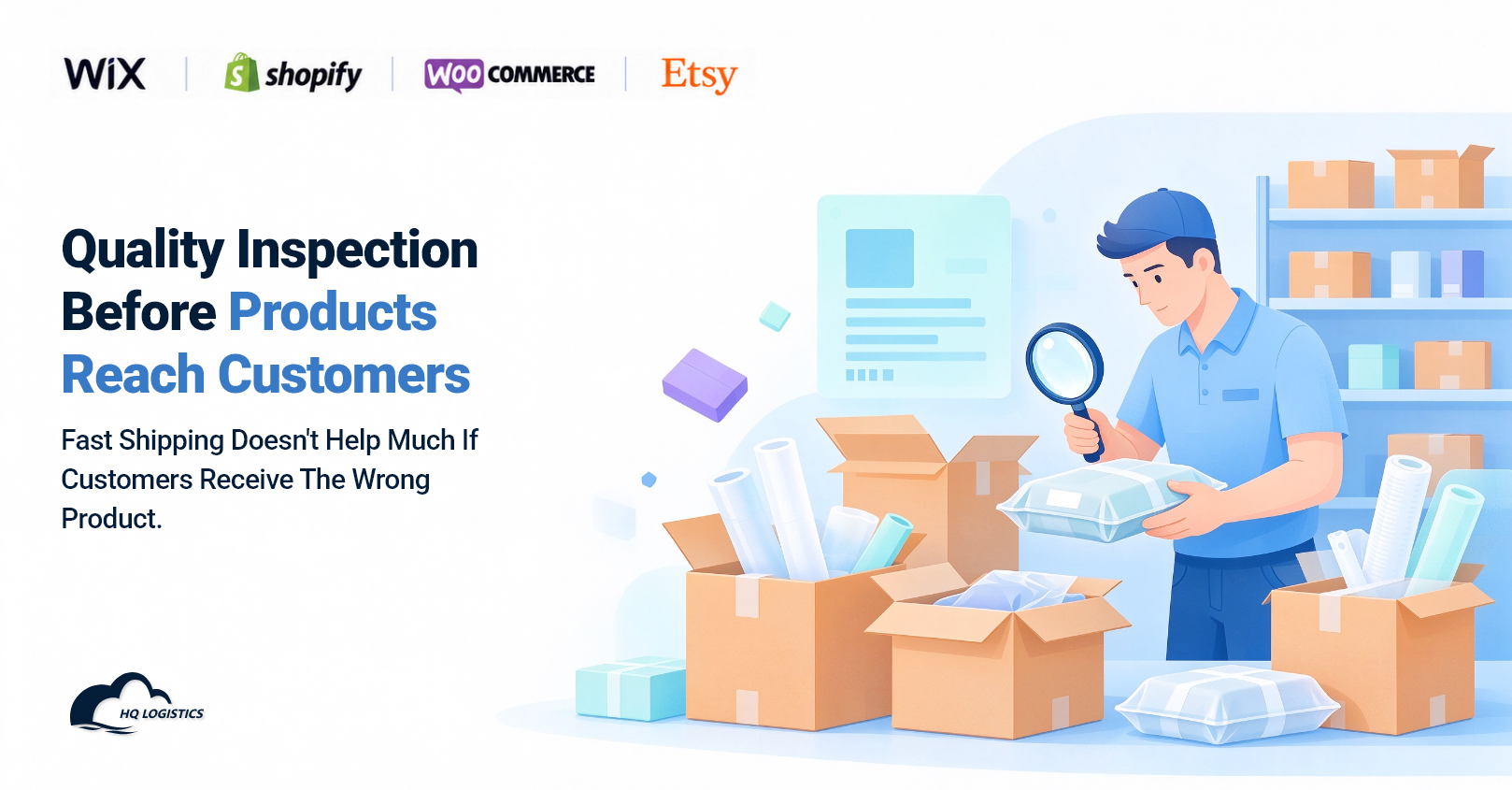
3. Quality Inspection Before Products Reach Customers
Fast shipping doesn't help much if customers receive the wrong product.
As order volume increases, quality control becomes increasingly important.
A small defect rate can turn into a large number of customer complaints when you are processing hundreds or thousands of orders.
Common problems include:
Wrong product | Incorrect size or color | Damaged items | Missing components | Poor packaging | Product defects
HQ includes quality inspection
as part of its US fulfillment workflow.A basic workflow can be:
Supplier → Product Inspection → Warehouse Receiving → Order Fulfillment → Customer
This helps move quality control earlier in the supply chain instead of discovering problems after customers receive their orders.
4. Start US Shipping From Just 0.05 KG
Shipping costs can become an important consideration when you scale US orders.
Not every ecommerce product is large or heavy.
Many products weigh only a few hundred grams, making minimum billing weight particularly important.
The HQ campaign highlights US shipping from 0.05 KG minimum billing, giving sellers an option for lightweight products.
The rate structure varies by weight segment, so sellers should request a current quote based on their actual product, packaging, destination, and order volume.
This is particularly relevant for categories such as:
Fashion accessories | Beauty accessories | Small electronics | Pet accessories | Lifestyle products | Small household products
For growing stores, even small differences in per-order shipping costs can become significant when multiplied across hundreds or thousands of monthly orders.
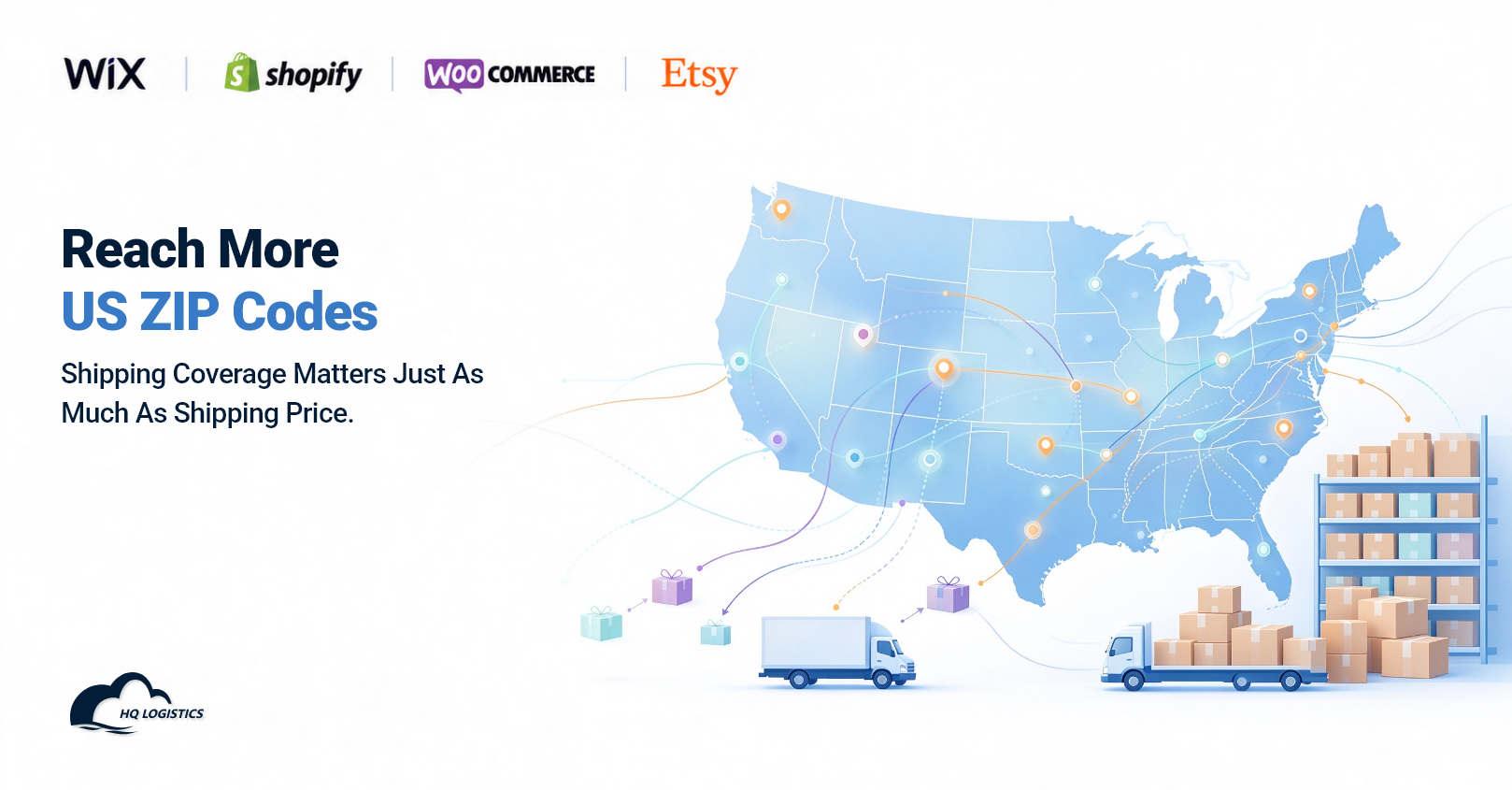
5. Reach More US ZIP Codes
Shipping coverage matters just as much as shipping price.
A low shipping rate is not particularly useful if the route cannot serve your customers effectively.
HQ's campaign materials highlight a commercial US route covering 9,000+ ZIP codes.
For ecommerce brands selling across the United States, broader route coverage can help create a more consistent fulfillment structure.
Instead of building a separate shipping solution for every customer location, brands can work with a more standardized US fulfillment route.
This is particularly useful when your store starts receiving orders from customers across multiple states.
6. Choose the Right Shipping Option for Your Products
Not every product needs exactly the same shipping solution.
Product weight, dimensions, destination, order volume, and shipping requirements can all affect the most suitable route.
The campaign materials show different US shipping options and weight-based pricing structures, including commercial and general-goods routes.
For example, the US fulfillment campaign highlights: 5–9 day transit as a key selling point, while another campaign version lists 6–12 day transit for a general-goods option.
This means sellers should select the appropriate service based on their actual product and fulfillment requirements rather than assuming every shipment will have the same transit time.
For a specific store, the best approach is to provide:
Product information | Product weight | Package dimensions | Monthly order volume | Main US destinations
Then compare the available fulfillment and shipping options.
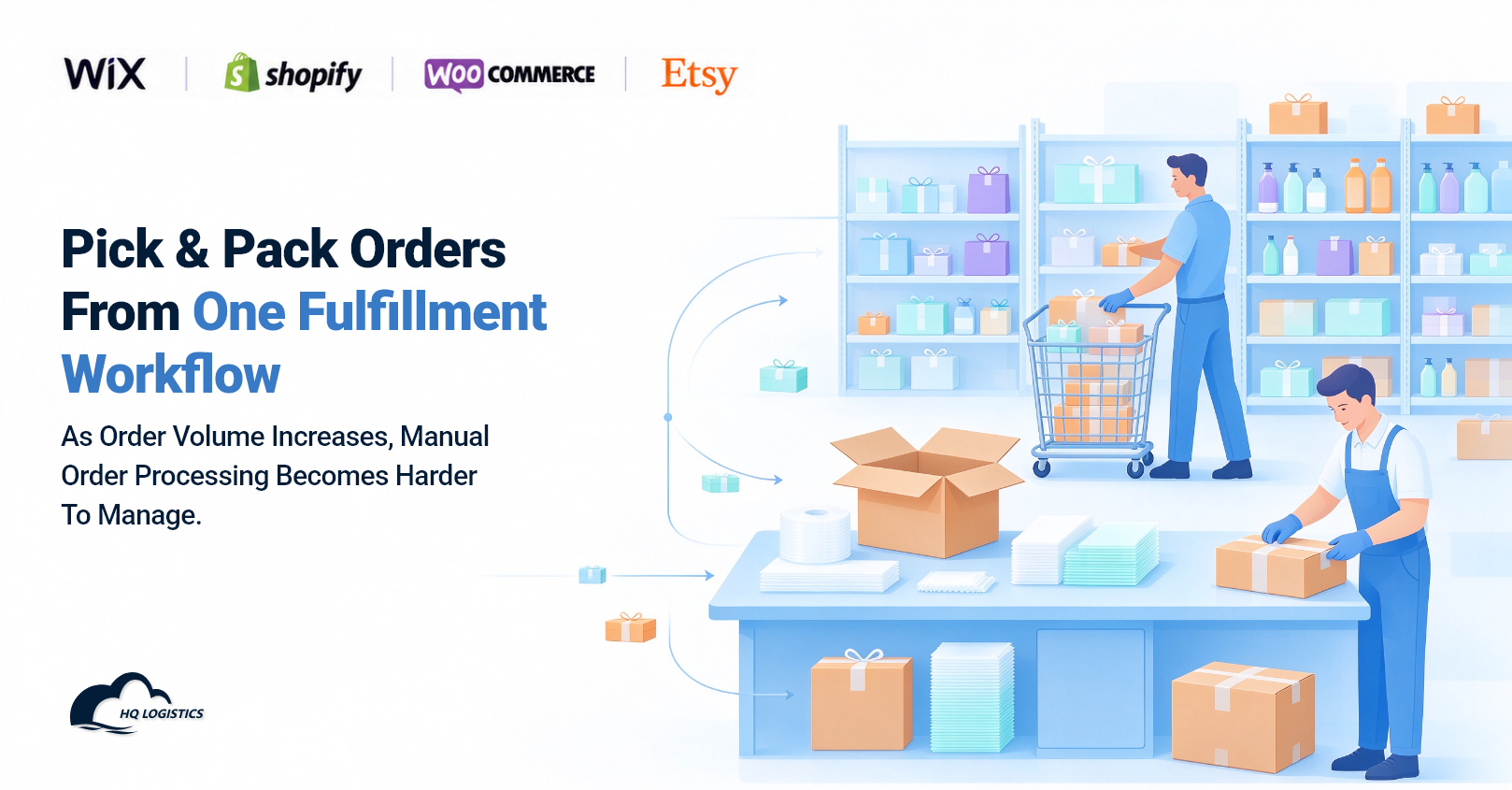
7. Pick & Pack Orders From One Fulfillment Workflow
As order volume increases, manual order processing becomes harder to manage.
A growing brand needs a consistent fulfillment process.
A typical workflow can look like:
Order Received → Inventory Check → Picking → Quality Check → Packing → Shipping → Tracking
HQ includes pick & pack and order fulfillment in its US fulfillment solution.
This means sellers can move away from managing every individual shipment themselves.
Instead, the fulfillment team can handle the operational process while the brand focuses on:
Marketing | Product development | Customer acquisition | Store optimization | Business growth
That's an important shift when a Shopify store moves from testing products to scaling a real brand.
8. Add Custom Packaging as Your Brand Grows
A growing ecommerce brand eventually needs more than a product in a generic package.
Customers increasingly notice the complete buying experience.
Custom packaging can include:
Branded mailers | Custom boxes | Thank-you cards | Product inserts | Hangtags | Branded labels
HQ's US fulfillment campaign specifically includes custom packaging
as part of the fulfillment workflow.This allows brands to connect fulfillment with branding.
Instead of treating packaging as a separate task, you can integrate it into the order fulfillment process:
Inventory → Custom Packaging → Pick & Pack → Shipping → Customer
For growing brands, this can help create a more consistent customer experience across US orders.
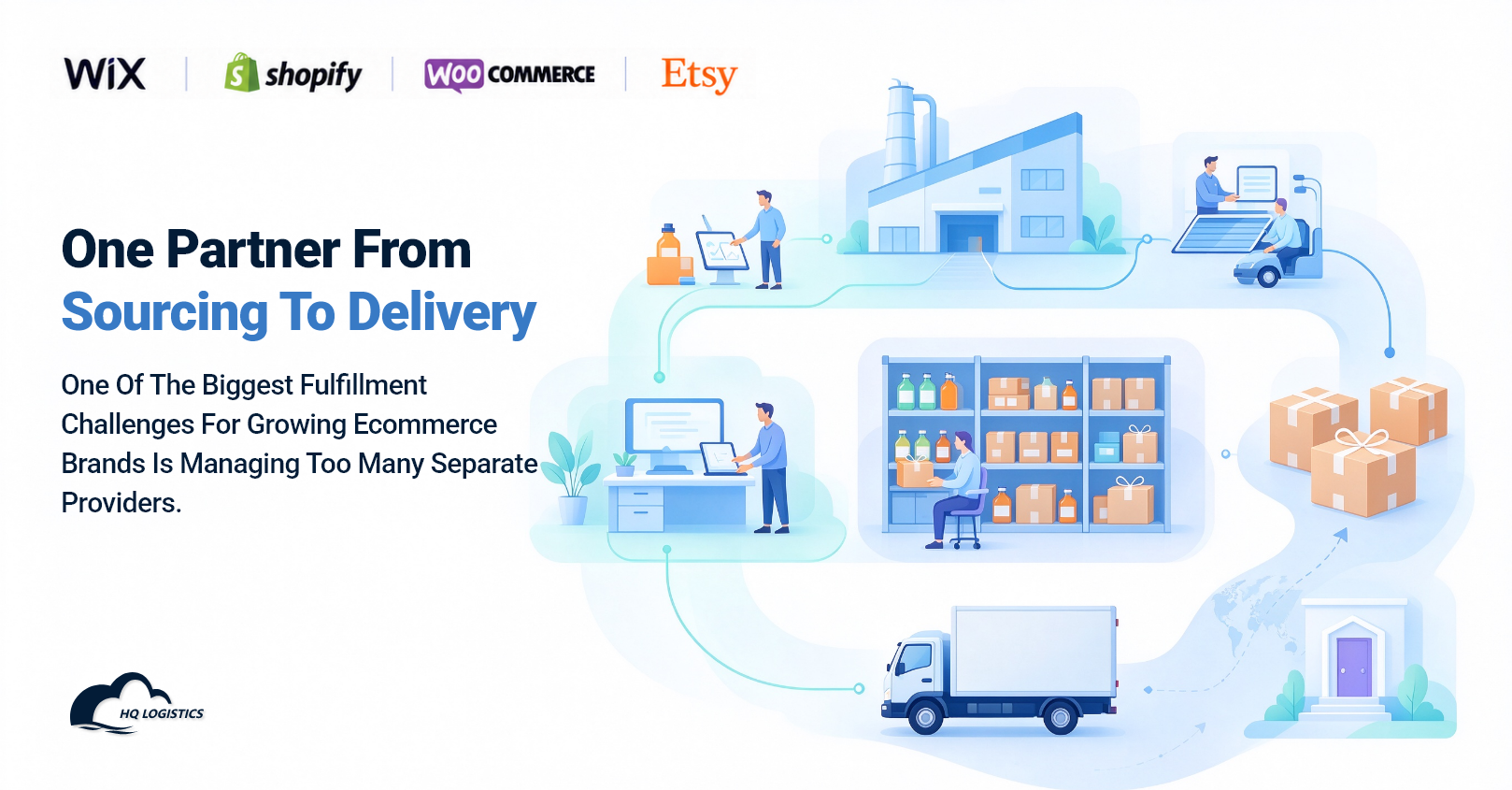
9. One Partner From Sourcing to Delivery
One of the biggest fulfillment challenges for growing ecommerce brands is managing too many separate providers.
You may have:
A product sourcing agent | A supplier | A quality inspection company | A warehouse | A packing company | A shipping agent
Every additional provider creates another communication point.
That can become difficult when order volume increases.
HQ's model connects these steps into one workflow:
Source → QC → Warehouse → Fulfillment → Delivery
The campaign describes this as a way for Shopify and DTC brands to manage China fulfillment in one place.
The benefit is not simply convenience.
A connected workflow can also make it easier to identify where a fulfillment problem is happening.
If inventory is delayed, you can investigate the sourcing or production stage.
If products are damaged, you can review quality control and packaging.
If shipping costs are too high, you can review the shipping route and product dimensions.
The entire supply chain becomes easier to analyze.
10. Scale US Orders Without Rebuilding Your Fulfillment System
Growth often happens faster than expected.
A product that generates 10 orders per day can suddenly generate 50.
Then 100.
Then several hundred.
Your fulfillment model needs to be able to adapt.
The goal is not simply to find the cheapest shipping option for today's orders.
The goal is to build a fulfillment structure that can support tomorrow's order volume.
A scalable US fulfillment strategy should provide:
Reliable sourcing | Warehouse capacity | Quality inspection | Inventory management | Pick & pack | Custom packaging | Stable shipping | Tracking visibility | Replenishment support
This gives your brand a stronger foundation for continued growth.
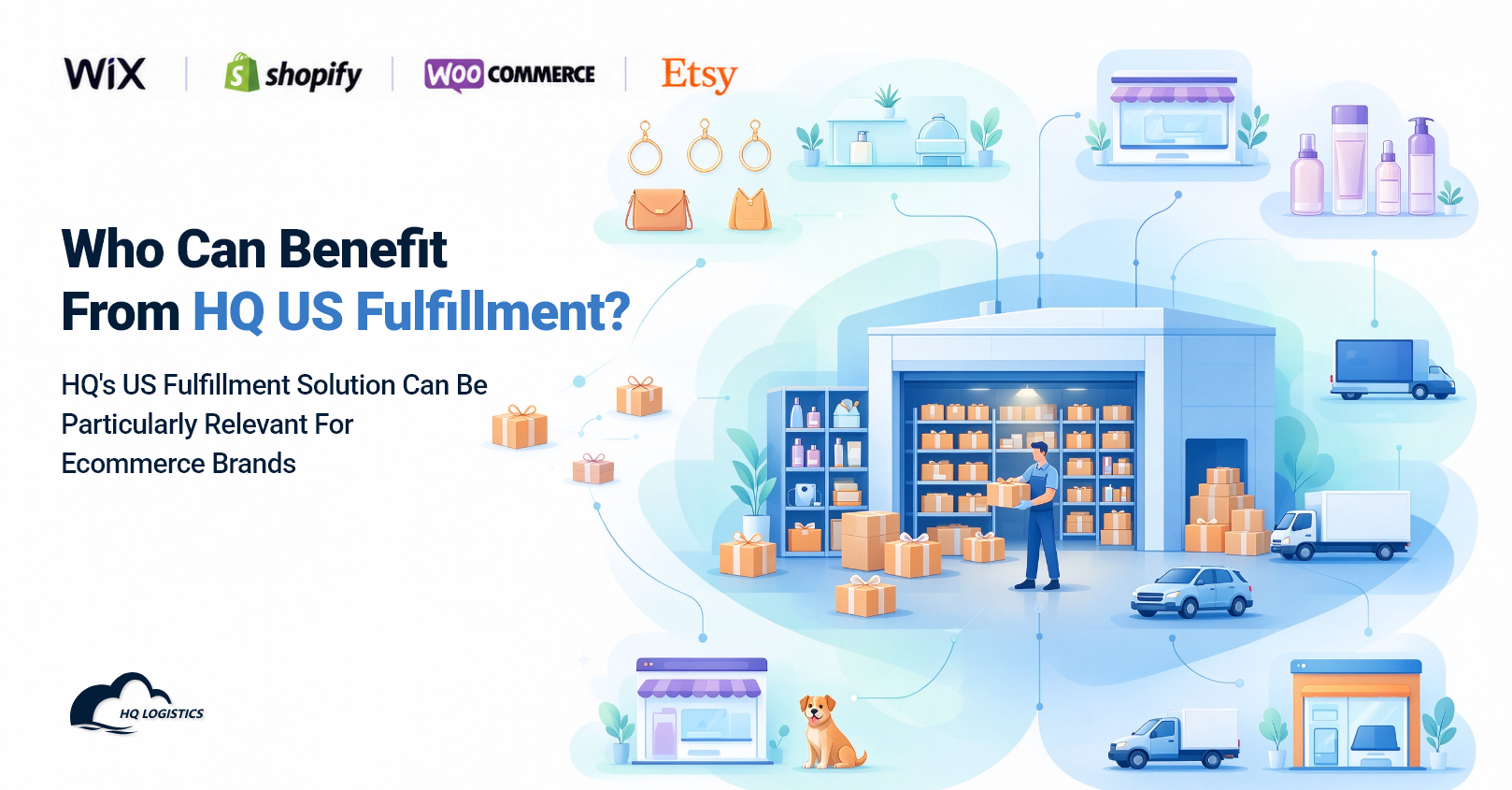
Who Can Benefit From HQ US Fulfillment?
HQ's US fulfillment solution can be particularly relevant for ecommerce brands that:
Already Sell to US Customers
If the US is one of your main markets, improving your fulfillment setup can have a direct impact on your customer experience.
Are Increasing Order Volume
When daily orders increase, manual fulfillment becomes more difficult to maintain.
Source Products From China
Brands already sourcing from China can benefit from connecting sourcing and fulfillment into one workflow.
Need Better Shipping Options
Different products and destinations may require different shipping solutions.
Want Custom Packaging
Brands moving beyond generic dropshipping can integrate branded packaging into their fulfillment process.
Need a More Integrated Partner
If you're currently managing sourcing, QC, warehousing, packing, and shipping through multiple providers, an integrated fulfillment partner may simplify operations.
HQ US Fulfillment: From China to Your US Customers
The basic workflow is simple:
Product Sourcing
↓
Quality Inspection
↓
China Warehouse
↓
Inventory Preparation
↓
Pick & Pack
↓
US Shipping
↓
Customer Delivery
Instead of managing each stage separately, HQ can coordinate the process as one fulfillment workflow.
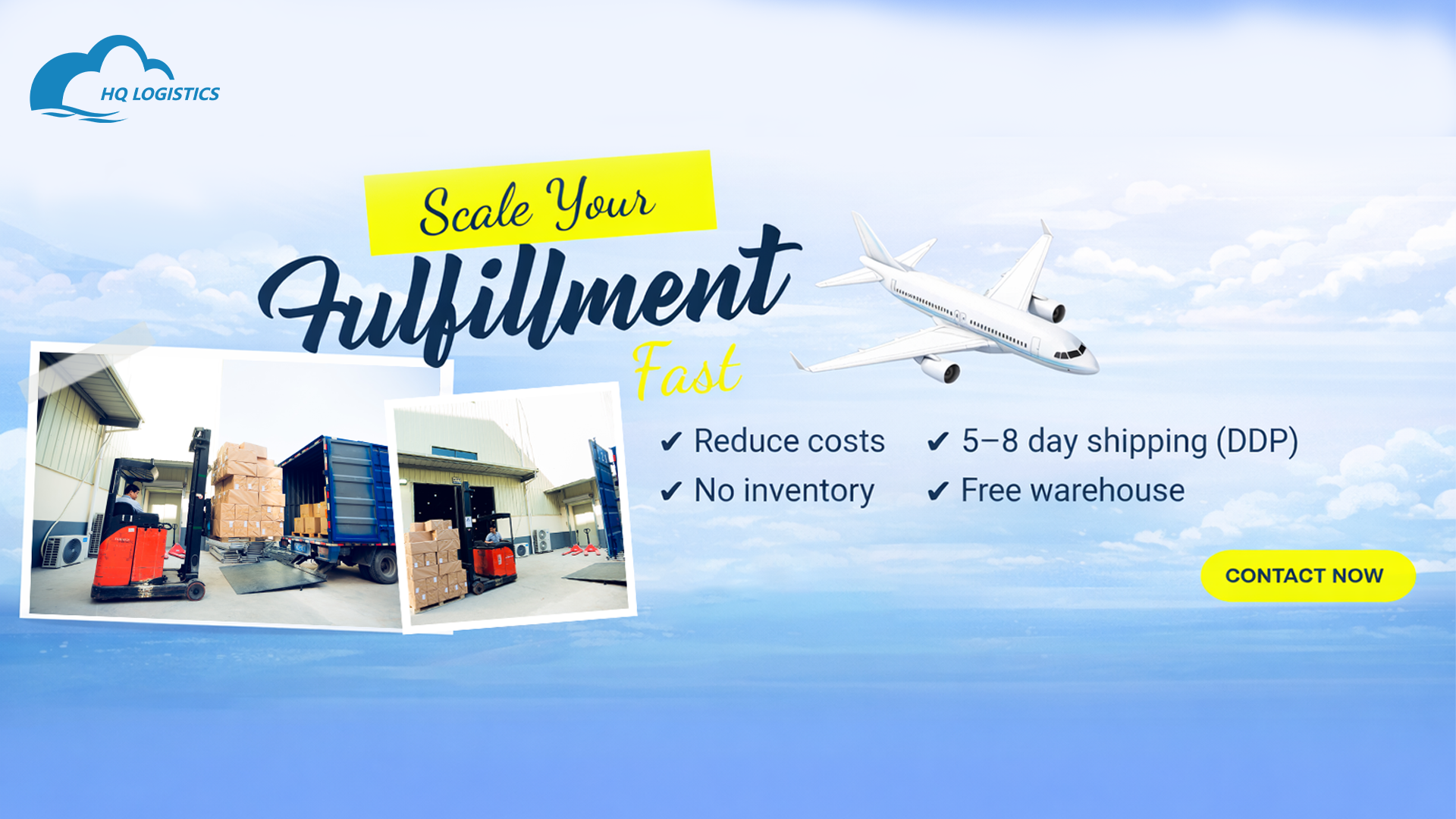
The current campaign highlights US shipping from 0.05 KG, 5–9 day transit for the featured service, 9,000+ ZIP codes for the commercial route, free warehouse storage, quality inspection, pick & pack, custom packaging, and order fulfillment.
Because shipping availability and rates can vary by product, weight, dimensions, and destination, sellers should confirm the current quote before planning a large inventory shipment.
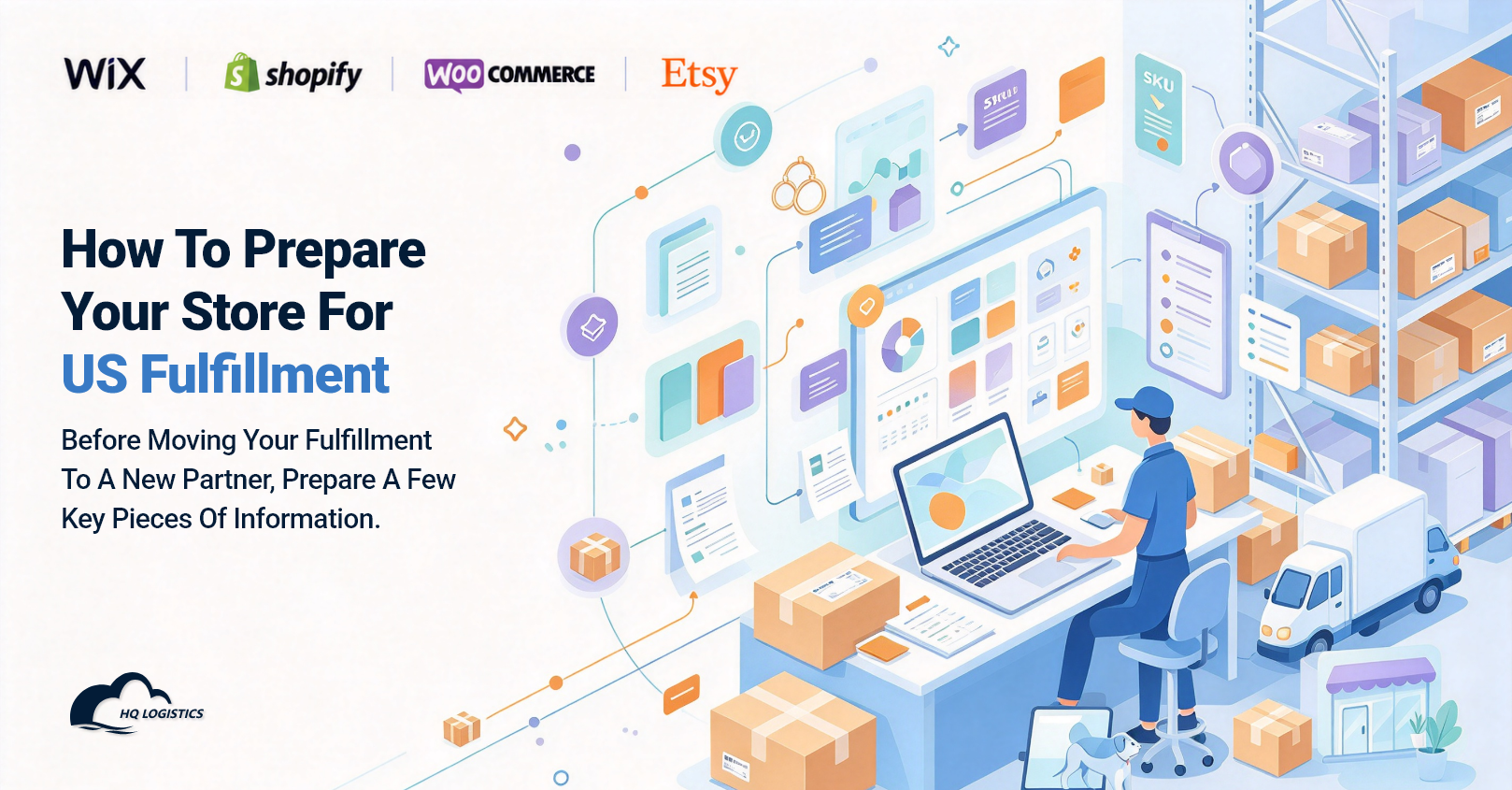
How to Prepare Your Store for US Fulfillment
Before moving your fulfillment to a new partner, prepare a few key pieces of information.
Product Information
Provide product name, specifications, material, dimensions, weight, variations, and packaging requirements.
Order Volume
Share your current daily or monthly US order volume and your expected growth.
Shipping Destinations
Identify your main US states, ZIP codes, and customer distribution.
Product Requirements
Tell your fulfillment partner whether products require special handling, custom packaging, labeling, or quality inspection.
Inventory Plan
Decide which products should be stocked regularly and which products should be ordered only after demand is confirmed.
The more information you provide, the easier it is to build a fulfillment plan around your actual business.
Don't Wait Until Fulfillment Becomes a Bottleneck
Many ecommerce brands only review their fulfillment strategy after something goes wrong.
A supplier runs out of stock.
Shipping becomes too expensive.
Orders take too long.
Customers start asking where their packages are.
The warehouse cannot keep up.
By then, changing the fulfillment system becomes much more difficult.
A better approach is to evaluate your fulfillment structure before your next growth stage.
Ask yourself:
Can my current supplier support my US order growth?
Can I maintain product quality as volume increases?
Can I get competitive shipping rates for lightweight products?
Can I store inventory without unnecessary pressure?
Can my fulfillment partner handle custom packaging?
Can I track the entire process from sourcing to delivery?
If several answers are no, it may be time to upgrade your fulfillment setup.
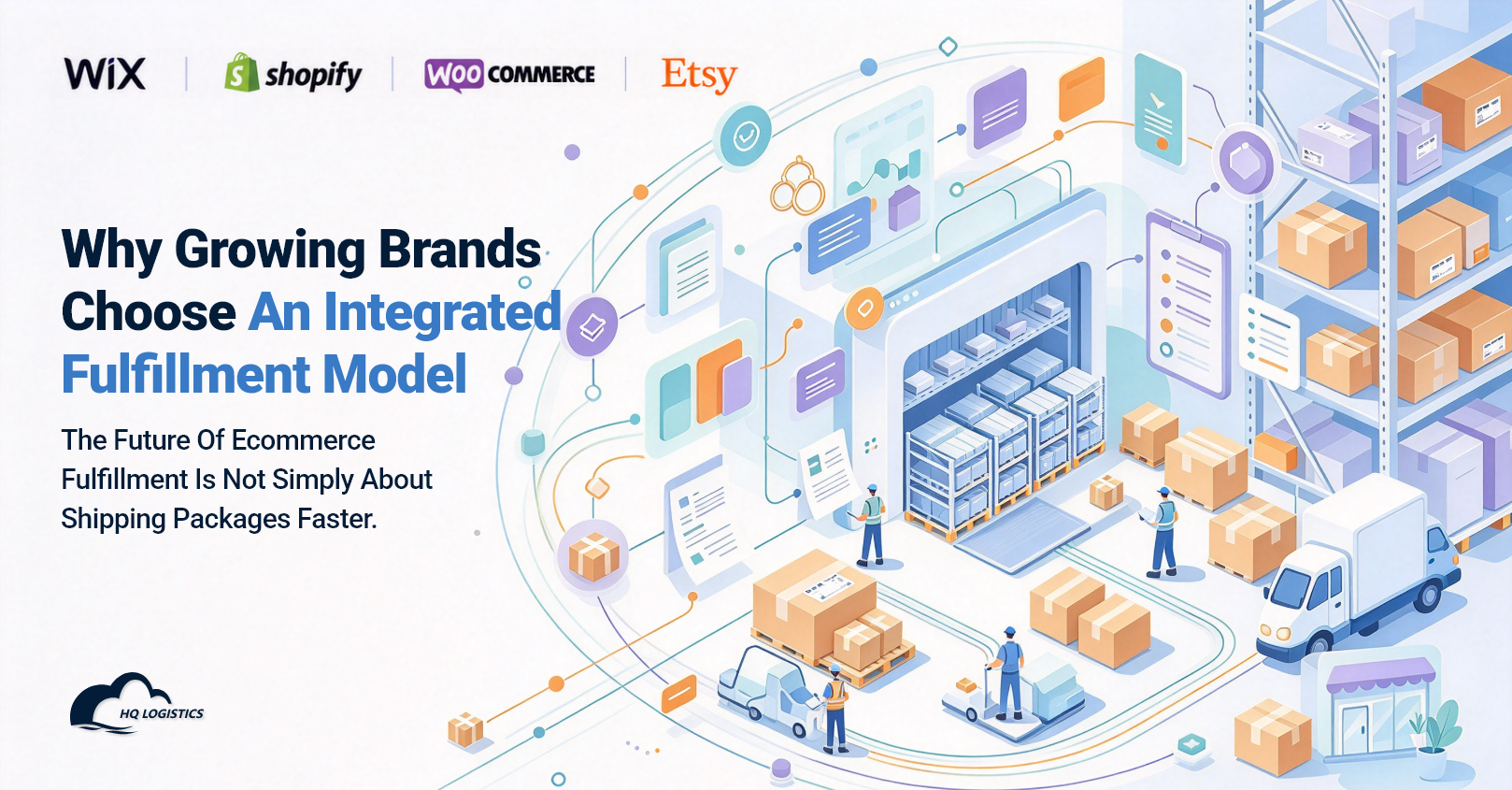
Why Growing Brands Choose an Integrated Fulfillment Model
The future of ecommerce fulfillment is not simply about shipping packages faster.
It's about connecting the entire supply chain.
For growing brands, the ideal workflow can look like:
Source → Inspect → Store → Pack → Ship → Deliver
When all these stages work together, your business can respond faster to demand and spend less time coordinating separate suppliers and service providers.
That's the real value of an integrated fulfillment partner.
More orders should mean more growth—not more fulfillment headaches.
Final Thoughts
Scaling US orders requires more than finding a shipping company.
You need a fulfillment system that can connect sourcing, warehousing, quality control, packing, shipping, and delivery.
HQ helps growing Shopify and DTC brands manage these steps from China through one coordinated fulfillment workflow.
With US shipping from 0.05 KG, featured transit options of 5–9 days, a commercial route covering 9,000+ ZIP codes, and services including sourcing, free warehouse storage, QC, pick & pack, custom packaging, and order fulfillment, HQ provides a more integrated way to manage growing US orders.
Your store is growing.
Your fulfillment should grow with it.
Source smarter. Store better. Fulfill faster. Scale your US orders with HQ.
FAQs
What is HQ US fulfillment?
HQ US fulfillment connects China product sourcing, warehouse storage, quality inspection, pick & pack, custom packaging, order fulfillment, and US shipping in one workflow.
What is the minimum billing weight for HQ US shipping?
The campaign materials list 0.05 KG as the minimum billing weight
for the featured US fulfillment solution.How fast can HQ ship orders to the US?
The featured campaign highlights 5–9 day US transit, while another general-goods option lists 6–12 days. Actual transit time depends on the selected route, product, destination, and shipping requirements.
Does HQ provide warehouse storage?
Yes. The US fulfillment campaign includes free warehouse storage
as part of the fulfillment solution.Can HQ help with custom packaging?
Yes. Custom packaging is included among the fulfillment services highlighted in the campaign materials.
How many US ZIP codes does the commercial route cover?
The campaign highlights a commercial US route covering 9,000+ ZIP codes.
What information should I provide for a US fulfillment quote?
Provide your product details, package weight and dimensions, monthly or daily order volume, main US destinations, and any packaging or product-handling requirements. This allows the fulfillment team to recommend a suitable sourcing and shipping solution.
 US fulfillment, US fulfillment service, China to US fulfillment,
Shopify US fulfillment, US ecommerce fulfillment, US fulfillment center, China fulfillment to USA,
Shopify fulfillment USA, fulfillment service for Shopify, US order fulfillment, China sourcing and
fulfillment, US shipping from China, ecommerce fulfillment USA, DTC fulfillment USA
US fulfillment, US fulfillment service, China to US fulfillment,
Shopify US fulfillment, US ecommerce fulfillment, US fulfillment center, China fulfillment to USA,
Shopify fulfillment USA, fulfillment service for Shopify, US order fulfillment, China sourcing and
fulfillment, US shipping from China, ecommerce fulfillment USA, DTC fulfillment USA